REVIEW · CHANDIGARH
Golden Triangle 6 Days
Book on Viator →Operated by INDIA TRIP DESIGNER India · Bookable on Viator
Golden Triangle trips can feel like a sprint, but this one is a smart sprint. You’ll cover Delhi, Agra, and Jaipur with hotel pickup, a guide’s running commentary, and skip-the-line privileges at many stops. I especially like the way the schedule clusters big sights by day, so you’re not bouncing around for no reason. I also like that five nights with breakfast are handled for you, which helps when India days start early. The one drawback: monument entry fees are not included, so you’ll want to budget for tickets on top of the tour price.
This tour is built around convenience and pacing. You start with an airport pickup into Delhi for an overnight, then move city to city with transportation included. By the time you reach Taj Mahal morning, you’ll be glad you didn’t try to plan transport, guides, and ticket timing on your own.
In This Review
- Key highlights worth your attention
- Golden Triangle 6 Days: Why this route works when time is short
- Price and what you really get for $544.27
- Day 1 Delhi: airport pickup, transfer, then a reset night
- Day 2 Delhi: Qutub Minar, Humayun’s Tomb, Old Delhi icons, Jama Masjid, Lotus Temple
- Qutub Minar (1 hour)
- Humayun’s Tomb (1 hour)
- Red Fort (1 hour)
- Jama Masjid (30 minutes, free)
- India Gate stop + Lotus Temple (30 minutes)
- Day 3 Agra Fort plus Mehtab Bagh: the pre–Taj warm-up
- Agra Fort (2 hours)
- Mehtab Bagh (1 hour)
- Day 4 Taj Mahal at sunrise timing, then Fatehpur Sikri on the way out
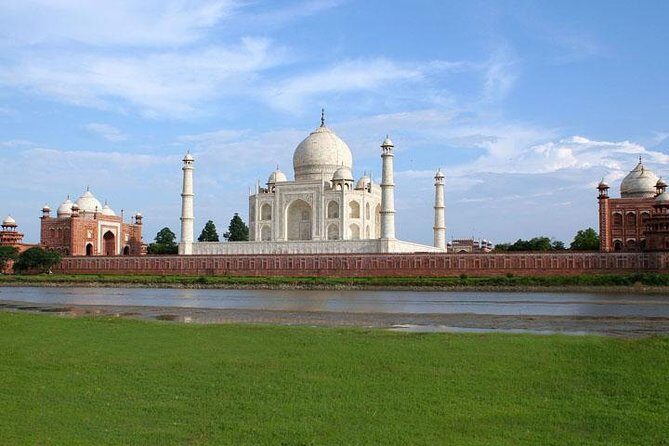
- Taj Mahal (about 2 hours)
- Fatehpur Sikri (1 hour, free)
- Day 5 Jaipur: Amber Palace, City Palace, Jantar Mantar, Hawa Mahal, Jal Mahal
- Amber Palace (2 hours)
- City Palace of Jaipur (1 hour)
- Jantar Mantar (45 minutes)
- Hawa Mahal (30 minutes)
- Jal Mahal (15 minutes, free)
- Day 6: Jaipur back to Delhi, or fly if your schedule allows
- Pickup, hotels, and shared rooms: what the “private tour” means day to day
- The guide and driver effect: what you should look for
- Skip-the-line privileges: helpful, but still plan for ticket costs
- Who this Golden Triangle tour fits best
- Should you book this Golden Triangle 6-Day tour?
- FAQ
- What cities does the Golden Triangle 6 Days tour cover?
- Is hotel pickup and drop-off included?
- How many nights of accommodation are included, and is breakfast part of it?
- Are monument entrance fees included in the price?
- Will I have a guide during the tour?
- Is this tour private?
- What is the cancellation policy?
Key highlights worth your attention

- Skip-the-line privileges at many stops help cut waiting time at major landmarks.
- Hotel pickup and drop-off means you spend less energy figuring out rides.
- A guide with commentary keeps the history and purpose of each site from turning into random photos.
- Sunrise-style Taj Mahal timing is built in so you don’t miss the morning window.
- Five nights of shared accommodations with breakfast keeps your days simpler.
- Agra and Jaipur are handled efficiently with the key must-sees grouped by geography.
Golden Triangle 6 Days: Why this route works when time is short
The Golden Triangle is three cities that feel totally different: Delhi’s layers, Agra’s Mughal grandeur, and Jaipur’s Rajasthan flair. The value of a guided 6-day plan is that you can see the big named sites without turning your trip into a logistics puzzle.
What makes this itinerary workable is the flow. You don’t spend the first half of the trip trying to catch up. Instead, Delhi gives you the foundation (major monuments in Old Delhi plus a couple of iconic modern spiritual stops). Then Agra focuses on the Mughal core. Finally, Jaipur concentrates on forts and palace architecture plus the city’s distinctive planned-city layout.
If you’re visiting India for the first time, you’ll probably appreciate having someone else responsible for sequencing and timing. You can still move at your own pace while you’re there, but the hard part—getting you to the right places in the right order—gets handled.
A few more Chandigarh tours and experiences worth a look

Price and what you really get for $544.27
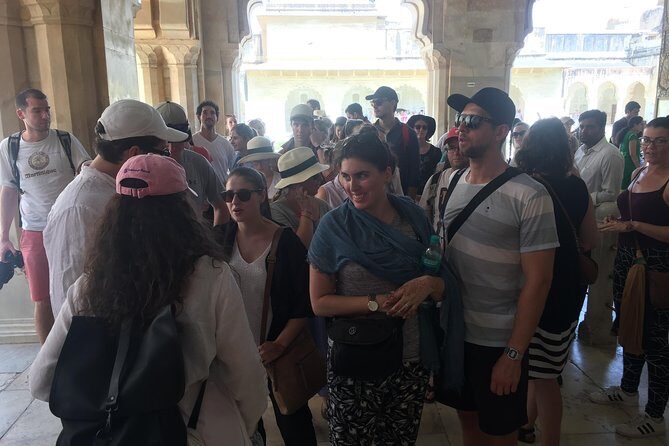
At $544.27 per person for roughly 6 days, the question is what’s included versus what’s on you.
What’s included from the details you provided:
- Local guide (so you’re not just walking through descriptions you can read on signs)
- Hotel pickup and drop-off
- Private tour (your group only)
- Breakfast for 4 days and five nights of shared accommodation with breakfast (the listing also frames it as breakfast included)
- Transportation between the cities (implied by “all transportation included” and the day-to-day transfers)
What’s not included:
- Monument entrance fees
So you’re paying for the structure: transportation, guidance, and the big-city-to-big-city movement. When people plan this on their own, they often underestimate how many moving pieces create friction—finding a reliable guide, timing entry, getting from one site to another, and keeping energy up through jammed streets.
Also, the tour includes mobile ticket and notes group discounts. That usually matters if you’re booking as a family or small group. The practical takeaway: the tour is likely set up for you to avoid extra ticketing headaches once you’re in the flow.
Bottom line: this price looks best for people who value convenience and a guided framework more than DIY freedom.
Day 1 Delhi: airport pickup, transfer, then a reset night

Day 1 is straightforward: driver pickup from the airport, transfer to your Delhi hotel, then an overnight.
This is a small detail, but it matters. Arriving in India can be disorienting—noise, traffic, temperature changes, and the shock of going from airport to city. A transfer plus a rest night means you can actually enjoy Day 2 instead of merely surviving it.
If you land early and want a quick look around, you’ll have that chance after you check in—though the itinerary itself stays focused on set-up and recovery.
Day 2 Delhi: Qutub Minar, Humayun’s Tomb, Old Delhi icons, Jama Masjid, Lotus Temple
Day 2 is packed, but it’s packed in a logical way: major Delhi monuments with minimal backtracking.
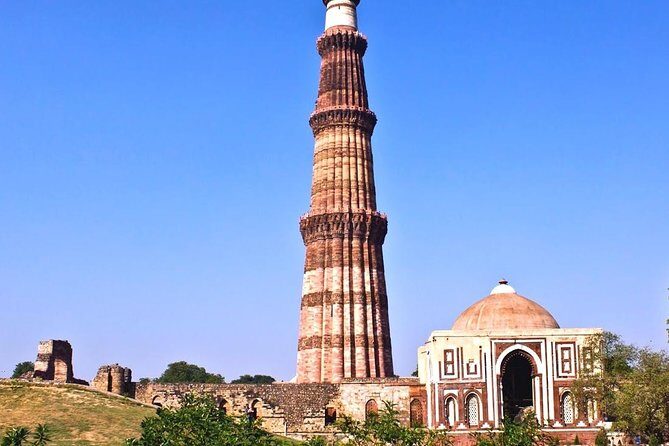
Qutub Minar (1 hour)
You’ll visit Qutub Minar, part of the Qutb complex (UNESCO). The listing calls out the minaret’s key specs—73 meters tall, tapering, five stories, and a 14.3-meter base.
Practical note: when a site is that visually dominant, your time goes fast. You’ll want comfortable shoes because you’ll likely be walking and turning to get the full tower view.





Humayun’s Tomb (1 hour)
Next is Humayun’s Tomb, commissioned in 1569–70 by Humayun’s first wife and chief consort, Empress Bega Begum. You’ll spend about an hour here.
Why it fits the day: these Mughal-era stops help you start seeing the visual language connecting Delhi’s monuments.
Red Fort (1 hour)
Then comes Red Fort (Shah Jahan, mid-17th century). Even if you’ve seen photos before, it’s one of those places where you finally grasp scale.
One possible drawback: Red Fort plus the next Old Delhi stops can become repetitive if you’re exhausted. If you’re tired, don’t try to absorb everything. Focus on the main structures and let the guide carry the rest.
Jama Masjid (30 minutes, free)
You’ll hit Jama Masjid, described as one of the largest mosques in Delhi and built by Shah Jahan. Admission is listed as free, and time is about 30 minutes.
This is a quick stop compared to the others. Plan to treat it like a “stop in, look, learn, move” moment.
India Gate stop + Lotus Temple (30 minutes)
The itinerary lists India Gate as a war memorial on the Rajpath, then ends with Lotus Temple (Bahá’í House of Worship), dedicated in December 1986.
Lotus Temple is often a mental reset after dense historic spaces. It’s also a good place to slow down and take in the mood for a change of pace.
Day 3 Agra Fort plus Mehtab Bagh: the pre–Taj warm-up
Day 3 is your transition into Agra’s Mughal landscape.
Agra Fort (2 hours)
You get Agra Fort for two hours, described as the main Mughal residence until 1638 when the capital shifted to Delhi.
This stop is more than a quick walk. Two hours gives time to understand how forts function—defense, power, and palace life layered into one complex.
Mehtab Bagh (1 hour)
Then it’s Mehtab Bagh, highlighted as an important part of the Mughal era and known as a key Taj Mahal viewing spot.
The value here is timing and expectation. You’re not at the Taj Mahal yet, but you’re being primed for what you’ll see next. For many people, that makes the Taj morning hit harder because you’ll connect the view to what you just walked through.
Tip: bring a water bottle and a light layer. Even when days aren’t too hot, Agra can still feel intense once you’re outside for long stretches.
Day 4 Taj Mahal at sunrise timing, then Fatehpur Sikri on the way out
This is the day people remember.
Taj Mahal (about 2 hours)
Your itinerary explicitly calls for an early morning visit, timed for sunrise or after breakfast. It also includes the core details: built by Shah Jahan between 1631–53 in memory of his wife Mumtaj.
Two hours is a useful window because it lets you do more than stare at the exterior. You’ll have time to follow the flow on-site and step back for perspective without feeling rushed.
One practical consideration: early mornings mean you’ll want sleep the night before. If your hotel sleep isn’t great (shared rooms can be that way), set realistic expectations for how easy it is to wake up.
Fatehpur Sikri (1 hour, free)
After Taj Mahal, you return for checkout and depart from Agra to Jaipur. On the route, you visit Fatehpur Sikri, described as the dream capital of Akbar. Admission is listed as free, and the stop is about 1 hour.
Why this matters in the flow: Fatehpur Sikri gives you a “bigger picture” stop between Agra and Jaipur. It helps break up the travel day with a destination that feels different from both cities’ main centers.
Day 5 Jaipur: Amber Palace, City Palace, Jantar Mantar, Hawa Mahal, Jal Mahal
Jaipur day is where the trip shifts from monumental empire architecture to Rajasthan’s palace-and-city identity.
Amber Palace (2 hours)
You’ll spend two hours at Amber Palace, also called Amer Fort, located 11 kilometers from Jaipur. It’s described as one of the most famous forts in Rajasthan.
This is the kind of site where you’ll get more out of it if you let the guide explain the layout and purpose. Forts aren’t just walls and towers—they’re designed for living, control, and ceremony.
City Palace of Jaipur (1 hour)
Then you visit City Palace, described as being at the center of Jaipur’s planned city, divided into nine blocks.
This stop helps you see how the royal structure fits into the city plan, instead of treating Jaipur as only forts and photos.
Jantar Mantar (45 minutes)
Next is Jantar Mantar, with the listing noting nineteen architectural astronomical instruments built by Sawai Jai Singh II.
If you like details (or even if you just like a place with “serious old-school science energy”), this is your brainy break. Forty-five minutes is enough time to notice how structured it feels.
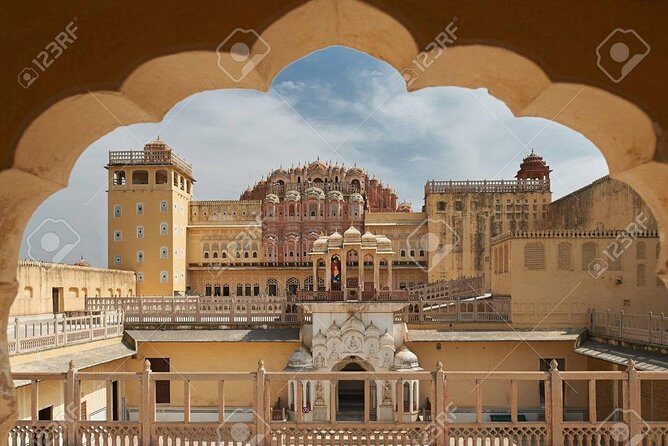
Hawa Mahal (30 minutes)
You’ll spend about 30 minutes at Hawa Mahal, described as built with red and pink sandstone and connected to City Palace and the zenana.
This stop works best when you keep your eyes moving. It’s a building that rewards quick observation—especially the way its form creates patterns of openings.
Jal Mahal (15 minutes, free)
Finally, there’s Jal Mahal, the Water Palace in the middle of Man Sagar Lake, with a listed free admission and a short 15-minute visit.
A short stop is common for viewpoints like this. It’s worth it if you treat it as a quick photo and atmosphere moment, not as a long “explore every corner” assignment.
Day 6: Jaipur back to Delhi, or fly if your schedule allows
Day 6 is your return.
You depart from Jaipur to Delhi with a stated around 5 hours drive, or you can take a flight from Jaipur depending on your schedule.
This flexible ending is practical. If you’re tired, a flight option can save hours and reduce end-of-trip stress. If you prefer to absorb the scenery (or just don’t want to change airports), the drive is the simpler plan.
Pickup, hotels, and shared rooms: what the “private tour” means day to day
Even though this is a private tour/activity where only your group participates, the accommodations are described as five nights of shared accommodations.
That’s not automatically bad. Shared rooms can make the trip cheaper and keep your budget predictable. The tradeoff is that your comfort depends on how your room is set up and who else is sharing with you.
Also, the tour includes hotel pickup and drop-off. This matters more than people think, because getting transportation in India can be the difference between a smooth morning and a rushed one.
A nice bonus is the mention of mobile ticket. Mobile ticketing tends to reduce last-minute confusion around vouchers and entry steps.
The guide and driver effect: what you should look for
This kind of tour lives or dies by communication. The itinerary explicitly includes a local guide providing commentary as you travel.
And the reviews you shared add a strong clue about what’s valued: drivers and guides who are kind, flexible, and fluent in English.
In particular, one driver name shows up often in the feedback: Surendra (sometimes spelled Surinder/Surendra in different notes). People praised him for being informative and careful with tourist needs. Another name that comes up in planning support is Manoj, noted for responsive communication and shaping an itinerary around family needs.
For you, here’s how to make the most of this part of the tour:
- Ask one or two questions early each day so the guide sets the context.
- Use commentary to connect sights across days (Delhi to Agra to Jaipur).
- If you have mobility limits or a must-see priority, say it early. A good driver can often help with timing within what’s possible.
Skip-the-line privileges: helpful, but still plan for ticket costs
The highlights mention skip-the-line privileges at many stops. That’s a real benefit in places where entry lines can steal your morning.
Just don’t confuse skip-the-line with free entry. The listing is clear that monument entrance fees are not included, so you’ll still need to pay tickets at stops where they apply.
So your best strategy is mental budgeting: plan for extra cash for entry fees, and treat the skip privilege as a time-saver rather than a ticket replacement.
Who this Golden Triangle tour fits best
This works well if:
- You want a classic Golden Triangle hit list without DIY headaches.
- You like a guided framework that explains what you’re seeing.
- You’re traveling as a couple, small group, or family and want private pacing.
- You appreciate breakfast included and don’t want to negotiate daily meals as part of planning.
It might not be ideal if:
- You hate early mornings. Taj Mahal timing is early.
- You’re determined to minimize additional spend. Entrance tickets are separate.
- You’re very sensitive to room comfort since the lodging is shared.
Should you book this Golden Triangle 6-Day tour?
If you want the Golden Triangle without juggling transport, guides, and timing, this is a strong pick. The price feels most justified because you’re paying for structure: pickup, guided sightseeing, intercity movement, and five nights with breakfast. The major things you must budget for are monument entrance fees, and you should be ready for an early Taj Mahal morning.
My recommendation: book it if your travel style is “I want to see the big sites and I want my mornings to run on schedule.” Pass or compare if you want a slow, highly flexible itinerary where you pick every stop based on mood and personal wandering.
If you tell me your travel dates and whether you’re flying into Delhi or elsewhere, I can help you sanity-check whether the drive/fly choice on Day 6 lines up with your comfort level.
FAQ
What cities does the Golden Triangle 6 Days tour cover?
You’ll spend time in Delhi, Agra, and Jaipur across the six days.
Is hotel pickup and drop-off included?
Yes. Hotel pickup and drop-off are included, starting with an airport pickup into Delhi and continuing with transfers between sights and cities.
How many nights of accommodation are included, and is breakfast part of it?
The tour includes five nights of shared accommodations with breakfast. Breakfast is listed as included for multiple days in the details provided.
Are monument entrance fees included in the price?
No. Monument entrance fees are not included. The itinerary lists admission as not included for several stops and free for a few.
Will I have a guide during the tour?
Yes. The tour includes a local guide who provides commentary as you travel between stops.
Is this tour private?
Yes. It’s listed as private, and only your group will participate.
What is the cancellation policy?
The policy states free cancellation if you cancel up to 24 hours in advance for a full refund. If you cancel less than 24 hours before, the amount paid is not refunded.