REVIEW · CHANDIGARH
The Hipster Chandigarh Architecture History Tour
Book on Viator →Operated by Rusty · Bookable on Viator
Chandigarh architecture hits different in person. This 2-day tour strings together the city’s most important Corbusier and Jeanneret sites with insider access and a guide who treats details like daily news, not trivia. I especially liked how the day moves from big, UNESCO-scale buildings to quieter, human-scale places like a Jeanneret home.
I also liked the way the host’s background shows up in the storytelling: he’s a 3rd-generation Chandigarh resident, spent decades living in Corbus’s public housing, and has the journalist habit of checking facts while keeping it funny. One consideration: you’ll be on your feet through active campus areas and monuments, and the tour runs only in good weather, so plan around heat or rain.
In This Review
- Key highlights you’ll actually feel on the tour
- Meet Rusty: the guide who knows Chandigarh from the inside
- Price and value: why $71.02 can make sense for two full days
- How the 9:00am start shapes your experience
- Day 1: Capitol Complex to the Open Hand and beyond
- Stop 1: Capitol Complex (UNESCO UNESCO World Heritage site)
- Stop 5: Open Hand Monument (symbol, peace, unity)
- Stop 6: Geometric Hill (grid-like earth mounds and concrete forms)
- Stop 7: Tower of Shadows (solar study building)
- Stop 8: Panjab University
- Day 1: Le Corbusier Centre, Gandhi Bhawan, and a museum designed around ideas
- Stop 2: Le Corbusier Centre (old architects’ building turned museum)
- Stop 3: Gandhi Bhawan (Pierre Jeanneret university landmark)
- Stop 4: Chandigarh Architecture Museum
- Day 1: Museum Maison Jeanneret (a rare first-house look)
- Day 2: Sukhna Lake and Sector 17 Market for real city rhythm
- Stop 2: Sector 17 Market (commercial planning you might miss)
- Day 2: War Memorial and the subtle architecture of remembrance
- Day 2: Pierre Jeanneret public socialist housing (rare access, real living)
- Day 2: Government Museum and Art Gallery, plus Lake Club
- Stop 5: Government Museum and Art Gallery
- Stop 6: Lake Club (a quiet Corbusier-era secret)
- What to expect from pacing, photos, and comfort
- Who this tour is best for (and who might not love it)
- Should you book the Hipster Chandigarh Architecture History Tour?
- FAQ
- FAQ
- How long is the tour?
- What time does the tour start?
- Is pickup and drop-off included?
- What does the tour price include?
- Are photography tickets included?
- Do I pay for snacks during the tour?
- What is the maximum group size?
- Which major stops are on the itinerary?
- Is the tour near public transportation, and can I bring a service animal?
- What if cancellation is needed or the weather is bad?
Key highlights you’ll actually feel on the tour
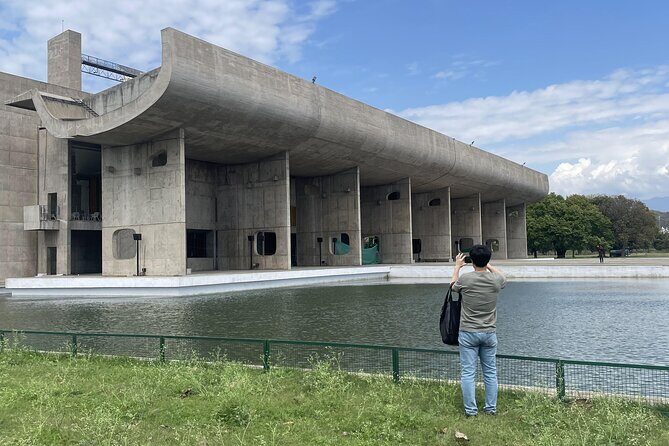
- Insider access at the UNESCO World Heritage Capitol Complex, including the Secretariat, Assembly Hall, and the Open Hand Monument
- Multiple Le Corbusier and Pierre Jeanneret stops across museums, university buildings, and rare residential spaces
- Photography tickets and admissions included, so you’re not nickel-and-dimed at each site
- AC vehicle with pickup and drop plus parking and waiting charges handled
- Small-group feel with a max of 41 travelers and a guide known for adjusting pacing
- Budget-friendly breaks for snacks, with you paying for those small stops
Meet Rusty: the guide who knows Chandigarh from the inside
The biggest reason this tour works is the guide. Rusty isn’t touring Chandigarh as a visitor with a phone and a brochure. He’s a 3rd-generation Chandigarh citizen, and he’s lived inside the city’s design. He spent 24 years in Corbus’s public social housing. He studied in Pierre Jeanneret-designed schools. He worked in Maxwell Fry-designed offices.
That matters because Chandigarh isn’t just “cool buildings.” It’s a whole system—administration, campuses, housing, streets, and public space—built with one big modernist idea and then tested by real life. When your guide has lived in that system, you get more than facts. You get context.
Rusty also brings journalism skills to the mix: he researches details, then tells the story in a way that stays practical and politically neutral, even when architecture touches bigger themes. And he keeps the pace friendly. He’ll slow down when architects and planners are busy photographing, so you don’t get that “walk faster” feeling while others are literally capturing the angles.
You can also read our reviews of more historical tours in Chandigarh
Price and value: why $71.02 can make sense for two full days
At $71.02 per person for about two days, the price looks fair once you count what’s included. Your tour covers pickup and drop charges, plus parking fees, and the air-conditioned vehicle handles taxi, driving, parking, and waiting charges. That’s not “nice to have” in Chandigarh—it reduces the annoying parts of independent touring.
Most important: entrance fees are covered. The tour includes admission tickets at each stop, and it also includes photography tickets and fees where applicable. If you’re planning to photograph actively, that can change how much you end up paying during the day.
What’s not included is small but real: snack stops are frequent and paid by you, though the tour is designed to keep those costs low (ideal if you’re a student, backpacker, or just trying to keep things simple). Gratuities are optional.
How the 9:00am start shapes your experience
You start at 9:00am, which is a smart timing choice for architecture trips. Buildings, monuments, and campuses all look better when you’re not dealing with late-day glare or rushed heat. It also gives you time for the guided rhythm: one site, one story, then moving on.
The tour uses a mobile ticket, and it keeps things organized with an AC vehicle. There’s also pickup and drop, so you don’t lose half a day coordinating rides across sectors.
Group size tops out at 41 travelers. That keeps it from turning into a silent bus-load, and it’s small enough that your guide can keep track of the group.
Day 1: Capitol Complex to the Open Hand and beyond

Day 1 is built around the core modernist statement of Chandigarh: the Capitol Complex. You start with insider-guided access at the UNESCO World Heritage site, including the Secretariat, the Assembly Hall, and the Open Hand Monument.
Why I think this is a great opening day: you get the city’s “big idea” before you start seeing the smaller, more personal layers. The tour points you toward brutalist concrete forms and innovative planning choices—this is where Chandigarh shows off its confidence.
Stop 1: Capitol Complex (UNESCO UNESCO World Heritage site)
You’ll be guided through the Secretariat and Assembly Hall, and you’ll also hear the story tied to the Open Hand Monument. The timing here is important. The architecture is massive, but your guide’s job is to help you read it without feeling overwhelmed.
One possible drawback with landmark architecture: sometimes the scale tempts you to walk fast and snap photos without understanding what you’re looking at. If you want value, slow down with your guide and listen for the “why,” not only the “what.”




Stop 5: Open Hand Monument (symbol, peace, unity)
You’ll also get up close at the Open Hand Monument, described as the crowning symbol of peace and unity. The tour includes the story of Le Corbusier’s vision, and if it’s windy, you may even catch the monument in motion with the surrounding air.
Stop 6: Geometric Hill (grid-like earth mounds and concrete forms)
After you’ve seen the administrative core, you move into a sculptural landscape element: grid-like earth mounds and concrete forms. Geometric Hill is a good reminder that Chandigarh’s planning isn’t only about buildings. It’s about shaping how people experience space.
Stop 7: Tower of Shadows (solar study building)
Then comes The Tower of Shadows, a concrete open-air structure designed as a “demo” building to study the solar movement. This stop is a reminder that this modernism wasn’t just style. It was a toolset for thinking about sun, shade, and daily life.
Stop 8: Panjab University
You’ll also tour Panjab University with insider access. University campuses often feel like a lot of walking, but this one is part of the larger story of Chandigarh’s planned social spaces—where education, design, and public life blend.
Day 1: Le Corbusier Centre, Gandhi Bhawan, and a museum designed around ideas
The middle of Day 1 turns from monumental outdoor statements toward a more interpretive pace. You’ll see how Chandigarh’s design thinking gets translated into museums, memorial spaces, and recognizable university architecture.
Stop 2: Le Corbusier Centre (old architects’ building turned museum)
At the Le Corbusier Centre, you’ll go inside an older architects’ building that now functions as a museum and memorial center. The tour includes visual demonstrations connected to an early attempt at green, sustainable, and naturally cooled building ideas.
This stop is useful if you’re the kind of person who likes to connect “aesthetics” to “engineering.” Even if you’re not an architecture nerd, you’ll likely appreciate how much thinking went into comfort and climate.
Stop 3: Gandhi Bhawan (Pierre Jeanneret university landmark)
Gandhi Bhawan is described as the heart of the university, designed by Pierre Jeanneret. You’ll observe the distinctive lotus-shaped spinning roof. If you like details you can actually point at—this is the kind of element that makes the whole building click.
Stop 4: Chandigarh Architecture Museum
Next is the Chandigarh Architecture Museum, a homage to Le Corbusier’s 1965 Zurich Pavilion. You’ll explore three levels of rare exhibits, plus the tour frames the place as part of Chandigarh’s modernist saga.
When museums are done well, they help you stop seeing buildings as random monuments. They give you a lens. This is meant to do that for the whole two-day arc.
Day 1: Museum Maison Jeanneret (a rare first-house look)
The day ends with a quieter kind of access: Museum Maison Jeanneret, described as the first house constructed in Chandigarh and originally Pierre Jeanneret’s residence for 11 years.
For me, this is where you shift from “city as concept” to “city as home.” You start understanding the designs as spaces people actually lived with—sleeping, working, and day-to-day living inside the same modernist logic.
If you only care about the showpiece buildings, you might skip your attention here and only glance. Don’t. The value is in how the story changes when you’re dealing with a house instead of a government complex.
Day 2: Sukhna Lake and Sector 17 Market for real city rhythm
Day 2 begins with a calmer tone: Sukhna Lake, designed by Corbusier as a manmade lake to refresh groundwater and cool northern sectors of the city. You’ll take a gentle walk and hear how the lake was created and how it evolved.
Why start with water? It helps you reset. After concrete campuses and monumental shapes, a walk gives your eyes and body a break while still keeping the architecture theme alive—because this is planning applied to nature-like space.
Stop 2: Sector 17 Market (commercial planning you might miss)
Then you go to Sector 17 Market, described as often-ignored commercial designs of Corbusier in the heart of the city. You’ll walk and talk through shaded, tree-lined walkways and do people-watching.
This stop is practical value. Architecture tours often focus on temples, palaces, and museums. But a city is also its everyday economy. Sector 17 is where you see how planning supports community and commerce, not only administration.
One consideration: market stops depend on normal day conditions. If it’s quieter than expected, your guide’s job becomes even more important for keeping the explanations alive.
Day 2: War Memorial and the subtle architecture of remembrance
You’ll visit the Chandigarh War Memorial in Sector 3, within the Bougainvillea Garden. The tour frames it as a place where architectural subtlety meets historical resonance.
This is a good stop if you want the emotional layer of Chandigarh’s design story. It’s not only about form and function. It’s also about memory and public meaning.
Day 2: Pierre Jeanneret public socialist housing (rare access, real living)
One of the most interesting parts of Day 2 is the rare access to Pierre Jeanneret’s public socialist housing. It’s described as still functional in its original stance, and your guide notes it’s private and subject to local variables.
Even without perfect certainty, the concept of the stop is strong: you’re not only seeing Chandigarh’s architecture as a museum piece. You’re seeing it as a working, continuing environment.
Because the access is described as private and depends on local variables, you should stay flexible. If conditions change, your guide may adjust the day’s flow so you still get meaningful city context.
Day 2: Government Museum and Art Gallery, plus Lake Club
Stop 5: Government Museum and Art Gallery
You’ll tour the Government Museum and Art Gallery, a heritage museum designed by Le Corbusier. It houses artifacts from the pre-partition era from Pakistan, including one of the world’s largest collections of Greco-Buddhist art objects.
This matters because it widens the scope beyond architecture. You get cultural context tied to the city’s broader role, not just the buildings.
Stop 6: Lake Club (a quiet Corbusier-era secret)
Finally, you’ll go to the Lake Club, described as a rarely known private yacht club for recreational boating and socializing designed by Corbusier a year before his death.
If you like atmosphere, this stop is likely to stick with you. It sounds like the kind of place people miss when they only chase the famous monuments. And since it’s described as “ignored,” your guide’s access likely changes what you’re able to experience.
What to expect from pacing, photos, and comfort
This tour is designed to keep the group comfortable. You have a lot of sites, but the pacing is meant to fit a normal visitor’s attention span. Rusty’s approach includes humor and hard facts, but also time for practical breaks and snacks.
Also, the tour includes admission tickets everywhere, plus photography permissions. That means you spend less time asking questions at the gate and more time learning.
Wear comfortable shoes. You’ll be moving across campuses and monuments, including university areas and memorial gardens. The schedule includes several guided segments that are short-to-medium in length, which can be perfect—but only if your legs are ready.
Who this tour is best for (and who might not love it)
You’ll likely love this if you:
- want a structured, two-day way to see the main Chandigarh modernism themes
- enjoy architecture explanations that connect form to real life
- want insider access instead of only looking from outside fences
- like guided humor that keeps the factual load easy to follow
It may be less ideal if you:
- want a purely relaxed sightseeing tour with lots of free time
- dislike walking through campuses and outdoor structures
- get easily frustrated when certain access points depend on local variables
Should you book the Hipster Chandigarh Architecture History Tour?
If you’re choosing between a self-guided photo run and a guided architecture story, I’d pick this one. The combination of tickets included, pickup and AC transport, and a guide with deep personal ties to Chandigarh makes it good value for the time.
Book it if you want to understand Chandigarh beyond postcards—Capitol Complex scale, museum interpretation, market life, memorial meaning, and rare Jeanneret housing access. Skip it only if you’re mainly there for beach-style lounging or you’re not up for a full two days of walking and listening.
FAQ
FAQ
How long is the tour?
It runs for 2 days (approximately).
What time does the tour start?
The start time is 9:00am.
Is pickup and drop-off included?
Yes. Parking fees plus pickup and drop charges are included, and the tour uses an air-conditioned vehicle.
What does the tour price include?
Entrance and admission fees are included, along with pickup/drop and parking fees. The air-conditioned vehicle covers taxi/driving, parking, and waiting charges.
Are photography tickets included?
Yes. Photography tickets and fees are included where applicable.
Do I pay for snacks during the tour?
There are frequent snack stops, and those are paid by you. The tour notes they are very cheap.
What is the maximum group size?
The maximum group size is 41 travelers.
Which major stops are on the itinerary?
You’ll see the Capitol Complex, Le Corbusier Centre, Gandhi Bhawan, the Chandigarh Architecture Museum, Open Hand Monument, Geometric Hill, Tower of Shadows, Panjab University, and Museum Maison Jeanneret on Day 1. Day 2 includes Sukhna Lake, Sector 17 Market, the War Memorial, rare Jeanneret public socialist housing access, the Government Museum and Art Gallery, and Lake Club.
Is the tour near public transportation, and can I bring a service animal?
The tour is near public transportation, and service animals are allowed.
What if cancellation is needed or the weather is bad?
You can cancel up to 6 days in advance for a full refund. If the experience is canceled due to poor weather, you’ll be offered a different date or a full refund.