REVIEW · CHANDIGARH
5 Day Golden Tingle Luxury Private Tour with Guide
Book on Viator →Operated by INDIA TRIP DESIGNER India · Bookable on Viator
Golden Triangle, but with room to breathe.
This private 5-day loop strings together Delhi’s big Mughal-era landmarks and Old Delhi icons, then heads to Agra’s Taj-area highlights, and finishes with Jaipur’s Amer Fort and signature pink-city views. I like that you’re not doing this as a crowded bus crawl: it’s a private vehicle and you get a real guide/driver team. I also like the “smart mix” of set-piece sights (Taj Mahal, Amber Fort) plus photo-friendly stops like Mehtab Bagh. One thing to plan for: paid entrance tickets are not included for several top stops, so your final cost can creep up once you add monuments’ entry fees and any local guides you may want inside.
Day 1 opens in Delhi, often starting with Humayun Tomb before moving through Qutub Minar, the Lotus Temple, India Gate, and Jama Masjid. Day 4 is pure Jaipur power, from Amer Fort to City Palace, Jantar Mantar, Hawa Mahal, and a quick look at Jal Mahal. The route makes sense for first-timers, but it also means long sightseeing days and some travel time between cities.
In This Review
- Key Points at a Glance
- Golden Triangle With Rajasthan in 5 Days: The Big Idea
- Price and What You Actually Get for $422
- Delhi Day 1: Humayun Tomb, Qutub Minar, Lotus Temple, India Gate, Jama Masjid
- Humayun Tomb: Mughal architecture you can feel
- Qutub Minar: the “victory tower” you can’t miss
- Lotus Temple: modern calm in the middle of the schedule
- India Gate: a British-era monument with a modern traffic vibe
- Jama Masjid: massive courtyard, strong Old Delhi presence
- Day 2 Agra: Agra Fort and Mehtab Bagh for Taj views
- Agra Fort: palaces inside a fortress wall
- Mehtab Bagh: the quick photography angle
- Day 3: Taj Mahal plus Fatehpur Sikri’s “lost capital” feel
- Taj Mahal: the love story you can literally walk around
- Fatehpur Sikri: Indo-Islamic architecture from Akbar’s peak moment
- Day 4 Jaipur: Amer Fort, City Palace, Jantar Mantar, Hawa Mahal, Jal Mahal
- Amer Fort (Amer Palace): red sandstone, marble, lake charm
- City Palace: the palace at the center of a planned city
- Jantar Mantar: astronomy you can walk through
- Hawa Mahal: Palace of Winds from the outside
- Jal Mahal: Water Palace on a lake surface
- Day 5: Transfer to New Delhi Airport from Jaipur
- Guide and Driver Matters: The Names People Keep Bringing Up
- Who This Tour Fits Best (and Who Should Skip It)
- Should You Book This 5-Day Golden Tingle Luxury Private Tour?
- FAQ
- Where does the tour usually start?
- Is this a private tour?
- What’s included in the price?
- Are entrance tickets included?
- Are lunch and dinner included?
- Do you pick me up from the airport?
- How long is the drive on the last day?
- What about children traveling with adults?
- Can I cancel and get a refund?
Key Points at a Glance
- Private, guide-led Golden Triangle with your own group and a driver/guide team.
- Pickup and drop-off included, with transfer to Delhi on the last day (about 5 hours’ drive).
- 4 nights accommodation plus 3 breakfasts—so you’re not planning meals from scratch every day.
- Top Delhi-Agra-Jaipur icons: Humayun Tomb, Qutub Minar, Taj Mahal, Fatehpur Sikri, Amer Fort, Hawa Mahal.
- Ticket mix: some sights are free on the plan; others explicitly say admission is not included.
Golden Triangle With Rajasthan in 5 Days: The Big Idea

This tour is built for classic India “first hit” travel: Delhi → Agra → Jaipur → back to Delhi. In only 5 days, you get the star attractions most people come for, plus a few stops that help you see how the Mughal and Rajput eras shaped daily life, not just monuments.
The best part is the pacing by design. You’re not hopping between tiny unrelated neighborhoods. The sights cluster nicely by theme: imperial Delhi, Mughal Agra, then Jaipur’s planned-city core with astronomy, palaces, and forts. That’s also why the itinerary works well with a guide—your time is spent walking the right sections, not guessing.
You can also read our reviews of more guided tours in Chandigarh


Price and What You Actually Get for $422
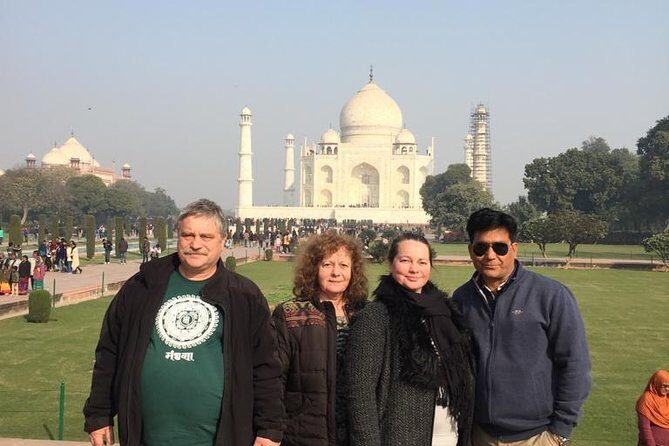
At $422 per person, the value is strongest if you care about comfort and not micromanaging logistics. Here’s what the package includes:
- 4 nights accommodation
- Driver/guide
- Hotel pickup and drop-off
- Transport by private vehicle
- Breakfast (3)
What’s not included:
- Lunch & dinner
- Driver/guide tip
Now the part that can change your budget: entrance fees. Several major sites list admission as not included (for example Qutub Minar, Agra Fort, Mehtab Bagh, Taj Mahal, Amber Fort, City Palace, Jantar Mantar, Hawa Mahal). Other stops are marked free (like India Gate, Jama Masjid, Fatehpur Sikri, Jal Mahal).
So the honest way to judge value is this: you’re paying for private movement, reliable guiding, and pre-arranged stays. You’ll still spend extra on monument tickets, but you’re likely to avoid the time-wasting guesswork of figuring it out on the fly.
One more detail that matters: the tour often starts in Delhi because more international flights land there. If you arrive via Jaipur airport, the service can still work at the same cost.
Delhi Day 1: Humayun Tomb, Qutub Minar, Lotus Temple, India Gate, Jama Masjid
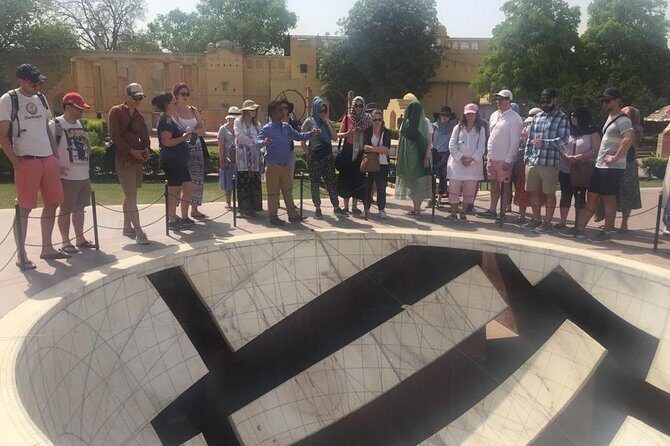
Day 1 feels like two Delhis in one: the grandeur of Mughal-era design, then the energy of Old Delhi.
Humayun Tomb: Mughal architecture you can feel
Humayun Tomb dates to 1565 A.D., built nine years after Humayun’s death by his senior widow, Bega Begam. I like this stop because it sets the architectural language for what you’ll see later in the week. You’re looking at the garden + geometry idea: the walled enclosure, chaharbagh garden layout (quadrants with pathways and water channels), and the well-proportioned mausoleum topped with a double dome.
Even if you only have a short amount of time, this place gives context fast. Your guide can connect it to later Mughal styles you’ll see at the Taj.
Qutub Minar: the “victory tower” you can’t miss
Next is Qutub Minar, in the Qutab complex. It’s a tapering minaret with construction across centuries: the first floor in the 12th century, then more floors added in the 13th, and the top completed in the 14th. There were also attempts to add a sixth storey that didn’t happen.
If you want a quick takeaway, it’s this: Qutub Minar is described as a Mughal victory tower, signaling the beginning of Muslim rule in India. Admission is not included on the plan, so budget for tickets here.
You can also read our reviews of more private tours in Chandigarh




Lotus Temple: modern calm in the middle of the schedule
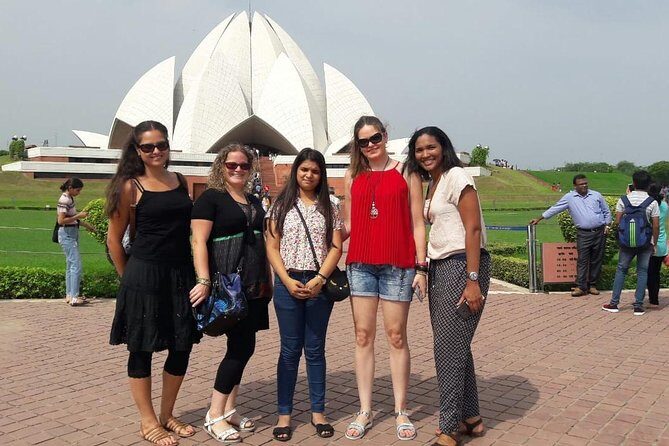
Then comes the Lotus Temple (Bahá’í House of Worship), dedicated to the oneness of humanity. It’s explicitly welcoming to people from all religious backgrounds, and it also serves as a center for social and educational services.
Admission isn’t included on the plan, but it’s a short, restful contrast from the stone-heavy Mughal sites.
India Gate: a British-era monument with a modern traffic vibe
India Gate is part war memorial, part civic landmark. It was originally known as the All-India War Memorial, built under the Imperial War Graves Commission, later Commonwealth War Graves Commission. The architect was Sir Edwin Lutyens, and the cornerstone was laid in 1921. Construction continued until 1931, when New Delhi was formally dedicated as capital.
This stop is short—about 30 minutes—but it’s worth it because it gives you a sense of how layers of empire history sit right next to everyday city life.
Jama Masjid: massive courtyard, strong Old Delhi presence
Finally, Jama Masjid: commissioned by Shah Jahan in 1650 and completed in 1656. It’s listed as India’s largest mosque, with a courtyard capacity around 25,000 people.
It’s also marked free on the itinerary. If you like details, the plan notes relics like an ancient Quran inscribed on deer skin.
Practical note: Old Delhi’s mosques and bazaars can be crowded around prayer times. Your guide will help you time walking breaks.
Day 2 Agra: Agra Fort and Mehtab Bagh for Taj views
Agra Day 2 is about stepping back from the Taj-shaped spotlight and looking at the bigger power center.
Agra Fort: palaces inside a fortress wall
Agra Fort sits near the gardens of the Taj Mahal. It’s a 16th-century Mughal stronghold of red sandstone, with 2.5-kilometer-long enclosure walls. Inside you get a whole imperial city feel: palaces like Jahangir Palace and Khas Mahal, audience halls such as Diwan-i-Khas, plus two mosques.
Admission is not included for this stop, so treat it like a paid add-on. Still, it’s the sort of place where a guide helps you spot the right halls instead of wandering aimlessly.
Mehtab Bagh: the quick photography angle
Mehtab Bagh is a crescent-shaped Mughal garden built along the Yamuna River. It’s widely known for being an excellent spot for viewing the Taj Mahal from across the river.
This is one of those “best for a specific purpose” stops. The plan notes it’s appreciated mainly for views and photography. If you’re not into photos, it may feel shorter and more basic than the forts and palaces.
Admission is not included here either, so decide based on your interests.
Day 3: Taj Mahal plus Fatehpur Sikri’s “lost capital” feel
Day 3 is the headline day. You’ll do both the emotional classic and Akbar’s ambitious project that didn’t last.
Taj Mahal: the love story you can literally walk around
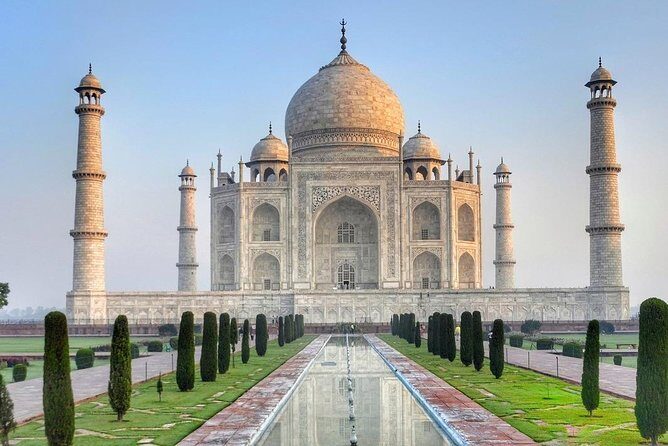
The Taj Mahal is listed as one of the Seven Wonders of the World. The itinerary frames it as more than just a pretty building: it’s about love, loss, and memory, tied to Shah Jahan and Mumtaz Mahal.
You get about 2 hours here, and that time matters. If you spend too long on the main view only, you miss the chance to understand how the complex is laid out. Let your guide point out the key design ideas and the viewing angles.
Admission is not included on the plan.
Fatehpur Sikri: Indo-Islamic architecture from Akbar’s peak moment
Then you head to Fatehpur Sikri, about 40 km west of Agra. This fortified city was Akbar’s short-lived capital between 1571 and 1585. What I like about including it is the contrast: the Taj is intensely personal and symbolic. Fatehpur Sikri is imperial ambition made stone.
The plan highlights its Indo-Islamic architectural character and the story behind Akbar’s heir. It connects the city’s founding to Akbar’s visit to Sikri and a prophecy involving sufi saint Shaikh Salim Chishti. “Fatehpur” means city of victory, tied to a period of successful expansion.
Admission is marked free on the itinerary, which makes it a strong value stop.
Day 4 Jaipur: Amer Fort, City Palace, Jantar Mantar, Hawa Mahal, Jal Mahal
Jaipur Day 4 is the “see it from every angle” day. You start with a major fort, then move through palace and astronomy, and end with iconic façades.
Amer Fort (Amer Palace): red sandstone, marble, lake charm
The day begins at Amber Fort, also known as Amer Fort. It’s about 11 km from Jaipur, and was originally the capital before Jaipur. Built in 1592 by Raja Man Singh, it’s described as having influences of both Hindu and Muslim architecture.
Inside highlights called out in the itinerary include Diwan-i-Aam, Sheesh Mahal, and Sukh Mahal. There’s also mention of the Shila Devi Temple and Ganesh Pol, a gate leading toward private palaces.
Admission is not included, but it’s a core stop and usually worth the ticket. The plan also notes the charm of the Maotha Lake setting.
City Palace: the palace at the center of a planned city
Next is City Palace of Jaipur, which is tied to how Jaipur is organized. Jaipur is described as the first planned city of medieval India, divided into nine blocks, with the royal palace at the center.
Admission isn’t included on the plan. This is a good stop if you want a more grounded sense of how royal spaces sat inside the city’s layout, not just as isolated showpieces.
Jantar Mantar: astronomy you can walk through
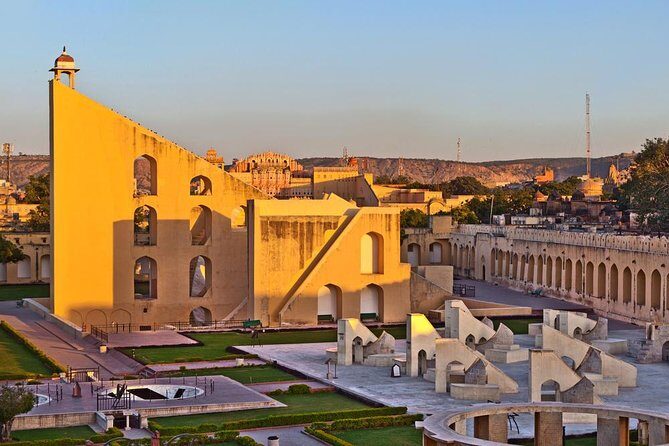
Then Jantar Mantar, built in 1724 by Maharaja Jai Singh II of Jaipur. The itinerary describes it as an astronomical marvel and calls it among five observatories, with Jaipur’s being the biggest.
Admission isn’t included. This is one of those stops that feels more interesting the moment you realize it’s not “old gadgets” for decoration—it’s built to measure sky patterns.
Hawa Mahal: Palace of Winds from the outside
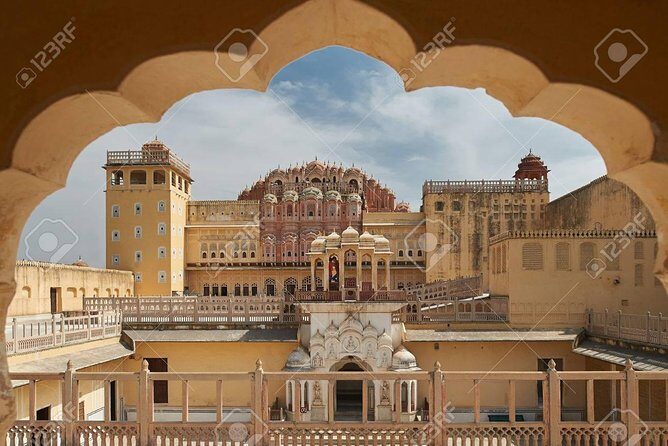
The Hawa Mahal (Palace of Wind) is built in 1799 by Maharaja Sawai Pratap Singh of the Kachhwaha Rajput dynasty. Expect it to be photographed heavily because it’s a landmark in the heart of Jaipur’s Pink City.
Admission isn’t included. You get about 30 minutes. It’s a quick façade stop—so use it as a visual rest between bigger interiors.
Jal Mahal: Water Palace on a lake surface
The final stop is Jal Mahal, meaning Water Palace, located in Man Sagar Lake. It’s described as a palace cum hotel sitting in the center of the water.
Admission is marked free, and the time planned is short—about 15 minutes. It’s not a “stay and tour” stop. It’s the payoff for ending the day with a quiet scenic moment.
Day 5: Transfer to New Delhi Airport from Jaipur
Day 5 is travel day. After breakfast, your driver picks you up from your Jaipur hotel and transfers you to Delhi for the airport, with the plan noting about 5 hours of drive time.
Flights can sometimes make the route tight, so plan to keep your packing simple. This is where having a private driver helps: you’re not hunting for connections or dealing with changing transport options.
Guide and Driver Matters: The Names People Keep Bringing Up
This tour lives or dies by the human layer: guide explanations and driver confidence.
In the feedback you can see a pattern. Planning support is credited to Manoj Sharma, and the smoother parts of the trip come down to the drive-and-wait rhythm. Drivers named in the information include Ravinder and Vivek, both praised for being careful and helpful. Another driver mentioned is Foran Singh, singled out for strong experience and a safety-first approach.
That’s not just nice trivia. When you’re moving between Delhi sites, Agra forts, and Jaipur palaces, traffic and timing can eat your day. A good driver helps protect your sightseeing time.
Also, because it’s private, guide talks can stay tailored. If you’re more into architecture, you’ll want the guide to point out the building logic. If you’re more into stories, ask for the “why” behind each monument’s design.
One hotel detail to note: one guest highlighted a Haveli hotel in Jaipur as the best part of the stay. Your exact property can vary, but this suggests the accommodation style aims for comfort with a local feel.
Who This Tour Fits Best (and Who Should Skip It)
This tour is a strong fit if:
- You want the Golden Triangle essentials plus Jaipur’s signature landmarks in a tight schedule.
- You prefer private transport and a guide to cut down decision fatigue.
- You like a clear itinerary that still allows you to ask questions and adjust day-by-day.
You might want to rethink it if:
- You’re trying to travel ultra-budget and don’t want to add monument tickets.
- You dislike long sightseeing days. With this many icons, the day can feel full.
- You’re hoping for very slow travel or deep off-the-beaten-path exploration. This route stays focused on the headline sites.
Should You Book This 5-Day Golden Tingle Luxury Private Tour?
I’d book it if you want a smooth, guided route through Delhi, Agra, and Jaipur with pickup, private car, and four nights handled for you. The itinerary hits the key Mughal and Rajput stops that first-timers usually list on day one. And the repeatedly praised driver/guide teams suggest the operator puts effort into the “how you experience it,” not just the checklist.
Before you say yes, do two quick reality checks:
- Add up which sites charge entry, since several major ones are explicitly not included.
- Decide whether you prefer “guided structure” over “wandering freedom.” This tour is built for structure.
If that sounds like your style, this is a solid way to see India’s most famous highlights without turning your vacation into a logistics project.
FAQ
Where does the tour usually start?
Mostly the tour starts in Delhi because more international flights arrive there. If you arrive at Jaipur airport, you can still use the services because cost is the same.
Is this a private tour?
Yes. It’s a private tour/activity, and only your group will participate.
What’s included in the price?
The package includes 4 nights accommodation, a driver/guide, hotel pickup and drop-off, transport by private vehicle, and breakfast (3).
Are entrance tickets included?
Admission tickets are not included for several stops listed in the itinerary. Some sights are marked free, including India Gate, Jama Masjid, Fatehpur Sikri, and Jal Mahal.
Are lunch and dinner included?
No. Lunch and dinner are not included.
Do you pick me up from the airport?
Pickup is offered, and the itinerary notes transfers including pickup from Jaipur hotel to Delhi airport on the last day.
How long is the drive on the last day?
On Day 5, the plan notes about a 5-hour drive from Jaipur to Delhi for your flight schedule.
What about children traveling with adults?
A child below 10 is free with 2 adults.
Can I cancel and get a refund?
Yes. Free cancellation is available if you cancel up to 24 hours in advance of the experience start time for a full refund.