REVIEW · CHANDIGARH
Chandigarh Walking Tour (2 Hours Guided Walking Tour)
Book on GetYourGuide →Operated by Yo Tours · Bookable on GetYourGuide
Chandigarh is weird—in the best way. This 2-hour guided walking tour turns the city’s planned layout into a story you can actually follow on foot, from the Musical Fountain area onward. If you get a guide like Ketan, you’ll likely leave with a clearer sense of how Chandigarh was designed and what to watch for. If you get a guide like Tanuj, you may still learn a lot, just expect more Q&A than a nonstop lecture.
I especially liked two things: first, the way the tour links architecture to real city life, including stop-and-explain moments around the Capitol Complex and nearby civic buildings. Second, you get practical local recommendations on what to eat, shop, and explore next, so the walking tour feels like the start of your trip—not a separate activity.
One thing to consider: the Capitol Complex is the big draw, and this type of walk may not include official entry. In at least one instance, the itinerary coverage felt smaller than advertised, so it pays to confirm the exact stops ahead of time.
In This Review
- Key highlights you’ll care about
- Starting where you’ll actually orient: Musical Fountain to the city’s plan
- Public library and civic architecture: the “small details” tour
- The matka roundabout and the Le Corbusier junction: a design you can spot
- Capitol Complex at UNESCO level: what you’ll appreciate and what you shouldn’t assume
- Rose Garden: the numbers that make the scale real
- If your route includes Sukhna Lake, use it to slow down
- What you actually get from the guide (and why it matters more than you think)
- Price and time: why $18 can be a bargain or a lesson
- Who this tour suits best (and who should choose something else)
- What to bring and how to show up ready
- Final call: should you book this Chandigarh walking tour?
- FAQ
- How long is the Chandigarh Walking Tour?
- What does the tour cost?
- Where does the tour start?
- What are the main places you’ll see?
- Are official entry tickets to the Capitol Complex included?
- Which languages are available?
- Is a guide included?
- Is hotel pickup or drop included?
- Is a water bottle included?
- What should I bring, and when should I arrive?
Key highlights you’ll care about
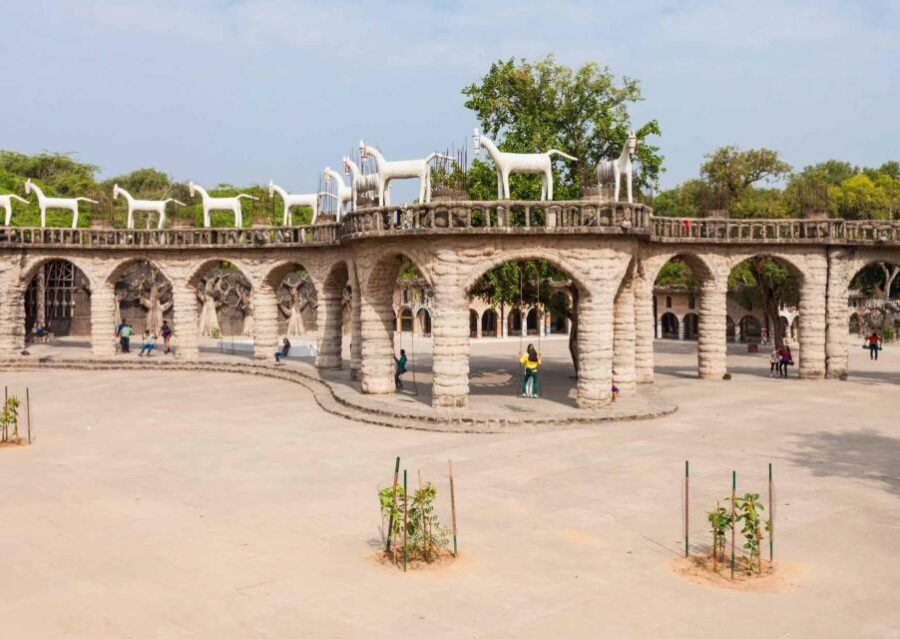
- Musical Fountain start: Great for orientation, plus a reminder of the evening fountain show.
- Le Corbusier’s “matka” roundabout: A design detail you’d miss without a guide.
- Capitol Complex expectations: UNESCO site viewing, but don’t assume official access.
- Rose Garden scale: 825 flower varieties and about 32,500 trees/medicinal shrubs—yes, that big.
- English and Hindi guiding: Guides can answer questions in both languages.
- Hidden lanes and quick conversations: A private-group feel, with time to talk.
Starting where you’ll actually orient: Musical Fountain to the city’s plan
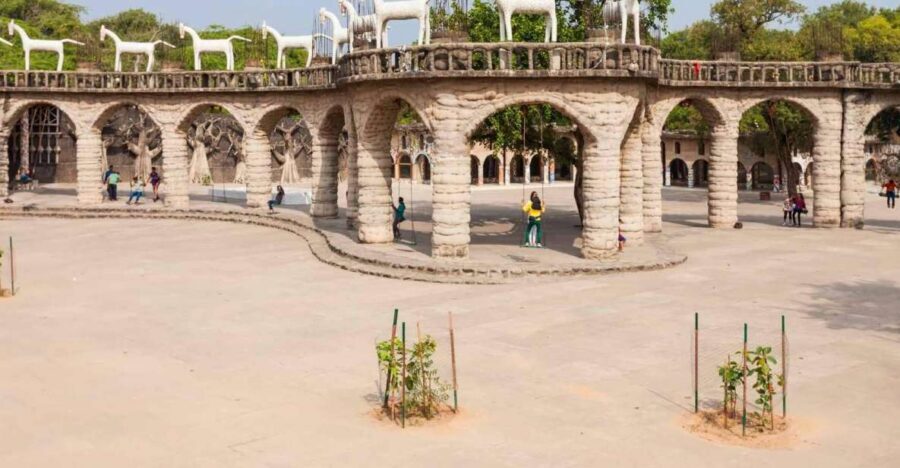
Most good city walks begin with orientation, and this one starts at the Musical Fountain. Even if you aren’t catching the night show, the fountain area is a natural launch point because it anchors the idea that Chandigarh is built like a series of clear zones and connections. The evening water-and-music fountain performance is one of the city’s popular recreation moments, and your guide can use it as a shorthand for how locals experience the city—planned, but not stiff.
From there, you move at walking pace rather than bus pace, which matters in Chandigarh. The city’s design can feel abstract until you’re standing in the geometry. A guide can point out how administrative buildings and civic spaces relate to each other, not just how they look. If you’re the type who likes to see how cities work, this format helps you connect the dots fast.
Practical tip: wear comfortable shoes and plan on sun exposure. The tour brief explicitly recommends a hat, and Chandigarh can cook. If you’re heat-sensitive, bring water even though it’s not included.
You can also read our reviews of more tours and experiences in Chandigarh.



Public library and civic architecture: the “small details” tour
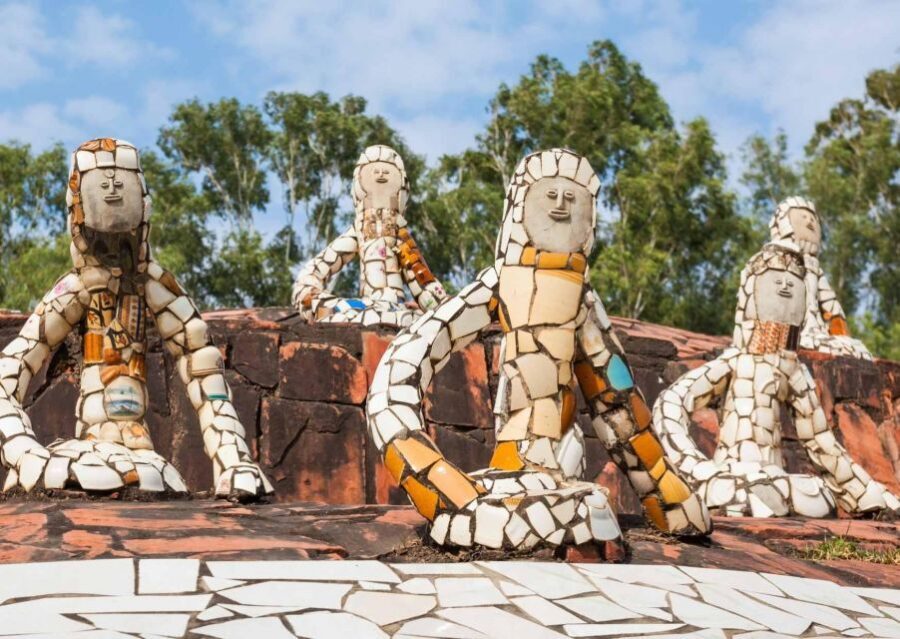
One of the tour’s strengths is that it doesn’t treat architecture like a museum-only subject. You’ll pass by a public library and then notice surrounding buildings with a distinctive look: exposed brickwork, louvered screens, and bright color painting on doors and windows. Those are the kinds of details you can miss when you’re rushing for a main landmark photo.
You also get a connection to culture through the Government Museum and Art Gallery area. Even if you don’t go inside during the walk, your guide’s explanation can help you understand what you’re seeing. Chandigarh’s official buildings can look like clean lines on a map, but at street level the textures, color, and patterns start to make sense.
This portion is where the tour earns its keep for first-timers. The city can feel “designed on paper,” but this stop-and-point approach makes it feel designed for people.
The matka roundabout and the Le Corbusier junction: a design you can spot
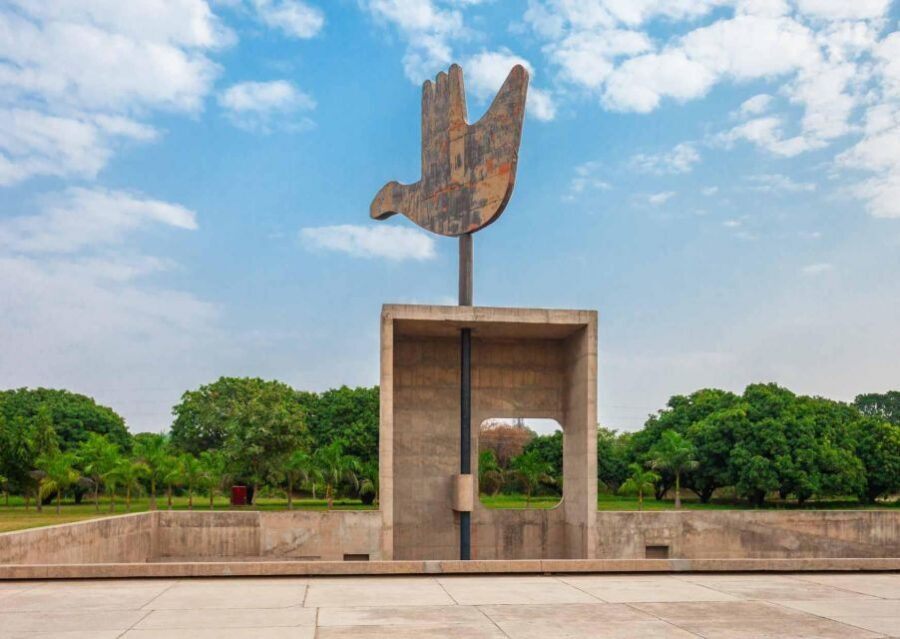
Chandigarh’s layout has a famous author-figure, and this walk gives you a visual clue early: a city center roundabout that resembles a matka—a clay pot. Your guide ties that form to Le Corbusier, including how this kind of junction was conceptualized.
What I like about this moment is that it’s concrete. You’re not just told “Chandigarh is modernist.” You see a shape, you understand it as a design choice, and you learn why that choice matters for movement. Roundabouts in many cities are just traffic features. Here, your guide frames them as part of the city’s identity and rhythm.
If you’re the kind of traveler who enjoys walking because it teaches you how to read a place, this is a smart stop. It also gives you a reference point for the later big-ticket buildings, because you start to recognize the logic behind the plan.
Capitol Complex at UNESCO level: what you’ll appreciate and what you shouldn’t assume
The Capitol Complex is the headliner—modernist architecture tied to UNESCO, and it’s often the reason people book a walking tour in the first place. This stop is where your guide’s storytelling can make the architecture feel legible. Instead of only admiring shapes, you’ll hear how the structures relate to symbolism and function.
That said, here’s the caution I’d give you before you rely on this tour for access: official entry to the Capitol Complex may not be included. One of the earlier experiences flagged that if you specifically want entry through the official arrangements, you should use the official Capitol Complex tour options instead of assuming a walking guide will automatically grant it.
So think of this stop as two things:
- A guided way to understand what you’re seeing from the outside and through explanation.
- A spot for photos and architectural context, not a guaranteed ticket to enter every area.
If your trip is timed tightly and you’re set on going inside, confirm what this specific walk includes before you show up. A quick message or confirmation call can save you disappointment.
Rose Garden: the numbers that make the scale real
Then comes the Rose Garden, which is the kind of stop that gives your legs a break while your brain takes notes. It’s described as the largest garden of its kind in Asia, with about 825 varieties of flowers and roughly 32,500 varieties of trees and medicinal shrubs. Those numbers are big, but they’re also useful. A guide can help you picture the range without you needing to memorize plant lists.
What you’ll likely enjoy most is that it’s not just a pretty park stop. Your guide may connect the garden to the city’s larger emphasis on planning and green space. Chandigarh is famous for the way it balances civic architecture and open areas, and the Rose Garden makes that balance obvious.
If you’re traveling with kids, this stop also works well. Even if they don’t care about modernist architecture, they can enjoy the colors, fragrances, and the sheer fact that it’s an extensive collection.
You can also read our reviews of more guided tours in Chandigarh


If your route includes Sukhna Lake, use it to slow down
One guide-led experience highlighted Sukhna Lake as an ending point, where the group relaxed by the water and took in views. That feels like an ideal way to wrap up a city architecture walk: you finish with a calm, open scene rather than more streets and buildings.
This part isn’t guaranteed in the basic outline you’ll see, but it’s a helpful clue for you. If the operator offers flexible timing or an added stop, Sukhna Lake is worth leaning toward because it makes the whole tour feel less like a checklist and more like a complete arc.
Even when Sukhna Lake isn’t included, you’ll still leave with a strong sense of where open spaces fit into the city plan.
What you actually get from the guide (and why it matters more than you think)
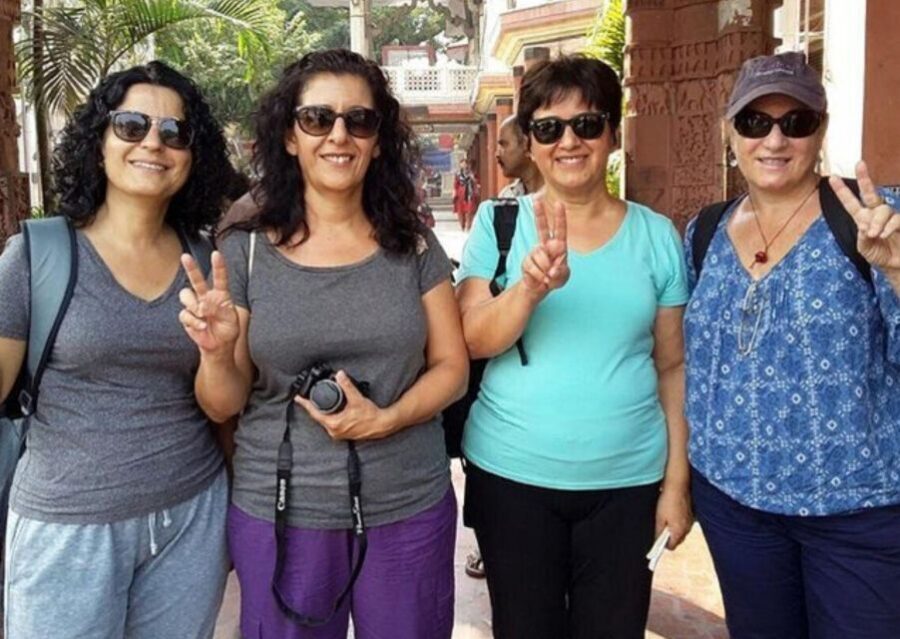
The tour’s value is heavily tied to the guide. The structure is built around storytellers who explain history, architecture, and culture, and the included benefit list emphasizes conversations and interesting stories.
You’ll notice that different guides can shape your experience:
- One guide, Ketan, was praised for explanations that made Le Corbusier’s ideas feel real and for pacing that left room to enjoy the Rose Garden without rushing.
- Another guide, Tanuj, was described as speaking good English and handling questions well, but with less spontaneous information—meaning you’ll probably want to ask more to get the full experience.
So here’s a practical approach: come with a few questions ready. Ask what to see next outside the itinerary. Ask how Chandigarh is organized by sector. Ask which buildings are worth another look on your own. A good guide will turn that into a personal mini-course.
Also, because the tour supports English and Hindi, you’ll have better odds of smooth communication. That’s not just convenience—it changes how much you’ll understand as you walk.
Price and time: why $18 can be a bargain or a lesson
At $18 per person for about two hours, the price can be excellent value if you’re arriving to the city as a first-timer. You’re basically paying for:
- Guided orientation in a designed city
- Clear context for major landmarks
- Local guidance for your next meal and next walk
Where the deal can turn sour is if you expected official entry to the biggest sites or if the itinerary coverage doesn’t match what you thought you were buying. Since access to certain areas may require official options, you don’t want to waste your limited time in Chandigarh assuming everything is included.
My advice: treat this as the “get your bearings and learn the structure” portion of your trip. If you want additional ticketed access, plan that separately.
Who this tour suits best (and who should choose something else)
You’ll probably love this tour if:
- You like modern architecture and want the city design explained in human terms
- You want local tips without hunting around on your first day
- You prefer walking pace over buses and want to notice details
You might want a different option if:
- You’re only interested in entering the most famous buildings and sites inside, not just seeing them and learning the story
- You hate tours where you may need to ask questions to get the most out of the guide
A private-group format can also help. Even if the walk is only two hours, you’re less likely to get stuck listening through a wall of unrelated group chatter.
What to bring and how to show up ready
The essentials are straightforward:
- Comfortable shoes for city walking
- Hat for sun protection
- A plan for hydration, since water bottle is not included
- Arrive about 10 minutes early so the start is smooth
Bring a light layer if you run cold indoors after the sun. And if you care about photos, keep your phone charged early. The most “meaningful” shots here tend to be tied to architectural viewpoints where you’ll want a few tries.
Final call: should you book this Chandigarh walking tour?
I’d book it if you want a smart introduction to Chandigarh’s design logic—Musical Fountain area orientation, civic buildings with distinctive details, Le Corbusier connections at the matka roundabout, then the Capitol Complex context and Rose Garden scale. At $18 for two hours, the price is hard to argue with when you’re using the walk to shape the rest of your trip.
I’d be cautious if your main goal is guaranteed official entry to the Capitol Complex. In that case, confirm what access this walk provides, and plan official entry separately if needed. Also, if itinerary clarity matters to you, message ahead and get the exact stop list confirmed.
If you go in with the right expectations—walk for context, ask questions, and use the tour as your launchpad—you’ll likely feel like you got far more than a simple stroll. You’ll understand why Chandigarh looks the way it does, and what to do next.
FAQ
How long is the Chandigarh Walking Tour?
The tour lasts 2 hours.
What does the tour cost?
It’s $18 per person.
Where does the tour start?
The walk starts from the Musical Fountain.
What are the main places you’ll see?
The walk includes stops around the Musical Fountain, a public library and administrative buildings (with exposed brickwork, louvered screens, and colorful painted doors/windows), the Government Museum and Art Gallery area, a roundabout resembling a matka linked to Le Corbusier’s concept, the Capitol Complex (UNESCO), and the Rose Garden.
Are official entry tickets to the Capitol Complex included?
This type of walking tour may not include official entry. If you want to enter, you may need the Capitol Complex’s official tour options.
Which languages are available?
The live guide speaks English and Hindi.
Is a guide included?
Yes. You get a highly trained and friendly storyteller/guide.
Is hotel pickup or drop included?
No. Hotel pickup and drop are not included.
Is a water bottle included?
No. A water bottle is not included, so you should plan to bring or buy one.
What should I bring, and when should I arrive?
Wear comfortable shoes and bring a hat. Arrive 10 minutes early at the meeting point for a smoother start.