REVIEW · CHANDIGARH
Golden Triangle 3 Days
Book on Viator →Operated by INDIA TRIP DESIGNER India · Bookable on Viator
Delhi-to-Jaipur speedrun, but with guidance. This Golden Triangle tour strings together the big hitters—Delhi’s UNESCO sites, the sunrise Taj Mahal, and Jaipur’s forts and palaces—without leaving you to figure out timing and tickets alone. It’s designed for travelers who want a lot of wow moments, yet still prefer a real person explaining what you’re seeing.
I especially like how the plan mixes must-sees with built-in context: Qutub Minar and Humayun’s Tomb aren’t just photo stops; they come with a local guide’s story. The second thing I like is the practical flow between cities, including pickup and comfortable round-trip transport, plus 2 nights with breakfast to keep the trip from turning into a daily food-and-hotel scramble.
One consideration: it’s a packed schedule. Entrance fees aren’t included, and some stops in the day plan are brief—so if you hate rushing (or you want to shop a lot), you’ll want to set priorities with your guide early.
In This Review
- Key Things to Know Before You Go
- Why This 3-Day Golden Triangle Route Feels Less Chaotic Than It Sounds
- Delhi Morning Sights: Qutub Minar, Humayun’s Tomb, Lotus Temple, and India Gate
- The Drive to Agra: How the Timing Works Overnight
- Taj Mahal at Sunrise: When Marble Looks Like It’s Lit From Inside
- Agra Fort: Mughal Power Beyond the Main Photo Spot
- Jaipur Essentials in One Day: Amber Fort to Hawa Mahal
- Jantar Mantar and Jal Mahal: The Weird-and-Wonderful Side of Jaipur
- Guides, Drivers, and the Real-Life Value of the Private Format
- Price and Logistics: What $241.43 Really Buys
- Who This Tour Fits Best (and Who Should Rethink It)
- Should You Book This Golden Triangle Tour?
- FAQ
- Are entrance tickets included for the monuments?
- Is breakfast included?
- Where do you pick me up from?
- How many nights of accommodation are included?
- Is this tour private or shared?
- Can I cancel for a full refund?
Key Things to Know Before You Go
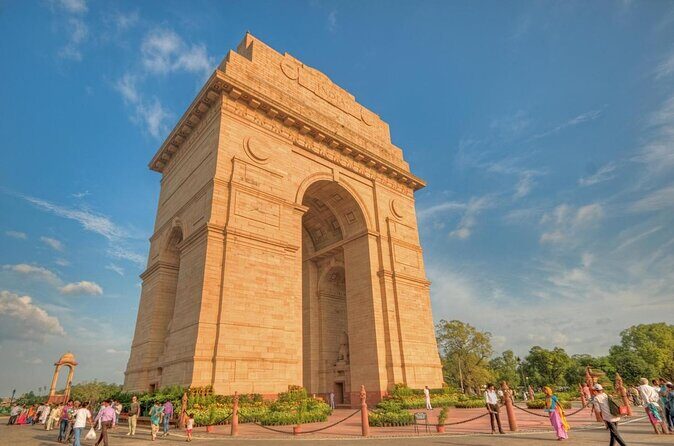
- Sunrise Taj Mahal is the point: the itinerary is built around an early viewing, not a late-day pass-by.
- Two nights, with breakfast: expect 1 night in Agra and 1 night in Delhi, both with breakfast included.
- Local guides in every city: the tour is set up city-by-city, so you get explanations instead of silent wandering.
- Entrance tickets are not included: you’ll pay for monument access separately (budget for this upfront).
- Private group format: it’s just your group, so you can move at a realistic pace.
- Easy coordination can make a difference: past guests highlighted smooth communication, including WhatsApp-style updates, and drivers who were on time and flexible.
Why This 3-Day Golden Triangle Route Feels Less Chaotic Than It Sounds
The Golden Triangle is famous for being intense. Three cities. Major monuments. Long drives. The trick is whether the trip is organized enough that you don’t spend half your day solving logistics.
This one stays focused. You get a local guide in each city, which matters because Delhi, Agra, and Jaipur can feel overwhelming if you’re just following a checklist. A guide helps you “read” the sites—why they were built, what to notice, and what to ignore if you’re short on time.
Also, you’re not stuck at the mercy of public transport. Pickup and drop are included for Delhi-area locations (plus airport pickup), and transportation is described as comfortable and round-trip. That’s the kind of reliability that keeps a short trip from becoming stressful. It’s especially useful if you’re arriving on a flight and don’t want to negotiate your way out of the airport.
You can also read our reviews of more tours and experiences in Chandigarh.



Delhi Morning Sights: Qutub Minar, Humayun’s Tomb, Lotus Temple, and India Gate
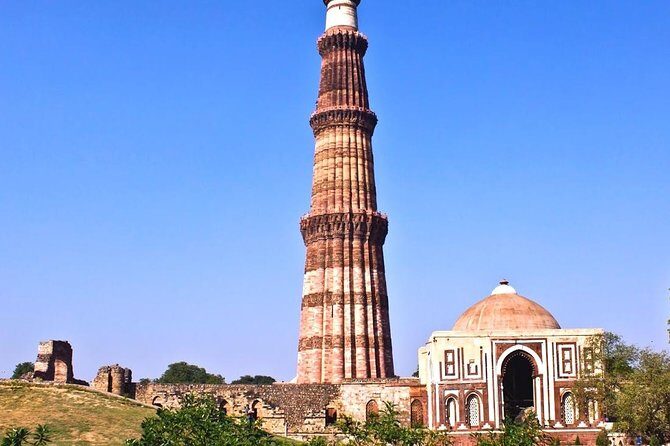
Day 1 starts with Delhi’s “serious architecture” side. Qutub Minar is part of the Qutb complex and sits in the Mehrauli area. Even if you’ve seen it in photos, being in the actual complex helps. It’s the type of place where a guide can point out details you’d otherwise miss—like how the complex evolved over time.
Next is Humayun’s Tomb, commissioned in 1569–70 and designed by Persian architects. This stop is valuable because it teaches you how Mughal-era monument building blended local and Persian influences. If you’re the kind of traveler who likes to understand the why behind the wow, this is a good early foundation.
Then you switch gears with Lotus Temple, a Bahá’í House of Worship dedicated in December 1986. It’s notable for its flowerlike shape, but the bigger practical point is that it’s open to everyone regardless of religion. That makes it a calmer, welcoming break in a trip full of forts and palaces.
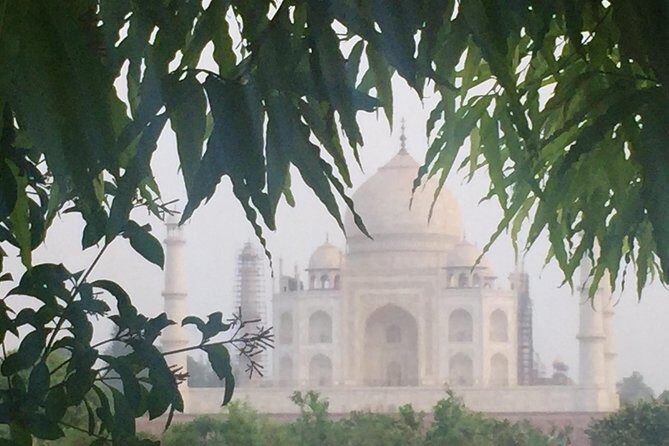
Finally, you get India Gate on the Rajpath. It’s a war memorial, and it’s one of those Delhi landmarks that gives you immediate context about the city’s modern national identity. The schedule is tight, but the guide-and-transport setup keeps you moving without feeling like you’re sprinting.
The Drive to Agra: How the Timing Works Overnight
After Delhi, you’ll head toward Agra, with the plan stating an evening drive of around 3 hours. That “get moving before night” structure is smart on a three-day timeline. It prevents the trip from feeling like you’re losing a full day just to travel.
You’ll also get hotel organization handled: the tour books 1 night in Agra and 1 night in Delhi (based on availability). Breakfast is included with your room, which is a small but real value add. In a fast itinerary, not having to hunt for a morning meal is a win.
One practical note: entrance tickets aren’t included. So while the drive and sightseeing are organized, you’ll still want to keep some cash or a payment plan ready for monument access when you arrive.
Taj Mahal at Sunrise: When Marble Looks Like It’s Lit From Inside
The standout here is the sunrise Taj Mahal. The highlight isn’t subtle: the tour is explicitly set up around early viewing, which is how you get the best atmosphere and that calm, soft-light feel people chase in photos.
The guide context matters too. The Taj Mahal is an ivory-white marble mausoleum commissioned in 1632 by Shah Jahan for Mumtaz Mahal, and it also houses Shah Jahan’s tomb. Knowing those two facts changes how you look at the complex. You’re not just staring at beauty—you’re seeing a carefully planned monument of love, power, and grief.
With just 3 days total, the early schedule is also a time-saver. You’re less likely to burn your daylight on late-arrival crowds or harsh lighting. If you’re traveling with kids or you don’t love super-early mornings, you might still find it worth it, but plan your energy for it.
Also, the tour listing says admission tickets are not included. So if you’re the type who hates surprises, confirm the expected ticket payment method with your operator ahead of time.
Agra Fort: Mughal Power Beyond the Main Photo Spot
After Taj, you’ll visit Agra Fort, described as the Mughal emperors’ main residence until 1638, when the capital shifted back to Delhi. This is one of those places where you can feel the shift from single-building icon (Taj Mahal) to the bigger picture: how rulers lived, governed, and defended.
Even if your time on-site is short compared to what you might want on a longer trip, the guide helps you keep the details straight—what you’re looking at, and why it mattered. Agra Fort also gives you a break from the Taj complex so the trip feels more layered, not just repeated marble.
Again, entrance tickets aren’t included, so budget for it as part of the real trip cost.





Jaipur Essentials in One Day: Amber Fort to Hawa Mahal
Day 3 transitions you from Agra toward Jaipur. Jaipur is where the tour really leans into royal architecture and symbolism.
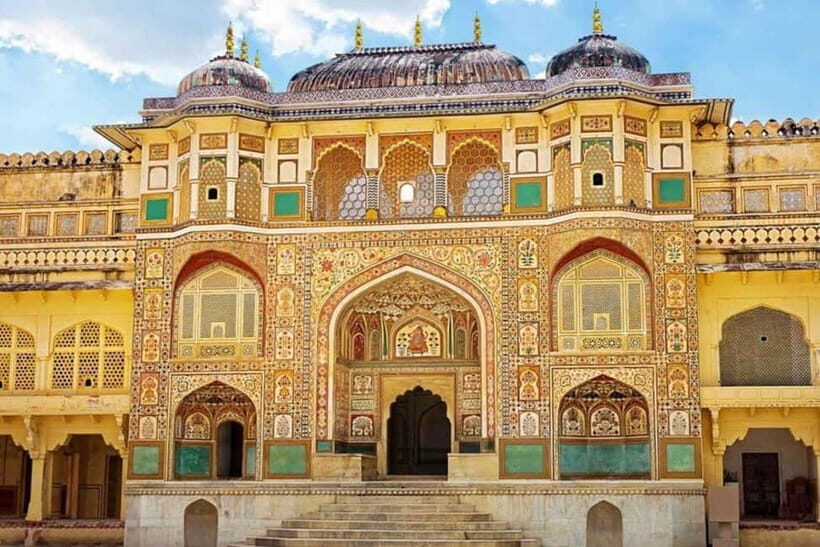
You start with Amber Palace (Amer Fort), a hilltop fort about 11 km from Jaipur. It’s a principal attraction for a reason. From a traveler’s perspective, forts are where you start seeing planning and engineering: how elevation helped defense, how spaces were arranged for rulers and ceremonies, and how the city grew around these power centers.
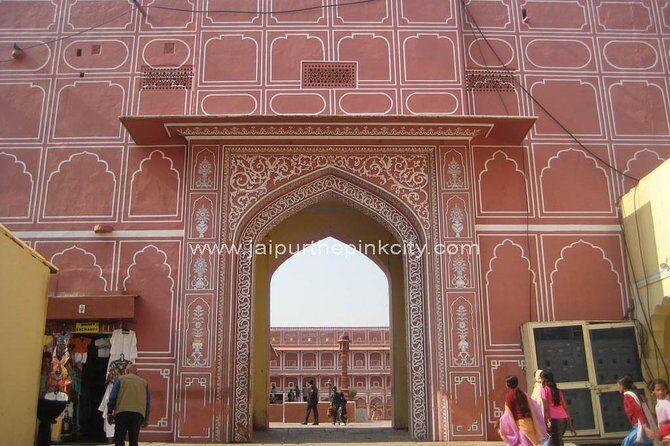
Next is City Palace of Jaipur. The complex is opulent, with gardens, courtyards, and museums, and part of it still functions as a royal residence. Even with limited time, a guide can help you focus—what’s worth looking at closely, and what you can enjoy from a distance without getting lost.
Then you get Jantar Mantar, the UNESCO astronomical instruments complex completed in 1734. The tour data highlights the world’s largest stone sundial. If you like odd-but-fascinating science built into everyday space, this stop is a treat. It also gives your eyes a break from palace walls.
Finally, the day funnels into Hawa Mahal, the Palace of Wind built in 1799. It’s made of red and pink sandstone and designed to extend toward women’s chambers (the zenana). A guide helps explain how that façade works—why it looks like a honeycomb from outside, and how it relates to the palace’s social purpose.
Jantar Mantar and Jal Mahal: The Weird-and-Wonderful Side of Jaipur

Jaipur can feel like a lot of color and crowds. That’s why I like having stops that change your mental pace.
Jantar Mantar does that. It turns the trip into something more curious than ceremonial. Instead of asking What dynasty built this? you’re looking at how Rajput astronomers created instruments for measuring time and sky patterns.
Then there’s Jal Mahal—a palace in the middle of Man Sagar Lake. The information you’re given is that the palace and lake were renovated and enlarged in the 18th century by Maharaja Jai Singh II. The practical reason this stop works in a tight itinerary: you get a scenic moment without committing to a full long visit. The tour schedule marks it as a shorter stop and lists entrance as free.
If you’re taking photos, this can also be your decompress moment. Forts and palaces are impressive, but the lake setting gives you a different kind of visual reward.
Guides, Drivers, and the Real-Life Value of the Private Format
This tour is set up as a private tour for your group. That matters more than people expect. In the Golden Triangle, timing is everything—monument queues, short travel windows, and the simple fact that not every traveler moves at the same speed.
From the service notes and prior guest experiences, a few names come up often. Manoj is mentioned as the key contact behind India Trip Designer, and multiple drivers are named—Mukesh, Ramesh, Surindar/Surandra (and also Surendra Singh), and Foren. In Jaipur, a guide named Ram is mentioned, including one experience where he spoke Spanish.
You might not get the exact same people, but the takeaway is that the operation tends to staff with English-speaking guides and safety-conscious drivers. One guest specifically praised a driver for being on time and flexible. Another noted that communication before pickup was easy, using WhatsApp-style coordination.
Still, keep your expectations grounded: not every guide experience is perfect. One critique mentioned that some guides can push for tips even when you’ve paid. My advice is simple: decide your tip budget in advance and stick to it, and ask your guide what’s optional versus included in the planned service. That keeps everything calm.
Price and Logistics: What $241.43 Really Buys
The price is $241.43 per person for about 3 days. On the surface, that’s a good deal for a route that includes two overnight stays, transport between cities, and local guiding.
Here’s the real value math. Your cost includes:
- pickup from Delhi airport or Delhi/Gurgaon/Noida hotels
- round-trip transport
- local guide in each city
- private group format
- 2 nights’ accommodation with breakfast
- hotel drop-off
What’s not included:
- entrance tickets
- lunch
- dinner and drinks unless specified
So the true cost depends on your monument-tickets spending and how you handle meals. If you plan to eat simply and buy tickets without surprises, this can still feel like strong value. If you want full-service meals every day and you’re paying premium tickets, your total will climb.
Also note the timing structure: the plan is packed across three countries of culture, and some stops are very short in the schedule. If you want a deeper, slower pace, you may need to adjust expectations or request more time where you care most—especially at the Taj Mahal and the forts.
Who This Tour Fits Best (and Who Should Rethink It)
This works best if you:
- want a structured route through Delhi, Agra, and Jaipur
- prefer guides who explain meaning, not just directions
- like the convenience of pickup, drop, and arranged hotels
- can handle an early morning for sunrise Taj Mahal
It may be less ideal if you:
- hate rushed schedules and want long unhurried museum-style visits
- expect a fully all-inclusive package where entrances and meals are covered (they’re not)
- dislike shopping detours or pressured add-ons
If you’re flexible, you can still get what you want. The private format helps you steer the day, as long as you communicate your priorities early.
Should You Book This Golden Triangle Tour?
I’d book it if your goal is a smooth, guided Golden Triangle at a fair price, with the big highlight timed right—especially sunrise Taj Mahal—and you want the peace of mind that comes from pickup, transport, and breakfast-included hotels.
I’d think twice if you want a slow travel pace, or if you strongly need meals and entrance fees to be included in one upfront total. In that case, you may prefer a different package where entrances and meals are clearly handled.
If you do book, do two things to stack the odds in your favor: confirm what entrance tickets you’ll pay for each site, and tell your guide what you want most—Taj sunrise, forts, or the Jaipur architecture—so the short stops support your priorities instead of competing with them.
FAQ
Are entrance tickets included for the monuments?
No. Admission tickets are listed as not included, so you’ll pay separately for the sights like Qutub Minar, Humayun’s Tomb, the Taj Mahal, and the forts/palaces.
Is breakfast included?
Yes. Breakfast is included with your room for the 2 nights of accommodation.
Where do you pick me up from?
You’re picked up from Delhi airport or from any hotel in Delhi/Gurgaon/Noida, based on your flight schedule.
How many nights of accommodation are included?
The tour includes 2 nights of accommodation. The plan notes 1 night in Agra and 1 night in Delhi, depending on hotel availability.
Is this tour private or shared?
It’s private. Only your group participates.
Can I cancel for a full refund?
Yes. You can cancel up to 24 hours in advance for a full refund. If you cancel less than 24 hours before the start time, the amount paid won’t be refunded.