REVIEW · VARANASI
Music art’s and culture
Book on Viator →Operated by Third eye your Indian friend · Bookable on Viator
Varanasi sounds different at every turn. This tour takes you into the city’s living world of music, art, and devotion, moving from a hands-on instrument school to the riverside atmosphere of Ganga Aarti. You’re not just watching from the sidelines—you’re meant to understand how sound works in Hindu life.
I especially love the way Baba the School of Music makes Indian music practical. You can see instruments up close and try as many as you want, which turns theory into something you can physically feel. I also love the emphasis on devotional singing during kirtan and bhajana, where the sound on the river feels purposeful, not staged.
One heads-up: the route includes a stop at the crematoria, where cremations happen daily. If you get overwhelmed by death rituals or need a lighter day, this might be too much—though it can also be the most honest, grounding part of the experience.
In This Review
- Key highlights you’ll actually feel
- Music and art in Varanasi: why it feels different
- Baba the School of Music: instruments you can try, not just look at
- Ganga Aarti: when devotional singing becomes the main event
- Banaras ghats shows: classical, folk, and wedding-style music
- Second visit to the music school: genres, meditation, and spiritual sound
- The studio experience and recording space (plus instrument shopping)
- Cultural activities between the music stops
- The crematoria stop: respectful context, not a spectacle
- Price and value for a $29, 3-to-6-hour experience
- Who this tour suits best
- Should you book this tour or skip it?
- FAQ
- How long does the tour last?
- What is the price of the tour?
- What is included in the experience?
- Is the tour private?
- Do you offer pickup?
- Is the ticket mobile?
- Does the price include admission tickets?
- What happens if the weather is poor?
- Is there free cancellation?
- Final note
Key highlights you’ll actually feel
- Hands-on instrument time at Baba the School of Music, with a chance to try many instruments
- Ganga Aarti with devotional music like kirtan and bhajana
- Banaras ghats performances blending Indian classical, folk, and wedding-style music
- A second school/studio visit for genres like Indian classical, folk, meditation, bhajan, and kirtan
- Studio + recording setup plus the chance to buy musical instruments
- A sobering crematoria stop that adds real-world context to Varanasi’s spiritual daily rhythm
Music and art in Varanasi: why it feels different
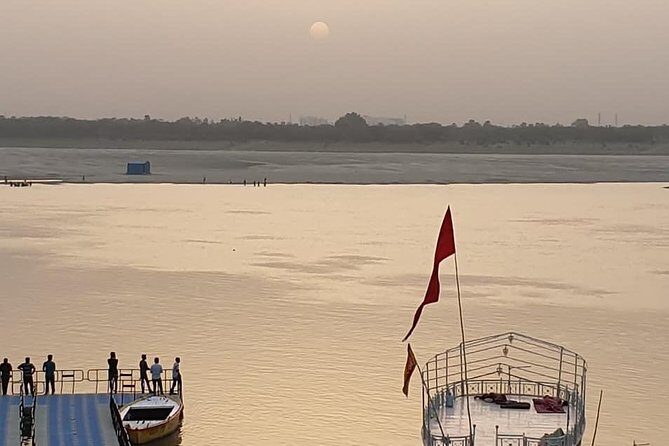
Varanasi doesn’t treat music like background noise. In Hindu tradition, art is often viewed as a form of devotion and expression, and Indian classical music connects listeners to something bigger than entertainment. That’s the vibe you’ll notice on this tour: it’s built around sound as a way of understanding the city.
You’ll also notice the balance. Yes, Varanasi can feel busy. But the tour is designed to help you find peace and creativity in the middle of that movement—especially through music that’s meant to steady the mind, not just impress your ears.
You can also read our reviews of more tours and experiences in Varanasi.
Baba the School of Music: instruments you can try, not just look at
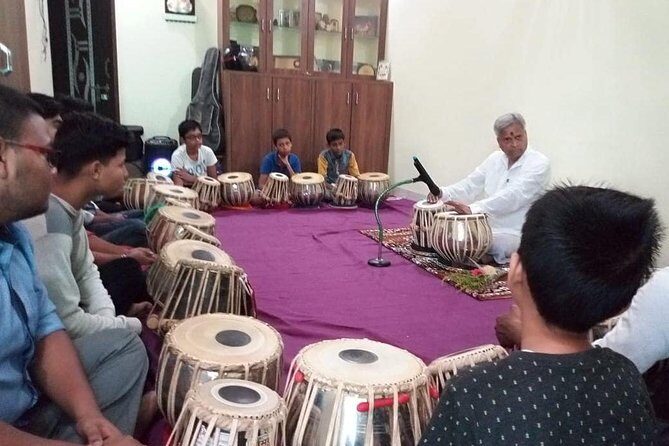
Your day starts at Baba the School of Music, and the big win here is how interactive it is. You get time to see the instruments, understand what they are in a basic way, and then try as many instruments as you want. That matters because Indian classical music can feel mysterious if you only hear it from a distance. Touching instruments changes your relationship to the sound fast.
Expect a focused hour that feels like a guided introduction, not a “sit and listen” lecture. This is also where you’ll get oriented to the broader musical world the tour follows—Indian classical and folk traditions, plus devotional styles that show up later on the ghats and in the Ganga Aarti.
Practical consideration: if you’re sensitive to loud, close-up instrument noise, tell your guide early so they can position you comfortably while you try things.
Ganga Aarti: when devotional singing becomes the main event
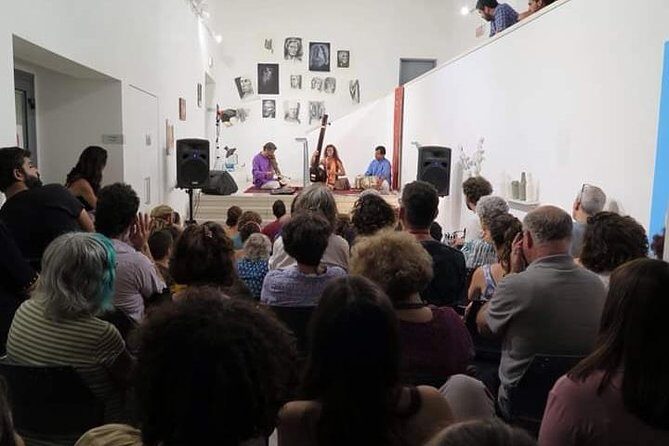
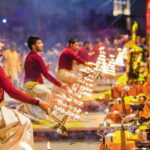
Next comes Ganga Aarti, and this is where the tour shifts from hands-on curiosity to spiritual attention. The key ingredient isn’t just the ceremony itself—it’s the devotional music around it: kirtan and bhajana. Those styles are meant to draw the mind inward, and hearing them in this riverside context makes the experience feel coherent rather than random.
A big reason people enjoy this part is the contrast. The instrument school is about hands and learning. The river is about listening and feeling the atmosphere—how voices and rhythms fill the space and create a shared focus.
Value for your trip: if you want a Varanasi moment that’s more about meaning than sightseeing photos, this stop delivers. Even if you don’t know the songs, the energy is clear.
Banaras ghats shows: classical, folk, and wedding-style music
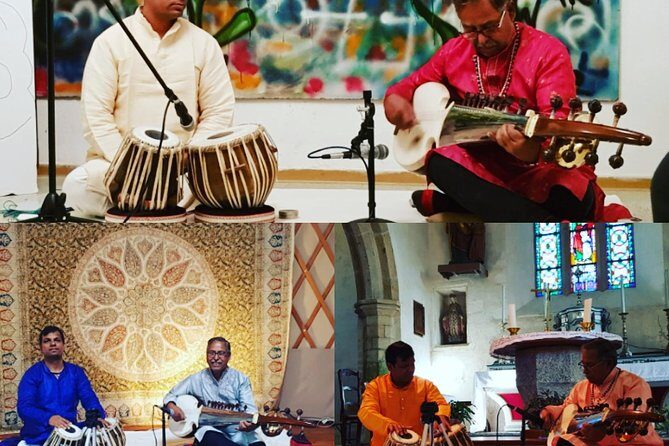
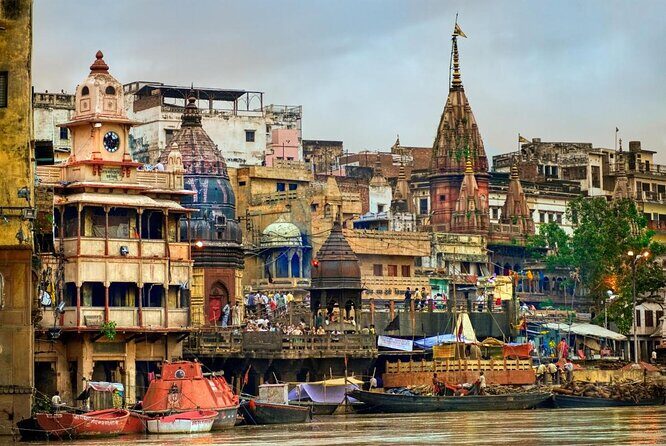
From there, you head to the Banaras ghats, where the mood becomes performance-on-the-street. On the ghats, you’ll find shows happening continuously, and the music you hear can range from Indian classical to folk, plus what’s described as wedding music.
This is a great stop for two reasons. First, it helps you realize that Varanasi music isn’t only for formal concert spaces. It shows up in everyday celebrations, which is exactly what you want to understand if you’re here to connect with living culture. Second, it gives your ears variety. The styles may be related, but the feel changes from moment to moment.
Possible drawback: because shows can vary by what’s happening at the time, you may not hear the exact mix you expected. The upside is you’re staying open—ghat culture changes by the hour.
Second visit to the music school: genres, meditation, and spiritual sound
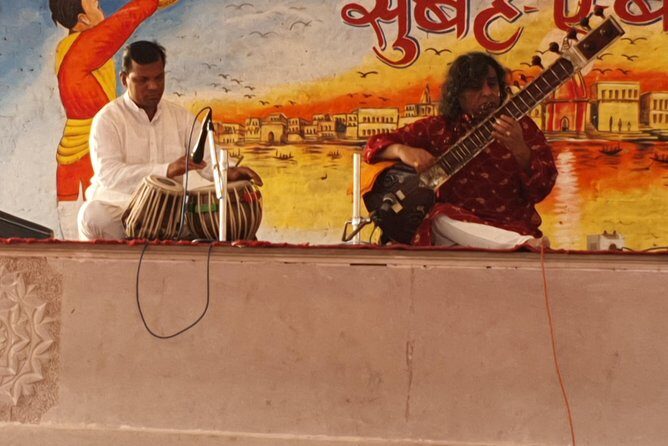
After the ghats, you return to Baba the School of Music for more structured learning and a broader tour of the musical world. This section is where the tour becomes more explicit about styles you might recognize later in Varanasi: Indian classical, Indian folk, meditation music, spiritual music, religious music, and even Bollywood songs, plus bhajan and kirtan.
This matters if you want to leave with more than memories. By naming the different categories, you start hearing patterns—how devotional songs differ from classical structures, and how music can be used for different mental states. If your goal is understanding, not just enjoying, this is the stop that helps.
You’ll also get access to a music studio area and time focused on the idea of music as a practice, not only a performance. That sets you up for the final, more behind-the-scenes pieces of the experience.

The studio experience and recording space (plus instrument shopping)

One of the most practical parts of the tour is the studio component—this is not just a viewing room. You’ll see the music studio to record music, plus a place where you can buy music instruments.
Even if you’re not planning to purchase anything, seeing how recording works changes your perspective. You start to understand why musicians care about rhythm, tone, and repetition. And if you’ve ever wished you could “know the difference” between instruments by hearing them up close, this is your chance to connect that difference to real physical objects.
In one of the standout experiences connected with this tour style, the local music teacher Ravi—a long-time Varanasi local—can answer questions deeply and adapt the day to your interests. If you have a specific curiosity (tabla, singing style, devotional rhythm), it’s worth bringing it up so the discussion stays personal rather than generic.
Cultural activities between the music stops
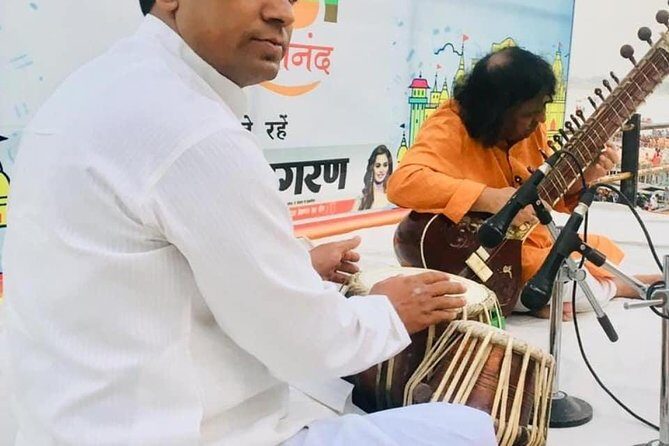
There’s also time for other cultural activities, and the theme is simple: you keep seeing different sides of Varanasi beyond the main “music stops.” It’s an important part of the pacing. Music is the thread, but culture gives it context.
This is also where the tour helps you feel less like you’re on a checklist. Instead, you’re experiencing the city as a place where art, religion, and daily life overlap.
The crematoria stop: respectful context, not a spectacle

The final major mental shift comes with a stop at the crematoria, described as a place where cremations happen every day, with work continuing 24 hours a day across the year.
This is the part you should approach with your emotions turned on, not your camera. It can be heavy. But it’s also a key piece of how Varanasi functions spiritually and socially. If you want to understand why the city treats life and death with such daily acceptance, you can’t skip the reality of it.
Consideration before you go: if you’re the kind of person who needs a purely uplifting itinerary, you may prefer to choose a different type of tour. If you’re comfortable with solemn cultural context, this stop may actually help you process the music with more depth afterward.
Price and value for a $29, 3-to-6-hour experience
At $29, this tour is priced in a range that usually gets you a basic guided walk in many cities. Here, much more is bundled into that number: admission tickets for the main stops, coffee and/or tea, and a private-format setup for your group.
The duration is listed as about 3 to 6 hours, so you should think of this as a half-day that moves at a cultural pace. You’re not spending the whole time in one museum or one performance. Instead, you’re getting multiple windows into music—some interactive, some ceremonial, some observational.
If you’re comparing options, ask yourself what you really want from Varanasi:
- If you want hands-on music, this tour leans that way.
- If you want one standout spiritual moment, Ganga Aarti is built in.
- If you want only light, cheerful sightseeing, the crematoria stop could work against that goal.
Who this tour suits best
This is a strong fit if you:
- Love music and want it connected to daily spiritual life
- Like interactive learning, not only watching
- Prefer a guide who can answer questions and steer the day toward what you care about (Ravi’s local knowledge is a major plus)
- Want an experience that balances beauty and reality
It may be less ideal if you:
- Want a purely uplifting day without death-related cultural rituals
- Get uncomfortable with strong emotional content
- Need a strictly polished, lecture-style explanation without lots of shifting settings
Should you book this tour or skip it?
I think this is worth booking if you’re open to a day that treats music as more than entertainment. The combination of instrument try-outs, Ganga Aarti devotional singing, and a studio look at how music is made is a smart mix for a short visit.
But don’t book on autopilot. Make sure you’re emotionally ready for the crematoria stop. If that part feels too heavy, look for a different music-focused Varanasi option.
FAQ
How long does the tour last?
The tour lasts about 3 to 6 hours.
What is the price of the tour?
The price is $29.
What is included in the experience?
Admission tickets for the stops and coffee and/or tea are included.
Is the tour private?
Yes, it’s a private tour/activity, meaning only your group participates.
Do you offer pickup?
Pickup is offered, but private transportation is not included.
Is the ticket mobile?
Yes, you’ll receive a mobile ticket.
Does the price include admission tickets?
Yes, admission tickets are included for the main stops.
What happens if the weather is poor?
The experience requires good weather. If it’s canceled due to poor weather, you’ll be offered a different date or a full refund.
Is there free cancellation?
Yes. You can cancel up to 24 hours in advance for a full refund.
Final note
If you want Varanasi through the language of sound—hands-on, sacred, and grounded—this tour delivers. Just go in aware that one stop is emotionally heavy, and the rest of the day will make more sense because of it.