REVIEW · NEW DELHI
Four Day Private Golden Triangle Tour to Agra and Jaipur From Delhi
Book on Viator →Operated by Agra Trip · Bookable on Viator
Golden Triangle tours are common, but the details matter. This private 4-day route links Delhi, Agra, and Jaipur with guided time at the big sights and a true sunrise start for the Taj Mahal. You get a car, a driver, and an English-speaking guide so you spend less energy figuring things out and more energy looking closely.
I like two things right away. First, the pacing is practical: you’re not bouncing around on your own, and you still get focused visits with a guide. Second, the sunrise Taj Mahal timing gives you one of those once-in-a-lifetime light shows—plus real context for what you’re seeing.
One drawback to keep in mind is that entrance fees for monuments are not included, and hotel quality depends on the category you choose. If you’re picky about room conditions, confirm your hotel standard in advance and be ready to communicate quickly if something is off.
In This Review
- Key things you’ll notice on this tour
- Why this Golden Triangle route from Delhi makes sense
- Day 1 in Delhi: Qutb Minar, Lotus Temple, India Gate, and the big-government drive-bys
- Sunrise Taj Mahal in Agra: the light show plus the inside story
- Fatehpur Sikri stop on the way to Jaipur: Mughal ambition in stone
- Day 3 in Jaipur: Amber Fort, Jal Mahal photos, City Palace, and Jantar Mantar
- Hotel reality checks: what you can control, and what to do if things go wrong
- Timing, dressing, and comfort tips that actually help
- Price and value: is $259 per person a good deal?
- Who this tour fits best, and who should think twice
- Should you book it?
- FAQ
- What time does the tour start?
- Is pickup and drop-off included?
- Is this a private tour?
- Are monument entrance tickets included?
- What’s included in the price?
- How long is the tour?
- Do I need to speak English to join?
- Can I choose my room type?
- Do I need a passport?
Key things you’ll notice on this tour
- Private, air-conditioned car with hotel/airport pickup and drop-off in Delhi
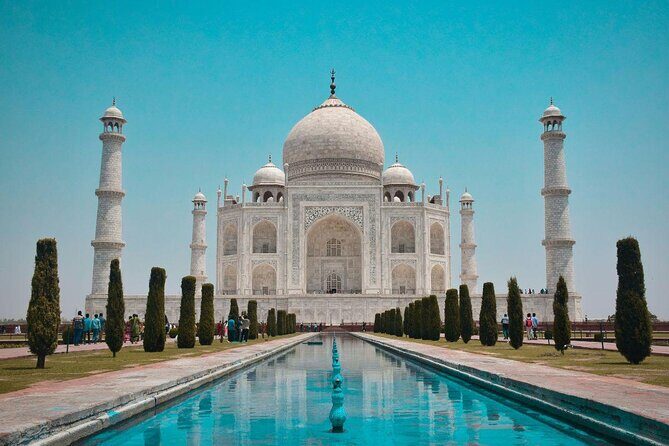
- Sunrise Taj Mahal plus about two hours inside with an English-speaking guide
- Fatehpur Sikri stop on the way between Agra and Jaipur for Mughal-era wow
- Amber Fort + City Palace + Jantar Mantar in Jaipur, guided rather than rushed
- Guides do the explaining so stops feel like more than photo ops
- Hotels and rooms depend on availability, so your room type can vary (single/double/triple)
Why this Golden Triangle route from Delhi makes sense
If you only have a few days, the Golden Triangle is the smart shortcut through Northern India’s highlights. This tour is built for that reality: start from Delhi, cover Delhi’s key monuments, then move on to Agra and Jaipur with private transport and guided time at the major UNESCO-linked sites.
The big value here is not just “seeing the places.” It’s having a guide for the whys: who built what, what changed over time, and what to look for when the site is busy or visually complex. That matters most at places like Agra Fort and Jaipur’s observatory, where the big idea can be missed if you only do a quick look.
You also get built-in ride structure. Meeting at 9:00 am keeps Day 1 moving, and the private car covers long drives without the stress of changing vehicles or tracking schedules. Add breakfast each morning and water/soft drinks during journeys, and you’ve got a workable base for a four-day whirlwind.
One more practical point: this is a private group experience, meaning it’s just your party with your guide. That usually makes it easier to ask questions and adjust small timing moments without turning into a swap-faces-with-strangers situation.
You can also read our reviews of more private tours in New Delhi


Day 1 in Delhi: Qutb Minar, Lotus Temple, India Gate, and the big-government drive-bys
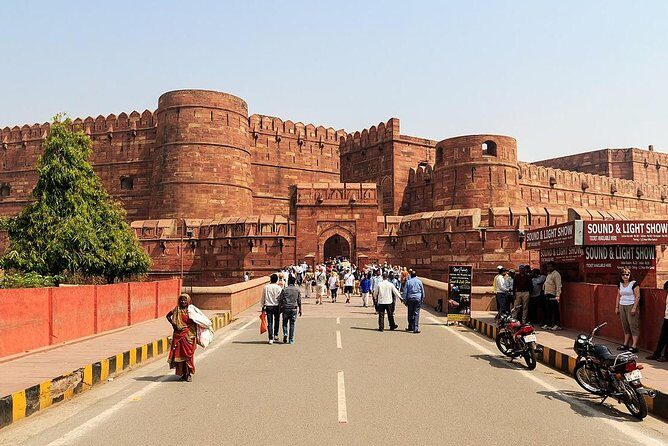
Day 1 is designed to get your bearings fast. You meet your guide at Indira Gandhi International Airport (or another pickup spot in Delhi) at 9:00 am, then start sightseeing around three hours with a guided loop through the area highlights.
Your core stops are Qutb Minar, Lotus Temple, and India Gate. Qutb Minar is one of those monuments where it helps to have context before you even start taking photos. The guide’s job is to point out what makes it historically important and what you can still notice today in its design and layout. Lotus Temple brings a different kind of architecture lesson—simple from far away, interesting up close, and very good for resetting your brain between dense urban sites.
India Gate is the mood-change stop. It’s less about intricate details and more about understanding what it represents and how the city frames memory in stone. After the sightseeing block, there’s time for lunch at a local restaurant, then you drive onward to Agra.
The best part of Day 1 is how it balances iconic landmarks with a clear explanation rhythm. The only consideration is energy management: after three hours of guided visiting and a lunch stop, you’re also doing a three-hour-ish transfer to Agra. Wear comfortable shoes, and don’t schedule anything else outside the tour on this day.
Sunrise Taj Mahal in Agra: the light show plus the inside story
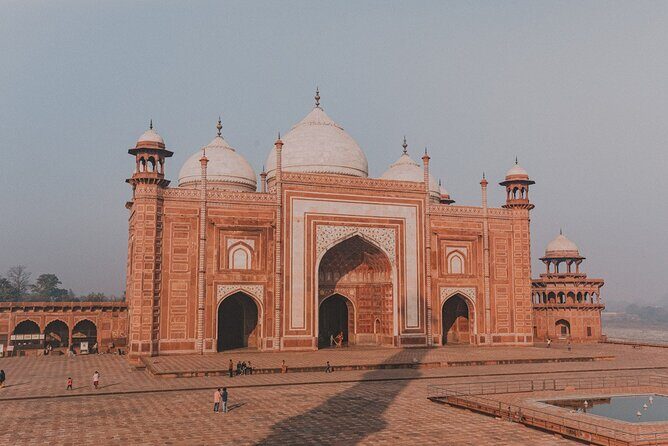
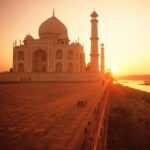
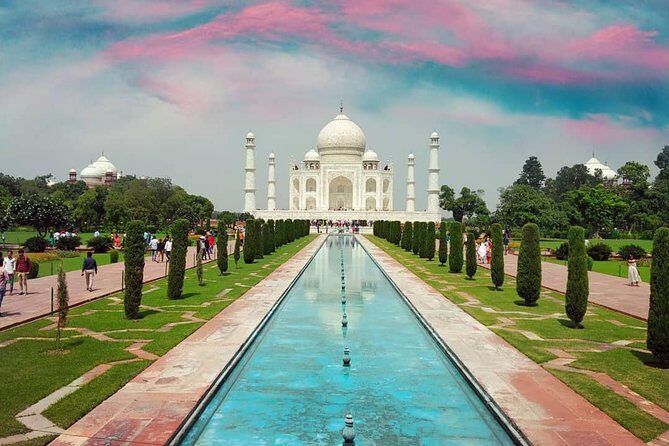
If the Taj Mahal is on your list, the tour’s biggest headline is the sunrise plan. Day 2 starts with the Taj Mahal at sunrise, when the marble shifts with the sky and the crowds are typically less intense than later in the day. You’ll also have a guided visit inside for about two hours.
Here’s what makes a guided inside visit valuable: the Taj can look perfect and simple from the outside, but the design choices are layered. Your guide explains it as a Mughal-era tomb commissioned by Emperor Shah Jahan in the 1600s, built to honor his wife. The point isn’t memorizing dates—it’s learning how the architecture supports the story, and what details to look for when you’re standing close.
After breakfast at your hotel, you then shift to Agra Fort for about two hours. Agra Fort works well with a guide because it’s not just one building—it’s a fortified complex with palaces, balconies, and garden spaces that reflect power, daily life, and changing uses over time.
There’s also a real-world travel rhythm here: once the Agra Fort time is done, you travel toward Jaipur. The drive is long enough that you’ll want to rely on the private car and not “mental map yourself.” You’ll also have a stop for Fatehpur Sikri on the way—worth it if you like architecture and big planning ideas from the Mughal period.
Timing note: transfers are approximate and depend on day traffic, so keep your expectations flexible. Sunrise plans are the one part you should treat as fixed—everything else can flex around it.
Fatehpur Sikri stop on the way to Jaipur: Mughal ambition in stone
The stop at Fatehpur Sikri is one of those add-ons that turns the drive into something meaningful. You’re not just traveling; you’re stepping into a Mughal-era setting that was meant to be the emperor Akbar’s home and capital for a period of time in the late 1500s.
Even in a short visit, you can feel the intention behind the site. It’s designed on a scale that makes you understand why emperors built like they had centuries to spend. The guide helps you connect layout, buildings, and the broader story of the empire—so it’s easier to move from “wow” to “I get it.”
The main drawback is simple: it adds another stop on an already full day. If you’re sensitive to heat, crowds, or long sitting time in vehicles, plan to take things slower with your pacing. Bring water (you’ll have bottled water during journeys, but it helps to be practical), and keep an eye on when you’re ready for photos versus when you need a pause.
Still, for many people, this is the moment that stops the tour from feeling like only checklists. It adds depth to the Mughal story that starts with the Taj and continues with Agra Fort.
Day 3 in Jaipur: Amber Fort, Jal Mahal photos, City Palace, and Jantar Mantar
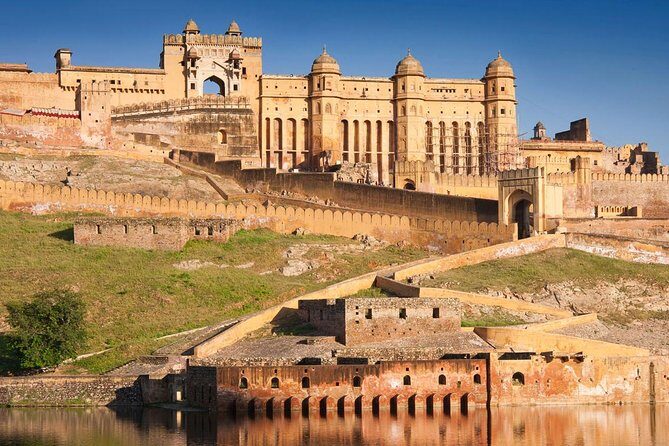
Jaipur is where the visuals get more dramatic, and Day 3 leans into that. After breakfast, you head to Amber Palace / Amber Fort, which served as the capital of Rajasthan until the early 1700s. You get about two hours guided through palaces, squares, and monuments, with time to walk through the areas that give you a feel for court life.
Then comes the quick photo moment at Jal Mahal, the palace that sits on/over Man Sagar Lake. You’re not there for a long stay, but it’s a great break in the day: a different angle, a calmer visual pause, and a useful stop for taking photos without burning an entire half day.
From there, lunch, then Maharaja’s City Palace for about two hours. City Palace is a strong choice because it connects Jaipur’s identity to real lived power rather than just a single landmark. A guide helps you see how the palace functions as a statement of authority, with rooms and courtyards that reflect shifts in time.
The final star on Day 3 is Jantar Mantar, an observatory built under Rajput King Sawai Jai Singh. You’ll explore for about an hour and a half. This is one of those sites where it helps to hear the explanation out loud. The big risk is treating it like strange metal sculptures and moving on. With a guide, it becomes a lesson in how astronomy was built into everyday observation.
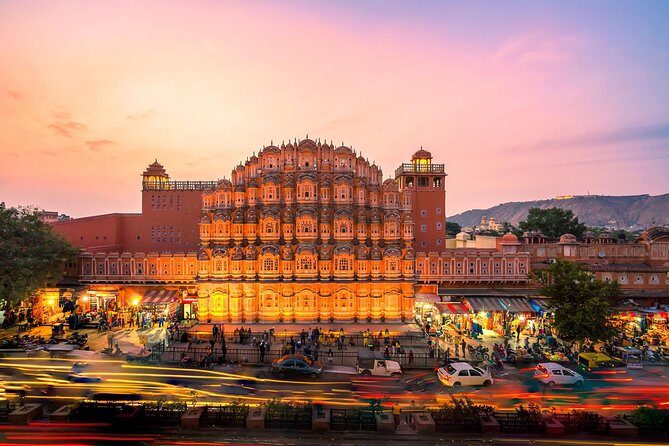
You also pass Hawa Mahal (Palace of Winds) on the drive back. Even if you don’t go inside, it’s worth recognizing because it’s one of Jaipur’s most photographed silhouettes, and a guide can point out what it’s shaped to do.
This day is packed, but it’s packed with order. The only caution is stamina: by the time you return to your hotel, you’ll probably want an early night.
A few more New Delhi tours and experiences worth a look

Hotel reality checks: what you can control, and what to do if things go wrong
This tour includes three nights of accommodation based on the category you choose, plus breakfast each morning. That sounds straightforward, but hotels in major circuits can vary a lot in comfort details like hot water, room location, and how convenient it feels for meals outside the tour.
Here’s the practical angle: before you go, decide what matters most to you—quiet room, hot showers, central location, or bigger room over being near restaurants. If a hotel isn’t meeting your needs, don’t wait days. In one case that was handled by the provider, a guest reported problems like no hot water and a hotel that felt far from the city center. The response involved direct phone/WhatsApp communication during the stay, and an alternate hotel was booked for the remaining day after the guest raised the issue.
So what should you do? Pack and travel with communication in mind. Save the provider’s contact, and tell them fast if something is genuinely not working for you. For Day 3 especially, remember it’s a full schedule day—if you value downtime, room conditions matter.
Also note the room type depends on availability and group size. If your group has an odd number of people, you might not get identical room setups across the board. That’s normal in hotel inventory, but it’s worth planning for mentally.
Timing, dressing, and comfort tips that actually help
A Golden Triangle tour can feel like a long list of big stops. The trick is using comfort and timing to make those stops feel better, not worse.
First, you’ll have a private guide and an English-speaking guide by default. If you need another language, you should request it in special requirements when you book.
Second, dressing matters. The tour advises avoiding clothing that’s too revealing. That’s especially relevant for monument sites where you’ll be entering and standing for time.
Third, be smart with daylight. Sunrise Taj Mahal is a win, but it also means you’ll likely be up early, with breakfast timing built around the morning. You’ll be doing long drives on Days 1 and 2 as well, so keep a light layer for vehicle air-conditioning and bring something small for hydration.
Finally, plan your expectations around what’s included. Monument entrance fees are not included in the listed inclusions. So carry cash or be ready to pay locally, and confirm what fees apply to each site you’re visiting. The tour handles guides and transport; you handle the entry tickets.
Price and value: is $259 per person a good deal?
At $259 per person for about four days, the value depends on what you’re comparing against. If you were trying to do this route alone—booking hotels, arranging drivers between cities, hiring guides for individual monuments, and dealing with long-distance logistics—you’d usually spend more time and often more money.
This price includes several high-cost pieces: private air-conditioned car, hotel or airport pickup and drop-off, three nights of accommodation, private local guides for sightseeing, and breakfast for four mornings. Bottled water and soft drinks during journeys are also included, which helps on travel days when you don’t want constant snack stops.
Where you should budget extra is monument entrance fees. Those can add up across Delhi, Agra, and Jaipur. Also, the tour doesn’t promise what’s inside each hotel room beyond the category you select, so read your category choice carefully if hotel comfort is important to you.
My rule of thumb: if you want less friction and better explanations at the major sites, this kind of bundled private tour is often a good value. If you’re traveling super flexible with your own bookings and prefer to self-guide, it might not beat DIY costs. But most people who choose this setup are buying time, structure, and a guide that helps you understand what you’re looking at.
Who this tour fits best, and who should think twice
This tour fits best if you want a guided Golden Triangle without the hassle of organizing everything yourself. It also works well for first-timers to India who appreciate pickup, private transport, and a clear day structure. If you care about learning—especially at the Taj Mahal, Agra Fort, Jaipur observatory sites, and palace complexes—having a guide is a big part of the payoff.
It’s also a good choice if you’re traveling as a private group that values attention. Because it’s private, you’re not stuck waiting for someone else’s pace.
Who might think twice? If you strongly dislike long days with early starts, the four-day schedule can feel intense. Also, if hotel standards are a deal-breaker, pick your hotel category carefully and confirm what’s included for your room type.
If you’re the kind of traveler who wants a lot of free time for wandering on your own each day, this tour is still guided and structured, so you’ll need to see whether that fits your style.
Should you book it?
I’d book this if you want the Golden Triangle highlights with a plan that’s easy to follow: Delhi landmarks in the morning, sunrise Taj Mahal in Agra, forts and palaces, and the Jaipur sights that people actually remember. The private car and guide setup turns a crowded region into something manageable.
I’d pause if you’re very sensitive to hotel comfort details or if entrance fees are a big unknown for you—because you’ll likely pay those on-site. If you do book, do two things before you arrive: choose your hotel category thoughtfully, and be ready to communicate quickly if anything doesn’t meet basic expectations.
If you want a smooth, guided best-of route through Delhi, Agra, and Jaipur, this is built for that. The sunrise Taj Mahal and the guided stops are the reasons you’ll feel satisfied at the end, not just tired.
FAQ
What time does the tour start?
The start time is 9:00 am, and your guide meets you at your chosen pickup location in Delhi (airport, railway station, hotel, or elsewhere).
Is pickup and drop-off included?
Yes. The tour includes hotel or airport pickup and drop-off in Delhi.
Is this a private tour?
Yes. It’s a private tour/activity, so only your group participates.
Are monument entrance tickets included?
No. Monument entrance fees are not included in the listed inclusions.
What’s included in the price?
Inclusions cover three nights accommodation, private air-conditioned car transport, sightseeing with private local guides, pickup/drop-off, bottled mineral water and soft drinks during journeys, and breakfast (4).
How long is the tour?
It’s listed as 4 days (approx.), with Day 4 being the return trip to Delhi or drop-off at Jaipur airport after breakfast.
Do I need to speak English to join?
No. You’ll get an English-speaking guide. If you need a different language, you can request it at booking in special requirements.
Can I choose my room type?
The room type depends on availability and hotel configurations, especially for odd-numbered groups (single, double, or triple rooms).
Do I need a passport?
Yes. A current valid passport is required on the day of travel.