REVIEW · MUMBAI
Dabbawala, Dhobi Ghat & Dharavi slum Tour with Local Train Ride
Book on Viator →Operated by Mumbai Dream Tours · Bookable on Viator
Mumbai’s lunch system is the real storyline.
This tour links three worlds that usually stay separate on a map: the life inside Dharavi, the hotel laundry work at Mahalaxmi Dhobi Ghat, and the citywide lunch delivery run by dabbawalas. It’s built for a tight time window (about 4 hours) and keeps things human, not just photo stops. You’ll also get a local train ride, which helps you see Mumbai moving the way locals do.
Two things I love here: first, the guide factor. People like Rakesh, Abhishek, Sagar, Dinesh, and Hardik bring local context and a lighter touch when the subject matter gets serious. Second, the mix of work you can actually see—leather work, pottery, soap making, dye and recycling areas in Dharavi, then the open-air washing at Dhobi Ghat—followed by the lunch network that connects it all.
One drawback to consider: this is a walking-and-looking tour through dense neighborhoods, so you’ll want to be comfortable with close quarters and keep your camera use respectful. Also, food and drink aren’t included, so plan for water breaks.
In This Review
- Key things to know before you go
- Why this Dharavi–Dhobi Ghat–Dabbawala route makes sense
- Dharavi on foot: work, services, and the film-scout detour
- Mahalaxmi Dhobi Ghat: the open-air laundry that runs the hotel world
- Dabbawala tribute stop: why the lunch delivery system is a big deal
- The local train ride: cheaper than a taxi and better for your perspective
- Price and value: $35.79 for a 4-hour local circuit
- Practical tips that make the tour easier
- Where the guides really shape the experience
- Who should book this tour (and who should think twice)
- Should you book this Dharavi, Dhobi Ghat & dabbawala train tour
- FAQ
- How long is the Dharavi, Dhobi Ghat & dabbawala tour?
- What is the price per person?
- Is a local train ride included?
- How many stops are there?
- Does it include food or drinks?
- Where does the tour start and end?
- What’s the group size limit?
- Are admission tickets included for the stops?
Key things to know before you go
- Dharavi on foot with a resident guide, covering local industries like leather, pottery, soap making, bakery work, dye color areas, and recycling
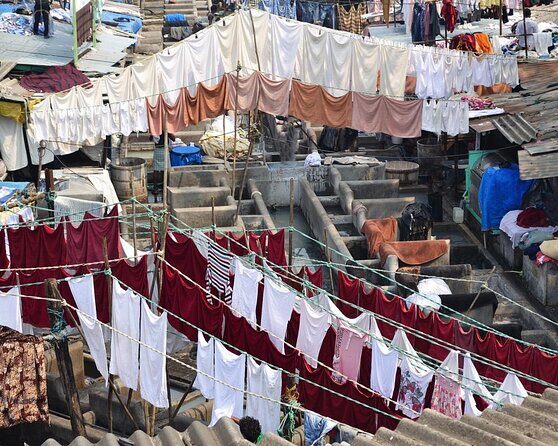
- Dhobi Ghat’s open-air laundry where dhobis wash hotel clothes in view of the street
- Dabbawalas connection via a stop centered on their role in delivering lunches across Mumbai
- Local train included, so you’re not stuck in a vehicle for the whole experience
- Small groups (max 15), which makes it easier to ask questions and keep pace manageable
- Mobile ticket and free admission tickets built into the stops
Why this Dharavi–Dhobi Ghat–Dabbawala route makes sense

Mumbai has a way of hiding its systems in plain sight. This tour connects three systems that run in parallel: street-level work and trading in Dharavi, the massive open-air washing operation at Dhobi Ghat, and the lunch pipeline that dabbawalas manage day after day.
What makes this route feel smart is the order. You start with Dharavi, where you can see how different trades sit close together—everything from schools and hospitals to small workshops. Then you shift to Dhobi Ghat, where you see a single job done at huge scale, outdoors, with the city watching. Finally, you end with dabbawalas, so you start to see how daily routines (like lunch) can depend on coordination, packaging, and timing—much more than people expect.
And because the group is small (up to 15), your guide can handle questions without turning it into a lecture or a rushed sprint.
You can also read our reviews of more tours and experiences in Mumbai.


Dharavi on foot: work, services, and the film-scout detour
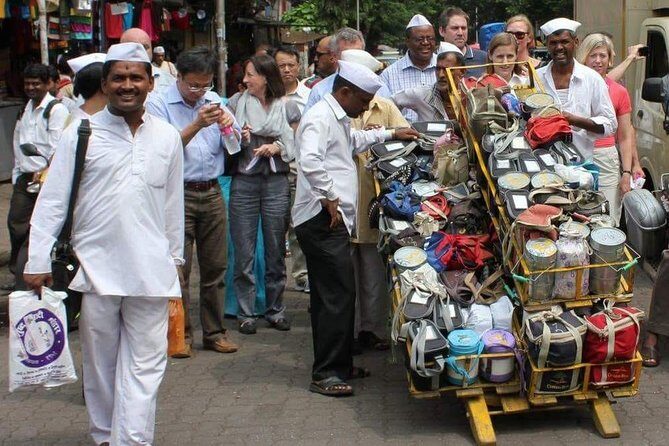
You’ll spend about 2 hours in Dharavi with your guide walking through lanes and alleys. The goal isn’t to shock you. It’s to show you the everyday economy and services that make the place function.
Here’s what you can expect to encounter during the walk:
- The area associated with Slumdog Millionaire filming (you’ll likely recognize the reference because it gets talked about a lot once it’s pointed out)
- Leather industries and the kind of workshop-based production you don’t usually see from outside
- Pottery and other small-scale craft work
- Making of soap and how goods get produced locally
- A bakery presence, plus spaces connected to food-related trade
- Colour dye areas—one of the most striking visual sections because color and chemicals are part of the work rhythm
- Small alleys where daily movement happens in tight spaces
- Schools and hospitals, which matter because they show life beyond labor
- Houses in the slum, where you get a sense of how work and home sit side by side
- Plastic recycling as a real industry thread
- A stop that includes an area noted as musli in the tour highlights list
A practical note: Dharavi walk-through tours can feel intense if you only come for dramatic scenes. This one is structured to keep returning to the point: people working, learning, repairing, serving, and trading.
That’s also where your guide matters most. The reviews heavily emphasize that guides like Rakesh and Abhishek keep things funny and engaging without flattening the reality. When the walk turns into a history lesson or a story about how an industry works, it’s usually because your guide has a clear way of explaining it—fast answers, not vague generalities.
Mahalaxmi Dhobi Ghat: the open-air laundry that runs the hotel world
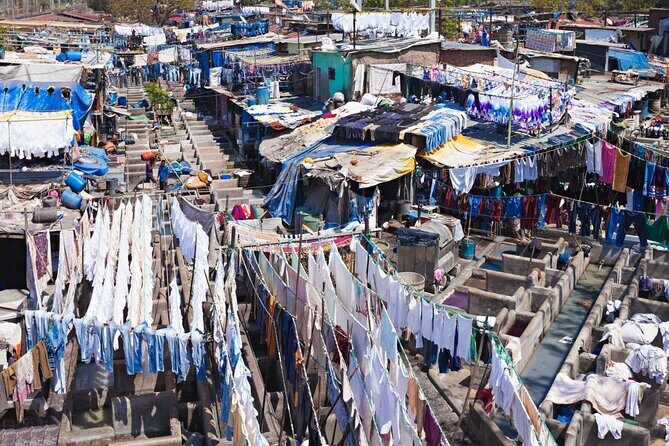
After Dharavi, you head to Dhobi Ghat (Mahalaxmi Dhobi Ghat) for about 1 hour. This is an open-air laundromat where dhobis wash clothes in the open. The tour framing here is straightforward: you’ll see how the laundry operation works, not just a neat viewpoint.
The key detail I think you’ll appreciate is scale and visibility. Dhobi Ghat isn’t tucked away behind walls. You’re seeing an entire workflow outdoors, with the city’s daily energy around you. That changes how you understand laundry as an industry—less like a behind-the-scenes task and more like a public, specialized operation.
One caution: expect noise, movement, and lots of activity. If you’re someone who wants quiet sightseeing, this may not be your cup of tea. If you like hands-on observation—how things are organized, how work gets done—this stop tends to be a favorite.
And because admission tickets are free for this part of the tour, you’re not paying extra once you’re there. That’s a small detail, but it matters for value.
Dabbawala tribute stop: why the lunch delivery system is a big deal
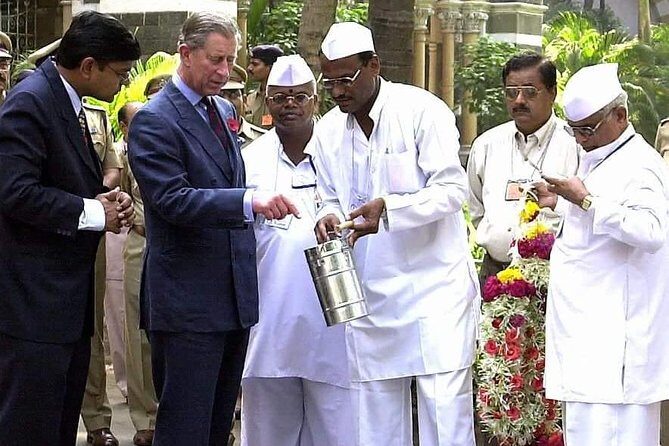
The final stop is a dabbawala tribute statue area, and it lasts about 1 hour. This is where you’ll connect the dots between what you saw earlier (work and production) and what happens later: lunch packaged, carried, sorted, and delivered reliably across Mumbai.
Even if the stop is shorter than Dharavi or Dhobi Ghat, the impact can be outsized. The dabbawalas are famous for their daily routine, and this tour makes sure you understand the role they play in everyday life, not just the headline.
I also like that the tour uses a tribute stop rather than forcing you into a constant “watch people work” mode. It gives your brain a breather while still keeping the thread of practicality.
If your guide is strong—many of the guides named in feedback are described as friendly, respectful, and ready to answer lots of questions—this final portion can turn into a better understanding of how coordination works in a city that’s always moving.
The local train ride: cheaper than a taxi and better for your perspective
One included highlight is transport by local train. That can sound simple, but it’s one of the biggest reasons tours like this feel authentic fast.
First, it’s efficient for time. With a route that packs Dharavi, Dhobi Ghat, and a dabbawala stop into about 4 hours, the train helps you cover distance without turning the day into “travel time.” Second, it changes your context. You’re not watching the city from behind a window; you’re riding with the rhythms locals rely on.
Expect a bit of the real Mumbai feeling here: crowds at times, quick navigation, and the need to stay aware of your belongings and where you’re stepping. Since the tour is led by a guide, you’re not left guessing. That “someone’s watching the flow” feeling is part of what makes the tour feel safe for many people who try it.





Price and value: $35.79 for a 4-hour local circuit
At $35.79 per person, this tour is priced like a budget-friendly day course—but it includes two things that usually cost more when you price them separately: a professional guide and local train transport. You’re also not paying for admission tickets for the stops highlighted here.
Here’s how the math feels in real life:
- You’re getting about 2 hours walking in Dharavi, plus 1 hour at Dhobi Ghat, plus 1 hour for the dabbawala tribute stop
- You’re traveling by local train as part of the experience
- You’re in a small group (max 15), which is usually when a guide can actually answer your questions
- Food and drink aren’t included, so budget a small amount for water or a snack before or after
So the deal isn’t just the ticket price. It’s that you’re paying for context and movement through multiple parts of Mumbai in one go, rather than piecing it together yourself.
If you’re in Mumbai for a short stay, this is the kind of half-day experience that can give you more “how the city works” than a longer sightseeing day.
Practical tips that make the tour easier
This tour is very doable for most people, but a little preparation helps.
Wear comfy shoes. You’re walking streets and alleys for about 2 hours in Dharavi. Gravel, uneven ground, and crowds aren’t theoretical on this kind of route.
Bring water. Reviews and shared advice around this tour repeatedly point to hydration as a must, especially when the weather turns unpleasant.
Keep your camera behavior in check. You’ll be in residential and working spaces. The best experience comes when you treat photographing like it’s a privilege, not a right—ask when needed, and don’t block walkways.
Plan for no included meals. Since food and drink aren’t part of the package, you’ll want to eat before you start or carry a small plan for after. (If you skip meals, the day can feel longer than it needs to.)
Be ready for questions. Guides like Rakesh and Abhishek are repeatedly praised for making questions feel normal rather than bothersome. If you care about how industries work, ask.
Respect the pacing. The tour is about timing—about 4 hours total—so you’ll see a lot, but you won’t have unlimited detours.
Where the guides really shape the experience

A consistent theme from feedback: the guides don’t just describe. They guide emotionally too—how you look, how you ask, and how you move through a sensitive setting.
Names that come up often include:
- Rakesh, highlighted for friendliness, respect, humor, and local storytelling
- Abhishek, described as entertaining and engaging while still factual
- Sagar, praised for communication and deep knowledge, plus making the day feel special
- Dinesh, noted for being friendly and informative even in tough weather
- Hardik, remembered for being pleasant, knowledgeable, and very informative
It’s also worth noticing that many descriptions mention feeling safe and comfortable at all times. In a place like this, that comfort matters—because it lets you focus on learning instead of worrying about logistics.
Who should book this tour (and who should think twice)
You’ll be a great fit if you:
- Want a real Mumbai experience that goes beyond landmarks
- Like hands-on observation of work—laundry processes, trades, and daily services
- Prefer a small group where you can ask questions
- Enjoy train travel and short walking routes
You might think twice if you:
- Want a relaxed, purely scenic sightseeing day
- Don’t do well with crowds or noise
- Are uncomfortable with sensitive contexts and want everything kept purely surface-level
This isn’t a “theme park version” of Mumbai. It’s a practical, lived-in overview of how parts of the city function day to day.
Should you book this Dharavi, Dhobi Ghat & dabbawala train tour
My take: this is a strong booking if you want value and genuine local context in one half-day block.
Book it if:
- You’re coming to Mumbai for fewer days and want maximum understanding per hour
- You like guided walking with clear explanations and respectful pacing
- You’re interested in how work networks connect, from laundry to lunch delivery
Skip (or choose another style of tour) if:
- You need a quieter, strictly scenic experience
- You don’t want to be walking through dense neighborhoods
- You’re not willing to plan for water and no included meals
One final tip: this is the kind of tour where good behavior makes the whole thing better. Keep your focus on learning and watching the systems at work, not just collecting photos.
FAQ
How long is the Dharavi, Dhobi Ghat & dabbawala tour?
The tour runs about 4 hours in total.
What is the price per person?
It costs $35.79 per person.
Is a local train ride included?
Yes. Transport by local train is included.
How many stops are there?
There are three main stops: Dharavi, Dhobi Ghat (Mahalaxmi), and a dabbawala tribute statue.
Does it include food or drinks?
No. Food and drink are not included.
Where does the tour start and end?
It starts at Maharshi Karve Rd, Churchgate, Mumbai and ends at Sai Multispeciality Hospital & Research Centre area on 90 Feet Rd behind Sion Hospital in Dharavi.
What’s the group size limit?
The maximum group size is 15 travelers.
Are admission tickets included for the stops?
Admission tickets are listed as free for the Dharavi and Dhobi Ghat stops.