REVIEW · NEW DELHI
Half-Day Tour Of Qutb Minar, Humayun Tomb and Agrasen Ki Baoli
Book on Viator →Operated by Day Tours Delhi · Bookable on Viator
UNESCO landmarks close together, minus the hassle. This half-day route lines up Humayun’s Tomb and Qutb Minar with the calm, ancient mood of Agrasen Ki Baoli, then finishes with a quick look along Rajpath toward India Gate and Rashtrapati Bhavan. I love how UNESCO landmarks fit into about 4.5 hours, and I love that you get a private guide who explains what you’re seeing as you move.
One possible drawback to plan for: monument entry fees for Humayun’s Tomb and Qutb Minar aren’t included in the price, so your total spend will be a bit higher than the tour cost alone.
In This Review
- Key highlights at a glance
- Why This Half-Day Delhi Route Works (Even If You’re Short on Time)
- Pickup, Timing, and the Pace You’ll Feel in Real Life
- India Gate on Rajpath: A Fast Stop That Still Lands
- Rashtrapati Bhavan From Outside: Knowing What You’re Looking At
- Agrasen Ki Baoli: The Stepwell Detour That Changes the Mood
- Humayun’s Tomb: Where the Garden-Tomb Idea Feels Tangible
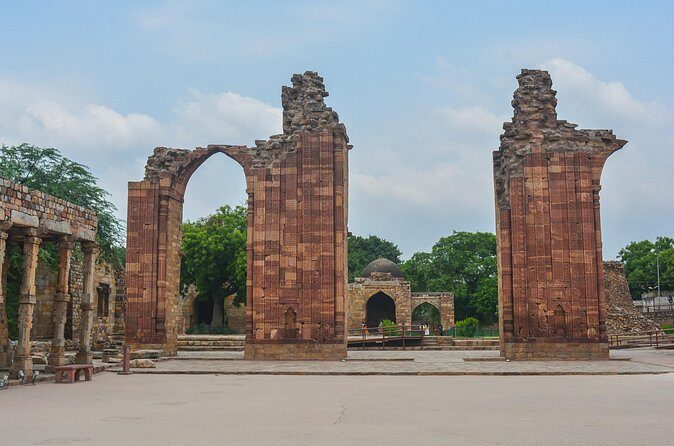
- Qutb Minar: 73 Meters of Brick, Carving, and Context
- Price and Value: What You’re Actually Paying For (Plus the Entry Fees)
- What to Watch For: Comfort, Photos, and Expectations
- Who This Tour Fits Best (And Who Might Want Something Longer)
- Should You Book This Half-Day Delhi Heritage Tour?
- FAQ
- How long is the Half-Day Tour of Qutb Minar, Humayun Tomb and Agrasen Ki Baoli?
- Is pickup and drop-off included?
- Is this tour private or shared with other groups?
- Are admission tickets included for all the monuments?
- Are camera fees included?
- What happens if the tour is canceled due to weather or if I cancel?
Key highlights at a glance
- UNESCO-heavy schedule without the full-day commitment: Humayun’s Tomb and Qutb Minar take the time, while the other stops keep you moving.
- Private guide, not a lecture from the curb: expect historical and cultural context while you walk.
- Pickup and drop-off anywhere in Delhi: easier on arrival days and when Delhi traffic can drain your energy.
- Smart short stop at Agrasen Ki Baoli: a stepwell break that feels different from the big-ticket monuments.
- Rajpath sights built into the morning: India Gate and Rashtrapati Bhavan give you a “you’re in the heart of Delhi” moment.
- Water included: small thing, but it helps on warm days when you’re walking between sites.
Why This Half-Day Delhi Route Works (Even If You’re Short on Time)
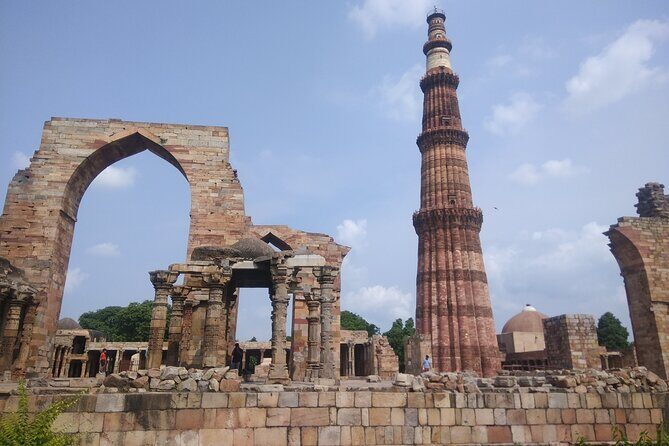
This tour is built for a very common Delhi problem: you want the famous monuments, but you don’t want to lose an entire day to transit, lines, and decision fatigue. The answer here is a tight route that groups the Mughal and early Sultanate-era icons (Humayun’s Tomb and Qutb Minar) and adds a short, memorable detour to Agrasen Ki Baoli, plus a taste of Rajpath with India Gate and Rashtrapati Bhavan.
I like the way the tour balances “big wow” with “small pause.” Humayun’s Tomb and Qutb Minar are the anchors. Agrasen Ki Baoli is shorter, but it’s a different kind of experience—quiet, architectural, and atmospheric in a way crowds often don’t expect from a stepwell. Then India Gate gives you a simple, instantly recognizable end point along Rajpath.
And because this is set up as a private activity for your group, the pacing stays practical. You can ask questions without waiting for a group to catch up, and your guide can adjust explanations to your pace.
A few more New Delhi tours and experiences worth a look


Pickup, Timing, and the Pace You’ll Feel in Real Life
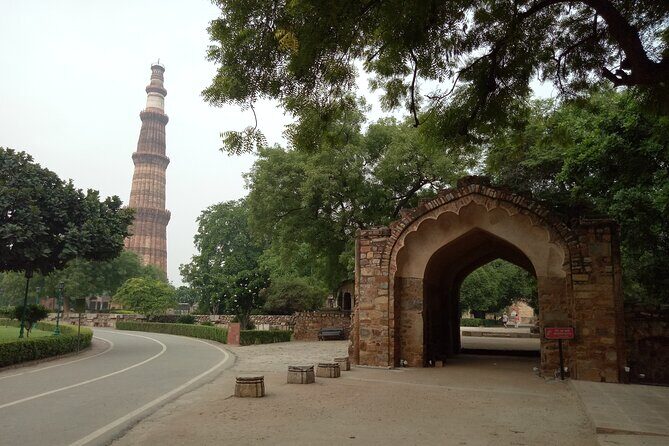
The tour runs about 4 hours 30 minutes. That’s not a long time, so timing matters. You’ll spend quick periods at India Gate, Rashtrapati Bhavan, and Agrasen Ki Baoli, then the bulk of the effort at Humayun’s Tomb and Qutb Minar.
Here’s the practical advantage: when you’re covering multiple major sites across Delhi, the “getting there” piece can quietly become the hardest part. With pickup and drop-off to anywhere in Delhi (including hotels or the airport), you start and end without the extra stress of arranging transport on your own.
The tour also includes parking fees, tolls, fuel, and taxes, plus complimentary water bottles. Those inclusions sound small on paper, but they reduce the mental clutter. You can focus on walking, looking up at carvings, and letting the guide connect the dots between what these places were built for and what they mean today.
A quick note on experience style: in the feedback, guides are praised for running an easy pace and being organized, which is exactly what you want when your day is already packed with stairs, uneven pathways, and the occasional surprise turn in Delhi traffic.
India Gate on Rajpath: A Fast Stop That Still Lands
India Gate is one of those monuments where you don’t need a long introduction to understand why people pause. You can see it from the Rajpath corridor, and it’s free to visit. In this tour, it’s a shorter stop (about 20 minutes), so you’re not trying to “finish” the site—you’re getting oriented and taking in the scale.
The India Gate stop also helps you understand Delhi’s geography. You’re on Rajpath’s eastern edge area (near the Kingsway reference in the tour description), and once you’ve got that mental map, the rest of the morning feels less like random driving and more like a route with meaning.
What I like about including India Gate is that it’s a clean contrast to the older monumental architecture ahead. You shift from modern memorial space and broad avenues into Mughal gardens and Sultanate-era brickwork. Even if your time is limited, the variety makes the day feel complete instead of repetitive.
Rashtrapati Bhavan From Outside: Knowing What You’re Looking At
Rashtrapati Bhavan is the official home of the President of India, and on this route it’s another quick, free stop. You won’t lose time hunting for viewpoints because the tour plan is designed around seeing it as part of the Rajpath experience.
This is one of those places where context matters more than lingering. If you know that Rashtrapati Bhavan was previously called the Viceroy’s House, the building stops feeling like generic grandeur and starts feeling like a chapter in Delhi’s layered story.
Since your guide provides historical and cultural insights during the walk, you’ll likely get a better read on what you’re seeing from outside and how the building fits into the wider layout of the capital.
It’s also a good practical reset: after India Gate, this stop gives you a short break before you shift into the more physically demanding walking at the monument complexes later.
Agrasen Ki Baoli: The Stepwell Detour That Changes the Mood
Agrasen Ki Baoli is a protected monument, and it’s located near Connaught Place, on Hailey Road. On this tour it’s a short stop (around 15 minutes), but it’s the kind of place that rewards a focused look.
A stepwell can sound like a footnote on a tour brochure. But Agrasen Ki Baoli’s structure and proportions make it feel like a pocket of older Delhi—less about grand entrances and more about how people used water and built public space. The tour description notes it’s about 60 meters long and 15 meters wide, and that scale is part of what makes the stop feel more substantial than the time suggests.
I also appreciate that it’s free. That’s not just about saving money; it helps you feel less pressured. You can take a few minutes for photos, watch the light on stone, and get the quiet contrast you don’t always find when every stop charges an entry fee.





Humayun’s Tomb: Where the Garden-Tomb Idea Feels Tangible
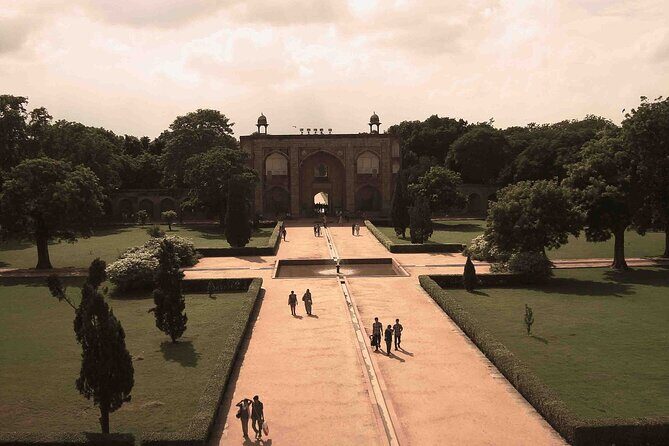
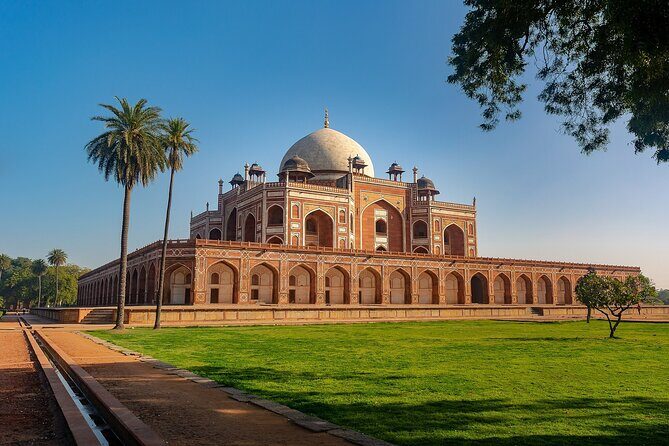
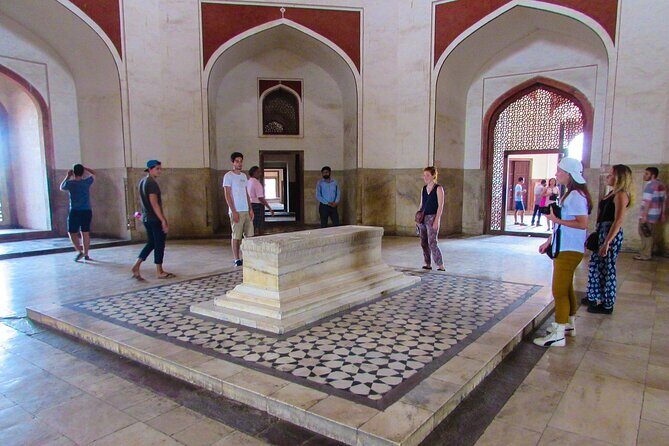
Humayun’s Tomb is a UNESCO World Heritage site and the tour sets aside about 1 hour 30 minutes for it. Admission isn’t included, so plan to budget separately. Still, this time block is a good sign: the site needs it.
The tour description calls it the first garden-tomb on the Indian subcontinent, and that matters because it changes how you experience the architecture. You’re not just looking at a building—you’re walking through an intentional, landscaped approach. The “garden-tomb” concept shows up as layout, symmetry, and the way the space guides your attention.
Humayun’s Tomb is also described as a Mughal monument, which gives you a framework for what you’ll notice: formality, proportion, and a sense that design is meant to communicate power and order.
In the feedback, guides are praised for being very informative and answering questions clearly, which is especially useful at Humayun’s Tomb. There’s plenty to look at—details, layout, and the overall design logic—so having someone explain what to focus on makes your 90 minutes feel purposeful instead of rushed.
Practical tip for your visit: wear shoes you trust. You’ll be walking and standing, and this is not the moment for brand-new sandals.
Qutb Minar: 73 Meters of Brick, Carving, and Context
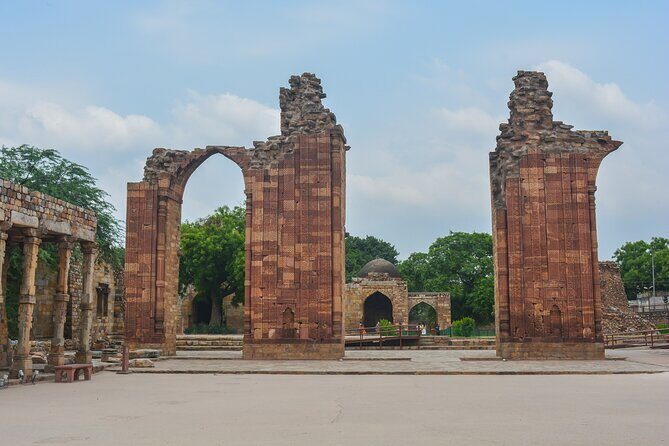
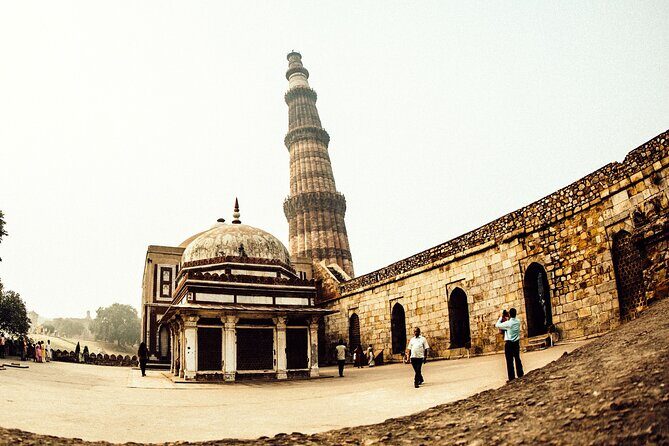
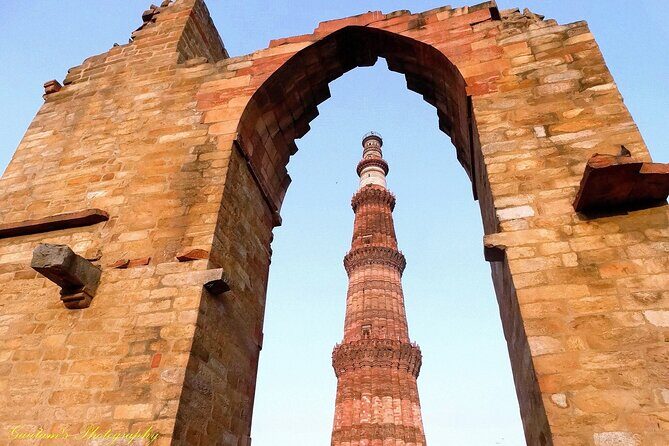
Qutb Minar is the other major anchor, also UNESCO-listed, and it gets about 1 hour 30 minutes. Like Humayun’s Tomb, admission tickets aren’t included, so treat this as your second budget item for the day.
The headline detail is the height: 73 meters, described as the tallest brick minaret in the world. But what makes Qutb Minar more than a height contest is the way the tower teaches you how to look. The carvings and patterning are part of the experience, and the tour guide’s job is to help you notice what’s easy to miss if you’re just snapping photos.
The tour description also notes the minaret dates back to the 12th century and mentions it was built in 1193 by Qutb-ud-din Aibak after the defeat of Delhi’s last Hindu kingdom. That historical framing is heavy, but it gives you a reason to pay attention to the structure instead of treating it as a single iconic photo.
If you like architecture, you’ll enjoy the fact that you’re spending more time here than at the “quick stop” sites. It’s not just a pass-by; it’s a focused visit.
Also, the guide experience seems to matter a lot. In the feedback, several guides are singled out for strong English and for accommodating questions. That’s ideal at Qutb Minar because your questions will likely be about symbolism, chronology, and construction style.
Price and Value: What You’re Actually Paying For (Plus the Entry Fees)
The tour price is $39.66 per person for roughly 4 hours 30 minutes. That’s not a bargain in the sense of “cheap,” but it’s good value if you count what’s covered.
Included features:
- pickup and drop-off anywhere in Delhi (hotel/airport friendly)
- private tour guide
- complimentary water bottles
- parking fees, tolls, fuel, and taxes
- mobile ticket
Not included:
- monument entry/admission fees, including Humayun’s Tomb and Qutb Minar
- still and video camera fees (if applicable at the sites)
- any meals
So your best way to think about value is simple: you’re paying for transportation help, a guide who explains, and a structured route that saves you time. If you tried to do this yourself, you’d spend your energy on figuring out transit, managing the logistics across sites, and deciding what to prioritize.
What tips the scale further is that multiple stops are free (India Gate, Rashtrapati Bhavan, and Agrasen Ki Baoli are listed as free admission in the tour outline). That means you don’t get hit with entry fees at every location—just at the two major monument sites where time is also concentrated.
What to Watch For: Comfort, Photos, and Expectations
This tour is short. That’s good—unless you expect a slow, linger-at-every-stone kind of day. If you want deep museum time or long café breaks, you might feel slightly rushed at the monument sites. The guide can’t stretch the schedule too much, and the route intentionally keeps the less central stops brief.
Camera fees are another thing to keep in mind. The tour notes still and video camera fees aren’t included. That doesn’t mean you cannot take photos—it means you should be prepared for site rules and possible extra charges. If photography is a major part of your trip, ask your guide at the start how the sites handle cameras.
Weather matters too. The experience requires good weather, and if it’s canceled due to poor weather, you’ll be offered a different date or a full refund. In a city where weather swings quickly, it’s wise to plan around mornings when conditions are more predictable.
Finally, Delhi walking can be real walking. Bring comfortable shoes and keep water handy even though bottles are included.
Who This Tour Fits Best (And Who Might Want Something Longer)
This half-day tour is a strong fit if:
- you want major Delhi landmarks without committing to a full day
- you like walking with guidance so you understand what you’re seeing
- you’re on a tight itinerary and can’t afford trial-and-error transit planning
- you appreciate getting a practical route with pickup and drop-off
It might be less ideal if you:
- want unlimited time for photography and extended exploration
- plan to visit other museums or nearby sites and need the schedule to be flexible
- prefer a slower pace that spends extra time at every stop
One more point from the feedback that I think is useful: guides are praised for being well-versed and easy to talk to. People mention examples like Ankush (guide) with Veeru (driver), and also Rajindeer and Asim being praised for English and photo skills. That kind of support matters most on days like this, when you’re seeing several landmark types in a short window.
Should You Book This Half-Day Delhi Heritage Tour?
If your goal is to cover Humayun’s Tomb and Qutb Minar plus the memorable change of pace at Agrasen Ki Baoli, this tour makes sense. The biggest reasons to book are the tight UNESCO-focused schedule, the included pickup/drop-off, and the private guide who helps you turn what you see into something you understand.
Before you book, do two quick reality checks:
- Budget for entry/admission at Humayun’s Tomb and Qutb Minar, since those aren’t included.
- Assume the day is paced. You’ll see a lot, but it won’t be a slow stroll all morning.
If you’re short on time and want the essentials done well, this is the kind of tour that earns its keep.
FAQ
How long is the Half-Day Tour of Qutb Minar, Humayun Tomb and Agrasen Ki Baoli?
It’s approximately 4 hours 30 minutes.
Is pickup and drop-off included?
Yes. Pickup and drop-off are included to anywhere in Delhi, such as your hotel or the airport.
Is this tour private or shared with other groups?
It’s set up as a private tour/activity, with only your group participating.
Are admission tickets included for all the monuments?
No. Entry/admission is not included for Humayun’s Tomb and Qutb Minar. Other listed stops on the route are listed as free admission.
Are camera fees included?
No. Still and video camera fees are not included.
What happens if the tour is canceled due to weather or if I cancel?
The experience requires good weather. If it’s canceled due to poor weather, you’ll be offered a different date or a full refund. You can also cancel up to 24 hours in advance for a full refund.