REVIEW · PUNE
Full Day Cultural & Heritage Pune City Tour in Private Vehicle
Book on Viator →Operated by Shreeji Tours n Travels · Bookable on Viator
Pune in one long day. This private, English-guided route stitches together major sights you’d otherwise spread across multiple trips, from temples to forts to a one-man museum collection. I like that the day is practical: you get hotel pickup and drop plus an air-conditioned vehicle so you’re not burning time in transit. One thing to keep in mind is that not every stop is free—some monuments have ticket costs not included.
The two things I like most: first, the mix is balanced, with spiritual landmarks (Ganesha and ISKCON) paired with Maratha-era architecture (Shaniwar Wada and Shivaji’s early palace) and Gandhi-era history at Aga Khan Palace. Second, the timing leaves breathing room at the Tulsi Baug market so you can shop without feeling rushed.
The one possible drawback: the pace is full-day. With an 8 to 10 hour schedule, you’ll want to decide early if you’d rather linger for photos and viewpoints or keep things moving.
In This Review
- Key Things to Know Before You Go
- A 9:00 am Pune Day That Actually Covers Real Ground
- Private Car + English Guide: Why This Day Works
- Stop 1: Dagadusheth Halwai Ganapati Temple (A Spiritual Start)
- Stop 2: Shaniwar Wada Fort and the Maratha-Era View
- Stop 3: Aga Khan Palace (Gandhi’s Prison Chapter)
- Stop 4: Tulsi Baug Shopping Market (Time to Wander and Buy)
- Stop 5: Raja Dinkar Kelkar Museum (One Person’s Collection, Big Impact)
- Stop 6: Lal Mahal Chitra (A Replica With a Purpose)
- Stop 7: ISKCON NVCC Temple (Radha-Krishna Devotion in a Modern Center)
- Price and What You’ll Probably Pay Extra
- Timing, Pacing, and How to Get the Most Out of 8–10 Hours
- Who This Pune Heritage Tour Fits Best
- Should You Book This Pune Cultural & Heritage Tour?
- FAQ
- What does the Pune city tour include?
- How long is the tour?
- What time does the tour start?
- Is this a private tour?
- Do I need to pay admission fees during the tour?
- Are meals included?
- Is the vehicle air-conditioned?
- How does cancellation work?
- What if weather is poor?
Key Things to Know Before You Go
- English-speaking guide for commentary that keeps the sights understandable, not just scenic
- Hotel pickup and drop in an air-conditioned private vehicle
- A mix of religious, political, and museum stops in one loop
- Tulsi Baug market time built in for shopping and wandering
- Some admissions are included as free, others not, so budget for a couple of paid tickets
- Private group flexibility, including the chance to accommodate requests like extra stops when available
A 9:00 am Pune Day That Actually Covers Real Ground
A 9:00 am start is a big deal in Pune. You beat the late-morning crowds for the temple and fort areas, and you still have time later for the museum and market.
This is designed as a full cultural loop that’s easy to follow: you start with a major Ganesha temple, then move into Maratha-era sites and palace history, and wrap with museum and devotional stops. The result is a day that feels like Pune’s story is happening in order, not just a grab-bag of locations.
You can also read our reviews of more city tours in Pune
Private Car + English Guide: Why This Day Works
The private vehicle is what makes this itinerary feel civilized. You’re not timing tuk-tuks, managing routes, or hoping the taxi driver understands exactly which temple you mean. With round-trip transfers from your hotel, you just show up and go.
An English-speaking guide changes the experience at every stop. For example, at Raja Dinkar Kelkar Museum, the guide can connect the artifacts and the idea behind the collection—so you’re not looking at objects without a sense of why they matter.
You also get more flexibility than a group bus tour. In one set of experiences, the guide/driver communication via WhatsApp was smooth, and the driver even accommodated a request to stop at Osho’s Ashram in Pune. That won’t be guaranteed for every add-on, but it’s a good sign that they’re willing to work with your preferences.
Stop 1: Dagadusheth Halwai Ganapati Temple (A Spiritual Start)
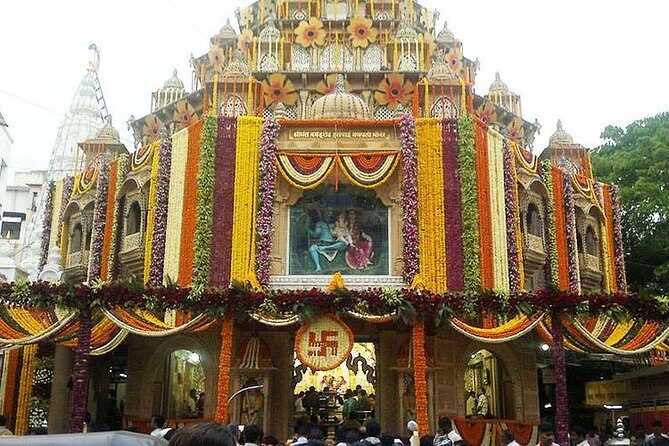
The day begins at Dagadusheth Halwai Ganapati Mandir, dedicated to Lord Shri Ganesha and part of a temple complex with other Ganesha shrines. It’s a strong opener because it sets the tone of Pune as a city where religion isn’t separate from daily life—it’s part of the culture you’ll see everywhere.
Plan for about 30 minutes here. That’s enough time to enter, observe the space, and take in the atmosphere without turning the morning into a half-day ritual. Admission is listed as free.
A practical thought: if you’re arriving from a hotel pickup, this is an easy place to “get your bearings” fast—no museum ticket line headaches, and you start with something visually and emotionally clear.
Stop 2: Shaniwar Wada Fort and the Maratha-Era View
Next up is Shaniwar Wada, tied to the Maratha Empire’s early story. You’ll see it as both an architectural landmark and a hub-like area because centuries-old buildings and local markets sit in the surrounding area.
You’re scheduled for about 1 hour. Admission isn’t included for this stop, so you should expect to pay the entry ticket on site if you want full access.
Why this stop is worth your time: Shaniwar Wada isn’t just a structure—it’s described as having a 180-degree view of the city. Even if you only get a short look from the viewpoint areas, it helps you understand where Pune sits in relation to the historic core.
Stop 3: Aga Khan Palace (Gandhi’s Prison Chapter)
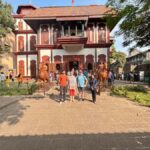
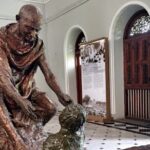
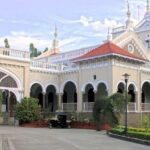
Then you head to Aga Khan Palace, a place with layers of history and heritage. It’s specifically noted as having served as a prison for Mahatma Gandhi—one of those “history in real places” stops that makes a city feel bigger than its present-day streets.
Your time here is about 1 hour, and admission is not included. So, treat this as one of the likely paid-ticket moments of the day.
What I like about putting Aga Khan Palace in the middle: it bridges the Maratha-era story you just saw with modern political history. That shift matters. Without context, forts can feel like just stone and angles; with the Gandhi-era connection, the site becomes more human and more urgent.
You can also read our reviews of more private tours in Pune

Stop 4: Tulsi Baug Shopping Market (Time to Wander and Buy)
After palace history, the itinerary gives you a break with shopping time at Tulsi Baug. This is one of the oldest markets in Pune, and the schedule leaves about 1 hour for you to browse.
Admission is listed as free, so your main cost here is what you choose to buy. And because it’s a market, it’s also the most flexible portion of the day. If you want gifts, snacks, textiles, or small Pune souvenirs, this is where you can do it without rearranging the whole plan.
A balanced tip: don’t try to do everything in one hour. Markets can eat time fast. Choose a direction, set a small shopping goal, and still leave time to enjoy the atmosphere instead of just hunting.
Stop 5: Raja Dinkar Kelkar Museum (One Person’s Collection, Big Impact)
This is the museum stop that tends to make people smile. Raja Dinkar Kelkar Museum is described as one of the largest one-man collections in the world, and that description isn’t marketing fluff—it’s basically the idea. Dinkar Kelkar toured remote parts of India and collected artifacts that reflect craft and power: embroidered textiles, sculptures, antique vessels, and swords of the Marathas.
You’ll have about 1 hour here, and admission is listed as free. That matters for value, because museums can quietly add up on a day tour.
The most memorable named feature is Mastani Mahal, a room recreated from ruins of the original palace. It’s connected to the royal romance between Baji Rao (the Maratha prime minister figure) and Mastani. So you’re not only seeing objects—you’re seeing a story staged in space.
This is also a great stop for photography if you like detail shots. Keep an eye on how materials, shapes, and designs repeat across the collection; that’s where the curator’s mind shows through.
Stop 6: Lal Mahal Chitra (A Replica With a Purpose)
Next is Lal Mahal Chitra, linked to the early life of Shivaji Maharaj. The father of Shivaji built this palace, and it was Shivaji’s residence until he conquered his first fort at Torna. What you see today is a replica of the original building, built in AD 1636.
Your time here is about 30 minutes, and admission is listed as free. Since it’s shorter, it works like a quick “Maratha origin story” checkpoint before the more devotional stops.
Why a replica stop can still be worthwhile: replicas can help you understand layout and setting, especially when you’re short on time. In this itinerary, it functions like a bridge—Maratha empire beginnings leading toward later cultural and religious landmarks.
Stop 7: ISKCON NVCC Temple (Radha-Krishna Devotion in a Modern Center)
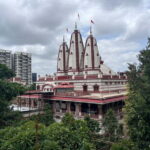
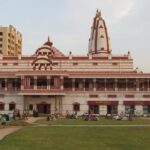
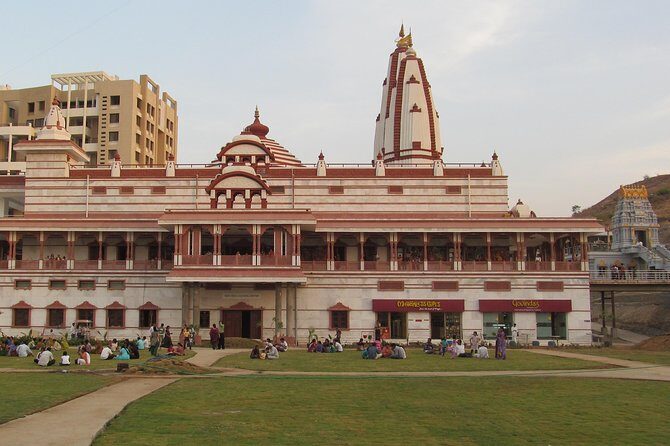
The last named temple stop is ISKCON NVCC Temple, the Sri Sri RadhaVrindavanchandra Temple at the New Vedic Cultural Center in Pune. This one is a clear change of tone from forts and palaces: it’s devotional, organized, and centered on worship.
You’re scheduled for about 1 hour, and admission is listed as free. The background is also specific: the story of ISKCON NVCC goes back to around 1995, when late Mr. Banerjee met HH Gopal Krishna Goswami and expressed inspiration connected to worship of Sri Sri Radha Kunjabihari. A Balaji deity and a house were gifted to support care of the deity by ISKCON.
That backstory helps the stop feel less random. It’s not just a temple you pass by; it’s a cultural center with a documented origin story in recent decades.
Even if you’re not deeply religious, this can be a peaceful way to end the day. It gives your mind a softer landing after museums and historic buildings.
Price and What You’ll Probably Pay Extra
At $64 per person, this tour is trying to hit a sweet spot: private vehicle comfort, hotel transfers, and an English-speaking guide, all wrapped into one day.
What boosts value here:
- Private transportation with air-conditioned comfort
- Round-trip pickup and drop
- Several major stops where admission is listed as free, including Tulsi Baug, Raja Dinkar Kelkar Museum, Lal Mahal Chitra, and ISKCON NVCC Temple.
What could affect your final cost:
- Shaniwar Wada and Aga Khan Palace list admission as not included. Those two are likely where the ticket spending happens.
- No meals are included, so you’ll need to plan for lunch or snacks on your own.
If you’re budgeting, I’d mentally separate it into two categories: what you already paid for (guide + transport + most free stops) and the likely add-ons (a couple paid admissions plus food). That makes the final math easier.
Timing, Pacing, and How to Get the Most Out of 8–10 Hours
With an 8 to 10 hour duration, you’re doing a lot. The good part is that each stop has a clear time window—so you won’t wander around trying to decide what to do next.
The watch-out is energy management. You’ll want comfortable shoes and an appetite for walking. Markets and temple areas may involve some standing and moving, even if each location time block is short.
If you have specific interests, tell the guide at the start. One benefit of a private tour is that you can shape the day around what you care about most. If you want extra context at the museum, more time for viewpoints at Shaniwar Wada, or a special added stop like Osho’s Ashram (in at least some cases), it’s the kind of conversation that can matter.
Who This Pune Heritage Tour Fits Best
This tour is a strong fit if you want:
- a first visit to Pune and you want the main cultural anchors in one day
- an English-speaking guide to connect history, culture, and architecture
- private comfort with hotel pickup and air-conditioned transport
- a mix of shopping, museums, and temples without long gaps between sites
It may be less ideal if you hate tight schedules or you want to study one place in depth for hours. This isn’t a “slow museum day” or a “take your time temple circuit.” It’s a well-structured highlights route with just enough time at each stop to feel you’ve covered the essentials.
Should You Book This Pune Cultural & Heritage Tour?
If you’re looking for a practical, high-structure introduction to Pune, I think this tour is worth considering. You get a smooth one-day route with a private AC vehicle, hotel transfers, and an English guide who can turn a list of landmarks into something you can actually understand.
The decision boils down to two questions for you: Do you want temples, fort/palace history, and a major museum in one day? And are you okay with admission for some sites (like Shaniwar Wada and Aga Khan Palace) plus your own meal planning?
If yes, book it. If you want a slower pace or you’re mainly focused on just one theme—like only museums or only religious sites—then you might prefer a more specialized half-day or single-area plan.
FAQ
What does the Pune city tour include?
It includes pickup and drop, toll tax and parking fees, an air-conditioned vehicle, private transportation, and an English-speaking guide.
How long is the tour?
The tour runs about 8 to 10 hours.
What time does the tour start?
The start time is 9:00 am.
Is this a private tour?
Yes. It’s a private tour/activity, and only your group will participate.
Do I need to pay admission fees during the tour?
Some stops are listed as free (like Dagadusheth Halwai Ganapati Temple, Tulsi Baug, Raja Dinkar Kelkar Museum, Lal Mahal Chitra, and ISKCON NVCC Temple). Shaniwar Wada and Aga Khan Palace have admission tickets not included.
Are meals included?
No. Meals are not included.
Is the vehicle air-conditioned?
Yes, the tour includes an air-conditioned vehicle.
How does cancellation work?
You can cancel for a full refund up to 24 hours in advance of the experience’s start time.
What if weather is poor?
The experience requires good weather. If it’s canceled due to poor weather, you’ll be offered a different date or a full refund.