REVIEW · NEW DELHI
8 Days GOLDEN TRIANGLE EXCURSION WITH RANTHAMBORE WILDLIFE SAFARI
Book on Viator →Operated by Varanasi Excursion · Bookable on Viator
Three cities, one tiger moment.
This Golden Triangle route (Delhi–Agra–Jaipur) is a fast, classic way to see India’s big-ticket sights, then it adds a real wildlife day in Ranthambore with a naturalist-led jeep safari. I love how the itinerary mixes monuments with practical city time—Old Delhi sights and a hands-on rickshaw ride in Delhi, then the Taj Mahal at sunset in Agra. You also get expert guides across Delhi, Agra, and Jaipur, so you’re not just looking at buildings—you’re understanding why they matter.
My other favorite part is the way the trip is organized around your comfort: private transportation for the route, pre-booked 3 hotels for 7 nights, and breakfast included most mornings. The main thing to watch is that monument entrance fees are not included, and hotel room quality can vary by city—Delhi and Jaipur have been described as basic in at least one case, while Agra and Ranthambore were better.
In This Review
- Key things I’d plan around
- The Golden Triangle rhythm: why this route works in 8 days
- Day 1 in Delhi: arrive, get paperwork, then reset near India Gate
- Day 2 Delhi highlights: Qutub Minar, Old Delhi mosques, Chandni Chowk, and a rickshaw
- Day 3 Agra and the Taj Mahal at sunset: the anchor day you’ll remember
- Day 4 Fatehpur Sikri to Ranthambore: Mughal stops before the wild
- Day 5 Ranthambore National Park safari: naturalist help and tiger country expectations
- Day 6 Jaipur arrival: sandstone city vibe and craft-market time
- Day 7 Amer Fort plus royal Jaipur: City Palace, Hawa Mahal, Jantar Mantar, and Jal Mahal
- Day 8 return to Delhi airport: keep the morning unhurried
- Price and logistics: what $700 gets you, and what you’ll pay extra
- What’s included
- What’s not included
- Who should book this Golden Triangle with Ranthambore safari
- Should you book it
- FAQ
- What cities are included in this tour?
- How long is the Golden Triangle portion, and what’s the total duration?
- Does the package include pickup and transportation?
- Are hotels included? What type?
- Is breakfast included?
- Is the Ranthambore safari included?
- Are monument entrance fees included in the price?
- Is this a private tour?
- Can I cancel for a full refund?
Key things I’d plan around
- Naturalist-led Ranthambore safari: morning shared jeep plus a chance at Bengal tigers and other wildlife.
- Sunset Taj Mahal: one of the itinerary highlights, with the dramatic timing you’ll want.
- Old Delhi energy on day tours: Jama Masjid, Chandni Chowk, and a rickshaw ride link the sights together.
- Fatehpur Sikri on the way: a Mughal stop that breaks up the long run to Ranthambore.
- 3 hotels with mixed reviews: expect variation; Agra and Ranthambore may feel nicer than Delhi/Jaipur.
- Entrance fees add up: the big sites usually require separate payment, even if some notes say otherwise.
The Golden Triangle rhythm: why this route works in 8 days
If you want India’s headline history without cramming every museum detail, this format is a good fit. Delhi, Agra, and Jaipur are close enough to connect by road, which means you spend more days sightseeing and fewer days “in transit.” Then Ranthambore is the shift: from palaces and forts to a real wildlife landscape where animals set the pace.
The best value here is not that you’ll see everything in one gulp. It’s that the tour builds each day around “anchor moments.” In Delhi, it’s the landmark mix of Qutub Minar and Old Delhi’s mosques and markets. In Agra, it’s the Taj Mahal experience twice in one day—classic daytime views plus the sunset run. In Jaipur, it’s the royal forts and palace complex, with Amer Fort and the city sights.
The only caution I’d give is mental, not logistical: tigers can’t be scheduled. Even with a great safari guide and jeep, Ranthambore is still nature. If you go expecting a guaranteed tiger photo, you’ll feel let down. If you go expecting a strong wildlife morning, you’re set up to enjoy the day no matter what’s spotted.
A few more New Delhi tours and experiences worth a look



Day 1 in Delhi: arrive, get paperwork, then reset near India Gate
On arrival in Delhi, you’re transferred to a pre-booked hotel. You’ll get your tour documents from a representative, then the rest of the day is intentionally light. That matters in a place like Delhi, where traffic and airport arrival times can make day one feel like a blur if you force too much.
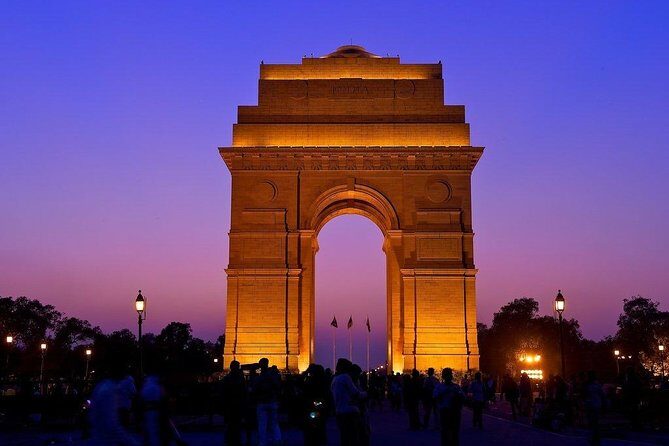
The itinerary also flags India Gate as a respectful first stop. It’s not a heavy “do everything” day—more like a calm landing point so you can adjust to the city. Overnight in Delhi gives you breathing space before the full sightseeing day.
If you’re sensitive to long travel days, this design is one of the practical wins. You don’t waste your first afternoon fighting jet lag through crowded sites.
Day 2 Delhi highlights: Qutub Minar, Old Delhi mosques, Chandni Chowk, and a rickshaw
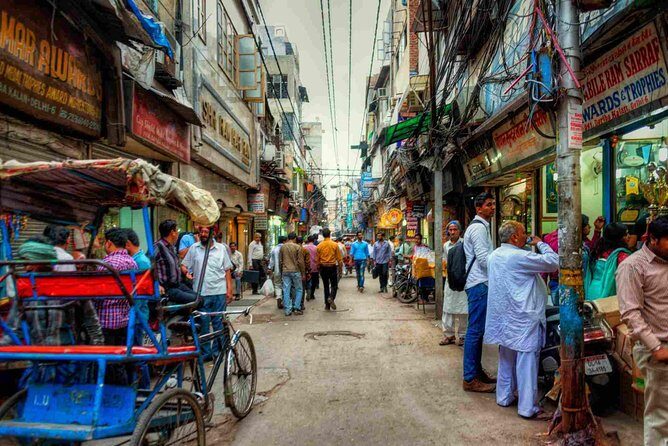
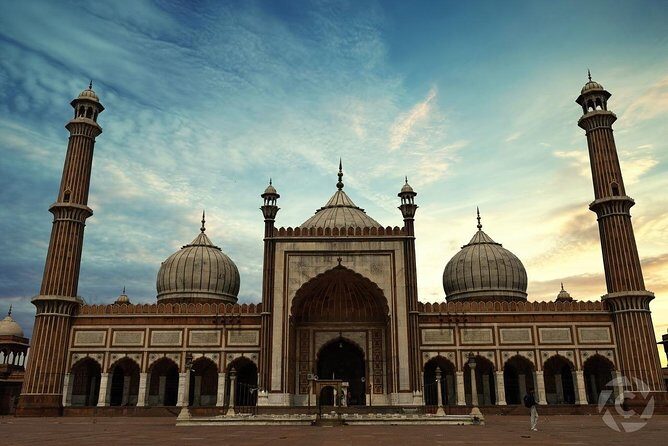
This is your full Delhi day, and it’s built to show how layered the city feels. You start with Qutub Minar, then move into Old Delhi with Jama Masjid—the large, iconic mosque that makes the area feel instantly historic. After that, you go through Chandni Chowk, one of the city’s best-known old market corridors, where sights and smells come at you faster than you can read signboards.
Then comes a sequence that turns a list of landmarks into an actual experience: you walk toward Fatehpuri Masjid, take a rickshaw ride (a short, memorable way to experience Old Delhi’s streets), and continue toward major points like Red Fort (viewed by route), Rajghat (Gandhi’s cremation memorial), and Humayun Tomb (a first garden-style tomb drawing Persian inspiration).
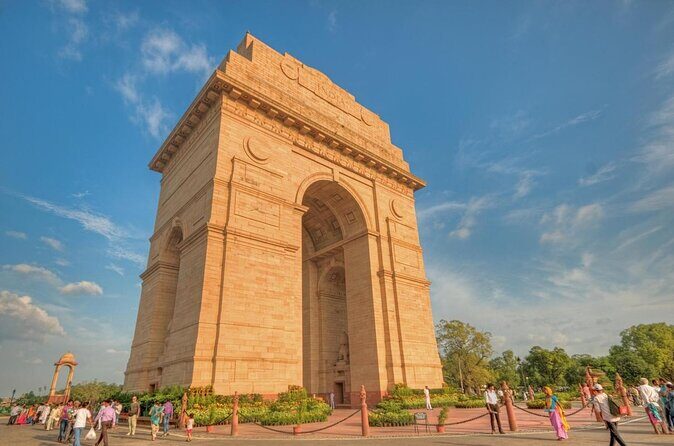
The day also includes a drive past Rashtrapati Bhawan and India Gate, which is a nice touch if you want a feel for modern India’s formal geometry alongside the older quarters.
A small consideration: this day is packed, and it includes walking and moving between neighborhoods. If you don’t like tight schedules, wear comfortable shoes and keep water and sunscreen in mind. Delhi days can feel hotter and more intense than you expect.
Day 3 Agra and the Taj Mahal at sunset: the anchor day you’ll remember
Agra is your big shift day. After breakfast, you drive to Agra and check in. Then the tour locks onto a core idea: the Taj Mahal is not a single moment. You get the main sights, including Agra Fort, Itmad ud Daulah (often called the Baby Taj), and Mehtab Bagh.
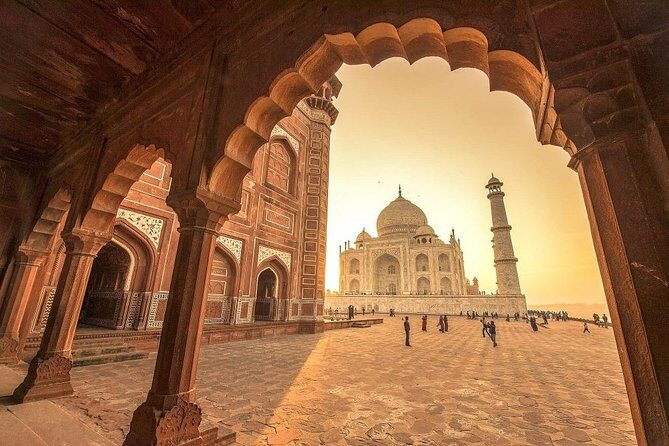
And then you do the part most people chase: a sunset Taj Mahal visit. Sunset timing is a value move because it changes how the marble looks and how the experience feels. It’s also simply more memorable than rushing through in the middle of the day.
The itinerary says you’ll be dropped back at your hotel afterward and spend the night in Agra. That’s helpful because it prevents the most common problem on day trips—where you spend your evening exhausted and don’t get a proper reset.
If you’re trying to decide what to prioritize, prioritize this day’s timing. The Taj Mahal at sunset is a highlight that’s worth planning around.
Day 4 Fatehpur Sikri to Ranthambore: Mughal stops before the wild
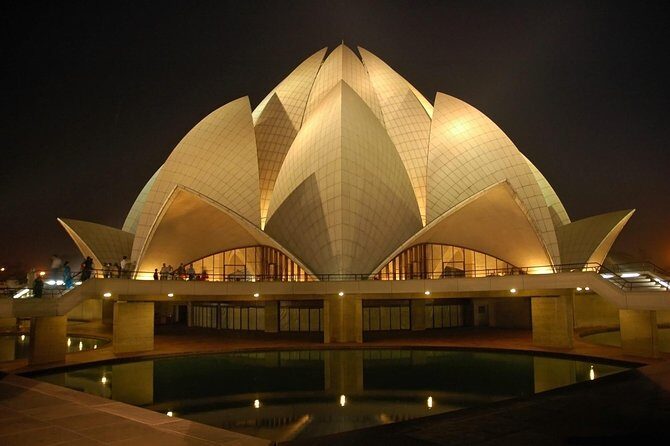
Day four starts with breakfast and a drive toward Ranthambore. The smart move here is the scheduled break: Fatehpur Sikri, a Mughal-era city stop, helps you transition between “palace and power” and “wildlife and nature.”
You’ll visit key Fatehpur Sikri features including Panch Mahal, Buland Darwaza, and the Dargah of Sheikh Salim Chishti. These aren’t random add-ons. They give you a sense of how the Mughal empire organized religious and administrative life—big gates, ceremonial structures, and spiritual centers.
Then you continue onward to Ranthambore, check in at your hotel, and stop for the night. That break is more than comfort. It positions you well for the safari day, so you’re not arriving late and trying to be sharp at dawn.
A few more New Delhi tours and experiences worth a look





Day 5 Ranthambore National Park safari: naturalist help and tiger country expectations
This is why people add Ranthambore to a Golden Triangle in the first place. Ranthambore National Park is known for strong Bengal tiger spotting odds, and the tour is designed around that with a morning shared jeep safari accompanied by a naturalist.
You’re going into a wildlife area tied to the Ranthambore Fort region and a sanctuary story that traces back to 944 AD. That gives the day an extra layer. It’s not only “see animals,” it’s also “see how this landscape was shaped around long-standing forts and boundaries.”
The safari plan targets the kinds of animals you might expect to see in the park, including gazelle, boars, jackals, leopards, and—when you’re lucky—tigers. You’ll ride and watch with animals moving freely around the area. That “freely” part is the point: it’s not a zoo-style viewing. You’re watching from the right distance, in a real habitat.
One practical reality: this is a shared jeep, so you’ll follow the rhythm of your group and the safari operations. That’s normal, and it usually helps keep the experience organized.
Also, the day’s schedule mentions additional time later in the afternoon in the Ranthambore area. Even if you aren’t getting another full safari session, that built-in buffer makes the day feel less rushed than a strict early-only plan. You’ll get time to cool down after the morning drive and still keep momentum.
If you care about tiger photos, bring patience more than gear. The biggest factor is animal movement, not camera settings.
Day 6 Jaipur arrival: sandstone city vibe and craft-market time
After breakfast, you check out and drive to Jaipur. The tour frames Jaipur as a place defined by craft and materials—especially sandstone architecture and the city’s handicraft and jewelry markets. That’s more than marketing language. It’s a clue about what the city feels like day to day: textures, workshops, and shopping streets.
On arrival, you check in and rest overnight. That rest matters because Jaipur’s sightseeing days are heavier.
If you’re planning your own evening, this is also a good night to keep things simple—eat well, sleep, and be ready for Amer Fort and the palace complex the next day.
Day 7 Amer Fort plus royal Jaipur: City Palace, Hawa Mahal, Jantar Mantar, and Jal Mahal
Day seven focuses on Jaipur’s royal core. You start with Amer Fort, then move through the City Palace and museum area with an expert guide.
This day is packed with Jaipur icons:
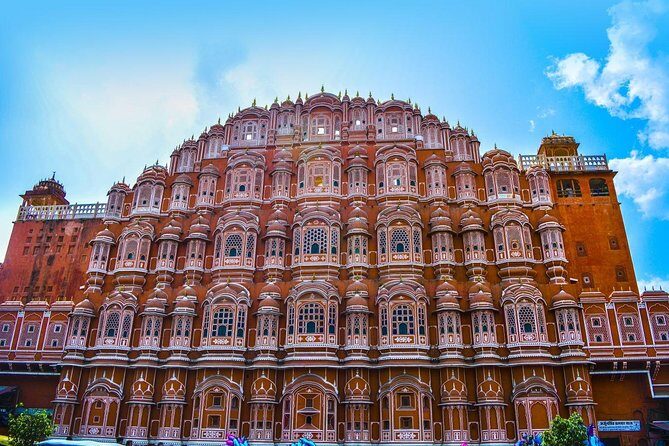
- Hawa Mahal (the Palace of Winds)
- Jantar Mantar (the astronomical observatory)
- Sheesh Mahal (Hall of Mirrors)
- Jag Mandir (Hall of Victory)
- Jal Mahal (a palace-like view over water)
- Kali Temple
Even if you’ve read about these places before, having them connected in one guided loop helps you understand how they fit together: court life, religious spaces, and scientific design are all in the same general world.
The itinerary also notes that the sightseeing includes time with an expert guide. In practice, this is the difference between standing in front of a structure and getting the story behind it—how it functioned and what it was built to do.
My only caution: this is a high-walking day with multiple sites. Plan for slower pacing. You don’t have to rush every photo.
Day 8 return to Delhi airport: keep the morning unhurried
The final day is simple: carry out your morning activities, then transfer to the Delhi airport for your onward flight. The tour ends back at the meeting point.
Because this is a departure day, I’d treat it as your “take it easy” morning. When you’re traveling, the best buffer is not another attraction—it’s time to handle traffic, security lines, and any last-minute needs.
Price and logistics: what $700 gets you, and what you’ll pay extra
At $700 per person, you’re paying for a well-structured route with transportation, guides, and a big wildlife highlight included. Here’s how the value breaks down based on what’s included.
What’s included
- Private transportation across Delhi, Agra, and Jaipur
- 3 hotels for 7 nights
- Expert guides on Delhi, Agra, and Jaipur stops
- Morning shared jeep safari at Ranthambore with a naturalist
- Breakfast (7)
- All applicable taxes (GST)
- Mobile ticket
- Pickup offered, and the tour ends back at the meeting point
What’s not included
- Entrance fees for monuments (paid separately)
That last line matters. Even if some days list certain admissions as free or included, assume you’ll still need to budget for major sites. The Taj Mahal and other top monuments can add up quickly, especially if you’re visiting multiple large complexes.
Also note a comfort reality: the hotels are 3-star, not boutique or luxury. One of the most useful bits of guidance from the trip’s feedback is that hotel room quality has been better in Agra and Ranthambore than in Delhi and Jaipur, where rooms were described as poor in one account. That doesn’t mean your stay will match that experience, but it is worth knowing.
If you want to judge value like a local, do this: treat the tour as paying for planning and people (drivers, guides, organization) plus key experiences (sunset Taj Mahal timing and Ranthambore safari). Then treat entrance fees and hotel comfort as your “day-of spending” areas.
Who should book this Golden Triangle with Ranthambore safari
This is a strong match for you if:
- You want the Delhi–Agra–Jaipur classics without complicated route planning
- You like guided context for big monuments
- You want a genuine wildlife morning in Ranthambore with a naturalist
- You prefer organized transport over DIY between cities
It might be less ideal if:
- You’re very picky about hotel rooms and want consistent room quality across every city
- You dislike packed days with lots of stop-and-go sightseeing
- You’re only interested in “tiger or nothing” wildlife—because safari sightings depend on nature
The “sweet spot” is travelers who want a reliable structure, then enjoy the cities as they unfold—markets, forts, tombs, and early-morning jeep rides.
Should you book it
Yes, if your priority is a well-run Golden Triangle with at least one day where the trip stops pretending and becomes real wildlife. The safari portion and the sunset Taj Mahal are the two moments that justify the whole mix.
Before you go, do two things:
1) Budget for monument entrance fees and confirm what you’ll pay for your dates.
2) If hotel comfort is a top concern, consider asking what “3” means for your exact properties in Delhi and Jaipur, since room quality may vary.
If you want a guided, transport-heavy India plan that still leaves space for real experiences, this one earns its keep.
FAQ
What cities are included in this tour?
The route covers Delhi, Agra, and Jaipur, with an excursion to Ranthambore for the wildlife safari.
How long is the Golden Triangle portion, and what’s the total duration?
The full tour is about 8 days.
Does the package include pickup and transportation?
Yes. Pickup is offered, and private transportation is included for getting around.
Are hotels included? What type?
Yes. You get 3-star hotels for 7 nights, with check-in and check-out time listed as 12:00.
Is breakfast included?
Yes. Breakfast is included for 7 mornings.
Is the Ranthambore safari included?
Yes. You get a morning shared jeep safari at Ranthambore, accompanied by a naturalist.
Are monument entrance fees included in the price?
No. Entrance fees for monuments are not included and must be paid separately.
Is this a private tour?
Yes. It’s listed as private, meaning only your group will participate. Note that the Ranthambore jeep safari is shared.
Can I cancel for a full refund?
Yes. Free cancellation is available, and you can cancel up to 24 hours in advance for a full refund. If you cancel less than 24 hours before, the amount paid is not refunded.