REVIEW · NEW DELHI
4 Days Private Golden Triangle Tour : Delhi Agra Jaipur
Book on Viator →Operated by JNK INDIA TOURS · Bookable on Viator
Golden Triangle magic starts at dawn. I love the easy pace of a private, air-conditioned car and the wow factor of a sunrise Taj Mahal visit led by a local guide. You’ll get picked up in Delhi/Noida/Gurgaon, sightsee, then head to Agra and keep moving without the usual hassle.
One thing to plan for: monument entrance fees aren’t included, so you’ll want to budget for tickets (the tour notes admission fees can start around $50 per person). That’s the main extra cost you should factor into the value.
The people behind the wheel also matter. In the way this trip is run, Pappu Choudhary comes through as coordinated and safety-focused, and that makes the long city-to-city drives feel far less stressful. You also get practical add-ons like water bottles during the journey and three hotel breakfasts to keep mornings simple.
In This Review
- Key things to notice before you go
- Private Delhi–Agra–Jaipur: what you’re really paying for
- Delhi morning: Red Fort photo stop, Jama Masjid, Rajghat, and Qutub Minar
- The Taj Mahal at sunrise: why this timing matters
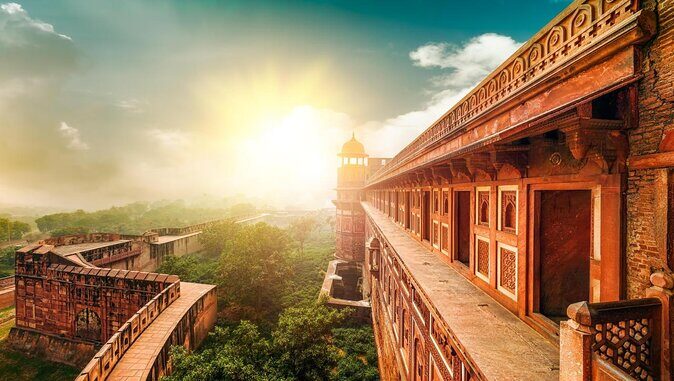
- Agra Fort after breakfast: Mughal power beyond the Taj
- Jaipur’s pink city day: City Palace, Jantar Mantar, and Hawa Mahal photos
- Day 4 back to Delhi: getting home without stress
- What’s included, what isn’t, and how to budget smart
- The real differentiator: Pappu Choudhary’s service style
- Who this Delhi–Agra–Jaipur tour suits best
- Should you book this Golden Triangle private tour?
- FAQ
- What cities are included in this tour?
- How does pickup and drop-off work?
- What time is the Taj Mahal sunrise visit?
- Are entrance fees for monuments included?
- What hotel is included, and for how many nights?
- Is transportation private and air-conditioned?
- Are guides included at each sightseeing stop?
- Is the tour really private for only my group?
- Is breakfast included?
Key things to notice before you go
- Sunrise Taj Mahal start: meet your guide at 5:45 AM for the early visit.
- Private guides at each stop: you’re not stuck reading signs—there’s guided context throughout.
- Delhi highlights with quick photo stops: Red Fort is a photo stop, plus Jama Masjid and Rajghat.
- Qutub Minar architecture lesson built in: the tour includes the 1192 AD origin detail and its towering scale.
- Agra Fort after Taj: you’ll go from sunrise views to Mughal power at Agra Fort.
- Jaipur’s must-sees packed tightly: City Palace, Jantar Mantar (including the world’s largest stone sundial), and Hawa Mahal for photos.
Private Delhi–Agra–Jaipur: what you’re really paying for
On a Golden Triangle run, the biggest variable is whether you’re fighting traffic and timing, or letting someone handle the logistics. This tour leans hard into the second option with a private, air-conditioned car and pickup/drop-off from your Delhi area start point (airport, hotel, or rail station, or your chosen spot in Delhi/Noida/Gurgaon). That means you spend your energy on sights instead of sorting routes, ticket lines, and who’s doing what.
The price is listed at $295 per person for the 4-day format, which can feel like a good deal if you actually use the included items: 3 nights in a 3-star hotel (twin sharing), local guides at each sight, and breakfasts. The private vehicle is also a big part of the value—Golden Triangle distances add up fast, and a shared setup can mean wasted time waiting around.
Two practical notes to keep your expectations realistic. First, this is a tight schedule—days run long, and you’ll have to roll with early starts. Second, monument entrance fees are not included, so your total budget will be higher once you add tickets.
If you’re the kind of person who likes structure—clear start times, clear stops, guides meeting you at each place—this style of tour usually feels like a win.
You can also read our reviews of more private tours in New Delhi


Delhi morning: Red Fort photo stop, Jama Masjid, Rajghat, and Qutub Minar
Delhi can be a lot in one day. The smart move here is splitting the feel of the city into two parts: Old Delhi landmarks with a guided walk, and New Delhi icons viewed from the road.
In the morning, you’ll start around 8:00 AM (or your given time) with pickup from your location. You then begin your guided sightseeing of Old and New Delhi with a Red Fort photo stop (quick, but at least you get the classic view), followed by Jama Masjid and Rajghat. Jama Masjid is the kind of place where having a guide helps you notice details you’d otherwise miss—layout, scale, and why it’s central to the city’s story.
After that, you transition into New Delhi by car. You’ll drive past India Gate, Rashtrapati Bhavan, and Parliament House. This doesn’t replace actually spending time inside those areas, but it does give you quick orientation: you get the capital’s geometry and symbolism before you move on.
Then comes Qutub Minar, a stop that’s specifically framed around its design and age. The tour notes it as an Indo-Islamic Afghan architecture landmark, built in 1192 AD, and mentions its status among the tallest minarets in the world. Even if you’ve seen photos before, Qutub Minar hits better in person—especially when someone points out what to look for.
The trade-off: Delhi sightseeing here is efficient rather than slow. If you love lingering, you’ll want to add extra time in Delhi on your own before or after the tour. But if you want a strong first taste without getting exhausted, this mix works.
The Taj Mahal at sunrise: why this timing matters
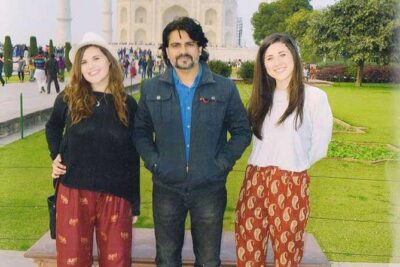
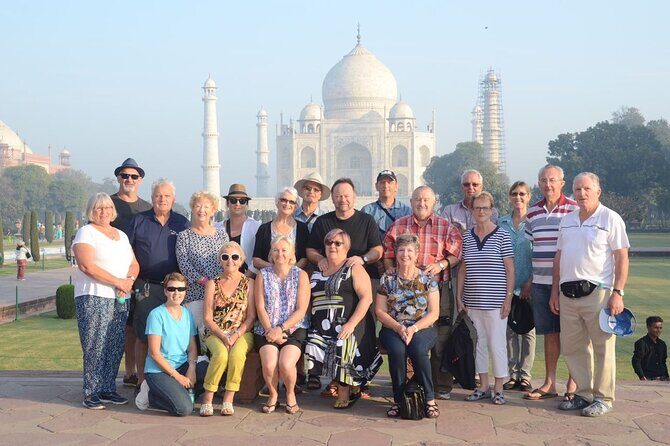
The centerpiece is the sunrise visit to the Taj Mahal, with a meet time of 5:45 AM. This is one of the few times of day when the Taj feels less like a photo stop and more like a living monument. Early light changes the look of the marble, and the atmosphere tends to feel calmer than later in the day.
A local guide meets you and takes you through the experience, which matters because the Taj is so iconic that it’s easy to treat it like a checklist. With a guide, you’re more likely to understand what you’re seeing—its placement, the design choices, and why this mausoleum became such a global reference point.
After the Taj visit, you head back to the hotel to freshen up, then you move into breakfast before the next major stop. That flow is important. Sunrise tours can feel brutal if you don’t have a recovery window, and this one builds that in.
Agra Fort after breakfast: Mughal power beyond the Taj
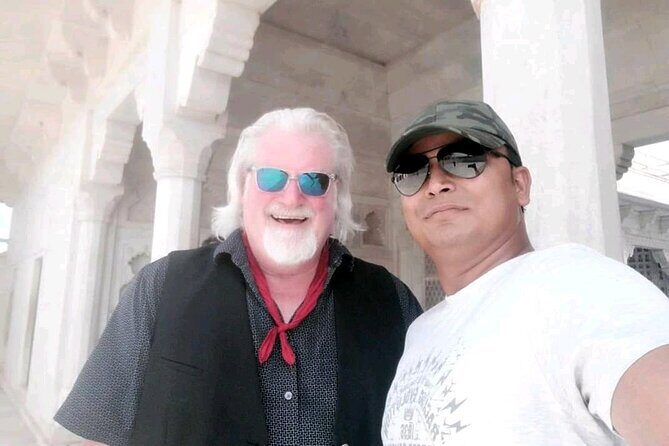
Once breakfast is handled, your next guided focus is Agra Fort. The tour frames it as the main residence of the Mughal emperors until 1638, which gives you a useful lens: this isn’t only a fortification, it’s also a seat of authority.
You’ll explore with a guide, and that helps because Agra Fort can feel like a maze of walls if you don’t have context. The defensive structure and the sense of control over the city are easier to understand when someone ties the space to how the Mughal rulers lived and governed.
One drawback to flag: Agra Fort tickets aren’t included in the tour price, so you’ll likely pay entrance fees here (and possibly at other monuments too). The good side is that it balances the day. You get the emotional peak of the Taj at dawn, then you shift gears to scale, power, and the practical reality of rule in the Mughal period.
Jaipur’s pink city day: City Palace, Jantar Mantar, and Hawa Mahal photos
Jaipur is where the Golden Triangle starts to feel more playful. After you arrive and check in, the sightseeing day is packed with big-name sights that are also different from each other—palace life, science/astronomy, and the city’s signature façade.
You’ll visit Maharaja’s City Palace, which is set up as a major stop in the tour. A guide makes a difference here because City Palace isn’t just one building—it’s a complex where style and function overlap. You’ll also see Jantar Mantar, including the fact that it features the world’s largest stone sundial. That detail is worth leaning into because it turns the stop from entertainment into understanding. You’re looking at a built system for measuring time and position using stone instruments.
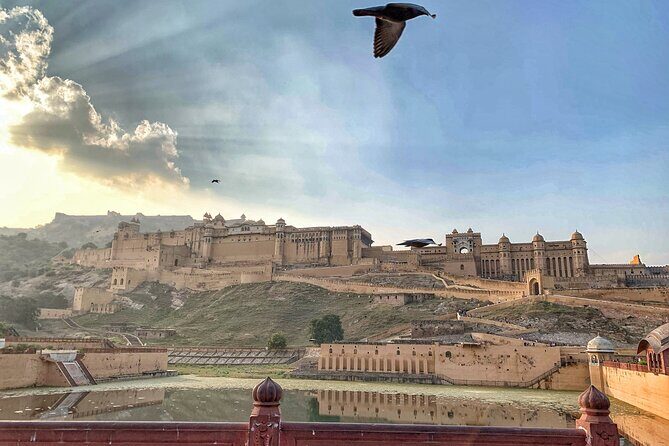
Then there’s the fort element: the tour includes a grand hilltop fort stop. The name isn’t specified in the details you provided, so I’d treat it as a hilltop fortress-style viewpoint day—plan for stairs, uneven surfaces, and the kind of views that make you forget you were tired earlier.
Finally, the day lands at Hawa Mahal, the Palace of Wind. This is where Jaipur’s look becomes memorable. Even if you’ve seen it in postcards, it’s the kind of façade you’ll want photos from multiple angles. This stop is also a nice pace-change: after palaces and observatories, it’s a visual moment.
If you don’t like doing “one photo spot, move on” too many times, Jaipur can feel quick. But the variety here is real, and the guide support helps keep the stops from turning into a blur.
A few more New Delhi tours and experiences worth a look




Day 4 back to Delhi: getting home without stress
On the final morning, you’ll have breakfast and then you’ll drive back to Delhi, with the ride time listed as about 5 hours (around 270 km). You’ll be dropped off at either your Delhi hotel, the airport, the railway station, or another location in Delhi/Noida/Gurgaon.
This is useful if you’re planning flights. Choose your flight times carefully so you’re not stuck racing the clock. A tour drop-off built around common transport points makes this part smoother than trying to solve logistics yourself at the end of a long trip.
What’s included, what isn’t, and how to budget smart
Here’s the deal, clearly:
Included
- 3 nights in 3-star hotels, twin sharing
- Private air-conditioned car for transport
- Private local guides for sightseeing
- Hotel or airport pick-up and drop-off
- Water bottles during the journey
- Breakfast for 3 days
Not included
- Monument entrance fees (listed as minimum around $50 per person)
- Lunch
- Anything not mentioned in inclusions
So how should you think about the value? If you compare just the big ticket pieces—private car + local guides + hotel nights—this price can make sense, especially if you’re traveling in a way that fits twin sharing. The entrance fees are the main “surprise” if you’re used to tours where tickets are bundled.
Planning-wise, I’d also expect long days and lots of steps. For sunrise Taj, you’ll want to wear comfortable shoes and something you can tolerate in cool morning air that warms up later.
The real differentiator: Pappu Choudhary’s service style
The strongest theme from the feedback you shared is the way the driving and coordination feel. Pappu Choudhary is described as respectful, helpful, honest, and professional, with driving that makes the group feel safe. That’s not a small point. In India, where traffic and timing can be chaotic, a steady, calm driver reduces stress a lot.
This tour also signals good communication: reviews point to coordination and guidance, and they specifically highlight good behavior from service providers. When someone like Pappu is on your side, it often feels less like you bought transport and more like you gained a local helper who knows how to keep things running.
Even if the monuments are the headline, this kind of service is what determines whether you enjoy the ride between them.
Who this Delhi–Agra–Jaipur tour suits best
This is a great match for you if:
- you want a private setup with less decision-making
- you like having local guides at the sights
- you care about the Taj Mahal sunrise timing
- you’re comfortable with a fast pace and long days
It may be less ideal if:
- you hate early starts (5:45 AM is not late)
- you want a slow, wandering travel style with lots of downtime
- you’re on a strict budget that can’t absorb monument tickets and meals outside the included breakfasts
Should you book this Golden Triangle private tour?
If you want an organized, guided, low-stress way to see Delhi, Agra, and Jaipur in about four days, this one is worth serious consideration. The combination of private transport, guides at each major sight, and the sunrise Taj Mahal slot gives you a high-impact experience without making you coordinate everything yourself.
Before you book, do one simple thing: add a realistic amount for monument entrance fees and lunch to your budget. Once you do that, the $295 price feels more like paying for the structure—hotel nights, private car comfort, and guided time—than just paying to get driven around.
If you’d like, tell me your travel month and whether you’re comfortable with early mornings. I can suggest a practical packing and pacing plan for sunrise Taj and the long drive days.
FAQ
What cities are included in this tour?
The tour covers New Delhi, Agra, and Jaipur.
How does pickup and drop-off work?
You’re picked up from your Delhi area location, such as Delhi airport, hotel, or railway station, or another place in Delhi/Noida/Gurgaon. You’re also dropped off at your hotel, Delhi airport, railway station, or a desired location in Delhi/Noida/Gurgaon.
What time is the Taj Mahal sunrise visit?
You meet your guide at 5:45 AM for the sunrise visit.
Are entrance fees for monuments included?
No. Monument entrance fees are not included, and the tour notes they can start around $50 per person.
What hotel is included, and for how many nights?
The tour includes 3 nights in 3-star hotels, with twin sharing.
Is transportation private and air-conditioned?
Yes. The tour includes transport by a private, air-conditioned car.
Are guides included at each sightseeing stop?
Yes. The tour includes all sightseeing with private local guides.
Is the tour really private for only my group?
Yes. It’s a private tour/activity, and only your group participates.
Is breakfast included?
Yes. Breakfast is included for 3 days.