REVIEW · GOA
4-Day Private Golden Triangle Tour: Delhi, Agra, and Jaipur
Book on Viator →Operated by Pacific Classic Tours India · Bookable on Viator
The Taj Mahal at sunrise is worth the alarm. This 4-day private Golden Triangle trip strings together Delhi and Agra highlights with local guides, included entry fees, and an air-conditioned vehicle so the trip feels structured instead of chaotic. You’ll move fast through the big names of India’s capital-to-palace-and-fort triangle, with time built in for early access and photo moments.
I really like the sunrise Taj Mahal timing and the way the tour handles the small-but-important logistics around it. You also get a smooth return battery-bus ride from the Taj Mahal parking, which helps when you’re meeting sunrise light and trying not to lose time.
One thing to consider: this itinerary is packed, with long drives between cities and several stops in a single day. If you’re the type who likes a slow morning or a leisurely lunch, you may feel the schedule more than you’d like.
In This Review
- Key highlights at a glance
- How this Golden Triangle tour stays efficient (without feeling rushed)
- Day 1 in Agra: the drive, the hotel, and Mehtab Bagh after dark
- Sunrise Taj Mahal plus Agra Fort: the best two-ticket combo in the triangle
- Jaipur’s day 3: Amber Fort, City Palace, and Jantar Mantar
- Delhi on day 4: Mughal tombs, Qutub Minar, Lotus Temple, and Lutyens-era landmarks
- Guide support and comfort: why the private setup matters
- Price and what $388 per person is really buying
- What to watch for: crowded-day myths, optional rides, and weather
- Who this tour fits best
- Should you book this tour? My practical take
- FAQ
- What is the duration of this Golden Triangle tour?
- Is this tour private or shared?
- What time does the tour start?
- Which cities does the itinerary include?
- Are hotel accommodations included?
- Is breakfast included?
- Are entry fees included?
- Do I need to pay for domestic flights?
- Is sunrise Taj Mahal included?
- Is there any extra cost during the trip?
Key highlights at a glance
- Sunrise Taj Mahal plus a Taj photo option from Mehtab Bagh
- Entry fees included for the sights listed in the program
- Battery-bus return from Taj Mahal parking to cut walking time
- Private local guides in each city, with clear historical context
- Jaipur’s mix of forts, palaces, and Jantar Mantar
- Delhi monuments from Mughal to colonial eras, all in one day
How this Golden Triangle tour stays efficient (without feeling rushed)
This is the classic Golden Triangle route, but built in a way that actually helps first-timers. Instead of spending your energy on tickets, directions, and timing, you’re basically handed a plan: private guide + private air-conditioned vehicle + entry fees for the key sites. That combination matters in India, where traffic and ticket lines can turn even a good day into a frustrating one.
The second big win is pacing across the three cities. You see the “greatest hits” of Delhi, Agra, and Jaipur, but you’re not only doing box-checking. The guide-led format means you’ll get why each place matters—Taj Mahal as Mughal artistry, Agra’s fort as power and defense, Jaipur’s architecture as Rajput splendor—rather than just staring at stone and hoping it clicks.
Still, do keep expectations realistic: this is not a slow-travel tour. Long road stretches and early starts are part of the bargain, because the payoff is getting the best light and fewer crowds at major sites.
You can also read our reviews of more private tours in Goa



Day 1 in Agra: the drive, the hotel, and Mehtab Bagh after dark
Your day starts early, around 8:00 am, with pickup and transfer toward the airport if you’re coming from another Indian city. From there, you fly to Delhi and then transfer by express highway to Agra. The road trip is about 3 hours, and it’s a useful setup: it gets you to the Taj region first so the next day can begin at sunrise without losing hours.
Once you arrive in Agra, the program moves you to a pre-booked hotel for check-in. That matters because Agra days often feel nonstop; having a real base on day one helps you settle in rather than just passing through.
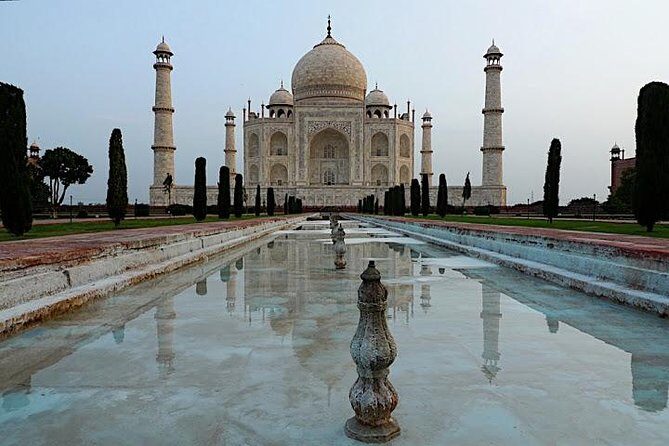
In the evening, you’ll do a photo tour of Taj Mahal from Mehtab Bagh—the riverside moonlit garden area. This is a smart choice because it lets you see the Taj from a different angle than the main entrance view. It’s also calmer. You’re not stuck in the thick flows of daytime visitors, and you get that “I see it, now I get it” moment when the monument feels like it’s part of the landscape instead of a lone object in a tourist lineup.
Tip: If you’re sensitive to early mornings, this is the day to keep your evening easy. Day two starts before the sun is up.
Sunrise Taj Mahal plus Agra Fort: the best two-ticket combo in the triangle
Day two is built around one goal: beat the crowds and see the Taj when it looks its most dramatic. You go early for the sunrise Taj Mahal visit, and the tour is structured for about two hours at the monument. There’s a real reason sunrise matters here. Light changes everything—the Taj’s white marble shifts tones from cool gray to warm glow, and the mood goes from loud-to-luxury in a very short time window.
Weather is the only wild card. The sunrise visit is subject to clear weather conditions, so if skies don’t cooperate you may need to accept that it won’t look exactly like the photos. Even so, early timing usually means more breathing room and a calmer first experience of the complex.
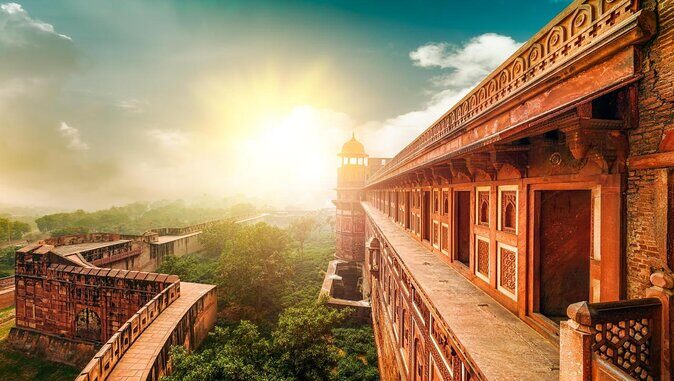
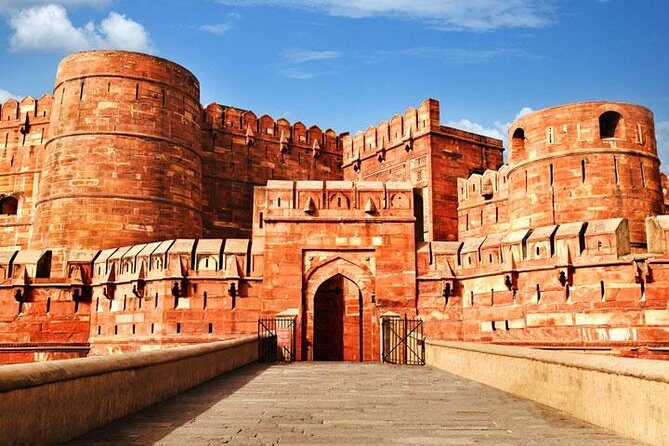
After the Taj, you head to Agra Fort, another UNESCO-listed site. This visit lasts about one hour and gives you a different story than the Taj. The Taj Mahal is about love and monument-building. Agra Fort is about rule, control, and defense along the Yamuna River. It’s one of those stops that helps you understand how Mughal power worked—who lived where, and why fortifications were essential.
Practical note: you’ll be using included entry fees for both of these major sites, so you’re not juggling ticket desk stress on the biggest day.
Jaipur’s day 3: Amber Fort, City Palace, and Jantar Mantar
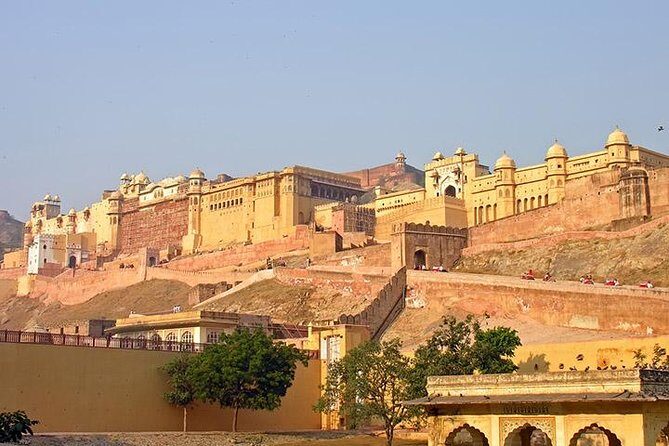
Then the tour swings west to Jaipur, the Pink City. You’ll drive after Agra sightseeing and check in to your hotel. Jaipur feels like a different country of colors and shapes. Fort walls turn honey-colored, palaces look patterned instead of plain, and even the streets feel more theatrical.
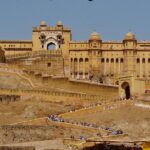
The Jaipur highlights start with Amber Fort (Amer), about 11 km from the city center. You spend around two hours here, and it’s the kind of place that rewards a guide. Amber Fort is dramatic architecture on a hillside, and it’s also layered—fortification, royal life, and design choices all at once. That’s why this stop is worth your focus time.
There’s also a quick note about transport at Amber: the program lists that a jeep ride is not included (it applies for 5 and above travelers and costs $3 per person). If your group is smaller, you may not have that option at all. Either way, plan for walking and steps.
Next comes a short but photogenic stop: Jal Mahal (Water Palace). You’ll have a photo stop of about 15 minutes, near the Man Sagar lake. It’s not a long visit, but it’s effective. The palace looks like it’s floating, and it’s an easy break between bigger sites.
Then it’s Hawa Mahal (Palace of Winds) as a photo stop. Expect about 15 minutes, and tickets aren’t included for this stop. This is one of those moments where you look up at the iconic honeycomb facade and get why it became a Jaipur symbol—windows built for airflow and the royal ability to observe street life.
After the photo stops, you’ll get into more interior, historically grounded places:
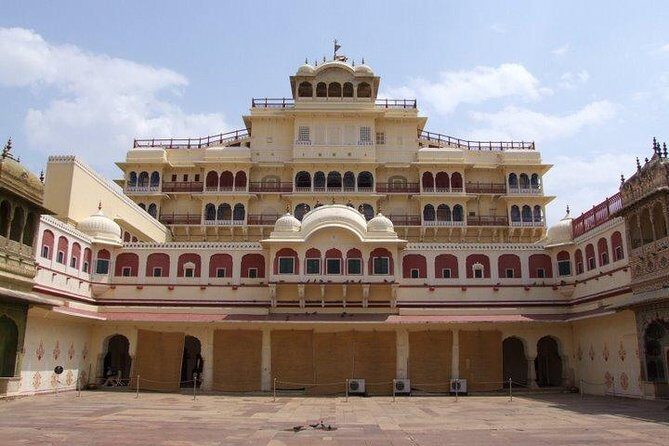
- City Palace of Jaipur (about one hour) as the royal residence complex with buildings from different eras
- Jantar Mantar (about one hour) as the UNESCO-listed astronomical observatory with geometric instruments
This is a strong combination because it covers both the visual side of Jaipur (palaces and courtyards) and the intellectual side (astronomy and measurements). It also helps break up the day so you’re not only climbing ramparts and staring at walls.
One more logistics detail: after the Jaipur sightseeing, you’ll drive back to Delhi and check into a hotel. That’s a long day, so if you book this, pack a little patience and plan an early wind-down in Delhi.
Delhi on day 4: Mughal tombs, Qutub Minar, Lotus Temple, and Lutyens-era landmarks
On the final day, you’ll start with Humayun’s Tomb, a UNESCO World Heritage site and a key Mughal monument in Delhi. The visit is about one hour, and it’s a great opener because the garden-tomb layout teaches you a lot about Mughal architectural taste—symmetry, marble inlay, and a sense of designed calm.
Next is Qutub Minar, also UNESCO-listed. You’ll have about one hour here, and it’s a must-stop for skyline watchers. The minaret’s height and Afghan-style tower/minaret design make it feel like Delhi’s history is reaching into the present.
Then you get a rare breather in the middle of the monument circuit: Lotus Temple. The program allows about one hour, and entry is free. The Lotus Temple is shaped like a lotus flower with 27 marble petals, and it gives you that pocket of quiet in a busy city. It’s also a nice change from forts and tombs—less about imperial power, more about worship and calm.
After that, you’ll visit India Gate (about 30 minutes), a 42m-high stone memorial arch designed by Lutyens. The stop focuses on remembrance for Indian soldiers who died in World War I and related campaigns. It’s short, but it lands because it’s so visually imposing.
The tour then includes additional Lutyens-era civic architecture:
- The circular, colonnaded building where the 1947 power handover from Britain to independent India took place, and where parliament still meets
- Rashtrapati Bhavan (President House), described as the official residence of the President of India and formerly home to the British Viceroy
Your exact time in each may vary, but the point is clear: this day isn’t only Mughal. It’s Delhi as a layered capital, from empire to independence to modern statehood.
At the end, you’ll be dropped off at Delhi airport or another desired location in Delhi, Gurugram, or Noida.





Guide support and comfort: why the private setup matters
What makes this tour feel good is the guide model. You’re not relying on audio apps or guessing at what to look for. You’ll have professional local private tour guides during sightseeing, which typically means you can ask questions in real time and adjust on the fly.
The reviews you’ve likely seen for similar tours tend to emphasize the human touch, and this one specifically has a track record of guides explaining the history in a way that makes the places feel understandable. People also praise how the tour setup supports comfort and safety—especially for first-time visitors—thanks to a dedicated driver and a vehicle that keeps you out of the stress of arranging transport between stops.
In practical terms, the air-conditioned vehicle is a big deal. Delhi and Agra traffic can be unpredictable, and the ability to move between points without cooking in heat is real value. Add unlimited bottled water, and your day-to-day fatigue stays lower than it would on a self-guided version.
If you can request a specific guide, Mahesh Kumar is named as a standout in the program’s feedback. The driver Bittu also comes up in the same context. You don’t need luck here, but choosing a guide you click with changes how much you enjoy each stop.
Price and what $388 per person is really buying
At $388 per person, the headline price looks simple. The value is in what’s included and what it replaces.
Here’s what you’re not paying extra for, based on the tour inclusions:
- Private air-conditioned transfers and sightseeing across the route
- Professional local private tour guides for sightseeing
- Entrance fees of the sights mentioned
- Battery bus/golf cart return ride from Taj Mahal parking
- Unlimited bottled water
- Breakfast is included only if you choose the option that includes hotels
On top of that, the tour is described as having group discounts and a mobile ticket. Group discounts can matter if you’re traveling with friends.
What’s not included:
- Domestic flights payable by guest (you handle the flight to Delhi based on the program)
- Meals beyond breakfast
- Jeep ride at Amber Palace (not included; listed cost of $3 per person for 5+ travelers)
- Items like Hawa Mahal ticketing not included for that specific photo stop
So the real question is: do you want to buy time and certainty? If yes, this price makes sense because it reduces multiple line items—tickets, guide time, and transport coordination—that can add up quickly when you DIY. If you’re comfortable planning everything yourself and you already have transport sorted, you may find a cheaper route. But for many people, the convenience of having it all lined up is the point.
What to watch for: crowded-day myths, optional rides, and weather
This itinerary has two main friction points.
First is the schedule density. You’ll do sunrise Taj plus another UNESCO site in Agra, then move to Jaipur for forts/palaces/observatory, then return to Delhi for multiple major monuments. You’ll see a lot, but you’ll also keep moving.
Second is timing reliability around weather. The sunrise Taj visit is subject to clear weather conditions. That doesn’t mean it’s a gamble, but it does mean you should stay flexible about what the light and views look like.
Also, pay attention to the “free vs ticket included” pattern:
- Some stops are free entry in the program (like India Gate and Lotus Temple)
- Some sights include tickets (like Taj Mahal, Agra Fort, Amber Palace, City Palace, Jantar Mantar, Humayun’s Tomb, Qutub Minar)
- Some are photo stops with ticket details called out (like Hawa Mahal not included)
If you want to spend more time at one place, a private guide usually helps you adjust within the overall plan.
Finally, pack for heat changes and early starts. Dress code is listed as smart casual, and the sunrise schedule means you’ll want layers for early morning comfort.
Who this tour fits best
This is a strong fit for:
- First-timers who want the Golden Triangle with minimal planning
- People who value private guiding and clear historical context
- Travelers who like efficient sighting and are okay with long travel days
- Visitors who want entry fees handled and don’t want to hunt down tickets mid-trip
It may be less ideal if you:
- Prefer slow travel with lots of downtime
- Want heavy shopping or long independent meals built into the schedule
- Are highly sensitive to early starts or have trouble with step-heavy monuments
Should you book this tour? My practical take
If you want a straightforward way to see Delhi, Agra, and Jaipur in four days—with guides, air-conditioned rides, and entry fees covered—this tour is a solid choice. The sunrise Taj Mahal and included logistics (like the battery-bus return) are the kind of details that make a difference once you’re actually there. And the guide-driven pacing keeps the stops from feeling like disconnected photos.
I’d book it if you’re the type who likes structure. If you’re more spontaneous and want to roam without a timetable, you might feel boxed in. But if your goal is an efficient first Golden Triangle intro, this one does what it promises, and it does it in a way that usually feels safe, comfortable, and easy to manage.
FAQ
What is the duration of this Golden Triangle tour?
The tour lasts 4 days (approximately).
Is this tour private or shared?
It is a private tour/activity, with only your group participating.
What time does the tour start?
The start time is 8:00 am.
Which cities does the itinerary include?
It covers Delhi, Agra, and Jaipur.
Are hotel accommodations included?
3-nights accommodation on twin sharing is included only if you choose the option that includes hotels.
Is breakfast included?
Breakfast is included if you choose the option with hotels (breakfast in the hotels of stay), and the tour lists breakfast (3).
Are entry fees included?
Yes—entrance fees for the sights mentioned in the program are included in the cost.
Do I need to pay for domestic flights?
Yes. Domestic flights are payable by the guest.
Is sunrise Taj Mahal included?
Yes. The Taj Mahal sunrise visit is included, but it is subject to clear weather conditions.
Is there any extra cost during the trip?
A jeep ride at Amber Palace in Jaipur is not included (listed as applicable for 5 and above travelers at $3.00 per person). Tickets are also not included for Hawa Mahal since it’s a photo stop.