REVIEW · NEW DELHI
3 Nights, 4 Days Golden Triangle Tour From Delhi
Book on Viator →Operated by Arush Tours · Bookable on Viator
Four days can feel like ten.
This Golden Triangle tour connects New Delhi, Agra, and Jaipur with a private, air-conditioned ride and a guide who keeps things moving (without turning it into a boring checklist). I like that pickup and drop-off are handled, and you get breakfast each day you’re in the program—simple, useful travel support right up front.
What I really liked is how the itinerary gives you early-face time with the big names: Taj Mahal and Agra’s Mughal sites on day 1, then Fatehpur Sikri on the way to Jaipur, and finally Jaipur’s signature stops before you head back to Delhi. In the feedback I saw, guide support came up again and again, including Arman Akhtar and Farhan, plus a mention of a well-driven, newly arranged cab with the driver named Shami.
One thing to consider: monument entrance fees aren’t included. Some places are listed as free (like Fatehpur Sikri and India Gate), but others aren’t, so plan your budget with that in mind.
In This Review
- Key Things That Make This Tour Work Well
- Golden Triangle in 4 Days: The Real Expectation
- Day 1: Agra First, Taj Mahal Then Agra Fort and Itmad-ud-Daula
- Taj Mahal: Why starting here is a win
- Agra Fort and the feeling of a walled city
- Itmad-ud-Daula: the Baby Taj moment
- Day 2: Agra to Jaipur via Fatehpur Sikri (260 Km / 5 Hrs)
- Fatehpur Sikri for free: why this adds value
- Jaipur arrival and hotel check-in
- Day 3: Jaipur Highlights—Hawa Mahal Photos, Amber Fort, City Palace, Jantar Mantar, Then Back to Delhi
- Hawa Mahal: a quick look at Jaipur’s iconic facade
- Amber Palace: the main event
- City Palace Museum: meaning beyond the postcard
- Jantar Mantar: clocks that are made of stone
- Evening drive back to Delhi
- Day 4: Delhi’s Classic Monuments—Raj Ghat, India Gate, Qutb Minar, Lotus Temple, Humayun’s Tomb
- Raj Ghat: Gandhi’s memorial stop
- India Gate: the free stop that still feels important
- Qutb Minar: UNESCO complex energy
- Lotus Temple: a different kind of calm
- Humayun’s Tomb: a final Mughal note before you head out
- Price and Value: What $151.43 Gets You (and What It Doesn’t)
- Service Quality: Guides Like Farhan and Arman Akhtar Matter
- Who This Tour Fits Best
- Should You Book This Golden Triangle Tour?
- FAQ
- What’s included in the Golden Triangle tour package?
- Are monument entrance fees included?
- Where does pickup happen for this tour?
- Is this a group tour or private?
- What are the main cities you visit?
- What’s the tour cancellation policy?
Key Things That Make This Tour Work Well
- Private, air-conditioned transfers keep the long distances from turning into a grumpy endurance test.
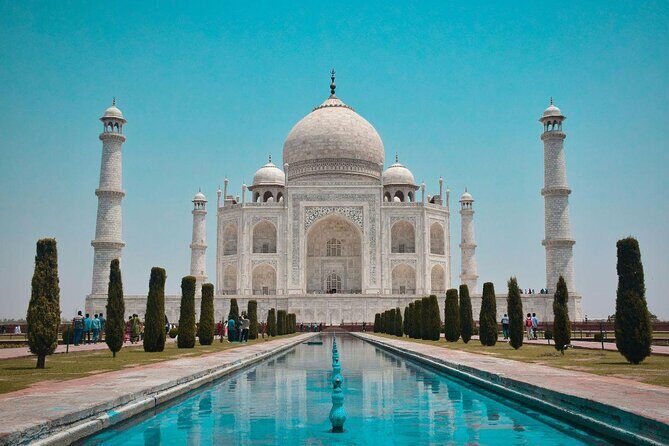
- Taj Mahal + Agra Fort + Baby Taj style stop (Itmad-ud-Daula) gives you more than one angle on Mughal-era power.
- Fatehpur Sikri is included for free (per the itinerary notes), which is a smart value boost on day 2.
- Jaipur’s core trio—Amber Palace, City Palace, and Jantar Mantar—hits both palaces and sights you can actually understand on-site.
- Delhi wrap-up of five major classics covers Gandhi’s memorial, two UNESCO-linked stops, and more.
- Guide mentions like Arman Akhtar and Farhan show that service quality is a real focus, not an afterthought.
Golden Triangle in 4 Days: The Real Expectation
The Golden Triangle is famous for a reason. In four days, you’re basically doing a greatest-hits tour of Indian empire history and palace architecture: Mughal grandeur in Agra, Rajput splendor in Jaipur, and Delhi’s blend of modern landmarks and older monuments.
The format here is practical. You’ll travel by private vehicle between cities, with a professional guide working as your translator of meaning—what you’re seeing, why it matters, and how to pace your time. You also get hotel pickup and drop-off in the Delhi area (the tour notes include Delhi, Gurgaon, and Noida), which saves you from the usual hassle of finding the right meeting point after a travel day.
That structure matters. Without it, people burn time bargaining for rides, waiting around at the wrong place, or showing up too late for the monuments when energy is already gone. Here, the planning is baked in: drive times are included, and the tour organizes the day by day flow.
A few more New Delhi tours and experiences worth a look

Day 1: Agra First, Taj Mahal Then Agra Fort and Itmad-ud-Daula
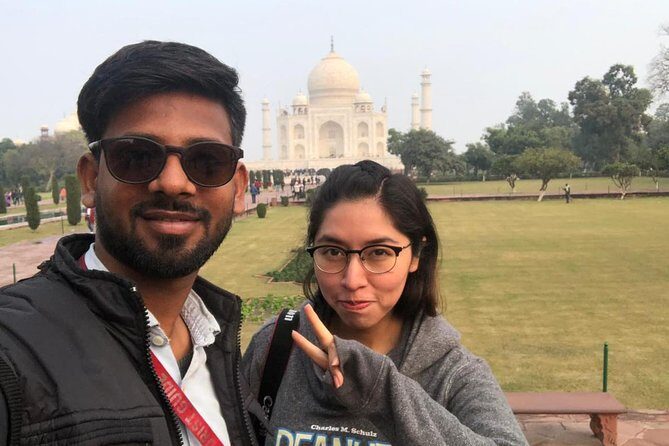
Day 1 is basically a direct run toward Agra with Taj Mahal at the front of the line. After pickup from your accommodation in the Delhi area, you transfer to Agra by private, air-conditioned vehicle for about 3.5 hours. Once you’re there, the itinerary focuses on the most visually iconic Mughal sites first—then layers in more.
Taj Mahal: Why starting here is a win
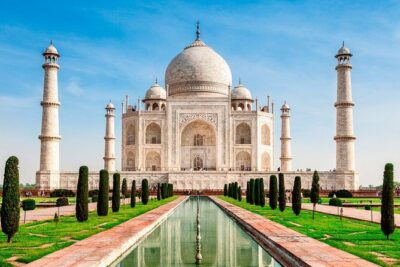
You’ll see the Taj Mahal, with about a 3-hour window listed. Entrance tickets are not included, but the time allocation suggests you’re not meant to race through it. What I like about placing Taj Mahal on the first day is simple: it gives you a hit of wow before you start collecting details. After that, Agra’s other sites make more sense because you already understand the Mughal style.
Agra Fort and the feeling of a walled city
Next up is Agra Fort (listed as the Red Fort in the itinerary notes), followed by free time for lunch on your own. The fort stop is about 2 hours, and it’s the kind of place where you learn to look differently: instead of one perfect facade, you notice the scale of walls, pavilions, and the way a city organized itself for protection.
A practical note: lunch is on your own here, so I’d treat Day 1 as the day you keep your schedule flexible for food choices, rather than expecting every minute to be handled.
Itmad-ud-Daula: the Baby Taj moment
You’ll also stop at Itmad-ud-Daula (often called the Baby Taj). The tour lists about 1 hour for this mausoleum. I like this stop because it’s smaller than Taj Mahal, but still deeply tied to the same Mughal design language. It helps you notice patterns: the care in proportions, the detail work, and the gradual shift from grand statement to intimate craft.






Day 2: Agra to Jaipur via Fatehpur Sikri (260 Km / 5 Hrs)
Day 2 is a travel-with-a-purpose day. After breakfast, you check out and head to Jaipur, and on the way you stop at Fatehpur Sikri. The drive is listed as 260 km / about 5 hours, and the Fatehpur Sikri stop is about 2 hours.
Fatehpur Sikri for free: why this adds value
The itinerary notes Fatehpur Sikri with an admission ticket free label. Even if your priorities lean more toward Jaipur, that matters for cost. It turns day 2 into a better deal: you’re not just paying for transit, you’re getting a major historical site without the ticket hit.
Also, Fatehpur Sikri tends to be the kind of stop that rewards patience. You won’t just see one monument; you’ll see a set of spaces that feel designed as a whole. With a scheduled time block, you’re not stuck rushing because you’re worried about missing your transport.
Jaipur arrival and hotel check-in
After Fatehpur Sikri, you arrive in Jaipur and check in to your hotel (the itinerary says you’ll check in upon arrival). This is a sensible break after a travel day. It keeps the rest of the tour from feeling like nonstop sprinting.
Day 3: Jaipur Highlights—Hawa Mahal Photos, Amber Fort, City Palace, Jantar Mantar, Then Back to Delhi
Day 3 is where Jaipur earns its reputation. The day structure is interesting: it starts with a quick photo stop at Hawa Mahal (about 1 hour), then shifts into longer, more substantial palace and museum-style stops, and ends with a return drive back to Delhi.
Hawa Mahal: a quick look at Jaipur’s iconic facade
You’ll get a brief photo stop at Hawa Mahal, the Palace of Breeze. Since the time is tight and it’s framed as a photo stop, don’t treat it like a full sit-down visit. Use it to get your angles, take your pictures, and keep going.
Amber Palace: the main event
Next is Amber Palace (Amber Fort) for about 2 hours. This is the kind of stop where I like having time because you can pace yourself. You’re not just looking at the walls; you’re also reading the layout and the way the complex works as a fortress-palace hybrid.
If you’re short on time in Jaipur on your own, Amber can be the one place that’s worth prioritizing. Here, it’s built in, which is a big deal for people who don’t want to fight with schedules.
City Palace Museum: meaning beyond the postcard
Then you visit the City Palace Museum (about 1 hour). The itinerary lists collections including paintings, carpets, weapons, and costumes. I find museum-style stops helpful because they add context. After seeing structures, you get a sense of what people wore, used, and valued—small details that make the palace experience feel less abstract.
Jantar Mantar: clocks that are made of stone
After City Palace, you head to Jantar Mantar, the observatory with a 90 ft sundial, plus time to explore old city markets. The itinerary notes about 1 hour here.
I like Jantar Mantar because it’s not just decoration. It’s built to measure the sky, which is a different way of seeing an observatory than a modern building. If you’ve ever wondered how people tracked time and movement of celestial objects before digital tools, this is a strong, visual way to get it.
Evening drive back to Delhi
The day ends with an evening drive back to Delhi and an overnight hotel stay. The schedule here is the tradeoff: you get a full day of Jaipur, but you don’t linger there. That’s fine if you like covering the big highlights and moving on, and not ideal if you want slow wandering.
Day 4: Delhi’s Classic Monuments—Raj Ghat, India Gate, Qutb Minar, Lotus Temple, Humayun’s Tomb
Your final day stays in Delhi and focuses on a lineup of major landmarks. After breakfast, you check out and start with Raj Ghat, then work through the city before departure.
Raj Ghat: Gandhi’s memorial stop
You’ll visit Raj Ghat (about 1 hour). It’s a quieter kind of stop compared with the palace sites earlier in the trip. I appreciate this pacing because it shifts the mood from empire architecture to a memorial space tied to modern Indian history.
India Gate: the free stop that still feels important
Next is India Gate for about 1 hour, and it’s listed as free in the itinerary notes. Even if you’ve seen it in photos before, it’s the kind of place that helps you understand Delhi’s ceremonial layout. It also gives you a low-cost win on the budget side.
Qutb Minar: UNESCO complex energy
After that you’ll visit Qutb Minar as part of the Qutb complex (listed as UNESCO). The tour gives about 1 hour, and entrance isn’t included per the general note. This stop is a big contrast from the Mughal and Rajput styles you saw earlier.
Lotus Temple: a different kind of calm
Then you go to Lotus Temple for about 1 hour. The itinerary notes it as a Bahá’í House of Worship dedicated in December 1986 and famous for its flowerlike shape. I like having a modern-feeling stop in the mix because it stops the trip from being only stone-and-palace all the way down.
Humayun’s Tomb: a final Mughal note before you head out
You end at Humayun’s Tomb for about 1 hour, the tomb of Mughal Emperor Humayun, commissioned by his first wife. This is a smart closing choice. It pulls your story back toward Mughal architecture, giving you a final visual link across the whole route.
Price and Value: What $151.43 Gets You (and What It Doesn’t)
At $151.43 per person, the biggest value drivers are the basics that normally cost time and hassle: professional guide, hotel pickup and drop-off, private air-conditioned transfers, and 3 nights accommodation (if you choose that option), plus breakfast for 4 days.
That’s a meaningful package when you consider how expensive and annoying it can be to coordinate rides and tickets city to city on your own. Also, the tour lists all taxes, parking fees and handling charges, which reduces surprise add-ons.
What’s not included is monument entrance fees. The itinerary does mark at least two items as free (Fatehpur Sikri and India Gate), but others are explicitly not included. I’d treat entrance fees as your main extra budget line, then plan your spending accordingly.
One more value angle: the tour is described as private—meaning only your group will participate. In practice, that usually means less waiting around and fewer awkward logistics than shared group tours.
Service Quality: Guides Like Farhan and Arman Akhtar Matter
Good tours don’t just show up on time. They explain what you’re seeing and they keep the day smooth.
In the feedback tied to this experience, guide support came through strongly, including Farhan and Arman Akhtar, both praised for friendly guidance and organized service. There’s also a note about travel comfort in humid conditions: a well-organised new cab and the driver Shami with great driving skills.
That may sound like small stuff, but it affects your entire mood. If you’re sitting comfortably for long drives, with a guide who knows how to pace stops, you end up seeing more and stressing less.
Who This Tour Fits Best
This is a good match if you:
- Want a structured first-time Golden Triangle experience
- Prefer private transfers rather than figuring out intercity logistics
- Like the big highlights: Taj Mahal, Agra Fort sites, Amber Palace, and Delhi’s major classics
- Appreciate guide-led pacing instead of running your own schedule
This is less ideal if you:
- Hate long driving days (day 2 and the day 3 return to Delhi can feel like a lot)
- Want to spend lots of time in one city without moving on
- Don’t want to think about entrance fees budgeting
Should You Book This Golden Triangle Tour?
I’d recommend it for most first-timers doing the Golden Triangle in one shot. The combination of pickup, private air-conditioned vehicle, and a guide-led route through the major monuments is exactly what makes a short trip feel complete rather than chaotic.
Book it if you want an efficient, meaningful arc: Mughal masterpieces in Agra, Rajput palace power in Jaipur, and Delhi’s major monuments to close. Skip it or plan carefully if your priority is slow travel or if entrance fees would be a dealbreaker for your budget.
If you do book, my practical tip is to budget for entrance tickets separately and mentally treat each day as a mix of driving, set-piece monuments, and brief free time for meals. It’s a busy itinerary, but it’s busy in the right direction.
FAQ
What’s included in the Golden Triangle tour package?
The tour includes 3 nights accommodation (if chosen option), professional guide, hotel pickup and drop-off, all taxes, parking fees and handling charges, and breakfast for 4 days. Monument entrance fees are not included.
Are monument entrance fees included?
No. The tour notes say any monument entrance fees are not included. Some stops are listed as free in the itinerary notes, such as Fatehpur Sikri and India Gate.
Where does pickup happen for this tour?
Pickup is offered from your accommodation in the Delhi region, including Delhi, Gurgaon, or Noida.
Is this a group tour or private?
This is described as a private tour/activity. Only your group will participate, and there is also mention of group discounts.
What are the main cities you visit?
You visit three cities: New Delhi, Agra, and Jaipur, with transfers between them across the 4 days.
What’s the tour cancellation policy?
You can cancel for a full refund if you cancel up to 24 hours in advance of the experience’s start time. If you cancel less than 24 hours before, the amount paid is not refunded.