REVIEW · NEW DELHI
3 Days Golden Triangle Tour from Delhi
Book on Viator →Operated by ROYAL WORLD TRAVEL, INDIA · Bookable on Viator
Golden Triangle tours are popular for a reason: in just a few days you see three different faces of India. This one strings together Delhi, Agra, and Jaipur with a guide-led pace that’s designed to keep you moving without feeling rushed all day long. You get the big-ticket Mughal and Rajput sights, plus one historic stop that most first-timers don’t expect.
Two things I’d put near the top: first, the service tone. The operator is described as trustworthy and well organized, with staff ready to meet you on arrival in Delhi and keep things running smoothly. Second, the sightseeing mix. You don’t just tick off monuments; you see how forts, tombs, and royal architecture fit into one connected story.
One thing to consider: entrance fees and meals are not included, and day-to-day tickets can be the difference between a “great deal” and an “okay deal.” Also, you’ll be in an AC vehicle most of the time, which is comfortable, but it does mean fewer unplanned stops and less wandering off-script.
In This Review
- Key highlights worth planning around
- Why the Golden Triangle works so well in 3 days
- Price and logistics: what $335 covers (and what it doesn’t)
- Day 1 in Agra: forts, tombs, and the Taj at dusk
- Agra hotel check-in (3-star, twin sharing)
- Agra Fort: more than background scenery
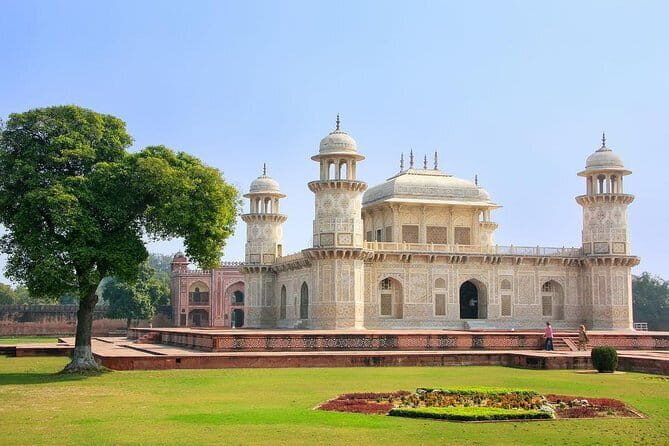
- Itmad-ud-Daula’s tomb: a key Mughal stop
- Taj Mahal at dusk: plan for patience
- Day 2: Fatehpur Sikri and Jaipur’s royal trio in one full day
- Fatehpur Sikri: the Ghost Capital break
- Jaipur check-in: the Pink City reset
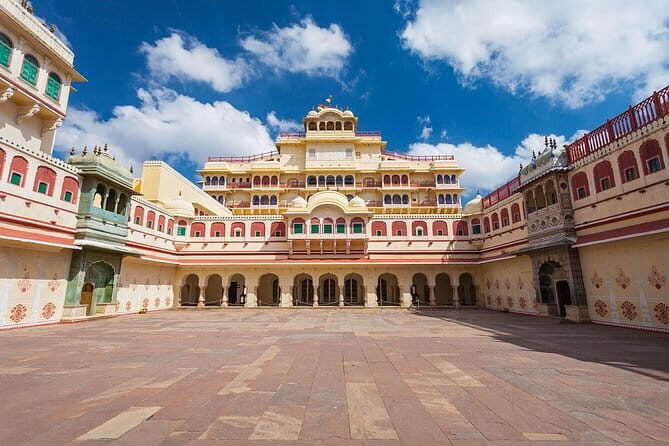
- City Palace: where design meets power
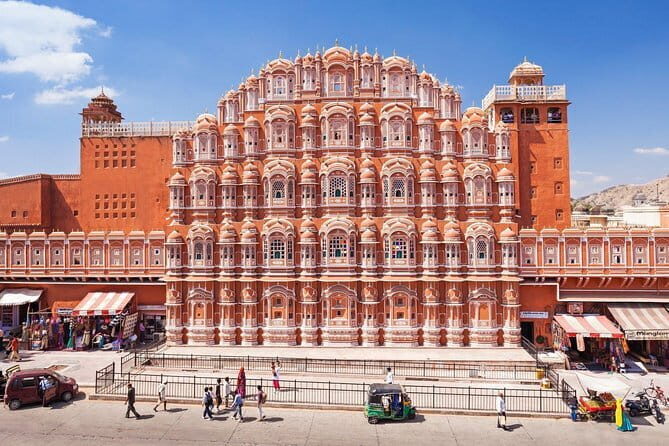
- Hawa Mahal: the Palace of Winds
- Jantar Mantar: Jaipur’s “science stop”
- Day 3: Amber Palace first, then back to Delhi for your flight
- Hawa Mahal area revisit?
- Amber Palace: hilltop drama
- Drive to Delhi International Airport
- Service style: why the guides and coordination matter on short trips
- What’s included (and what you should plan for)
- Included
- Not included
- Who should book this tour, and who might not love it
- Should you book this 3 Days Golden Triangle Tour from Delhi?
- FAQ
- FAQ
- What cities are included in this Golden Triangle tour?
- How long is the tour?
- What time does the tour start?
- Do I get pickup and drop-off?
- How many hotel nights are included?
- Is an English-speaking guide included?
- Are monument entrance fees included?
- What meals are included?
- Is the tour private?
Key highlights worth planning around
- Taj Mahal at dusk: a time slot that usually gives softer light and a more atmospheric visit window.
- Agra Fort and Itmad-ud-Daula: you get more than the headline monument, including a key Mughal-era tomb stop.
- Fatehpur Sikri stop: a real history bonus on the way to Jaipur, not just a roadside break.
- Jaipur’s royal core: City Palace, Hawa Mahal, and Jantar Mantar in one day.
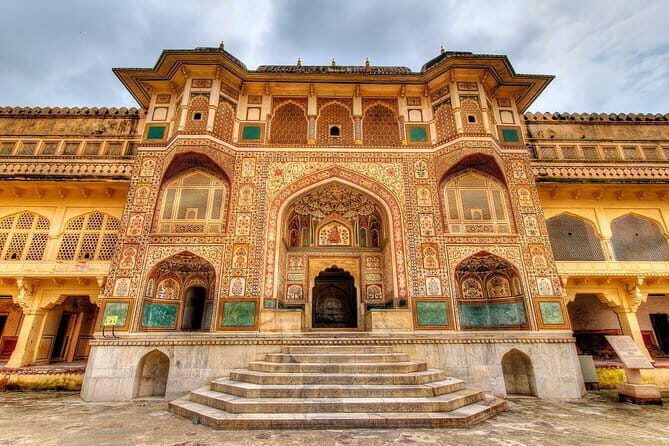
- Amber Palace on Day 3: arriving at the hilltop fort before heading back to Delhi keeps the trip efficient.
- Private group setup: your group stays together, with an English-speaking guide and AC car doing the heavy lifting.
Why the Golden Triangle works so well in 3 days
The Golden Triangle is basically a fast intro to three major cultural eras of North India. Delhi brings you a modern gateway city feel with deep layers of past rule. Agra concentrates Mughal power into stone and symmetry. Jaipur takes that royal design language and turns it into something you can actually walk through in daylight.
The value here is that the itinerary is built to reduce decision fatigue. Instead of you mapping out routes, hiring drivers, and trying to stitch monuments together across three cities, the plan links them with a guide, an AC vehicle, and two hotel nights. That matters most if your time is tight—like if you land in Delhi and need to be back for a flight.
The operator also leans into what you want on short trips: clear pacing, enough time to see the highlights, and hands-on coordination. In the feedback you’ll notice a pattern—people call out smooth organization and careful attention to details like meeting you when you arrive and keeping transfers running on schedule.
A few more New Delhi tours and experiences worth a look



Price and logistics: what $335 covers (and what it doesn’t)
At $335 per person for roughly three days, the biggest “included” components are the stuff that usually costs real money when you book separately: 2-night 3-star hotel stays (twin sharing), an English-speaking guide, and an AC vehicle for the Delhi–Agra–Jaipur movement.
It’s also priced like a tour where you pay for convenience. The route is long enough that you’d either spend time arranging transport or pay for it anyway. This tour folds in the vehicle and driver, so you can focus on sightseeing rather than logistics.
What’s not included is equally important. Monument entrance fees aren’t listed in the inclusions, and lunch/dinner aren’t included either. One part of the plan notes admission as free for a segment, but the overall terms state entrance fees are not included—so treat that as a “confirm before you go” item.
If you budget entrance fees up front, the trip becomes much easier to judge.
A few practical details from the setup:
- Start time is 9:00 am.
- You get pickup offered and a greeting on arrival at Delhi International Airport.
- Day 3 ends with a transfer back to Delhi International Airport, which is ideal if you already have onward travel booked.
If you’re the type who hates last-minute hassles, this style of package planning usually feels worth it.
Day 1 in Agra: forts, tombs, and the Taj at dusk
You start by landing in Delhi, then you’re driven straight toward Agra. That “move first, unpack later” approach is common on fast tours, and it works because Agra’s top sights are concentrated, so you can make the day count once you arrive.
Agra hotel check-in (3-star, twin sharing)
After arrival, you check in for the night in a 3-star hotel, twin sharing. This is a sweet spot for many people on the Golden Triangle circuit: comfortable enough to recharge, but not priced like a luxury stay.
Agra Fort: more than background scenery
In the afternoon, the sightseeing focuses on Agra Fort, a major red sandstone stronghold on the Yamuna River. Fort visits are often “second-tier” for first-timers, but Agra Fort helps you understand how power worked. You’re looking at walls that weren’t built for looks—they were built to control, defend, and rule.
One practical perk of having a guide: you’ll usually get the right context about what you’re seeing and why it was built in that exact way. That turns “pretty buildings” into “I get what I’m looking at.”






Itmad-ud-Daula’s tomb: a key Mughal stop
Next up is Itmad-ud-Daula’s tomb. This is the kind of place that’s easy to skip when you’re chasing the Taj. I like it because it expands your understanding of Mughal architecture and the cemetery culture around it. It also gives you a calmer change of pace after forts and courtyards.
Taj Mahal at dusk: plan for patience
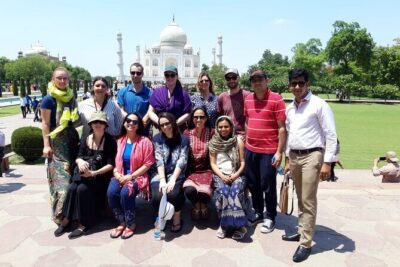
As the day cools down, you visit the Taj Mahal. The Taj at dusk is a smart scheduling idea. Light tends to soften, crowds can feel different than midday, and the monument often feels more emotional when the day is winding down.
Here’s the one logistics caution: the schedule notes a day 1 admission ticket as free, but entrances are listed as not included overall. So if you want to avoid surprise costs, ask ahead what is actually covered for the Taj.
Overall, Day 1 is a strong start because it gives you the full Mughal flavor: power (Agra Fort), artistry and tomb culture (Itmad-ud-Daula), then the headline at Taj time.
Day 2: Fatehpur Sikri and Jaipur’s royal trio in one full day

Day 2 is where the tour shifts from Mughal to Rajputana storytelling—while still throwing in a history detour that’s worth your time.
Fatehpur Sikri: the Ghost Capital break
After checking out, you drive toward Jaipur with a stop at Fatehpur Sikri, often described as a “ghost capital.” Even if you’ve only seen it in photos, you’ll recognize it as a place built for grandeur that didn’t stay in use the way it was intended.
You’ll visit the tomb of Salim Chishti and Akbar’s residential complex. This is a good move because it’s not just a quick photo stop; it’s an actual immersion into the kind of belief system and court culture that shaped Mughal decisions. If you like history that feels physical—courtyards, carved details, and scale—you’ll appreciate this.
Jaipur check-in: the Pink City reset
Then you continue to Jaipur and check in at your hotel. This hotel night matters because Jaipur is best enjoyed when you can pace yourself through royal sites without feeling like you need to rush.
City Palace: where design meets power
Jaipur’s big centerpiece is City Palace. It’s a mix of Rajput and Mughal architecture, and that blend is exactly what makes Jaipur more than just “pretty.” You’ll walk through royal space built for administration, ceremony, and showmanship.
Hawa Mahal: the Palace of Winds
Next is Hawa Mahal, the five-storied facade built in 1799 so royal women could view street life from inside. Even if you never sit in a window yourself, you can feel the purpose: the building is designed for vision and privacy at the same time.
One reason I like including Hawa Mahal: it’s a different kind of royal architecture. It’s not a fortress wall or a tomb. It’s a crafted urban presence.
Jantar Mantar: Jaipur’s “science stop”
Then comes Jantar Mantar, an astronomical observatory. This part can surprise people who think of India only as monuments and markets. It’s old-school science—measuring time and the sky using massive instruments. The guide helps here; without context, it can feel like a bunch of shapes.
The day ends back at the hotel. The main downside of packing so many sights into one day is fatigue. If you’re sensitive to long walking stretches or heat, you’ll want to go slow, drink water, and plan for breaks where your guide suggests.
Day 3: Amber Palace first, then back to Delhi for your flight
Day 3 is the “wrap and return” day. It’s not meant to be slow. It’s built for one last big sight and then smooth airport timing.
Hawa Mahal area revisit?
The schedule specifically highlights Hawa Mahal – Palace of Wind with Day 3 time, but the main Day 3 action is the drive out of Jaipur toward Amber. In practice, it usually means you’re starting the day with Jaipur’s royal highlights in mind, then moving on quickly.
Amber Palace: hilltop drama
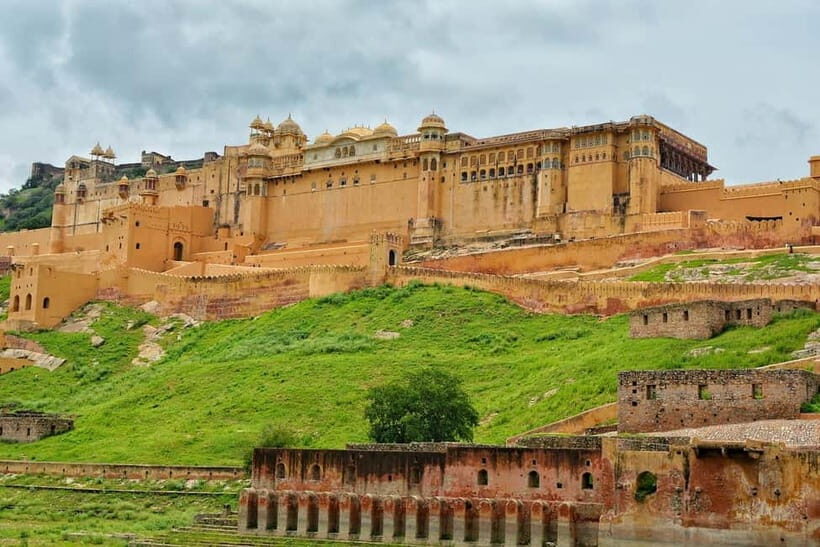
You head toward Amber Palace, the fort located on top of the Aravali Hills. Amber is often the one stop that makes people feel like the tour paid off. The fort setting changes how the buildings look. From the hilltop, you get that sense of scale that flat-lot monuments can’t deliver.
This is also a strong “last major photo moment” because it tends to feel cinematic, and it’s easier to love even if you’re already monument-saturated.
Drive to Delhi International Airport
After Amber, you drive back to Delhi and transfer to Delhi International Airport for your onward journey. The tour lists Day 3 as around 12 hours, so expect a longer day with less free time.
This is ideal if you already know your departure time. It’s less ideal if you want to add extra sightseeing in Delhi on the way out, since the plan is designed to get you back to the airport.
Service style: why the guides and coordination matter on short trips
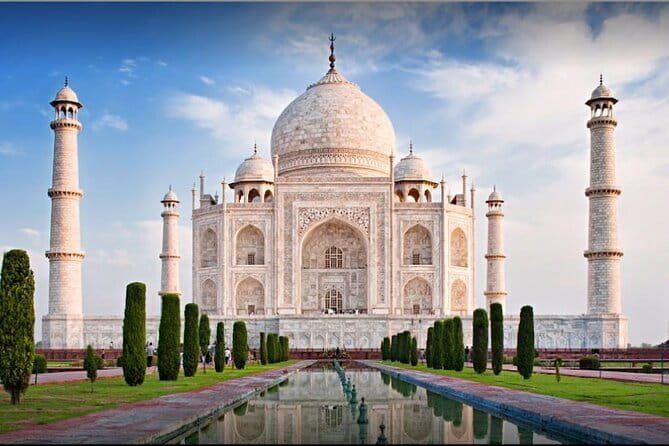
On a three-day Golden Triangle tour, the guide’s job isn’t just to name buildings. It’s to help you prioritize, pace, and not miss what makes each place special.
This operator includes an English-speaking guide and also emphasizes private tour guidance. That combination often translates into a smoother experience when you hit things like:
- crowded entry points
- timing for best light (like the Taj visit approach)
- knowing where to focus inside large complexes
- keeping the drive-to-site-to-site rhythm working
The feedback also highlights extra care and the sense that the tour does what it promises. I take that seriously because short itineraries leave very little room for confusion. If you’re delayed, lost, or stuck waiting at hotels, your whole schedule can collapse. So when the service is described as organized from the moment you’re met at Delhi arrivals, that’s exactly the kind of reliability you want.
What’s included (and what you should plan for)
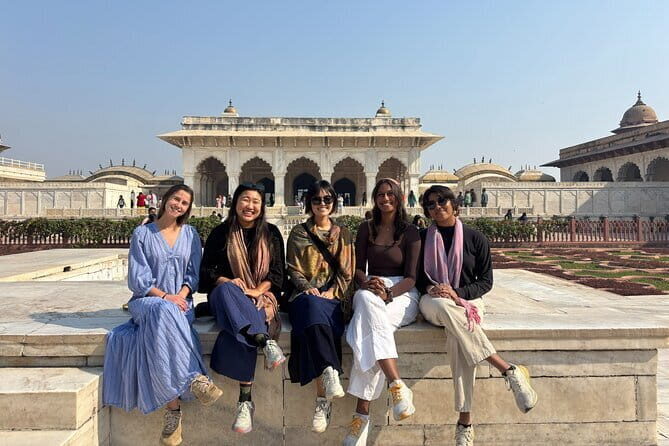
Here’s the practical checklist mindset that makes this tour feel easy:
Included
- 2-night accommodation at a 3-star hotel, twin sharing
- English-speaking guide during sightseeing
- Private tour guidance
- Air-conditioned vehicle
- Bottled water
- Breakfast (2)
Not included
- Monument entrance fees
- Lunch and dinner
- Anything not listed in inclusions
If you want this to feel seamless, budget for lunch/dinner each day and carry cash/credit for entrances. Also, pack a water bottle and sun protection, especially for Jaipur walking days.
Who should book this tour, and who might not love it

This tour fits best if you want:
- a first-timer Golden Triangle overview with the biggest sights covered
- less planning and more guided structure
- a short, efficient route that ends with airport transfer in Delhi
- a comfortable base with 3-star hotels and breakfast
You might want to look elsewhere if:
- you want lots of independent wandering and long open-ended hours
- you’re sensitive to multi-city travel and long drive days
- you hate paying entrance fees on top of the tour price (because they’re not included)
If you like the idea of seeing both Mughal and Rajput elements—plus a major Mughal stop on the route—this itinerary hits a lot of the right beats.
Should you book this 3 Days Golden Triangle Tour from Delhi?
I’d recommend booking if your goal is a well-run highlight circuit with minimal stress. The tour’s value comes from the built-in structure: AC transport, a guide, hotel nights, and a route that takes you from Delhi to Agra to Jaipur without you having to engineer it yourself. The Taj-at-dusk planning and the inclusion of places like Itmad-ud-Daula and Fatehpur Sikri are especially good for people who don’t want a shallow checklist.
Before you book, do one quick reality check: confirm how entrance tickets are handled for the monuments you care about most, and budget for lunch/dinner since those are not included.
FAQ
FAQ
What cities are included in this Golden Triangle tour?
The tour covers Delhi, Agra, and Jaipur.
How long is the tour?
It’s listed as 3 days (approx.).
What time does the tour start?
The start time is 9:00 am.
Do I get pickup and drop-off?
Pickup is offered, and you’re greeted on arrival at Delhi International Airport. On the last day, you’re transferred to Delhi International Airport for onward travel.
How many hotel nights are included?
You get 2 night accommodations at a 3-star hotel, twin sharing.
Is an English-speaking guide included?
Yes. The tour includes an English speaking guide during sightseeing and private tour guidance.
Are monument entrance fees included?
No. Monument entrance fees are not included in the standard inclusions.
What meals are included?
Breakfast (2) is included. Lunch/dinner are not included.
Is the tour private?
Yes. It’s described as a private tour/activity, meaning only your group participates.