REVIEW · NEW DELHI
3-Days Luxury Golden Triangle Tour to Agra and Jaipur from Delhi
Book on Viator →Operated by Private Car and Driver in India · Bookable on Viator
Three stops, three days, lots of history. This luxury Golden Triangle tour strings together Delhi, Agra, and Jaipur with private transport, English-speaking guidance, and real sightseeing time. I like the 5-star-style comfort with breakfast and dinner baked into the stay, and I like that the day plan isn’t just drive-by photos. You’ll also get practical touches like battery-bus access for the Taj area and bottled water during travel.
One thing to keep in mind: it’s a packed schedule, so you’ll want to plan for long days in the car and a tight rhythm at each major monument. Also, a couple of key sites have day-of closures (like the Taj Mahal on Fridays), so your exact mix of stops can shift.
In This Review
- Key things that make this tour work so well
- Golden Triangle in 3 days: what you’re actually buying
- Day 1 in Delhi: Old Delhi sights plus New Delhi classics
- Sunrise Taj Mahal day: what makes Agra feel different
- Fatehpur Sikri to Jaipur: the drive that actually earns its keep
- Day 3 Jaipur: Amer, Hawa Mahal, City Palace, and a lake pause
- Luxury hotels, private drivers, and meals: where the money goes
- Price and ticket clarity: avoid the common “wait, what’s included?” moment
- Who should book this tour, and who might feel rushed
- Should you book? My take on the “yes” and the “not yet”
- FAQ
- What cities are included in this 3-day Golden Triangle tour?
- Where can I get picked up in Delhi/NCR, and what time?
- Is transportation private and air-conditioned?
- Are meals included during the tour?
- Are monument entrance fees/tickets included?
- Is the Taj Mahal open every day?
- What happens if Akshardham or Gandhi Smriti are closed?
- Is this tour private or shared with other groups?
- Do I need a passport for this tour?
- What kind of room arrangement should I expect?
Key things that make this tour work so well
- Private A/C car and driver between cities, so you’re not crowd-squeezed or schedule-dependent
- English-speaking guides for on-the-ground explanations you’d miss if you went solo
- Early Taj Mahal timing with the sunrise experience and the battery-bus transfer for convenience
- Major UNESCO sites in Delhi and Agra—enough to feel you got the essentials without feeling like a whirlwind checklist
- Breakfast and dinner included (for the included stay nights) to cut down on daily decision-making
- Single-group private format, meaning your timing and questions stay in your bubble
Golden Triangle in 3 days: what you’re actually buying
The Golden Triangle—Delhi to Agra to Jaipur—is famous for a reason. But the hard part is logistics. If you try to do it independently, you’re constantly juggling trains, tickets, booking guides, and transportation. This tour removes a lot of that stress with private A/C transfers and guides lined up for your key stops.
The “luxury” angle is mostly about comfort and pacing. You’re staying in upscale hotels (described as luxurious 5-star accommodation). The ride is not a shared shuttle. And you get food support: breakfasts are included, and dinners are included for the included nights. There’s also bottled water and soft drinks during travel, which is a small thing that actually matters when days are long.
One more practical note: the info you get has a small mismatch. The overview talks about three nights in luxury, while the included section mentions two nights with breakfast and dinner. That doesn’t mean it’s a scam—just means you should confirm your exact hotel night count when you book.
A few more New Delhi tours and experiences worth a look



Day 1 in Delhi: Old Delhi sights plus New Delhi classics
You start with pickup somewhere in Delhi/NCR—places like Noida, Gurugram, Ghaziabad, and Faridabad—with a pickup window between 9 AM and 11 AM. That matters because Delhi traffic can be chaotic. You’ll likely spend less time guessing your way and more time seeing.
Old Delhi begins with a tuk-tuk style ride through the bazaars around Chandni Chowk. You’re not just looking at shops—you’re getting context on why the area matters to locals. Then you hit two big religious landmarks:
- Jama Masjid: This massive mosque, built in 1656 with help from thousands of workers, gives you a sense of scale right away. You’ll also be oriented to its position near the Red Fort area.
- Gurudwara Bangla Sahib: This one brings a different feeling. The tour explains the story behind the tank inside the complex and why people still come to visit.
After that, you move into “big monument” Delhi. India Gate is brief but meaningful, and it’s a nice break from the hustle of Old Delhi. Then you get a spotlight on the “planned” side of New Delhi—buildings and design credited to major architects tied to the city’s creation.
Next come two major temple stops that many visitors skip or cram too quickly. Akshardham is modern in origin (constructed in 2005) but designed to feel timeless in its architecture. You can also choose between visiting Humayun Tomb or Akshardham Temple nearby, depending on the day’s plan and closure rules. In this tour’s flow you’ll see both Humayun’s Tomb (UNESCO, noted as India’s first garden tomb) and later Qutub Minar (72.5 meters tall, UNESCO area, with the Qutub complex around it). Even if you’ve read about them, having a guide here makes the geometry and history click faster.
Finally, you transition toward Agra and drop into your hotel. Translation: Day 1 is where you collect Delhi’s biggest hits, then you switch cities.
Possible drawback to watch: this day is heavy. If you’re sensitive to long walking and fast transitions, you’ll want comfortable shoes and a “go with the flow” mindset.
Sunrise Taj Mahal day: what makes Agra feel different
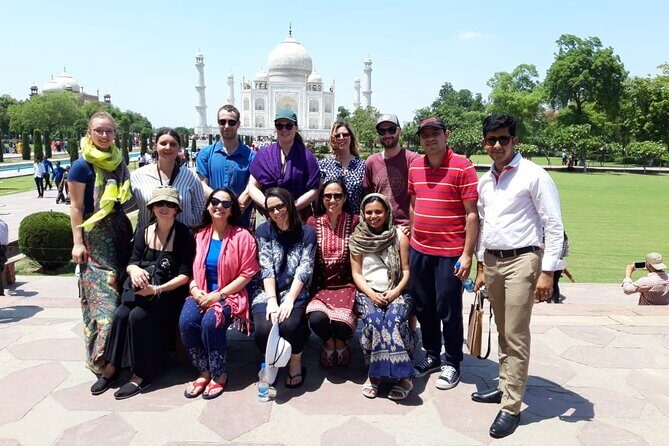
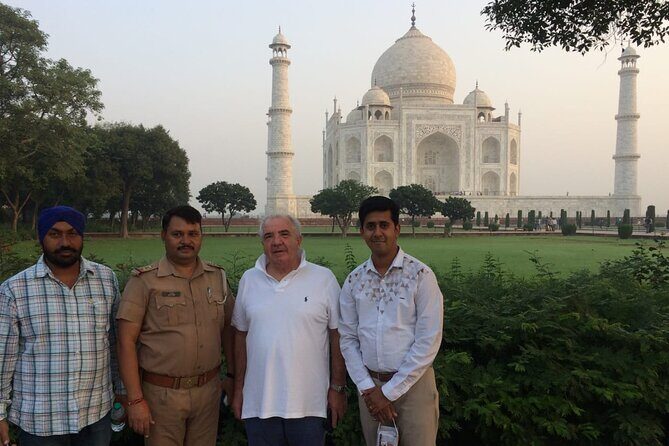
Day 2 starts with the star: Taj Mahal sunrise. The timing is the value here. Early light changes everything—colors soften, crowds are easier to deal with, and the monument doesn’t feel like a daytime postcard.
You’ll also have a “moment” after visiting—getting back for breakfast is included. That matters because Taj Mahal days can be exhausting. You’ll then continue within Agra’s UNESCO cluster:
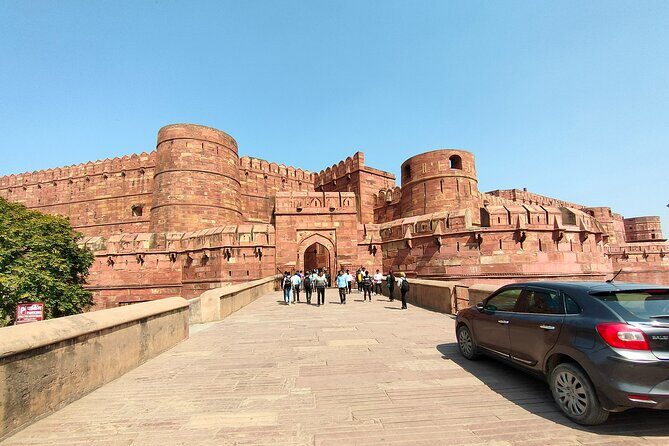
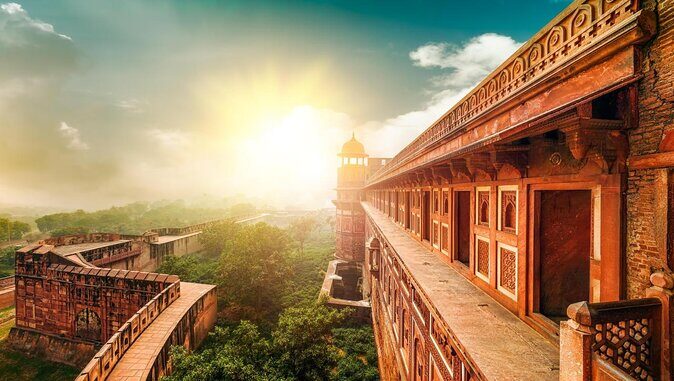
- Agra Fort: a powerful structure from the 17th century with Islamic and Indian art and architecture. It gives you context for the empire’s scale and power.
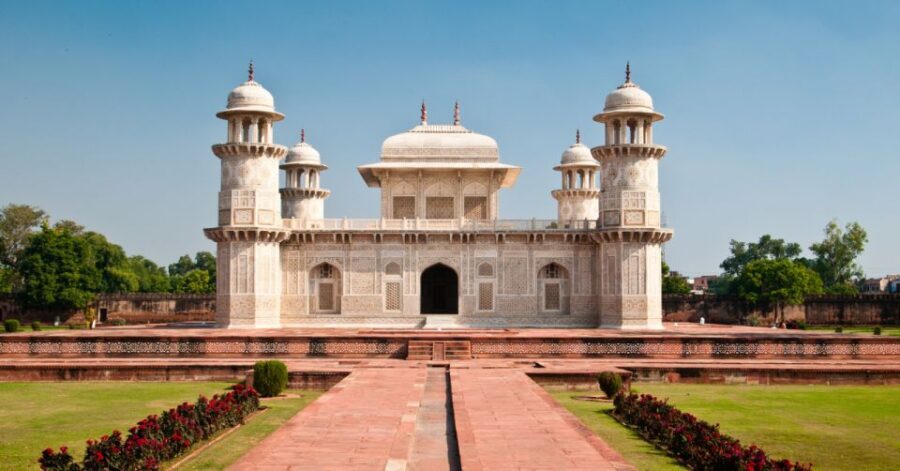
- Itmad-ud-Daula: often called a “pre-Taj” marble masterpiece. It’s the kind of place that rewards patience, because the details are where the story lives.
After Agra monuments, the tour adds a classic curveball: Fatehpur Sikri. This fortified ancient city sits about 40 km west of Agra and is tied to its former role as a capital. It’s not just a stop for walking. It’s also a “time travel” moment—stone layouts and fortifications that help you understand how this region functioned.
By the end of the day you’re heading to Jaipur and being dropped at your hotel. You’re not sightseeing through the night. You’re saving your energy for Jaipur’s morning and afternoon mix.
One small reality check: Agra + Fatehpur Sikri + the drive to Jaipur is a lot for one day. If you’re the type who needs downtime between stops, build in a short rest at the hotel before the evening.
Fatehpur Sikri to Jaipur: the drive that actually earns its keep
A lot of Golden Triangle travelers treat the road as downtime. Here, the trip from Agra to Jaipur isn’t just about getting there. Fatehpur Sikri gives the journey a reason.
Here’s what you’ll likely appreciate when you stop there: it’s a different architectural mood from Taj Mahal. The Taj is all about white marble and romance. Fatehpur Sikri is fortification, city planning, and the logic of defense. Even if you’re not a “history person,” the built environment makes sense when you have a guide to translate what you’re looking at.
Then you arrive in Jaipur, and that shift is part of the fun. Jaipur feels more “royal city” than “imperial capital.” The next day’s sights lean into that vibe: forts, palaces, and astronomy.
Day 3 Jaipur: Amer, Hawa Mahal, City Palace, and a lake pause
Day 3 is designed like a highlight reel, but with enough variety to keep it interesting.
You start with Amer Fort, a 600-year-old site known for Hindu-style design in marble and red sandstone. This is the kind of place where the views from the fort can hit you even if you don’t care about every architectural detail. It’s also a great opener because it sets the tone for the rest of Jaipur.
Next is Hawa Mahal (Palace of Breeze). The famous detail here is the 953 windows in red and pink sandstone. Even if you’ve seen pictures, seeing the facade in person helps. It’s also a quick stop compared to Amer Fort, which keeps the day from becoming one long grind.
Then you move into City Palace, the former seat of the Maharaja of Jaipur, with portions now used as a museum. This stop feels less like a photo wall and more like a place where you can actually understand how power and daily life were linked. If you like your sightseeing with some context, this is one of the best fits.
After the palaces, you switch gears to science with Jantar Mantar, an 18th-century astronomical observatory. The value is in the instruments—architecture used for tracking time and celestial bodies. It’s a reminder that Jaipur wasn’t only about royalty. It was also about knowledge.
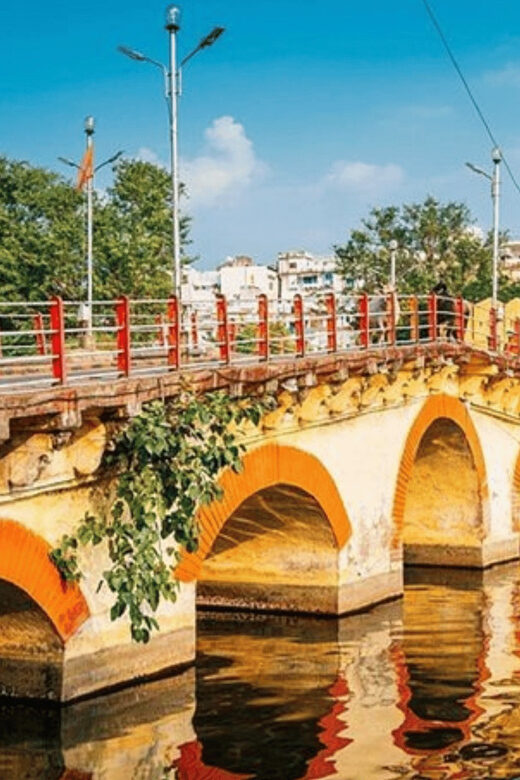
Then you get a breather: Jal Mahal, the palace on Man Sagar Lake. It’s calm compared to forts and palaces, and that’s intentional. A short pause like this can make the final leg of the day feel easier.
You’ll then be taken back to Delhi, or dropped at Jaipur airport if that’s what you prefer. The tour is private, so your return plan can match your flight timing better than a shared bus would.





Luxury hotels, private drivers, and meals: where the money goes
At around $206 for three days (based on the info provided), the real question isn’t the number. It’s what you’re getting for it.
You get:
- Private A/C car and driver across the triangle cities
- Local guides at key sights
- Hotel stay in luxury 5-star accommodation (confirm the exact number of nights because the details conflict)
- Breakfast and dinner included for the included nights
- Battery bus ride to and from the Taj Mahal parking area up to the monument area
- Bottled water and soft drinks during journeys
- Fuel surcharge and taxes/service charges
What you don’t get:
- Lunch isn’t included (the “Any Meal (Lunch and Dinner)” line is clear on that)
- The info also has a conflict about monument tickets: one part says monument tickets are included in an option, while the “Not Included” section says entrance fees aren’t included. The safe move is to confirm what you’re paying for before you go.
This matters for value because entrance fees can add up in India once you’re doing multiple UNESCO sites. If your tour includes tickets, great. If not, you’ll want to budget separately so it doesn’t become a surprise at check-in or ticket counters.
Price and ticket clarity: avoid the common “wait, what’s included?” moment
This tour is priced as a package, and package logic is where confusion sometimes happens.
Two things to double-check:
- Monument entrance fees/tickets: One section says tickets are included with a chosen option. Another section explicitly lists entrance fees as not included. Before booking, ask for a written confirmation of what monuments are covered by your ticket option.
- Number of hotel nights with meals: The overview says three nights. The included section says two nights with breakfast and dinner. Ask which one applies to your exact booking.
Also note day-of swaps:
- Taj Mahal is closed every Friday. If your dates land on Friday, the plan must adjust.
- Akshardham and Gandhi Smriti are closed on Monday, and you’ll be taken to Gurudwara Bangla Sahib and Birla Temple instead.
These aren’t bad surprises. They’re common India realities. Knowing them up front helps you set expectations and avoid disappointment.
Who should book this tour, and who might feel rushed
This tour is a good fit if:
- You want a high-comfort Golden Triangle without negotiating transport every day
- You like seeing top monuments with a guide explaining what you’re looking at
- You value built-in meals support (breakfast and dinner included for the stay nights)
- You have limited time and want the big “first visit” sights handled
It may feel less ideal if:
- You hate fast transitions and long sightseeing days
- You need lots of free time for wandering alone
- You’re traveling on a tight budget that doesn’t allow extra entrance fees if tickets aren’t included
One more practical detail: dress matters. You’ll want clothing that isn’t too revealing, and you should carry a valid photo ID for monument checks.
And if you’re thinking of how guides and drivers work together, the tour’s private format helps. In particular, one traveler highlighted how driver Sanjiv provided continuity between guides across the different cities, which is exactly what you want in a schedule like this.
Should you book? My take on the “yes” and the “not yet”
I’d book this tour if your priority is a smooth, guided Golden Triangle with private A/C transport, comfortable hotel quality, and the heavy hitters handled in a sensible order. The Taj Mahal sunrise component plus the private driver setup makes it much easier than DIY.
I would pause and ask a few questions before confirming if:
- You care deeply about the exact number of hotel nights and the breakfast/dinner coverage
- You want guaranteed inclusion of monument tickets—because the package details conflict in the information you’re given
- Your travel day is Friday (Taj closure) or Monday (site closures) and you want to understand what swaps will happen
If you verify those points, this is the kind of tour that saves energy and helps you focus on what you came for: Delhi’s monumental layers, Agra’s imperial centerpiece, and Jaipur’s palace-and-fort world.
FAQ
What cities are included in this 3-day Golden Triangle tour?
The tour covers New Delhi, Agra, and Jaipur, with sightseeing stops in each city.
Where can I get picked up in Delhi/NCR, and what time?
Pickup is available from Delhi, Noida, Gurugram, Ghaziabad, and Faridabad, with pickup times between 9 AM and 11 AM.
Is transportation private and air-conditioned?
Yes. All transfers and sightseeing are handled by a private A/C car and driver.
Are meals included during the tour?
Breakfast is included with the included stay, and dinners are included as part of the hotel package for the included nights. Lunch is not included.
Are monument entrance fees/tickets included?
The information is mixed: one part says monument tickets are included in the chosen option, while another part lists monument entrance fees as not included. Check which ticket option you are selecting before you go.
Is the Taj Mahal open every day?
No. The Taj Mahal is closed every Friday.
What happens if Akshardham or Gandhi Smriti are closed?
Akshardham and Gandhi Smriti are closed on Monday. If that happens, you’ll be taken to Gurudwara Bangla Sahib and Birla Temple instead.
Is this tour private or shared with other groups?
It’s private. Only your group participates.
Do I need a passport for this tour?
Yes. A current valid passport is required on the day of travel.
What kind of room arrangement should I expect?
Rooms are generally provided on twin-sharing. If you book 3 people, rooms are generally triple-sharing by default, unless you prefer 2 rooms (which may require an additional charge).