A good Golden Triangle tour has one job: make the big sights feel real. This one is interesting because it adds Keoladeo National Park birding between Agra and Jaipur, plus a first day built around major Mughal-era landmarks. I also like how the schedule keeps the stops understandable, so you get meaning, not just checkmarks like Humayun’s Tomb and Qutub Minar.
One big consideration: the Taj Mahal sunrise visit depends on clear weather, and you’ll spend real time in the car. Still, if you want Delhi, Agra, Jaipur, and wildlife in the same trip, this format is a strong match.
In This Review
- Key things I think you’ll notice right away
- Price and what you’re really buying for $340
- Day 1 in Delhi: Humayun’s Tomb, Qutub Minar, Lotus Temple, and the monuments of New Delhi
- Humayun’s Tomb: the Mughal blueprint you’ll want to stare at
- Qutub Minar: an Afghan-style victory tower with a long story
- Lotus Temple: calm in a city that rarely slows down
- India Gate and the New Delhi government area: memorials and power
- Drive to Agra: enough time to reset before the next big day
- Day 2 in Agra and Bharatpur: sunrise Taj Mahal, Agra Fort, and Keoladeo rickshaw bird watching
- Taj Mahal at sunrise: worth the early start, even with weather risk
- Agra Fort: palatial scale on red sandstone and marble
- Keoladeo National Park: one of the best birding experiences on this route
- Arrive Jaipur: pink-city evening without the pressure of evening planning
- Day 3 in Jaipur: Amber Palace, Jal Mahal photos, Hawa Mahal, City Palace, and Jantar Mantar
- Amber Palace: honey-hued fort views and multiple courtyards
- Jal Mahal: short photo stop by the water palace
- Hawa Mahal: the Palace of Winds as an instant Jaipur landmark
- City Palace: the royal residence in mixed Rajasthani and Mughal style
- Jantar Mantar: geometry that tracks the stars
- Driving, guides, and the feel of a private tour
- Practical tips that can save your day (and your photos)
- Should you book this Delhi–Agra–Jaipur with bird watching?
- FAQ
- What time does the tour start?
- Are tickets and monument entrances included?
- Is the Lotus Temple included on every day?
- Will I definitely see Taj Mahal at sunrise?
- How does the bird watching work at Keoladeo?
- What about food during the tour?
- Is an elephant or jeep ride at Amber Fort included?
Key things I think you’ll notice right away
- Keoladeo birding by rickshaw with an English-speaking guide and a focused 2-hour wildlife ride
- Sunrise Taj Mahal plus a battery bus/golf cart return from the parking area to save walking
- UNESCO-heavy days (Humayun’s Tomb, Qutub Minar, Taj Mahal, Agra Fort, plus Jantar Mantar and Keoladeo)
- A true private setup with a professional guide and air-conditioned private vehicle
- Lots of photo moments built in (Jal Mahal, Hawa Mahal) without pretending you’ll linger forever
- Park-friendly dressing advice (khaki, brown, olive green) to help wildlife feel calmer
Price and what you’re really buying for $340
At $340 per person for a 3-day private tour, you’re paying for three things that add up fast in India: private transport, private guiding, and included monument access. You’re not just getting a ride between Delhi, Agra, and Jaipur. You’re getting guided time at the key sites, plus the one experience that’s hard to DIY: bird watching inside Keoladeo with a proper ride setup.
Where the value is strongest is in the mix:
- UNESCO sights that benefit from a guide (especially Humayun’s Tomb and Jantar Mantar, where the details matter)
- A timed sunrise at the Taj Mahal, where you want logistics handled
- Keoladeo National Park, where the best sightings come from being in the right area at the right pace
The main thing to think about before you book is your tolerance for a packed loop. This is “Golden Triangle fast and focused,” not “slow travel.” Transfer times are approximate and traffic changes everything. On paper, you’re looking at about 3 hours from Delhi to Agra by express highway, then roughly 5 hours back toward Delhi/Gurugram/Noida at the end (or you can be dropped elsewhere in Jaipur).
You can also read our reviews of more private tours in New Delhi



Day 1 in Delhi: Humayun’s Tomb, Qutub Minar, Lotus Temple, and the monuments of New Delhi
Your day starts with pickup at 9:00 am from Delhi airport, your hotel, or nearby areas like Gurugram or Noida. From the start, the tour gives you two of Delhi’s best “time machines”: Mughal architecture and medieval victory symbolism.
Humayun’s Tomb: the Mughal blueprint you’ll want to stare at
Humayun’s Tomb is the first stop and it sets the tone. This UNESCO site is the tomb of Emperor Humayun, built in the mid-16th century by Haji Begum, Humayun’s Persian wife. The great thing here is how the architecture blends Persian and Mughal elements, using restrained decoration so your eye can follow the structure rather than getting overwhelmed.
If you like sites that reward paying attention, Humayun’s Tomb does that. I’d plan for some slow walking and a few extra glances back and forth across the complex.
Qutub Minar: an Afghan-style victory tower with a long story
Next comes Qutub Minar, another UNESCO highlight. You’ll be looking at an Afghan-style victory tower and minaret, built by Qutb-ud-din beginning in 1193. The guide context matters here: it wasn’t built as a random tourist landmark. It was a visible claim of supremacy over the defeated rulers of Qila Rai Pithora.
You’ll likely spend about an hour here, and it’s a good amount. The goal is to see the minaret’s height, then notice the way the surrounding complex supports the tower’s importance.
Lotus Temple: calm in a city that rarely slows down
Then you shift moods at the Lotus Temple, also known as the Bahai Temple. It’s designed for tranquil worship and meditation, with a shape based on a lotus flower. The temple has 27 white-marble petals, and it aims to bring faiths together—silent prayer or meditation is part of the experience.
One practical note: the Lotus Temple is closed on Mondays. If your travel dates land on a Monday, you’ll need to adjust your expectations for that stop.
A few more New Delhi tours and experiences worth a look





India Gate and the New Delhi government area: memorials and power
After that, you get India Gate, a 42-meter stone memorial arch designed by Lutyens. It commemorates roughly 90,000 Indian army soldiers tied to World War I and later conflicts including the Northwest Frontier operations and the 1919 Anglo-Afghan War.
From there, you’re in the New Delhi government zone. The tour includes a look at the Parliament House area, connected to the 1947 handover of power from Britain, and you also get a peek at the President’s House (Rashtrapati Bhavan), which is described as having 340 rooms and 2.5 km of corridors. This is more “see it from the outside and understand what it represents” than museum time, but it’s a good fit after the memorial at India Gate.
Drive to Agra: enough time to reset before the next big day
Finally, you head to Agra by express highway, about 3 hours. You check into your hotel, and the schedule leaves you time to be ready for sunrise tomorrow. This is one of those days where private transport helps—when the alternative is piecing together transit on your own, the fatigue can sneak up fast.
Day 2 in Agra and Bharatpur: sunrise Taj Mahal, Agra Fort, and Keoladeo rickshaw bird watching
Day 2 is built around the emotional peak of the Golden Triangle: the Taj Mahal at sunrise. But it doesn’t stop there. You then move into wildlife mode at Keoladeo National Park, with birding being the star of the afternoon.
Taj Mahal at sunrise: worth the early start, even with weather risk
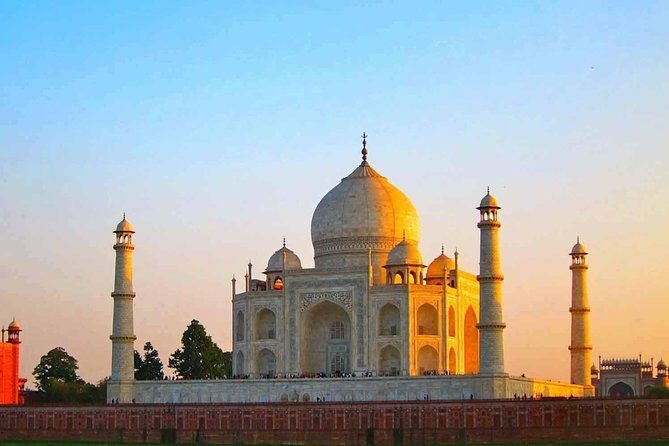
The Taj Mahal stop is scheduled for sunrise and listed as a UNESCO World Heritage site. It was built by Shah Jahan as a memorial for his wife Mumtaz Mahal after she died in 1631. This kind of origin story matters because it reframes the building from “pretty” into “loss made stone.”
The key logistical point is also clearly stated: sunrise is subject to clear weather conditions. If skies are cloudy, you’ll lose some of the magic. Still, the Taj Mahal is visually strong even when it’s not perfectly lit, and the tour includes a battery bus/golf cart return ride from the parking area, which reduces the walking time after your visit.
Agra Fort: palatial scale on red sandstone and marble
After breakfast time back at the hotel, you visit Agra Fort, another UNESCO World Heritage site. This is a fort along the Yamuna River, built as a palatial fortress with red-sandstone and marble courts. The experience here is the scale—courtyard after courtyard—so you gradually realize how much was built and how much life was lived inside those walls.
You’ll spend about an hour, which is enough to see the main highlights without turning it into a full-day commitment.
Keoladeo National Park: one of the best birding experiences on this route
Then comes the signature twist of this tour: Keoladeo National Park, also known locally as Keoladeo Park and described as a UNESCO site. You’ll go by rickshaw (tricycle) with an English-speaking guide for about 2 hours, and the goal is simple: see birds without rushing.
The tour info lists a wide range of species you might spot, including open-bill and painted stork, egret, darter, white ibis, spoonbill, grey heron, Sarus crane, cormorant, migratory geese, duck, rosy pelican, and even the rare Siberian crane.
Two things to know before you go:
- The tour recommends wearing colors that blend with the forest: khaki, brown, and olive green. Bright colors can make animals uneasy because wildlife isn’t used to them.
- The birding ride is the core of the experience. Don’t treat it like a quick photo stop. If you want wildlife, give your eyes time to adjust.
This is also where the private-guiding format helps. A guide can steer you toward activity patterns rather than just pointing at trees.
Arrive Jaipur: pink-city evening without the pressure of evening planning
After Keoladeo, you head to Jaipur and arrive in the evening. You check into your pre-booked hotel. Your day isn’t left hanging with a packed evening program, which is smart when you’ve done sunrise Taj Mahal plus a fort plus a wildlife ride.
Day 3 in Jaipur: Amber Palace, Jal Mahal photos, Hawa Mahal, City Palace, and Jantar Mantar
Jaipur is where the trip turns from “big monuments” into “lived-in drama.” You’ll see fort architecture, water-still palaces, royal city spaces, and a science-and-astronomy stop that doesn’t look like much until your guide explains what you’re seeing.
Amber Palace: honey-hued fort views and multiple courtyards
The day starts with Amber Palace, also called the Amber Fort area. It’s about 11 km northeast of Jaipur and rises from a rocky mountainside. You’re looking at a palace complex built from pale yellow and pink sandstone plus white marble, divided into four main sections and courtyards.
You’ll likely spend around 3 hours. That’s the right amount for Amber, because you’re not only walking through buildings—you’re also learning how the layout supports life in a fort environment. You’ll get good elevated views from the courtyards too, which helps it feel like more than just a photo backdrop.
The tour notes that an elephant/jeep ride at Amber Fort is not included, so if you’re expecting that add-on, you’ll have to arrange it separately.
Jal Mahal: short photo stop by the water palace
Next is Jal Mahal, the Water Palace, positioned near the cenotaphs of the maharanis of Jaipur in the Man Sagar waters. The origins are uncertain, but it’s believed to have been extensively restored or possibly built by Jai Singh II in 1734.
This is a 15-minute photo stop, so don’t build a whole emotional arc around it. Instead, use it as a quick visual break between Amber and the more intense palace-culture sites.
Hawa Mahal: the Palace of Winds as an instant Jaipur landmark
Then you get the Palace of Winds, Hawa Mahal. It’s Jaipur’s distinctive landmark: a pink-painted, honeycombed facade rising five storeys. It was constructed in 1799 by Maharaja Sawai Pratap Singh, designed so royal ladies could watch city processions.
This is another 15-minute photo stop. Tickets aren’t noted as included, and you’ll likely focus on viewing from the outside and grabbing your best angles fast.
City Palace: the royal residence in mixed Rajasthani and Mughal style
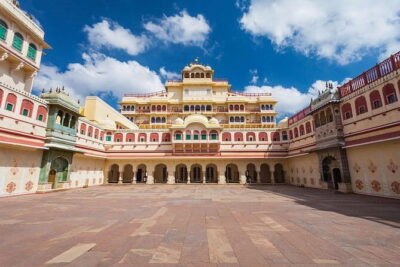
City Palace is a longer stop at about 1 hour, and this is where you see the royal family’s residence as a working complex of courtyards, gardens, and buildings from different eras, including early 20th-century additions.
The blend of Rajasthani and Mughal architecture is described as part of the appeal, and it shows up in details and forms across the complex. If you like architecture that evolves over time, this stop works well.
Jantar Mantar: geometry that tracks the stars
Finally, you visit Jantar Mantar Observatory, another UNESCO site. It’s a collection of geometric instruments calibrated to monitor star and planet movement. This is the kind of stop where you’ll benefit from having a guide explain what each shape is actually measuring.
After that, you drive back toward Delhi/Gurugram/Noida, which takes about 5 hours. The tour also offers drop-offs at Jaipur airport or Jaipur railway station if you’re continuing onward.
Driving, guides, and the feel of a private tour
Because this is a private tour with a dedicated vehicle, the day-to-day rhythm is simpler than most DIY routes. Pickup is scheduled at 9:00 am, and you have professional local private guides plus bottled water. There’s no constant negotiation with ticket lines or figuring out who does what.
One thing I take seriously when choosing a private driver is driving style and punctuality. The information provided includes a positive note about a driver named Mr. D.K. Sharma being patient, kind, and staying on time. It also includes a sharp concern in another experience about a driver speeding, missing a turn on the highway, and not keeping to safer practices. That’s not something you can ignore.
So here’s my practical advice: if this tour is important to you, confirm what safety standards and driving habits the company expects, and set expectations early with your guide/driver on how you want highway speeds handled. Private doesn’t automatically mean safe; it means you should verify.
Practical tips that can save your day (and your photos)
These small items matter because they affect how smooth the trip feels.
- Taj Mahal sunrise is weather-dependent. Clear skies help, so be ready for the possibility that morning light may be limited.
- Lotus Temple is closed on Mondays. If your schedule hits a Monday, plan for a swap in mood even if timing stays tight.
- Dress for Keoladeo. Use the provided color guidance—khaki, brown, olive green—so wildlife isn’t startled.
- Camera and video fees aren’t listed as included. Camera fees at monuments aren’t part of what’s covered.
- No elephant/jeep ride at Amber Fort. If that’s on your wishlist, arrange it separately.
- Meals: a vegetarian option is available, and breakfasts are included (two breakfasts are mentioned when hotels are booked with the tour option). Food and drinks beyond that aren’t included unless specified.
- Transfer times are approximate. Traffic and timing can shift your day, especially between cities.
- Paperwork: a valid passport is required on the day of travel, and you’ll need to handle your own visa requirements.
Should you book this Delhi–Agra–Jaipur with bird watching?
I’d book this tour if you fit one of these profiles:
- You want the classic Golden Triangle highlights but don’t want them treated like a race.
- You care about seeing wildlife and want a structured Keoladeo birding ride, not just random stops for photos.
- You like having a private guide to explain UNESCO sites like Humayun’s Tomb and Jantar Mantar, where details make the visit.
I’d think twice if:
- You’re extremely sensitive to weather risk at sunrise, since Taj Mahal is clear-weather dependent.
- You hate long driving days. This route includes a full Delhi day, then Agra + wildlife, then Jaipur, with a multi-hour drive at both ends.
FAQ
What time does the tour start?
The tour starts at 9:00 am, with pickup offered from Delhi airport, your hotel, or other desired locations in Delhi, Gurugram, or Noida.
Are tickets and monument entrances included?
Yes. Entrance fees for monuments and the national park are listed as included.
Is the Lotus Temple included on every day?
The Lotus Temple (Lotus/Bahai Temple) is listed as closed on Mondays, so that stop would not run on a Monday.
Will I definitely see Taj Mahal at sunrise?
The Taj Mahal sunrise visit is stated to be subject to clear weather conditions.
How does the bird watching work at Keoladeo?
You’ll enjoy a guided bird-watching experience at Keoladeo National Park with a guide on a rickshaw (tricycle) ride, lasting about 2 hours.
What about food during the tour?
A vegetarian meal option is available. Breakfast is included (two breakfasts), while food and drinks beyond that are not included unless specified.
Is an elephant or jeep ride at Amber Fort included?
No. Elephant/Jeep rides at Amber Fort in Jaipur are not included.