REVIEW · VARANASI
Visit the 3 largest temples in Benares
Book on GetYourGuide →Operated by Gagan Kumar · Bookable on GetYourGuide
Three temples. One unforgettable path of faith. This private tour links Hanuman, Durga, and Shiva through the old-city streets, with a guide who explains clearly in French or English and ties it back to his life in Varanasi, near the Ganges.
I especially like the way the tour turns a temple visit into something you can actually follow: what you’re seeing, which rituals you’re joining, and what the gods represent in this local setting. One thing to plan for: temple donations and offerings aren’t included, so have some cash ready if you want to participate the way worshippers do.
In This Review
- Key highlights to look for on this Varanasi temple circuit
- Why this 3-temple route works so well (and why tuk tuk matters)
- Meet at Om natural near Assi ghat: how to start without stress
- Stop 1: Sankat Mochan Hanuman Mandir and the idea of power
- Stop 2: Durga Mandir and the meaning of protection
- Stop 3: Shri Kashi Vishwanath on the university campus and Shiva’s world harmony
- The guide makes or breaks it: Gagan Kumar in French and English
- Timing: how you actually fit three temples into 3 hours
- Optional after-temple extras: saree weaving or a meal with your spice level
- Price and value: what $21 buys you in Varanasi
- Who should book this tour (and who might not)
- Should you book this Varanasi temple tour?
- FAQ
- How long is the tour?
- How much does it cost?
- Which temples are included?
- What languages does the guide speak?
- Can I add saree weaving or a meal?
- What should I bring, and what is not allowed?
Key highlights to look for on this Varanasi temple circuit
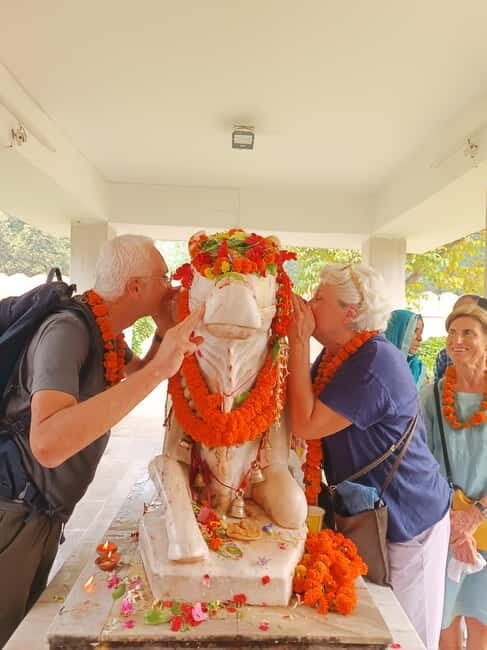
- Three major temples in 3 hours with a clear god-by-god theme
- Explanations in French or English that stay focused and practical
- Tuk tuk transport to handle narrow old-city lanes without getting lost
- Accompaniment in rituals, so you’re not guessing what to do
- Optional add-ons after the temples: saree weaving or a meal with your spice level
- A guide rooted in Varanasi, originally from the city and close to the Ganges
Why this 3-temple route works so well (and why tuk tuk matters)
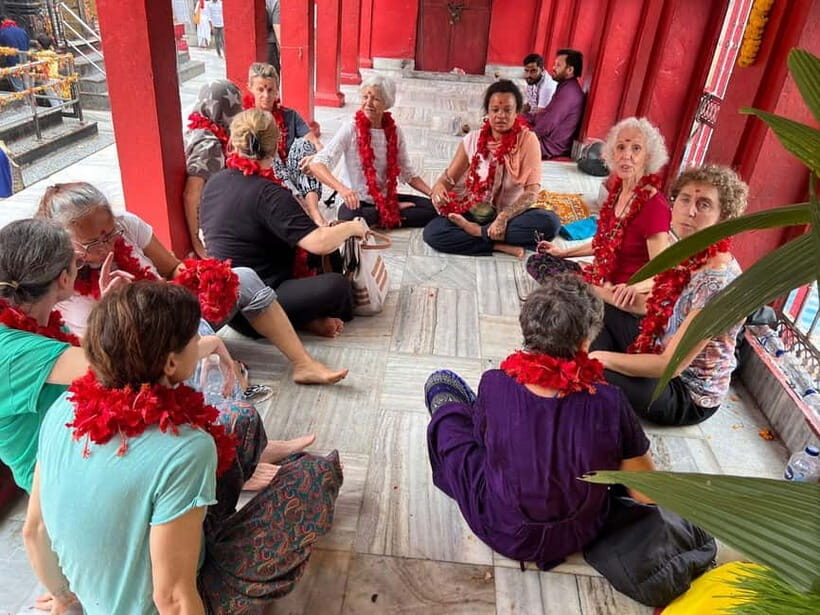
Varanasi can feel like a puzzle when you’re on your own. The lanes are narrow, turns happen fast, and you can end up spending time just trying to locate the next place. This tour uses an authentic tuk tuk to keep you moving through the old city while you focus on the temples and the explanations.
The other smart choice is the structure. Instead of hopping randomly between shrines, you hit three standout temples tied to three major gods: Hanuman (power), Durga (protection and purification), and Shiva (world harmony). That theme helps you connect the dots and leaves you with a simpler mental map than a long, unstructured day.
You’re also in a private group. That matters here because temple rules, crowd flow, and timing are all part of the experience. A small group gives your guide room to keep things on track without turning your day into a race.
You can also read our reviews of more tours and experiences in Varanasi.

Meet at Om natural near Assi ghat: how to start without stress
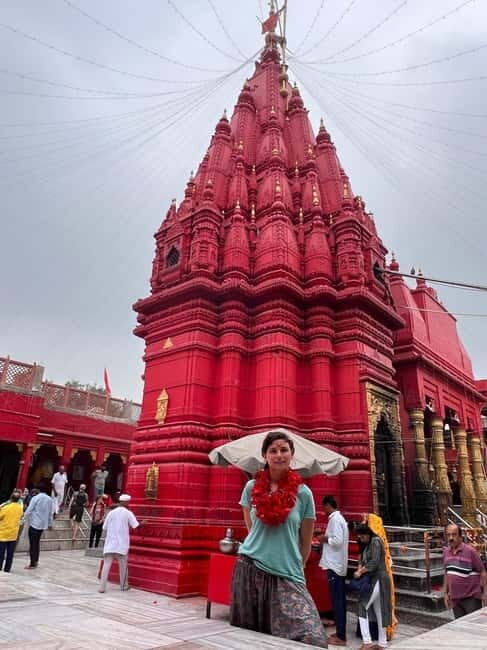
The meeting point is Om natural shop near Assi ghat. Starting near the river area helps you ease in rather than arriving in the middle of the maze.
Before you go, do a quick practical check:
- Bring passport (it’s listed as required)
- Wear comfortable clothes for walking and respectful temple areas
- Carry cash (useful for temple donations, since those aren’t included)
- Skip smoking and any alcohol or drugs during the tour
If you’ve never done a temple route in Varanasi, your biggest win will be simply having a plan. You’ll know where you’re going next and why you’re there, instead of reading signs while people stream past.
Stop 1: Sankat Mochan Hanuman Mandir and the idea of power
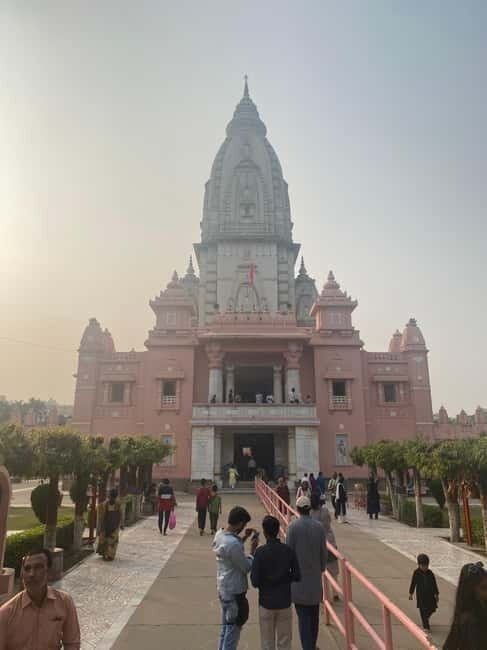
Your first visit is to Sankat Mochan Hanuman Mandir, with about 45 minutes on site.
In your guide’s framing, Hanuman isn’t treated like a distant figure. You’ll hear how Hanuman represents power, and you’ll get explanations that connect what you see in the temple setting to the role the deity plays in this tradition. This is the kind of context that turns a quick glance into a moment you can actually understand.
What I like about starting here is the energy shift. Hanuman temples often set a strong tone for the rest of the day. Even if you’re not an expert in Hinduism, the guide’s ritual accompaniment helps you follow along without getting stuck on questions like What do people do next? and Why is this part important?
A realistic consideration: 45 minutes is enough to feel the place, but it’s not enough to treat this as a slow, hours-long devotional visit. If you want extended quiet time, you’ll need to save that for a later stop or a separate trip.
Stop 2: Durga Mandir and the meaning of protection
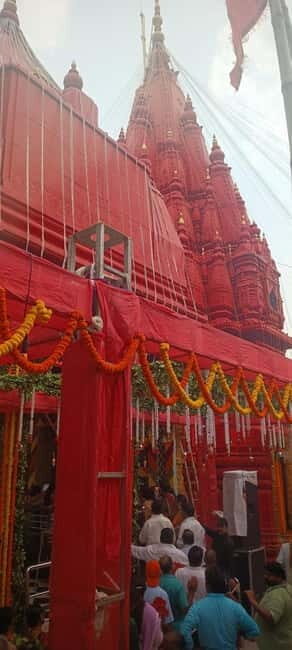
Next up is Durga Mandir, again with about 45 minutes.
This stop focuses on Durga as the protective and purifying goddess. The value here isn’t just the label—it’s how the guide explains the purpose behind what worshippers do. You’ll be accompanied in the rituals, which helps you avoid the common issue of watching respectfully but feeling unsure about the flow.
Durga is a strong follow-up after Hanuman. If Hanuman is presented as power, Durga shifts the focus toward what people want to guard against and how purity is part of religious practice. The guide keeps the explanations clear and connected, so you’re not hearing three unrelated temple facts—you’re building a thread.
Watch for the usual temple-day reality: crowds and movement. The good news is that you’re on a timed route, so your guide can steer you so you still get meaningful access to the key areas without constantly getting swept away.
Stop 3: Shri Kashi Vishwanath on the university campus and Shiva’s world harmony
Your third temple is Shri Kashi Vishwanath Temple (Shiva), located on Varanasi’s university campus—and you’ll have about 45 minutes there.
The god focus here is Shiva as the guardian of world harmony. That framing gives the visit a different tone than the first two temples. Instead of emphasizing strength or protection, this viewpoint lands on balance, order, and keeping the universe aligned. Even if you’re new to the symbolism, the guide’s explanations help you see why that idea shows up in the way the space is used and the rituals you’re joining.
One practical upside of the university-campus setting: it can feel more navigable than some of the older lanes. Still, expect normal temple movement and respect rules. Keep your posture modest, follow your guide’s cues, and you’ll get far more out of the visit.
At the end, your tour returns you to the starting area at Om natural.
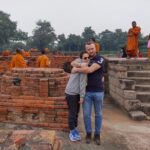

The guide makes or breaks it: Gagan Kumar in French and English
This is where the tour earns its top marks. The guide, Gagan Kumar, is described as very professional and strong with both English and French. People also highlight that he keeps the day flexible and reads what you’re most interested in rather than treating it like a rigid checklist.
You’ll feel that in two ways:
- Clear explanations that stay grounded in what’s happening in front of you
- Accompaniment in rituals, so you’re not left guessing at the sidelines
His style also comes through in small touches. In accounts of the experience, he’s noted for a good sense of humour and for spotting details along the way that others might miss. And because the lanes can confuse even careful walkers, he’s also described as helping you get back at the end of the tour so you don’t end up wandering.
If your French is basic, you’ll still benefit if you choose the French option, because the goal is clarity. And if you prefer English, the same “keep it understandable” approach seems to be built into how he guides.
Timing: how you actually fit three temples into 3 hours
You’re looking at 3 hours total, with about 45 minutes per temple plus travel time between stops. That pacing is the point. It’s designed to give you enough time to experience each site and still keep the route manageable.
The practical advantage: you won’t be exhausted by the end of the day. Temple-hopping can quickly become a long slog if you overbook. Here, the structure helps you leave with real memory of each stop, not just photos and name lists.
The drawback is also tied to that pacing: you’re committing to the itinerary. If you’re the type who wants to linger quietly at one shrine for a long time, this format might feel brisk. The compromise is to treat this as the orientation day, then return later to the temple that pulled you in most.
Optional after-temple extras: saree weaving or a meal with your spice level
After the temple circuit, you can request one of two extras:
- Saree weaving handicraft in Benares, linked to traditions going back since Mughal times
- A typical Indian meal, with your spice level adapted
These options add value if you want more than religious landmarks. They connect the temples back to daily life and local culture, which is often what people crave after the spiritual intensity of the morning or midday.
The main thing to remember: the meal price isn’t included. If you choose food, confirm spice adaptation with your guide at the time of request.
Price and value: what $21 buys you in Varanasi
At $21 per person for a 3-hour private temple circuit, you’re paying for more than entry-time. The included pieces listed here matter:
- Explanations in English or French
- Accompaniment in the rituals
- Tuk tuk management for the old city movement
- Bottles of water and tea
That’s a lot of “invisible” labour. Without a guide, you’d likely spend extra time figuring out route flow, etiquette, and what’s going on during worship. Here, the guide provides the translation layer and the ritual context.
Not included items are clearly stated:
- Possible donations to temples
- Meal price if you add it
So the real cost picture is simple: the base price covers guidance and transport, and you decide whether you want to add worship donations or an extra cultural stop like weaving or lunch.
Who should book this tour (and who might not)
This tour fits best if you want:
- A first-timer-friendly introduction to Varanasi’s most important temples
- A guide who can explain in French or English without talking over your head
- A route that handles navigation and timing so you don’t lose half the day to getting oriented
It’s also a good choice if you care about doing the rituals with confidence. Being accompanied in the rituals reduces awkward uncertainty and lets you focus on respectful participation.
You might skip it or pair it differently if you:
- Want long, quiet time at just one temple
- Plan to spend the day chasing side streets and want full independence
- Don’t want any structure or guide interpretation
But if you’re looking for a balanced, guided circuit that connects the three gods with real explanation, this is the kind of day that saves you effort and boosts understanding.
Should you book this Varanasi temple tour?
I’d book it if you want a clear, structured way to see three major temples without wrestling with logistics. The combination of tuk tuk transport, ritual accompaniment, and guide explanations in French or English is exactly what makes a short trip to Varanasi feel meaningful.
I’d also go for it if you like when a local guide ties religious sites to everyday life and gives context that helps you read what you’re seeing. With Gagan Kumar, the theme stays consistent from Hanuman to Durga to Shiva, and you get enough time at each stop to remember it.
If you’re willing to bring cash for temple donations and you’re okay with a 3-hour, three-stop pace, this tour is strong value.
FAQ
How long is the tour?
The tour lasts 3 hours.
How much does it cost?
The price is $21 per person.
Which temples are included?
You visit three temples: Sankat Mochan Hanuman Mandir, Durga Mandir, and Shri Kashi Vishwanath Temple.
What languages does the guide speak?
The guide provides explanations in English or French.
Can I add saree weaving or a meal?
Yes. After the temple visits, you can request saree weaving handicraft in Benares or a typical Indian meal. The meal price is not included.
What should I bring, and what is not allowed?
Bring your passport, comfortable clothes, and cash. Smoking, alcohol, and drugs are not allowed.
If you want, tell me your travel dates and whether you prefer French or English, and I’ll suggest a simple plan for the rest of your day around Assi ghat.