REVIEW · NEW DELHI
Delhi Agra Jaipur & Varanasi Tour – Taj Mahal & Ganga Aarti
Book on Viator →Operated by vwitours · Bookable on Viator
Seven days means you hit the big names fast. This private tour links the Golden Circuit with Varanasi and the Ganga Aarti, using guided visits and private transport so your days feel organized instead of chaotic. It’s also built around real schedule needs: hotel nights with breakfast, and trains to reduce backtracking.
I like the hotel pickup and private sedan/SUV setup. It cuts the hassle of figuring out how to get from sights to hotels, especially once you’re in Old Delhi traffic and later in Rajasthan. I also like that you get private local tour guides across cities, not just a driver and a vague map.
One thing to consider is the overall pace and the extra costs. The itinerary stacks sightseeing and then drives, and monument entry fees are not included, so your final spend won’t be just the tour price. Also double-check your Taj Mahal day against weekly closure rules, since date mix-ups can happen.
In This Review
- Key things I’d watch (before you book)
- What This Delhi–Agra–Jaipur–Varanasi Tour Really Delivers
- Day 1 in Delhi: Old Delhi + Qutub Minar in One Packed Circuit
- Day 2 to Jaipur: Amber Fort and the Quick Stop at Jal Mahal
- Day 3 in Jaipur: Hawa Mahal, City Palace, Jantar Mantar, and a Temple Detour
- Day 4 Agra: Taj Mahal First, Then the Mughal Trail Around It
- Day 5 to Varanasi: Sarnath Arrival and a Full Ganga Aarti Sunset
- Day 6 in Varanasi: Sunrise Ganges Moments, Dashashwamedh Ghat, Bharat Kala Bhavan
- Day 7 Back in Delhi: Humayun’s Tomb, India Gate, and Lotus Temple
- Price and Comfort: What You’re Paying For, and What’s Not Included
- Who This Tour Suits Best
- Should You Book This Delhi, Agra, Jaipur, and Varanasi Package?
- FAQ
- How long is the tour and what cities does it include?
- Does the tour include hotel pickup and transportation?
- What’s included in the tour price?
- Are monument entry fees included?
- Is Ganga Aarti included in the itinerary?
- Does the tour include trains?
- Can I cancel for a full refund?
Key things I’d watch (before you book)
- Private guides across the whole route: You’re not stuck with self-guided time for major stops.
- Golden Triangle + Varanasi in one week: Delhi, Jaipur, Agra, then Varanasi with the river ceremonies.
- Ganga Aarti is included: Sunset ceremony viewing is part of the plan, not an add-on you may skip.
- Overnight trains included: It helps you gain time, but you should be ready for travel-day fatigue.
- Pace can feel full-on: Sightseeing blocks plus driving means you’ll want good stamina.
- Entrance fees are extra: Budget for monument tickets for the big stops.
What This Delhi–Agra–Jaipur–Varanasi Tour Really Delivers

This tour is for people who want North India’s greatest hits with structure. You’re covering the classic Golden Triangle route (Delhi–Agra–Jaipur) and then adding Varanasi, which changes the vibe completely. Instead of “see one city per day,” you’re doing a tight loop: guided sights, hotel sleep, then onward.
The best part for practical travelers is how the day design supports you. You get hotel pickup and private transportation, and you stay in one place each night (with breakfast included). That sounds basic, but it matters in India, where time and energy disappear fast if you’re constantly re-planning.
Value-wise, the headline price (around $366.16 per person) can be fair for what’s included: 6 breakfasts, 6 nights’ lodging, private local guides for sightseeing, and AC train tickets between cities. The cost gap comes later at the monuments, because entry/admission fees aren’t included. If you hate surprise expenses, plan for that upfront and you’ll feel much better.
You can also read our reviews of more tours and experiences in New Delhi.



Day 1 in Delhi: Old Delhi + Qutub Minar in One Packed Circuit
Delhi Day 1 keeps you in the historic core and then shifts you to a major landmark.
You start with Raj Ghat, then move to Old Delhi icons like the Red Fort (Lal Qila). The Red Fort stop is tied to the Mughal era: it was commissioned by Shah Jahan and construction began on 12 May 1638. This is one of those locations where your guide’s context matters. Without it, you may just see walls and arches; with it, you start noticing how power was displayed.
Next is Jama Masjid, one of the largest mosques in India. The listing calls out its formal name, Masjid-i Jehan-Numa, the world-reflecting mosque, and that it was built by Shah Jahan. This is a good day to accept that photography and walking may slow you down, because the area around major religious sites has its own rhythm.
Finally comes Qutub Minar, a tall, iconic tower built in 1193 by Qutab-ud-din Aibak. The listing notes it has five distinct storeys and that it followed the defeat of Delhi’s last Hindu kingdom. It’s a strong end to the day because it moves you from Mughal-era Delhi back into earlier architecture and skyline views.
Consideration: Old Delhi routes can mean frequent stops and slower travel. You’ll be happier if you pack a calm attitude and don’t plan extra add-ons right after this.
Day 2 to Jaipur: Amber Fort and the Quick Stop at Jal Mahal
After breakfast, you leave Delhi by car and reach Jaipur in the afternoon. Your arrival window matters because Jaipur afternoons can be bright and busy, so getting to the hotel, freshening up, and then heading out keeps the day enjoyable.
Jaipur Day 2 includes Amber Fort, which the itinerary describes as one of the finest and best preserved forts, serving as the royal capital for seven years before Jaipur was built. That detail helps explain why Amber Fort feels more like a palace complex than a defensive stronghold.
You also get a short visual break at Jal Mahal, the palace on Man Sagar Lake. The palace was originally constructed in 1699. Even if you don’t spend long there, it’s a useful contrast with Amber Fort’s stone-heavy grandeur.
What to expect: This is a day where you’ll get “a lot of wow” but not endless wandering. If you prefer slower pacing, treat this as a sightseeing sprint rather than a casual stroll day.
Day 3 in Jaipur: Hawa Mahal, City Palace, Jantar Mantar, and a Temple Detour
Day 3 is where Jaipur flexes its architectural styles. You’ll see multiple layers of the city in a single day: royal palaces, science instruments, colonial-era museum architecture, and religious spaces.
You start with Hawa Mahal (Palace of Wind), a five-storey façade built in the form of Krishna’s crown, according to the listing. It’s a quick stop type of sight, but it’s worth it because it’s uniquely Jaipur. Even if you don’t know every historical reference, the shape and window pattern communicate the design intent clearly.
Then comes City Palace, described as the place that pulls you back to the Rajput era the moment you arrive. A guide can help here by pointing out how different sections connect to the story of Jaipur’s rulers.
Next is Jantar Mantar, a collection of 19 astronomical instruments built by Sawai Jai Singh II, completed in 1734. The value of this stop is that it turns sightseeing into problem-solving. You start noticing that these aren’t random decorations; they’re big instruments meant to measure the sky.
After that, you visit Albert Hall Museum. The listing notes it was built in 1876 as a concert hall and named for similarity to the Victoria and Albert Museum in London. This stop can be a highlight if you like artifacts and architectural transitions from one empire style into another.
Then there’s Birla Mandir, the white marble Lakshmi Narayan Temple built by the B.M. Birla Foundation in 1988. The contrast is striking after forts and palaces. It’s also a calm reset if your morning has you walking quickly.
Finally, the day includes Monkey Temple (Galta). The listing describes it as a group of temples at the holy place of bath Galta, with views toward the Aravalli hills and a peaceful environment. Just keep in mind this is the sort of stop where you’ll want to watch your footing and keep a light grip on your belongings.
Tip for comfort: Jaipur days are active. Bring water, and consider light layers you can handle if temperatures swing.
Day 4 Agra: Taj Mahal First, Then the Mughal Trail Around It
Agra Day 4 is the reason many people sign up: the Taj Mahal. The itinerary frames it as the most photographed monument in the world. More important than the statistic is the timing and sequencing. You start with breakfast and then go into the main Taj Mahal visit, which is usually when you’ll have the best chance to enjoy the site without feeling like you’re fighting fatigue.
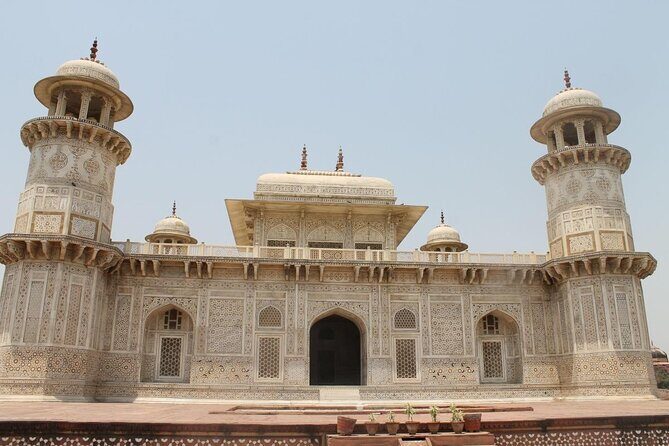
After the Taj, you move to Itmad-ud-Daula, often called the Baby Taj or Tomb of I’timād-ud-Daulah. The listing calls it a “jewel box.” This is one of those Mughal tomb stops that can surprise you, because it’s smaller than the Taj but visually intense.
Next is Agra Fort, built during 1565–1573 for Mughal Emperor Akbar, and described as a main residence before the Mughals occupied it. The fort visit helps you understand that the Taj is only one chapter in Mughal grandeur. Forts show power in a different way: strength, control, and rule.
Finally you visit Mehtab Bagh, a charbagh complex across the Yamuna River from the Taj Mahal complex. The listing notes it lies on flood plains and is laid out as a square garden. This stop works best if you like perspectives. Even if you’ve already seen the Taj up close, looking toward it from a garden layout adds another angle.
One big watch-out: The Taj Mahal has weekly closure rules tied to prayer schedules. One guest’s experience described a date mismatch that caused a very serious disruption. So before you lock your travel dates, confirm your Taj day is actually available for visiting.



Day 5 to Varanasi: Sarnath Arrival and a Full Ganga Aarti Sunset
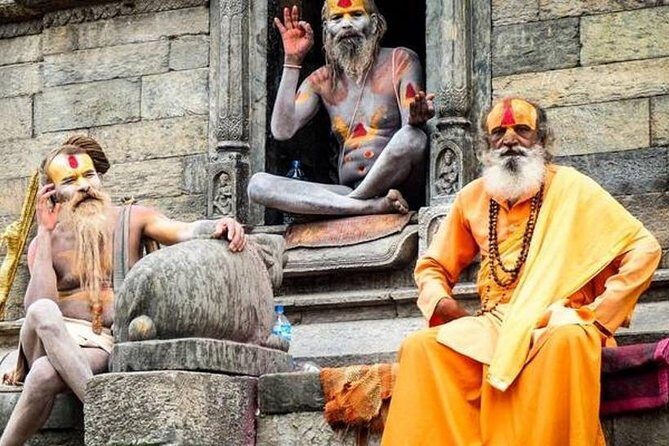
The jump to Varanasi changes everything. Delhi and Jaipur feel planned; Varanasi feels alive. The itinerary has you arrive at Varanasi Railway station, where a representative meets you and you’re driven to your hotel. After check-in support, the plan shifts toward nearby sacred sites, starting with Sarnath.
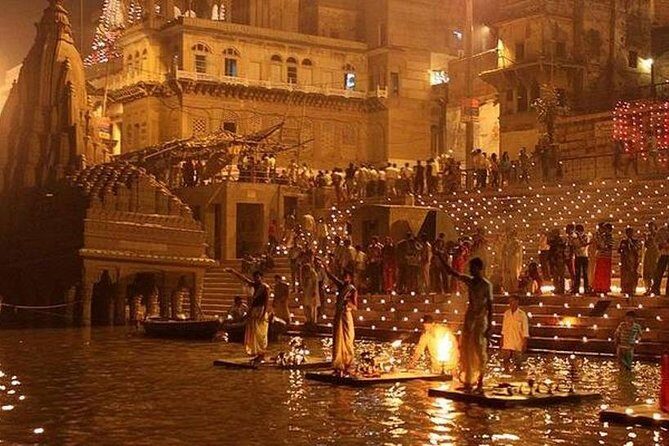
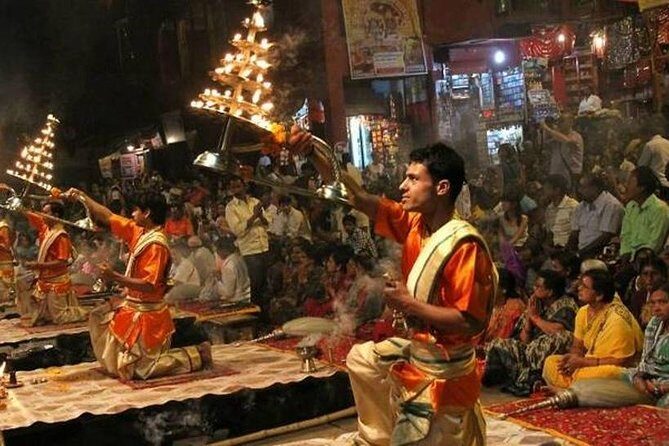
From there, you get your centerpiece evening: Ganga Aarti. The listing describes it as a sunset cruise on the Ganges with a grandstand view of an ancient prayer and oil lamp ceremony. Importantly for value, the itinerary marks admission for this as included.
This is where the tour does something smart. Instead of trying to cram ten activities into evening time, it anchors the day around one ceremony with a clear atmosphere. If you’re sensitive to noise and crowds, you’ll still feel the energy here, but the timing is controlled: sunset. That’s when the river holds attention.
Practical note: If you want photos, plan your camera habits. With ceremonial lighting and crowds, getting one perfect shot can take time and patience.
Day 6 in Varanasi: Sunrise Ganges Moments, Dashashwamedh Ghat, Bharat Kala Bhavan
Day 6 is split between river views and a cultural break. Early morning, you meet your guide and head to a boat cruise on the Ganges for sunrise, and you’ll see historical ghats of Varanasi. The itinerary frames the early tour as a way to understand the city through the river and to spot ghats in motion.
Then you visit Dashashwamedh Ghat, described as the most well-known of all ghats. The itinerary notes what you might notice during the boat journey, including young men showing strength in yoga poses. That kind of detail is exactly why river time feels different than walking time.
After that, you go to Bharat Kala Bhavan, described as an art and architecture museum holding paintings, Hindu and Buddhist sculptures, and other archaeological materials of importance. This museum stop is a useful break if you feel your senses overloaded. It turns a spiritual city into a place you can also read through objects and art.
Optionality detail: The inclusions list “Varanasi Boat Rides optional,” and some boat elements are marked as not included. So if you’re trying to control costs, ask what portion is already covered versus what could be extra when you’re on the ground.
Day 7 Back in Delhi: Humayun’s Tomb, India Gate, and Lotus Temple
You end with a Delhi sightseeing day that covers Mughal gravitas and modern landmarks.
First is Humayun’s Tomb, where the listing says you visit the mausoleum built in memory of Emperor Humayun, the second Mughal ruler. This stop pairs nicely with your earlier Mughal sites, so the architecture themes connect across the week.
Then you head to India Gate, a war memorial originally named the All India War Memorial. The listing says it memorializes more than 70,000 soldiers who died in the First World War and the third Anglo-Afghan war. If you’re the kind of traveler who likes understanding what a monument meant to a country, India Gate is a straightforward one.
Finally, you visit Lotus Temple, described as a unique lotus-shaped architectural marvel that received awards and recognitions. It’s noted as one of the temple structures in Delhi.
Tone of the final day: It’s a calmer finish than earlier days. After long drives and river rituals, a line-up of famous spots can feel almost easy.
Price and Comfort: What You’re Paying For, and What’s Not Included
Let’s talk value like a grown-up, not like a brochure.
At about $366.16 per person, you’re paying for a package that includes:
- 6 nights of accommodation with breakfast
- Private local tour guides for sightseeing
- Hotel pickup and drop-off
- Private transportation in a sedan/SUV
- AC train tickets (first or second class depending on your selection)
- All taxes and service charges
- A mobile ticket and group discount structure (when applicable)
Where costs can rise:
- Monument entry/admission fees are not included for the major sites.
- Some river/boat ride components are listed as optional or not included depending on the segment.
The biggest comfort trade-off is pace. This is a full-on week. One review complaint described exhaustion from sightseeing days followed by 5 to 6 hours of driving. That’s not a defect; it’s the core design. If you get cranky after long road time, you might want to build buffer days around this trip in the future.
On hotels: the program says 4-star style comfort, with accommodation options from 3-5 star depending on what you choose. One person noted that the Agra hotel wasn’t as good as the others, but most stops were described as solid quality. The safe move is to confirm the specific hotel name before you go, since that matters for expectations.
Who This Tour Suits Best
This tour fits well if you:
- Want a one-week circuit that covers Delhi, Jaipur, Agra, and Varanasi
- Prefer private guides (so you understand what you’re looking at)
- Like structured days and don’t mind moving quickly between cities
- Want the big ceremonial moment of Ganga Aarti as part of the package
It might not be your best match if you:
- Hate long driving days after a full sightseeing block
- Want lots of free time to wander without a plan
- Don’t want to think about extra monument entry costs
A helpful hint from real-world experiences: staff and drivers can make or break the vibe. One driver named Siri was praised for calm, patience, and safe driving. That kind of steady presence is the secret ingredient on packed itineraries like this.
Should You Book This Delhi, Agra, Jaipur, and Varanasi Package?
I’d book it if your top priority is seeing Taj Mahal + Ganga Aarti with private guidance and minimal logistics stress. The structure is strong: pickup, guides, hotels with breakfast, and transport that keeps you moving without constant coordination.
I’d hesitate if you’re very sensitive to pace, or if you’re traveling during a period when the Taj Mahal could conflict with weekly closure timing. Before you pay, double-check your dates for that specific day and request confirmation of the scheduled Taj visit day, plus the hotel name for each stop by email.
If you want, tell me your travel month and whether you prefer early mornings or slower afternoons. I can help you decide if this pace matches your style, and what to plan around so the week feels like a win instead of a sprint.
FAQ
How long is the tour and what cities does it include?
It’s about 7 days, starting in New Delhi and visiting Delhi, Jaipur, Agra, and then Varanasi, with an additional sightseeing day back in Delhi.
Does the tour include hotel pickup and transportation?
Yes. Hotel or airport pickup and drop-off are included, and you travel with private transportation in a sedan/SUV.
What’s included in the tour price?
The price includes 6 breakfasts, 6 nights of accommodation (hotel category depends on the option you select), guided sightseeing with private local tour guides, AC train tickets, taxes and service charges, and personal care and attention.
Are monument entry fees included?
No. Entry and admission fees for monuments are not included.
Is Ganga Aarti included in the itinerary?
Yes. The Ganga Aarti sunset viewing is included, and the itinerary notes an admission ticket included for that stop.
Does the tour include trains?
Yes. AC first class or second class train tickets are included, and the itinerary includes train travel (including driving to Delhi by train near the end of the trip).
Can I cancel for a full refund?
Yes, you can cancel for a full refund if you cancel at least 24 hours before the experience starts. If you cancel less than 24 hours before, the amount paid isn’t refunded.