REVIEW · VARANASI
Sarnath – Where Buddha preached his first sermon of Buddhism
Book on Viator →Operated by Monu Tours · Bookable on Viator
Sarnath makes the Buddha story feel real. This guided tour takes you to the places tied to Buddha’s first sermon after Bodh Gaya, with a licensed professional guide from Monu Tours. I also like that your guide is approved by the Ministry of Tourism, so the experience feels more organized and safer—especially around crowded streets. One drawback to plan around: the Archaeological Museum is closed every Friday.
What I really like is the way the tour stays human and easy to follow, not a lecture. With Monu (Monu bhaiya), the explanations land at just the right level, and the pace feels built for real questions. You should also expect a fair bit of walking, since it’s a guided circuit of key Buddhist sites.
In This Review
- Key highlights worth your time
- Sarnath: where Buddhism’s first chapter starts
- Trust and safety: the guide makes the difference
- Getting started: 9:00 am, a simple meeting point
- Stop 1: Sarnath grounds and the feel of the setting
- Stop 2: Dhamekh Stupa—one landmark, lots of atmosphere
- Stop 3: Sarnath Museum—bring your questions
- What “3 hours” feels like in real time
- Walking through Varanasi: how the guide helps
- Price and value: is $60 worth it?
- Mobile ticket and smooth day-of flow
- Who this tour suits best
- Should you book the Sarnath tour?
- FAQ
- What time does the tour start?
- How long is the Sarnath tour?
- How much does the tour cost?
- What is included in the tour price?
- What is not included?
- Do I need a printed ticket?
- Where does the tour start?
- Where does the tour end?
- How many travelers are in the group?
- Is the museum always open?
- Is the booking refundable?
Key highlights worth your time
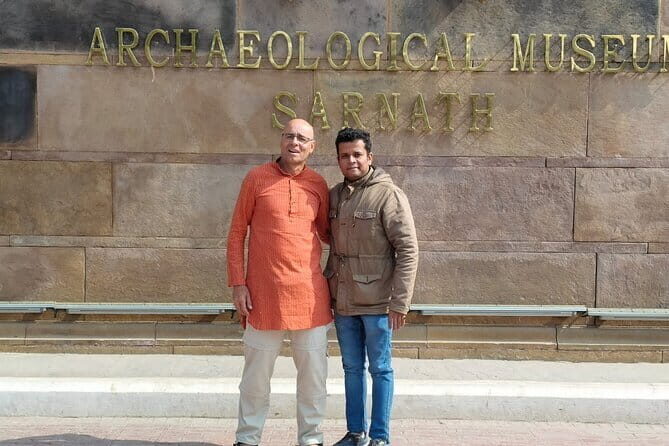
- Licensed guide you can trust: Approved by the Ministry of Tourism, and led by Monu Tours.
- Buddha’s first sermon context: You visit Sarnath, the story-setting place after enlightenment at Bodh Gaya.
- Dhamekh Stupa as a major stop: A clear, memorable monument stop in the Sarnath area.
- Sarnath Museum stop: Helps connect what you see in the grounds with what the site represents (closed Fridays).
- Small-group feel: Maximum 30 travelers.
- Safety through busy streets: The guide helps you navigate confidently on the ground.
Sarnath: where Buddhism’s first chapter starts
Sarnath is one of those places where religion and geography line up. You’re not just seeing old buildings; you’re stepping into the setting tied to the Buddha’s first teaching after enlightenment in Bodh Gaya. That matters because it turns a famous story into something you can actually stand inside of—paths, courtyards, monuments, and the rhythm of the neighborhood.
This tour is built around that idea. You spend your time where the day’s story lives, then you add a museum stop to make it click. Even if you’re not a hardcore history person, you’ll likely feel your understanding improve once you connect names and locations into a single timeline.
You can also read our reviews of more tours and experiences in Varanasi.


Trust and safety: the guide makes the difference
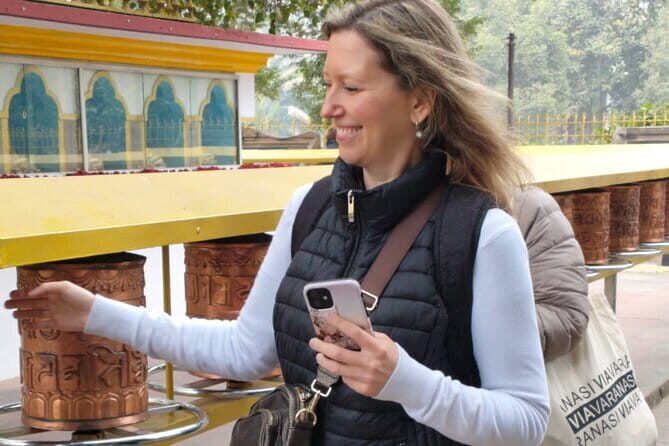
In Varanasi, the “walk out the door and figure it out” plan can get stressful fast. What I like here is that the tour is led by a licensed professional tourist guide approved by the Ministry of Tourism. That doesn’t magically remove all crowds or noise, but it does remove a lot of uncertainty.
Monu Tours also keeps the group size limited to a maximum of 30, which helps on busy sidewalks. And Monu is the kind of guide who makes safety feel practical: you get guidance on where to walk, when to slow down, and how to handle the movement of people around you. From the way the tour is described, it’s the sort of experience where you can ask questions without it feeling like you’re hijacking the schedule.
Getting started: 9:00 am, a simple meeting point
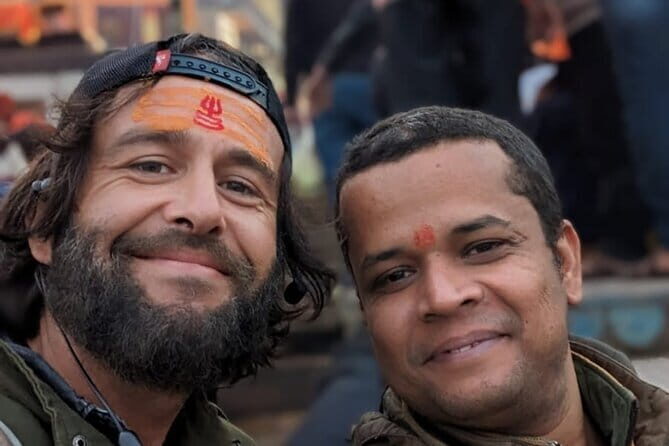
Your tour starts at 9:00 am and ends back at the meeting point. The pickup location is at Hotel Ganges Grand (front of the building), in the area of the Dashashwamedh Ghat Road crossing (Marwari Hospital building, D-37/47). If you like to plan efficiently, this kind of centralized meeting spot is helpful because you can focus on the tour instead of hunting for a guide.
It also helps that the tour is described as near public transportation. So even if you’re not starting from the exact same hotel as your group, you’re not trapped in one neighborhood.
Stop 1: Sarnath grounds and the feel of the setting
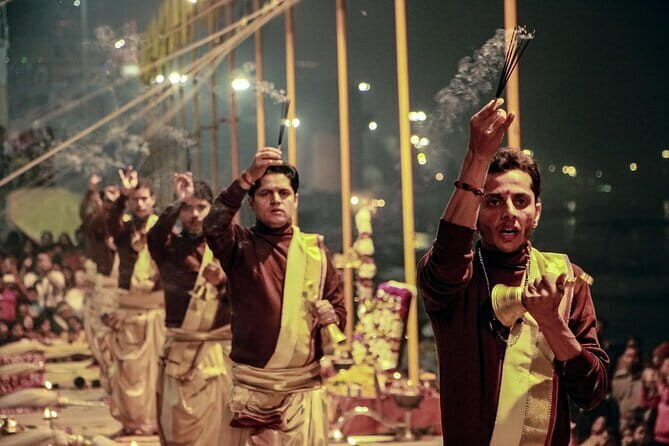
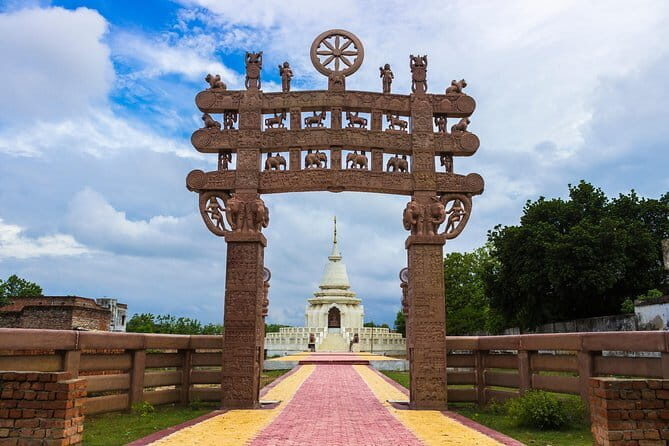
The tour begins with Sarnath, and that first stop is the most important. Here’s why: Sarnath isn’t just a single monument. It’s an area where multiple layers of Buddhist life once overlapped—teaching, visiting, building, and learning.
A guided start helps you get your bearings. Instead of arriving and wondering where to look first, you’ll have a structure: what to notice, why it mattered, and how the pieces connect to the story of the Buddha after Bodh Gaya. This is also where the tour’s tone begins—since you’re grounded in context early, later stops like Dhamekh Stupa and the museum feel more meaningful rather than random.
One practical note: this part of the day works best if you’re comfortable walking and standing for short periods. If you prefer a “sit down, see one thing” type of tour, Sarnath may feel more active than you expect.
Stop 2: Dhamekh Stupa—one landmark, lots of atmosphere

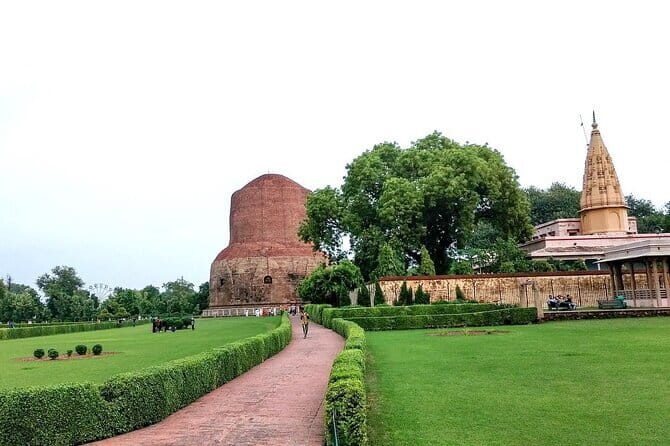
Next comes Dhamekh Stupa, one of the headline monuments in the Sarnath area. This stop is valuable because it gives you a clear focal point. With one standout structure, you can slow down and absorb the setting without juggling too many directions.
Guided time at a stupa works especially well when you’re trying to understand the site’s importance without getting lost in details you won’t remember later. The tour’s style—short, clear explanations—means you’re more likely to walk away with a usable mental map: where things are, what they represent, and how they connect back to the Buddha’s first sermon story.
Also, if you’re worried about taking photos in crowded places, a guide can help you choose moments to step aside. That’s a small thing, but it makes a big difference when streets around Sarnath get busy.



Stop 3: Sarnath Museum—bring your questions
The final main stop is the Sarnath Museum. A museum stop is often where a tour “snaps into focus,” because you finally see the kinds of items that explain what you’ve just been looking at. Even without going deep into academic detail, it helps you understand why the landmarks matter and how the site connects to Buddhist teaching in general terms.
Here’s the key drawback: the museum is closed every Friday. If your travel plans put you in Varanasi on a Friday, you’ll want to double-check alternatives with the operator before you lock in the day. Otherwise, you may still enjoy the Sarnath portion, but the museum time won’t happen.
If you do get museum time, keep your expectations realistic: it’s a guided stop within a 3-hour tour. So you’ll get the highlights rather than a full research visit—and that’s actually a good thing if you have limited time in Varanasi.
What “3 hours” feels like in real time
This tour is listed as about 3 hours. That’s a smart length for Sarnath because it’s enough time to do more than one meaningful component (grounds, Dhamekh Stupa, museum), while still leaving you energy for the rest of your Varanasi day.
In practice, the length works well if you:
- have a morning window you don’t want to overfill,
- want to hit the key Buddhist sites without getting stuck in a half-day maze,
- like guided context more than solo wandering.
If you’re the type who needs long breaks to rest your legs, you may want to plan a lighter afternoon after. The schedule includes walking, and it’s in a lively part of town.
Walking through Varanasi: how the guide helps
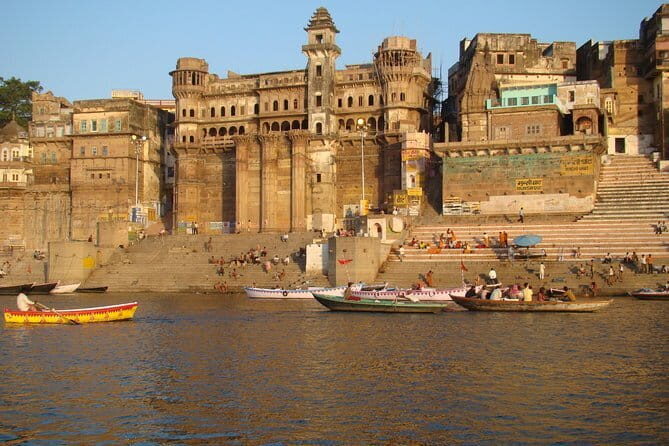
One of the best parts of this experience is the way it’s framed for real on-the-ground conditions. Varanasi is not a quiet museum town. Streets can be busy, people can move unpredictably, and it’s easy to lose your sense of direction.
With Monu, the focus seems to be on confidence and flow. The tour helps you move through the area without feeling like you’re constantly negotiating crowds on your own. You’ll also get explanations at a pace that keeps the walk interesting—more conversational than rigid.
I’d treat this as a “value of guidance” tour. Even if you like independent travel, the guide is what turns the experience from sightseeing into understanding.
Price and value: is $60 worth it?
The price is $60 per person for approximately 3 hours, and it includes all fees and taxes. Dinner is not included, so plan that separately.
Is it good value? For me, yes—because you’re paying for more than entry tickets. You’re paying for:
- a licensed guide (approved by the Ministry of Tourism),
- a structured route that hits multiple key parts of Sarnath,
- a museum stop (when open),
- a small-group maximum of 30.
Where you might feel the cost less comfortable is if you’re a very independent traveler who already knows the area well and prefers self-guided museum time. In that case, the tour may feel like paying for structure you could build alone.
But if you want a smooth, safe, story-based route without guessing, $60 makes sense—especially for a first visit.
Mobile ticket and smooth day-of flow
This experience uses a mobile ticket, which is exactly what you want on a busy travel day. Instead of keeping track of paper or hunting for a voucher, you can keep things simple and focus on the sites.
You’ll also receive confirmation at booking time, so you’re not left wondering whether everything is locked in. And if anything changes, or you need help, there’s a direct call/WhatsApp number provided for the local team.
Who this tour suits best
This is a good fit if you:
- want the main Sarnath story without piecing it together on your own,
- prefer a guided explanation rather than reading alone,
- like small-group experiences,
- appreciate safety and clear direction in crowded places.
It may not be perfect if you:
- are traveling on a Friday and specifically want museum time,
- dislike any walking or standing,
- want a long, slow paced exploration without a set route.
Should you book the Sarnath tour?
I’d book it if this is your first time connecting Buddhism’s story to a real place—and you want that connection guided, safe, and efficient. The best reasons are the licensed guide, the focused route through Sarnath and Dhamekh Stupa, and the added museum stop when it’s open.
Skip it or adjust plans if you’re locked into a Friday, since the museum closure is built into the reality of the day. Otherwise, this is a strong choice for a half-day commitment in Varanasi: you’ll leave with clearer context and less stress than you’d likely get on your own.
FAQ
What time does the tour start?
The tour starts at 9:00 am.
How long is the Sarnath tour?
It lasts about 3 hours (approx.).
How much does the tour cost?
The price is $60.00 per person.
What is included in the tour price?
All fees and taxes are included.
What is not included?
Dinner is not included.
Do I need a printed ticket?
No. The tour uses a mobile ticket.
Where does the tour start?
It starts at Hotel Ganges Grand – Varanasi (front of the building), near the Marwari Hospital Building, D-37/47, Dashashwamedh Ghat Rd.
Where does the tour end?
The activity ends back at the meeting point.
How many travelers are in the group?
The tour has a maximum of 30 travelers.
Is the museum always open?
The Archaeological Museum is closed every Friday.
Is the booking refundable?
No. This experience is non-refundable and cannot be changed for any reason.