REVIEW · MUMBAI
Private Tour in Mumbai Slum with Sightseeing
Book on Viator →Operated by Colors Experiences · Bookable on Viator
Dharavi turns Mumbai into a real story. This private day blends Dharavi neighborhood life and the open-air laundry at Dhobi Ghat, then rolls right into Mumbai’s big-name landmarks. It’s the kind of route that makes the city feel bigger than postcards.
I love the way the day balances perspectives. You get time to talk about daily life and local industries in Dharavi, then you see Dhobi Ghat as an operating, working system—not just a spectacle. I also like that you’re not stuck in a bus line: you ride in a private air-conditioned vehicle with pickup, so you can actually keep your head on straight.
One thing to consider: this is a packed 8-hour route with lots of stops, so you’ll want to go in with a flexible mindset. If you’d rather spend more time on monuments and less time on shopping-type moments, make that clear early with your guide.
In This Review
- Key highlights you can plan around
- Private AC transport is the real comfort upgrade
- Dharavi slum tour: seeing daily life and small-scale work
- What to look for when you’re there
- Dhobi Ghat: the outdoor laundromat that runs like a system
- Antilia and Banganga: extreme wealth and a myth you can visit
- Jain Temple and Mani Bhavan: quiet stops with big ideas
- Crawford Market and Chhatrapati Shivaji Terminus: commerce and architecture
- Gateway of India and Kamala Nehru Park: ending with city views
- Who should book this private Mumbai tour?
- Price and value: what $61.37 buys in practice
- Practical tips to get the best day
- Should you book this Dharavi and Mumbai landmarks private tour?
- FAQ
- How long is the private tour?
- Is this tour private or shared?
- Is pickup included?
- What are the main stops on the route?
- Are admission tickets included?
- What’s included in the tour price besides transportation?
- Do I need moderate physical fitness?
- Is the tour affected by weather?
- What is the cancellation policy?
- Are tips included?
Key highlights you can plan around
- Dharavi neighborhood visit for real-world context, including local industries and everyday social issues
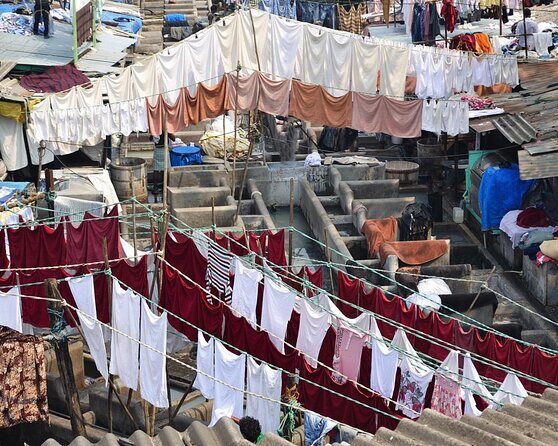
- Dhobi Ghat’s outdoor laundromat with color-coded wash pens and family-run work
- Major Mumbai landmarks in one day, from Gateway of India to Chhatrapati Shivaji Terminus
- Private comfort: air-conditioned vehicle, pickup offered, and a water bottle included
- Guides that keep it human (you may hear stories from locals like Abhi, Sajid, Bala, and Jeeta)
- A portion reinvested in Dharavi Travel, aimed at staying rooted in the area you visit
Private AC transport is the real comfort upgrade
This tour is built around a simple idea: spend your energy learning, not negotiating transit. You travel in a private air-conditioned vehicle, and pickup is offered, which matters a lot in Mumbai traffic. You’re also on a route where timing gets tight, so having one vehicle doing the moving helps keep the day from turning into a game of catch-up.
The tour also works well for couples, solo travelers, and small groups because it’s private—just your group. That means your guide can adjust pacing, answer questions as they come up, and customize the day to match your interest level. If you want more history, say so. If you want more human stories, also say so.
You can also read our reviews of more private tours in Mumbai



Dharavi slum tour: seeing daily life and small-scale work
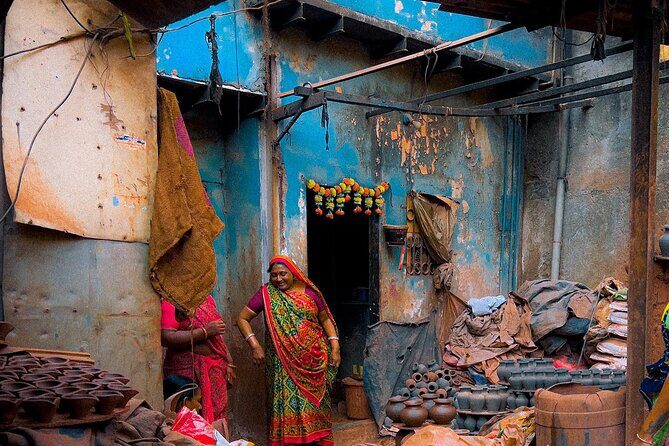
Dharavi is the largest slum in India, and the tour approach is designed to help you understand it as a place where people organize life under hard conditions. Plan on about 3 hours in Dharavi. You’ll visit different neighborhoods and spend time discussing everyday life and social issues that shape what people can and can’t do.
What makes this stop special is not just the setting—it’s the framing. The experience is meant to give you an educational insight into the area. You’ll also learn how many small-scale industries operate there, because Dharavi isn’t only about hardship. It’s also about work, routine, and problem-solving. In guides’ explanations, you often hear how community ties support survival and how local industry fits into the broader Mumbai economy.
Guides often bring a personal angle because many of them have real connections to the area. In past groups, names like Abhi, Sajid, Bala, and Jwetu have been guiding, and the common thread is clear English plus practical storytelling. That combo helps you keep respect front-and-center while still getting straight answers.
A possible drawback? Dharavi requires moderate physical fitness, and you’ll be moving through busy, lived-in streets. It’s not a museum tour where everything stays behind rails. If you’re sensitive to crowding or you hate walking, you may feel rushed or overwhelmed.
What to look for when you’re there
- How people structure work and daily routines in tight spaces
- How schools and community life fit into the neighborhoods you’re shown
- The way guides connect local industries to what you see around you
Dhobi Ghat: the outdoor laundromat that runs like a system
After Dharavi, the day shifts from neighborhood life to an open-air operation. Dhobi Ghat is one of the world’s largest outdoor laundry facilities. You’ll have about 1 hour here, and the main point is to see laundry as labor, skill, and choreography.
The wash pens are color-coded, and the process is passed down through generations, with family businesses continuing the work. It’s also a place that’s been featured in Bollywood, which you might notice through references your guide points out—but your goal shouldn’t be “spot the movie.” Your goal is to watch how the system works: the stages, the tools, and the constant motion.
This stop tends to click for visitors because it feels like a living workplace. It’s not staged. People are working, sorting, and moving items through the process. That’s why photos help, but explanations help more. A good guide makes the mechanics understandable.
One practical note: it’s outdoors. So if Mumbai weather is doing its thing, you’ll want to be ready for heat and humidity swings during that hour.
Antilia and Banganga: extreme wealth and a myth you can visit
Next comes a visual contrast that Mumbai does better than almost anywhere: a look at Antilia, followed by Banganga. Antilia is described as a modern architectural marvel and one of the world’s most expensive private residences. You’ll have about 30 minutes. The stop isn’t about going inside—it’s about seeing how one private world sits inside the city’s public reality.
Then you head to Banganga, a tank associated with a legend involving Lord Rama. According to the story, Lord Rama stopped here to quench his thirst by shooting an arrow into the ground, creating the tank. The name Banganga comes from Ban (arrow) and Ganga (river). This part of the day is shorter—about 30 minutes—but it’s a nice reset after Antilia’s wealth shock.
Banganga is listed as free admission, so this is one of those “add-on value” stops: it gives you culture and context without eating into your budget.




Jain Temple and Mani Bhavan: quiet stops with big ideas
From myth and wealth, the tour turns toward belief and independence-era thinking.
At the Jain Temple – Mumbai, you’ll spend about 30 minutes. The guide’s focus here is usually on Jainism as a minority religion with a strong influence on Indian culture and philosophy. The key ideas emphasized are non-violence and spiritual enlightenment as a path toward liberation. Even if you’re not religious, this stop helps you understand a thread that shows up across India—how ethics shapes daily life.
Then there’s Mani Bhavan Gandhi Museum, about 30 minutes. This is framed as a living testament to Mahatma Gandhi’s legacy and his work for independence through non-violence and civil disobedience. It’s a compact museum stop, but it lands because it connects Gandhi’s ideas to real action rather than just slogans.
Both of these are listed as free admission, which keeps them from feeling like “extra costs for extra stops.” They’re also a good pacing change: after Dharavi and Dhobi Ghat, these calmer moments help your brain absorb what you just learned.
Crawford Market and Chhatrapati Shivaji Terminus: commerce and architecture
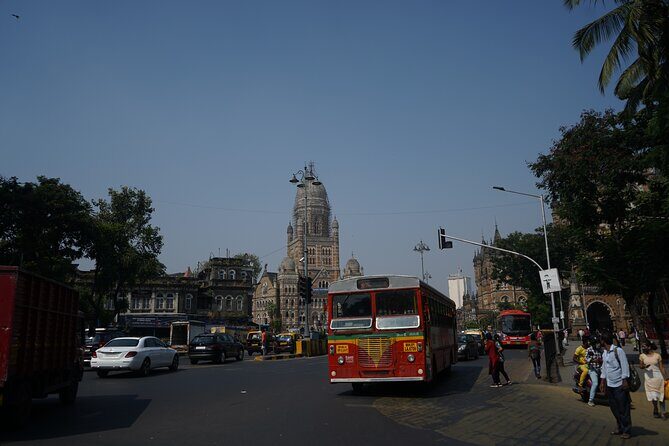
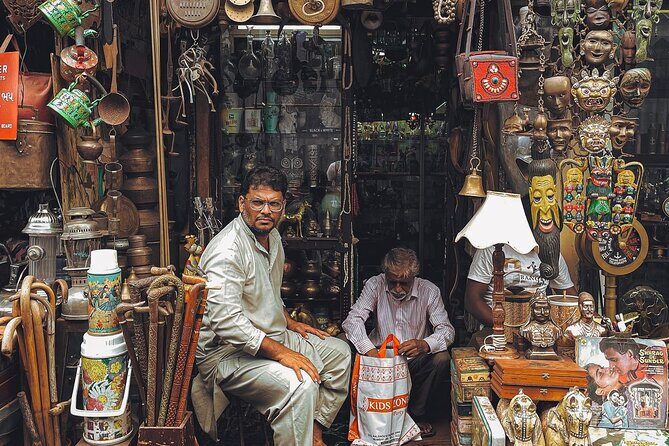
Mumbai’s personality shows up fast at Crawford Market. You’ll get around 30 minutes here. The tour frames it as more than shopping—it’s a historical landmark reflecting the city’s commercial and cultural diversity, and it remains a useful place to get a sense of how Mumbai sells, buys, and moves goods.
This is also the sort of stop where guides may choose how much time to spend based on your group. One practical tip: if you prefer monuments over browsing, tell your guide early. You’ll get a smoother day and fewer time surprises.
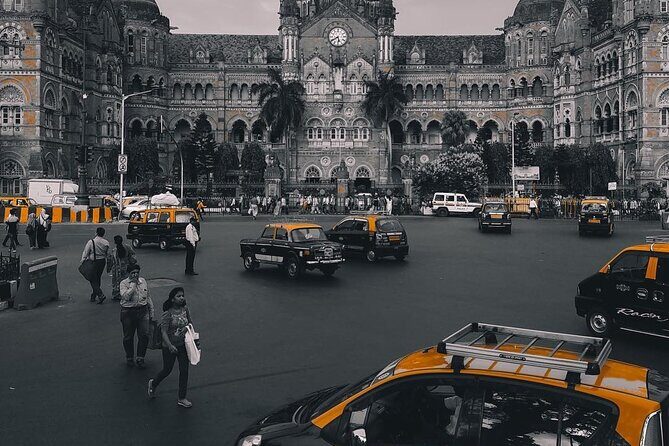
Then you move to Chhatrapati Shivaji Terminus for about 30 minutes. It’s described as an architectural gem and a transportation hub, tied to Mumbai’s colonial legacy. Even if you know nothing about rail history, the building’s scale tends to grab attention, and the stop works well as a break between the emotional weightier segments and the final waterfront landmarks.
Gateway of India and Kamala Nehru Park: ending with city views
The route finishes with a classic Mumbai skyline ending.
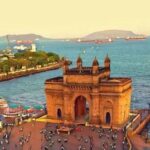
Gateway of India is next, and you’ll have about 30 minutes. This spot is described as a symbol of Mumbai’s history and independence, and it’s often where people get their first big “oh, this is the city” feeling. It’s a landmark stop, but it also helps you wrap the day visually: from neighborhoods and workplaces to iconic public spaces.
After that, there’s Kamala Nehru Park, about 30 minutes. The park is famous for its layout that resembles a giant shoe, representing the footwear of Mother Earth. From the top of the shoe, you can enjoy panoramic views of the city, including views toward iconic Marine Drive.
Kamala Nehru Park is listed as admission not included, so keep that in mind if you want to go up for the views. For many visitors, this is the moment where the day’s theme turns into “see Mumbai as a whole.”
Who should book this private Mumbai tour?
This is a strong fit if you want:
- A private day that mixes neighborhood life with landmark sightseeing
- A guide who can explain what you’re seeing, not just point out buildings
- A route that includes Dharavi + Dhobi Ghat instead of only the obvious monuments
It’s also a good choice if you like variety: temples, a Gandhi museum, architecture, and a working laundry facility in one day.
This is less ideal if:
- You hate walking or crowded streets, since Dharavi visit requires moderate physical fitness
- You want a slow, deeply spaced itinerary. This day is full, and the pace can feel intense
If you’re traveling with teens or adults who enjoy real-world learning, it can be especially satisfying. Families with small kids may find the schedule tougher, but that depends on your group’s comfort level with crowds and walking.
Price and value: what $61.37 buys in practice
At $61.37 per person for about 8 hours, the value comes from three places.
First, you get a private air-conditioned vehicle with pickup. In Mumbai, comfort and time matter. If you’ve dealt with public transit timing, you’ll appreciate paying for less stress.
Second, the day includes tickets for Dharavi and Dhobi Ghat. Those are the two parts that would otherwise cost you extra or require more planning. Other stops like Banganga, Jain Temple, Mani Bhavan, Crawford Market, Chhatrapati Shivaji Terminus, and Gateway of India are listed as free admission.
Third, you’re not only doing “sights.” You’re doing explanation time. The guide experience drives the value. People like Abhi, Sajid, Bala, Suraj, Jeeta, and others are mentioned for strong English and thoughtful storytelling. That kind of communication turns a visit into an understanding moment.
Don’t forget the extra line item: tips are not included. Also, Antilia and Kamala Nehru Park have admission not included, so you might pay for those if you want specific access or viewpoints.
Overall, this feels like a fair deal for a private day that includes two ticketed working/learning stops plus a stack of famous Mumbai landmarks.
Practical tips to get the best day
Here’s how I’d plan for a day like this so you don’t feel rushed or out of sync.
- Tell your guide your focus early. If you want more history and landmarks, say it before you start drifting into shopping time. Guides can adapt, and that makes a big difference.
- Expect contrast. Your emotions may swing between Dharavi’s resilience, Dhobi Ghat’s labor, and Antilia’s wealth symbolism. That’s the point—just don’t be surprised if you need a minute to reset.
- Use your guide’s knowledge on every stop. The stops aren’t long, so ask questions while you have them. A good guide can connect dots fast: work, religion, independence, architecture, and city identity.
- Bring patience for pacing. With about 30 minutes at many major landmarks, you’ll get “enough” rather than a long wander. Plan your day accordingly.
And one small confidence booster: drivers are part of the success here. In past experiences, groups have praised drivers for managing traffic smoothly, which helps you stay on schedule.
Should you book this Dharavi and Mumbai landmarks private tour?
I think this is a smart booking if you want one day that’s both educational and visually memorable. It avoids the common trap of doing only famous monuments. Instead, it gives you Dharavi and Dhobi Ghat, then pairs them with major Mumbai markers like Gateway of India and Chhatrapati Shivaji Terminus.
Book it if:
- You want a private, air-conditioned way to see a lot
- You care about context behind the city, especially Dharavi’s everyday life and industries
- You like guided explanation and clear English from your host
Skip it or rethink if:
- You want a slow itinerary with lots of free time
- You’re not comfortable with walking and time in dense neighborhoods
- You’d rather keep the day strictly to monuments and museums
If you do book, send a note (or ask at the start) about your priorities. The guides can customize, and that’s where you’ll get the best match between your day and Mumbai’s many faces.
FAQ
How long is the private tour?
It runs for about 8 hours.
Is this tour private or shared?
It’s private. Only your group participates.
Is pickup included?
Pickup is offered, and you travel in a private air-conditioned vehicle.
What are the main stops on the route?
You’ll visit Dharavi, Dhobi Ghat, Antilia, Banganga, a Jain Temple, Mani Bhavan Gandhi Museum, Crawford Market, Chhatrapati Shivaji Terminus, Gateway of India, and Kamala Nehru Park.
Are admission tickets included?
Admission tickets are included for Dharavi and Dhobi Ghat. Antilia and Kamala Nehru Park are listed as not included. Other stops mentioned are free.
What’s included in the tour price besides transportation?
A water bottle is included.
Do I need moderate physical fitness?
Yes. The experience notes a moderate physical fitness level.
Is the tour affected by weather?
Yes. It requires good weather. If it’s canceled due to poor weather, you’ll be offered a different date or a full refund.
What is the cancellation policy?
You can cancel up to 24 hours in advance for a full refund. If you cancel less than 24 hours before the start time, you won’t receive a refund.
Are tips included?
Tips are not included.