REVIEW · MUMBAI
Local Transport & Dabbawallah Tour
Book on Viator →Operated by Reality Tours & Travel Pvt Ltd · Bookable on Viator
Mumbai clicks into place with train windows. What makes this tour special is that you don’t just look at sights; you travel through real daily Mumbai with a guide who keeps you oriented. I like that the transport is part of the experience, not an afterthought, and I also like the human angle—especially the chance to understand how dabbawallahs move lunchboxes through the city.
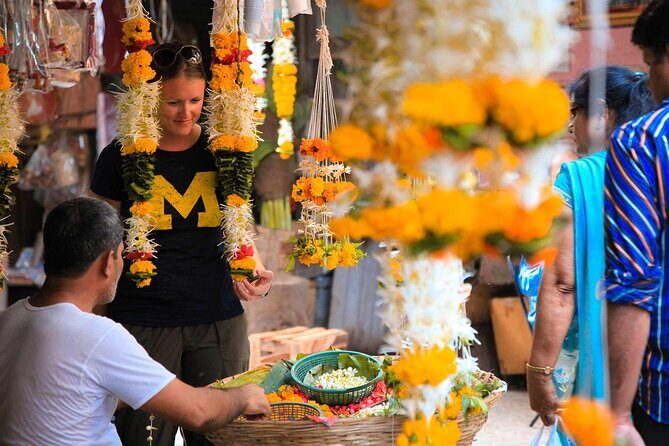
You also get strong texture stops that explain how Mumbai actually runs. Dhobi Ghat is the standout: an outdoor laundry where dhobiwallahs scrub sheets for big hospitals and hotels, and you can watch the work as it happens. You’ll also see flower culture at SHYAM STALL and get a taste of shopping life at Chor Bazaar.
One consideration: there’s no hotel pickup, and the tour starts at Regal Cinema at 8:30 am and finishes at Churchgate. If you’re not at the meeting point on time, you can end up in that frustrating situation where your day gets harder fast.
In This Review
- Key highlights worth planning for
- Why this South Mumbai route feels like real Mumbai
- Transport mix: trains, buses, taxis, and why it’s worth the time
- Regal Cinema meeting point: an easy start in Colaba
- CST at rush hour: watching one UNESCO station in action
- SHYAM STALL: flowers everywhere, and you’ll notice it for days
- Dhobi Ghat: the outdoor laundry that runs at human speed
- Chor Bazaar: flea market energy plus snack-sized local culture
- Churchgate and dabawallahs: a delivery system you can see
- Price and value: $32.45 buys fewer headaches than you think
- Practical tips to enjoy the 3.5 hours without stress
- Who should book (and who might not love it)
- Should you book Local Transport & Dabbawallah Tour?
- FAQ
- How much does the Local Transport & Dabbawallah Tour cost?
- How long is the tour?
- Where does the tour start and what time?
- Where does the tour end?
- What transportation does this tour use?
- Are transportation fares included?
- Is water included?
- Do I need tickets or do any stops have admission fees?
- Is there a meal included?
- What if I need to cancel?
Key highlights worth planning for

- Public transport as the main event: train, bus, and taxi rides with guide support
- UNESCO-listed CST at rush hour: see the crush load from a safer viewing walkway
- Dhobi Ghat in motion: watch large-scale outdoor laundry work up close
- Flower-heavy culture stop: SHYAM STALL makes the city’s use of flowers feel immediate
- Chor Bazaar browsing plus tastes: sweets, homemade pickles, and chutneys during the market stop
- Dabbawallah delivery snapshot: learn how lunchboxes reach people daily, then eat a vegetarian lunch nearby
Why this South Mumbai route feels like real Mumbai
This is the kind of half-day tour that helps you understand Mumbai, not just photograph it. You’re in the city’s thick of it—on the move, weaving between stations, markets, and working spaces—so you see how people get around and how routines actually land in daily life.
The structure matters. You start in Colaba at Regal Cinema and end at Churchgate, which gives you a clean, logical arc across South Mumbai. The tour runs about 3 hours 30 minutes, and the group stays capped at 25 people, so you’re not trapped in a huge crowd-control bubble.
At $32.45 per person, the value is mostly in what you don’t have to sort out. Transportation fares are included, and the stops that have admission are free. For a city like Mumbai, where transit can feel like a puzzle at first, that’s a big practical win.
You can also read our reviews of more tours and experiences in Mumbai.


Transport mix: trains, buses, taxis, and why it’s worth the time
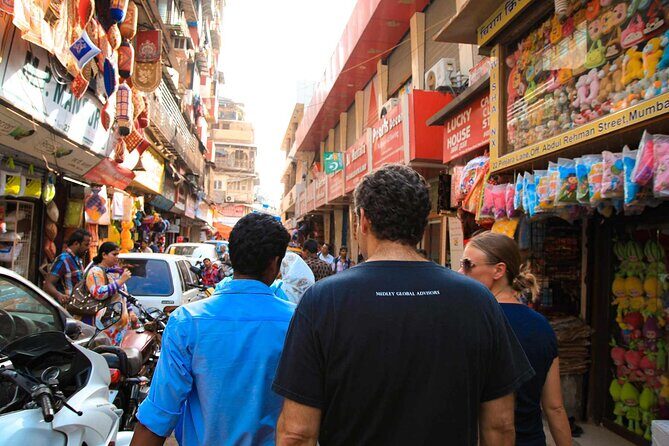
The headline promise here is simple: you ride public transport like locals do. That means you’re not just standing near a train station. You’re learning the rhythm—boarding, moving with the group, and watching how trains and stations operate during busy hours.
Why I think this works for first-timers: Mumbai’s biggest learning curve is confidence. Once you’ve seen where to stand, how to follow a guide through station flows, and how to stay oriented while people move around you, you’ll feel less like you’re wandering and more like you’re participating.
You should still expect crowded moments. The tour includes time at busy areas such as Chhatrapati Shivaji Terminus (CST) during rush hour, and one of the better parts of that stop is the chance to observe a huge arrival of passengers from a walkway rather than trying to get lost in the middle of it.
Also, the transport is part of the storytelling. The guide doesn’t just say where to go; they explain what you’re seeing and why it’s relevant to the city’s daily life. The result is that the transit time feels useful, not like dead travel.
Regal Cinema meeting point: an easy start in Colaba
The tour begins at Regal Cinema, on Colaba Causeway opposite Chhatrapati Shivaji Maharaj Vastu Sangrahalaya (Apollo Bandar, Colaba). That’s a practical meeting point because it’s in an area that’s already well-connected and familiar for many visitors.
You also get a nice warm-up. Before you hit the “wow” stops, you’re already in South Mumbai’s older core, where you can see a blend of tourism and everyday movement. It’s a good start point if you want to feel like you’re stepping into the city early, not late.
One more thing I appreciate: since there’s no hotel pickup, you can move on your schedule. Just plan to arrive a bit early so you’re not rushing at 8:30 am.
CST at rush hour: watching one UNESCO station in action
Chhatrapati Shivaji Terminus (CST) is one of the most important places in Mumbai for rail travel, and the tour gives you a focused look at it during peak activity. The stop is short—about 10 minutes—but it’s designed for impact.
CST is UNESCO-listed, and it’s also famous pop-culture-wise due to its connection to Slumdog Millionaire. That’s useful context, but the real value is sensory: you see how quickly passengers move, how the station breathes with arrivals, and how dense commuting can get.
Here’s the practical advantage: you’re not asked to fight the crowds on the platforms. The experience centers on watching the station flow from a safer vantage point (a walkway), so you get the drama of rush hour without the chaos of trying to manage a hundred moving decisions at once.
If you’re the kind of person who enjoys transport photography or just wants to understand how big-city systems work, this stop delivers.
SHYAM STALL: flowers everywhere, and you’ll notice it for days
SHYAM STALL is only about 15 minutes, but it changes how you’ll read Mumbai afterward. The idea is that flowers aren’t a “special occasion” thing here. They show up in temples, in taxis, in women’s hair, and in daily acts of worship and welcome.
In a lot of cities, you’d need a museum to get that kind of cultural context. Here, it’s direct and visual. You’ll see more flowers in one place than you might expect, and it helps explain why Mumbai feels so color-forward even when the streets are busy and work-focused.
This is also a good stop for photos, but do keep it respectful. If you’re taking pictures close to vendors, watch for cues from your guide on where it’s okay to stand and how to avoid blocking others.


Dhobi Ghat: the outdoor laundry that runs at human speed
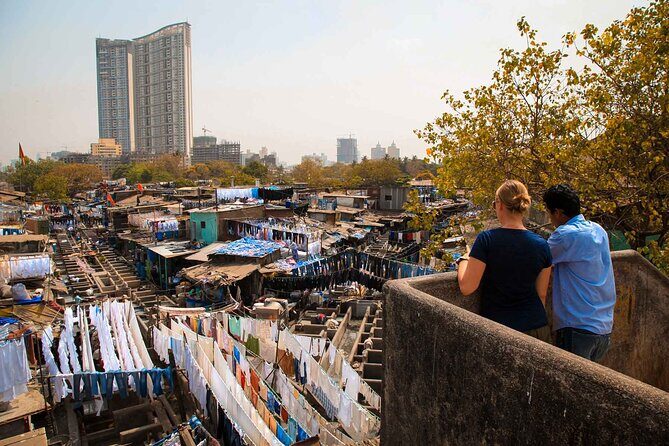
Dhobi Ghat is the stop that tends to stick in your memory, and for good reason. This is described as the world’s largest outdoor laundry. In plain terms, you’re watching workers—dhobiwallahs—scrub linens from large hospitals and hotels.
The time on site is about 30 minutes, which is the right length for two things:
1) You can watch enough to understand the rhythm of the work.
2) You’re not stuck so long that you lose track or get overwhelmed.
What you gain from seeing it this way is respect for systems. Laundry might sound mundane, but at Dhobi Ghat it’s clearly infrastructure. It’s part of how large institutions keep operating, and it’s part of how everyday life gets cleaned, reset, and sent back into circulation.
A practical heads-up: this is open-air. Weather and comfort matter. Wear something you can handle in Mumbai sun or morning conditions, and keep your eyes on your guide if there are moving workflows around you.
Chor Bazaar: flea market energy plus snack-sized local culture
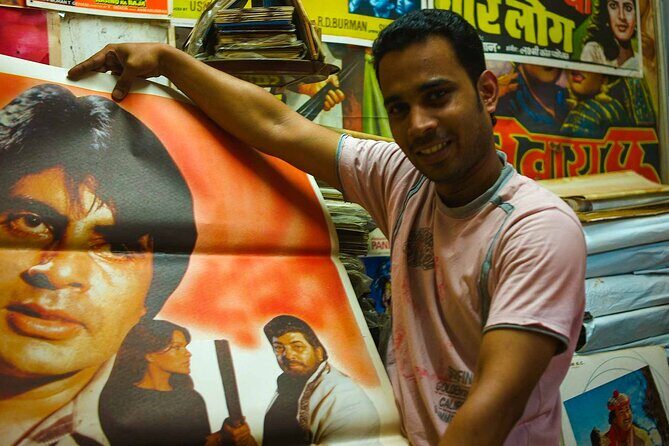
Chor Bazaar is known as the Thieves Market, and the tour uses that reputation as a lead-in to what you’ll actually experience: one of India’s larger and busier flea-market areas where you can find almost anything.
The stop runs about 30 minutes, which is just enough time to get a feel for the market layout and browse without feeling trapped. The tour also includes tasting local sweets and the chance to try homemade pickles and chutneys. That’s a smart move for value. Even if you don’t plan to buy much, you still come away with flavors that help you remember the place.
One thing to expect: markets like this can be crowded and a little chaotic. Keep your pace slow and listen to your guide on where to stand. Your group move matters more than individual wandering during this part.
Churchgate and dabawallahs: a delivery system you can see
The tour ends at Churchgate, but right before finishing you get one of the most interesting glimpses of Mumbai life: the dabawallah operation. You’ll view how the delivery process works, with an example scale of about 200,000 lunchboxes handled every single day.
This is one of those moments where the tour turns from sightseeing into real understanding. It’s not just “look, lunch boxes.” It’s the idea of organization—how routes, handoffs, and consistency create a system that keeps people fed while the city keeps running.
The stop is about 10 minutes, which again is short, but it’s timed so you can see the flow rather than just learn about it in theory.
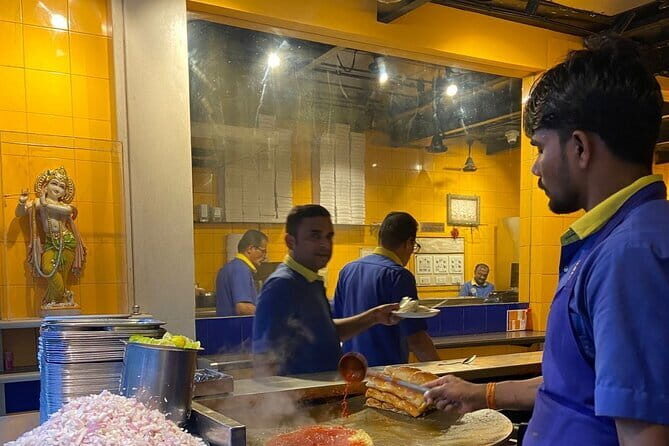
Then you get the practical payoff: a vegetarian dabawallah lunch at Oval Maidan nearby. The tour plan states you’ll enjoy it there, but the data you provided doesn’t explicitly say whether the meal is included in the price. Either way, the time slot is built for you to eat as part of the experience, not after you leave.
Price and value: $32.45 buys fewer headaches than you think
Let’s talk value in a concrete way. At $32.45 per person, you’re getting:
- All transportation on the tour
- A local guide
- Bottled water / a cold drink
- Free admission at the listed stops
That matters because Mumbai’s transit can be cheap, but it’s not always easy to navigate when you’re new to train lines, station flow, and local bus routes. Including fares means you can focus on learning rather than juggling small payments and figuring out the right option on the spot.
The booking pattern also hints at demand; it’s commonly booked well in advance, which often means you’re joining a route that keeps proving itself as a good introduction to the city. With a max group size of 25, it’s usually manageable.
For me, the best value isn’t just the sightseeing list—it’s that you finish with confidence about how to move. That’s hard to measure until you try it later in your own plans.
Practical tips to enjoy the 3.5 hours without stress
This tour moves. You’re doing train, bus, and taxi, plus multiple quick stops. Here’s how to make it feel smooth instead of rushed:
- Wear comfortable shoes. Stations and walking paths happen fast, and you’ll want traction.
- Travel light. Your day includes standing, watching, and moving between points, so large bags can turn annoying quickly.
- Be ready for crowds during rush-hour moments, especially near major rail hubs like CST.
- Plan your day for the ending point. You finish at Churchgate, so decide in advance how you’ll get back to your hotel or next stop.
- If you’re sensitive to schedule changes, know that India’s public holidays can affect normal routines. One past experience noted the dabawallah portion was shortened on Republic Day, so don’t assume the exact delivery routine will look identical every time.
Who should book (and who might not love it)
This tour is a great fit if:
- You’re a first-timer who wants to learn Mumbai transit basics with a guide
- You like human-scale city life—working people, markets, and daily routines
- You want an affordable introduction that mixes iconic sites with lesser-visited local spaces
- You’d rather take trains and buses than spend a morning in a vehicle watching out a window
It may not be the best match if:
- You strongly dislike crowded rail settings
- You need a very relaxed pace with fewer transitions
- You expect hotel pickup or a door-to-door tour (this starts at Regal Cinema)
Should you book Local Transport & Dabbawallah Tour?
Yes, I’d book it—especially if your priority is to understand how Mumbai works in real time. The mix of public transport practice plus working-city stops like Dhobi Ghat makes the day feel grounded, not just tourist-heavy. At this price, the guide and included transport fares remove a lot of the friction that can make transit tours stressful.
Just go in with the right mindset: this is short, moving, and sometimes busy. If you show up on time at Regal Cinema, keep close to your guide, and treat rush hour as part of the lesson, you’ll leave with a much better sense of where you are and how to navigate next.
FAQ
How much does the Local Transport & Dabbawallah Tour cost?
It costs $32.45 per person.
How long is the tour?
The tour lasts about 3 hours 30 minutes.
Where does the tour start and what time?
It starts at Regal Cinema at 8:30 am.
Where does the tour end?
The tour ends at Churchgate Railway Station, which offers easy access to other parts of Mumbai.
What transportation does this tour use?
You travel using train, bus, and taxi during the tour.
Are transportation fares included?
Yes. All transportation on the tour is included.
Is water included?
Yes. Bottled water is included, along with a cold drink.
Do I need tickets or do any stops have admission fees?
The stops listed for the tour indicate admission is free.
Is there a meal included?
The tour schedule includes time to enjoy a vegetarian dabawallah lunch at Oval Maidan nearby, but the provided details do not specify whether the lunch cost is included in the price.
What if I need to cancel?
You can cancel for a full refund if you cancel at least 24 hours before the experience starts.