REVIEW · JAIPUR
Guided Morning E-Rickshaw Ride with Food Tasting at Jaipur
Book on Viator →Operated by Seagull Jaunt · Bookable on Viator
Sunrise in Jaipur feels made for slow rides, and this guided e-rickshaw loop mixes Pink City photo stops with food tasting at long-running stalls; I like the traffic-free morning flow around Ram Niwas Garden and I like seeing real brass work in Thatheron ka rasta instead of just taking pictures. One thing to consider: you’ll still do short walks and standing at a few stops, so plan for that and wear shoes you can handle for about an hour in total.
In small groups (max 10), the pace stays calm and personal, and it helps that guides like Umesh or KumKum know where to pause for both views and flavor. I also like the balance here: major landmarks like Hawa Mahal sit next to everyday places like the flower and vegetable markets, where morning smells hit fast and you get an easy feel for how locals move.
This is a 3-hour experience that costs $30.09 per person, and for me the value comes from stacking multiple categories in one go: history-looking-at, temple moment, craft watching, and multiple tastings without a lot of backtracking.
In This Review
- Key highlights worth waking up for
- Enter Jaipur by e-rickshaw, not by hustle
- Raj Mandir Cinema to Ajmeri Gate: start with icons, then hit the city wall
- Ram Niwas Garden and Albert Hall: Anglo-Indian calm at the right hour
- Pink City roads and Chardiwari walls: where the city tells you its priorities
- Hawa Mahal’s honeycomb facade: don’t just look, find the windows
- Govind Devji Temple: aarti first, then laughter in the garden
- Thatheron ka rasta: artisans with no shortcuts
- The food portion: classic Jaipur snacks, served with morning context
- Price and value: what $30.09 buys you in real time
- Practicalities you should actually care about
- Who this tour suits best
- Should you book this morning e-rickshaw + food tour
- FAQ
- How long is the Jaipur guided morning e-rickshaw ride with food tasting?
- Where does the tour start and end?
- What’s the group size limit?
- Is the mobile ticket included?
- Are admission tickets included for all stops?
- What food experience is included?
- Which major sights are included?
- What happens at Govind Dev Ji Temple?
- What if the weather is bad?
- What is the cancellation timeframe for a refund?
Key highlights worth waking up for
- Traffic-light morning riding: you get to glide past the Pink City before the day crowds really crank up.
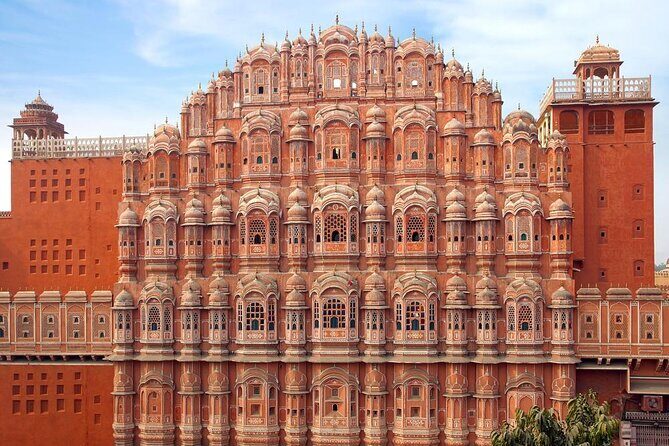
- Hawa Mahal at photo-hour: 953 jharokhas (small lattice windows) make the stop feel instantly more specific than a postcard.
- Govind Devji Temple ceremony: you’ll attend aarti and then do laughing yoga in the temple garden area.
- Thatheron ka rasta brass craft: watch artisans make utensils in old style, and you can even try your hand.
- Flower and vegetable market time: more than 100 varieties gives you a sensory break between monuments and food stops.
Enter Jaipur by e-rickshaw, not by hustle
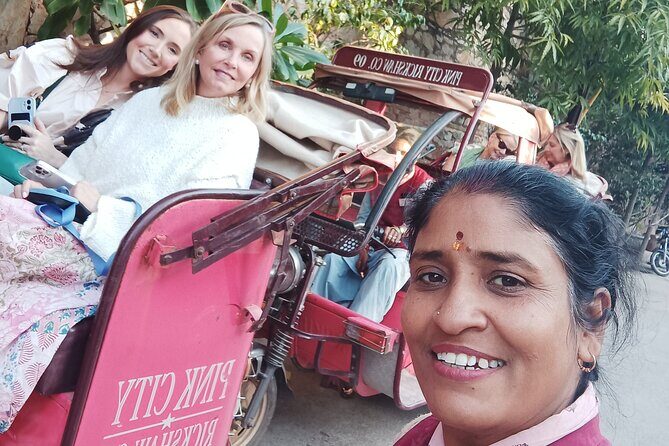
If you only know Jaipur from quick day tours, this kind of morning route can change your whole mental picture. Starting early matters. Streets feel less choreographed by tour groups, and your guide can choose quieter angles for photos. The e-rickshaw also cuts down on the grind: you sit, relax, and still cover ground that would be slower on foot.
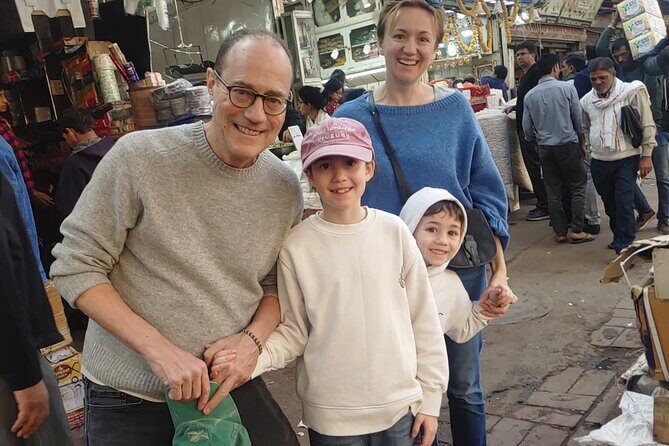
The ride works especially well if you don’t want to spend your morning constantly stopping, walking, and re-starting. One earlier group included people in their 70s (and even with a back injury), and the “sit and move” style helped them keep up without feeling cooked.
The group size also keeps it human. With a maximum of 10 people, you’re less likely to get lost in the shuffle, and your guide can adjust the pace if someone needs extra time at a market or a photo point.
You can also read our reviews of more food & drink experiences in Jaipur


Raj Mandir Cinema to Ajmeri Gate: start with icons, then hit the city wall
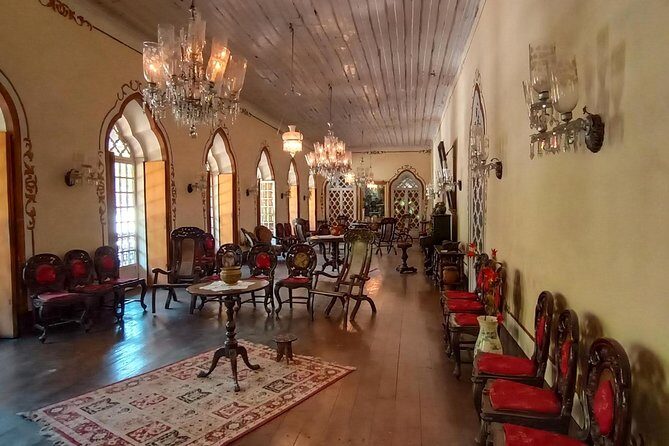
The tour starts back at Raj Mandir Cinema (C-16, Bhagwan Das Rd, Panch Batti, C Scheme). It’s not just a random theater stop. The hall is known as Jaipur’s oldest cinema, and the interior is described as opulent. Even if you only catch the exterior vibe and the surrounding area, it’s a good marker for how the city mixes entertainment, old-world grandeur, and everyday life.
From there you head toward Ajmeri Gate, where the big takeaway is how strongly the old city boundaries shaped movement. You’ll see Jaipuri art on walls and huge doorways that once protected localities from foreign invaders in the Maharaja era. It’s also where you get a sense that the walled city starts right here, not later “somewhere near the monuments.”
A practical note: this stop is short (about 10 minutes) and mostly visual. If you like reading a place through details—doorways, wall art, and geometry—this is a fast but meaningful jump.
Ram Niwas Garden and Albert Hall: Anglo-Indian calm at the right hour
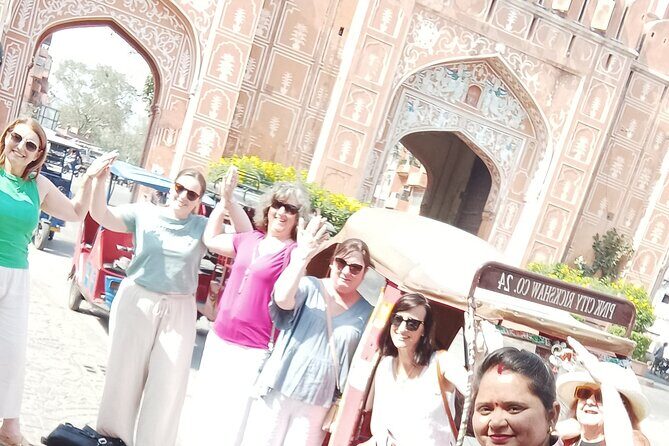
Next up is Ram Niwas Garden, where the morning matters more than you’d think. Traffic is not allowed in morning hours, so your route through the garden stays calmer than the city streets. That means you can actually enjoy the view instead of fighting exhaust and horn noise.
This is where Albert Hall Museum shows up in an almost perfect setting: the museum has European architectural styling, sitting inside the Ram Niwas Garden area. The guide keeps the time practical (about 20 minutes), so you get time for photos and a slow look without turning it into a long museum detour.
This stop also connects nicely to Jaipur’s “planned city” story. Earlier ideas about planned crossroads and fountains (developed as a city system roughly 300 years back) help explain why Jaipur feels so structured in places—even when you’re surrounded by markets and movement. You don’t need a lecture. Your eyes get it as the streets line up.
One small drawback to consider: because this is a garden ride before traffic starts, morning can feel cool, especially if you’re the type who gets chilled easily at dawn.
Pink City roads and Chardiwari walls: where the city tells you its priorities
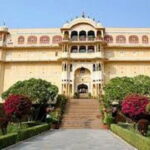
Then you roll through Pink City areas and reach Chardiwari, described as the abode of Jaipur’s Maharajas. You’ll cross older market lanes along the way, but the real anchor here is the idea of outer walls protecting the palace family area. It’s one of those stops where the “why” sticks: why walls, why these routes, why this placement.
Chardiwari and the Pink City visuals are all about color, proportion, and control. Jaipur painted many structures pink as part of the city’s welcoming image for Queen Victoria, and in early light that color hits differently than it does under midday sun.
This part of the route is also a good reminder that Jaipur isn’t only about grand forts and palaces. Markets and street activity run alongside heritage architecture, so you’re seeing a living city, not an empty museum set.
Hawa Mahal’s honeycomb facade: don’t just look, find the windows
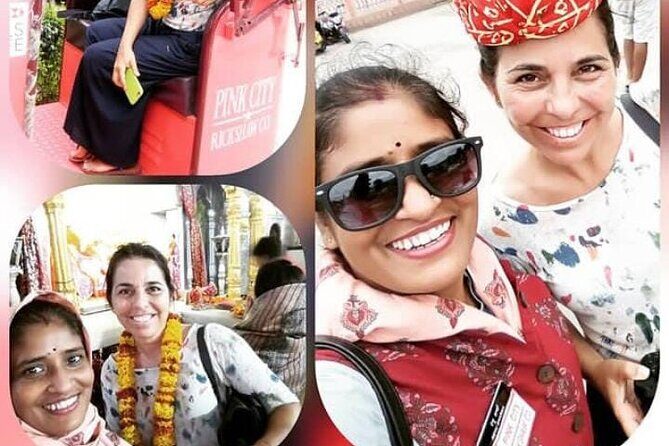
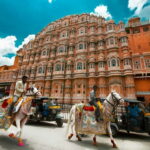
Hawa Mahal – Palace of Wind is usually on everyone’s must-see list, but the value here is the timing and the explanation. You’ll learn it was designed by Lal Chand Ustad, and the exterior is described as five floors forming a honeycomb pattern, covered with 953 small windows called jharokhas decorated with intricate latticework.
The best thing about this stop is how the windows change your perspective. From the right angle (and without the worst crowd pressure), you start noticing the grid, how the facade repeats, and how the building reads almost like a filter for light and air.
This is another shorter stop (about 20 minutes). If your goal is the perfect photo, plan for a little repositioning. If your goal is understanding, linger just enough to connect the lattice detail to why the name Palace of Wind makes sense.
Admission isn’t included here, so factor in that you might need to pay to go inside depending on what your guide plans during the stop.
A few more Jaipur tours and experiences worth a look






Govind Devji Temple: aarti first, then laughter in the garden
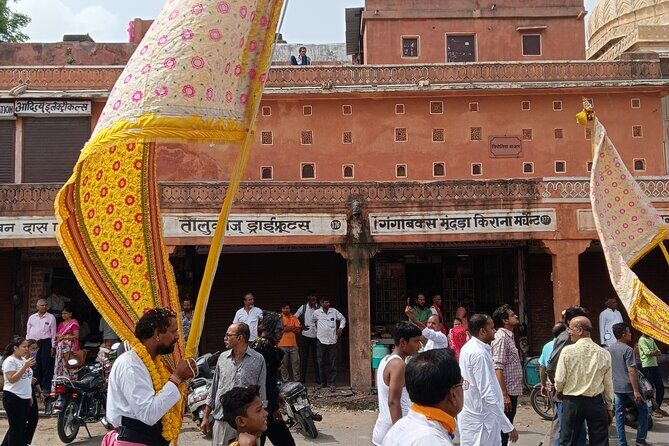
This is the spiritual and human moment of the route. At Govind Dev Ji Temple, you’ll attend aarti and get a far view of City Palace, the home of the Maharaja family, from the temple area.
The temple stop runs longer (about 1 hour), and it isn’t just standing at a gate. The experience also includes laughing yoga in the temple garden area. That sounds odd on paper, but on the ground it often feels like a reset. You shift from sensory overload (markets, smells, food, streets) into a more grounded rhythm.
This stop also acts like a divider between the “big landmark” sections and the “everyday Jaipur” sections. After you’ve seen Hawa Mahal and crossed old walls, the temple gives you a different kind of context: how ritual, sound, and community occupy the city’s morning.
Admission here is listed as free, which helps keep the experience value strong if you’re trying to avoid stacking extra ticket costs.
Thatheron ka rasta: artisans with no shortcuts
Thatheron ka rasta is one of my favorite parts of this morning plan because it’s about process, not just products. This street is known for real artisans making utensils without machines, in old style. You’ll get to watch the work as it happens, then try to make a brass utensil yourself if you like.
That hands-on moment is the secret sauce. You don’t need to become an expert. You just need to feel why craft takes time: pressure, alignment, repetition, and patience. It turns the story from a photo into something you understand in your muscles.
This stop is about 20 minutes and listed as admission free. Also, if you’re traveling with someone who likes crafts, this is a rare chance to match that interest with the food side of Jaipur instead of treating them as separate tours.
The food portion: classic Jaipur snacks, served with morning context
The best tasting tours don’t just feed you. They teach you what you’re eating in the flow of the day.
Here, the food tasting is built around stops tied to the way Jaipur wakes up. You’ll spend time at the flower and vegetable markets, where there are said to be more than 100 varieties. That means your tasting comes with real sensory context: fresh greens, bright petals, and the kind of bustle that feels natural at dawn.
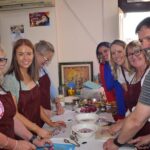
Then you move toward some famous food outlets that have been running their business for more than 100 years. You also get stops at street vendors for items like chai and traditional snacks. The route is designed so you’re not rushed through tasting with nowhere to pause. You sample, you smell, and you get brief explanations from your guide as the city moves around you.
A small caution: food tours involve eating, but the exact menu isn’t listed here. If you have diet limits, I’d plan to ask your guide early in the ride so you can steer toward what fits you.
Price and value: what $30.09 buys you in real time
At $30.09 per person for about 3 hours, this tour is priced like a practical morning package rather than a museum-only add-on. You’re paying for multiple parts working together:
- guided interpretation of major sights (including Hawa Mahal and the Pink City area)
- temple experience with aarti plus laughing yoga
- market time with flower and vegetable variety
- craft viewing on Thatheron ka rasta, plus the chance to try making something
- guided food tastings at classic, long-running outlets and street vendors
- e-rickshaw transport that limits walking
If you were to stitch all those together alone, you’d spend more time coordinating and more money on separate tickets and transport. Here, it’s one morning, one guide, and a route that keeps you moving without frantic pacing.
It’s also a good value setup because the group is small (max 10) and the ride is designed for early viewing before crowds and traffic dominate.
Practicalities you should actually care about
Timing: This is a morning ride meant for sunrise-style sightseeing. Start early enough that you’re not fighting sleep during the first landmark stop.
Walking and comfort: Even with an e-rickshaw, you’ll have short standing/walking moments at each stop. Wear comfortable shoes and keep water in mind, especially if you’re sensitive to heat even in the early hours.
Admission costs: Some sights are listed as not included. The ones called out as admission ticket not included include Raj Mandir Cinema, Ram Niwas Garden, and Hawa Mahal. Other stops are listed as free, including Ajmeri Gate, Govind Dev Ji Temple, and Thatheron ka rasta. Your guide can help you plan what you want to pay for and what you’ll see from outside.
Where it meets: You meet at Raj Mandir Cinema (exact address is provided) and the tour ends back at the meeting point.
Ticket format: It uses a mobile ticket, which is convenient if you don’t want to hunt for paper.
Weather: The experience needs good weather. If it’s canceled due to poor weather, you’ll be offered a different date or a full refund.
Who this tour suits best
This is a strong pick if you want:
- a morning overview of Jaipur without spending the whole day in transit
- a good mix of landmarks (Hawa Mahal, Pink City areas) and daily-life stops (markets, artisan street)
- food tastings tied to place and timing, not random restaurant hops
- less walking than you’d do on a pure walking tour
It’s also a good fit for people who prefer safety and structure. In past groups, the e-rickshaw driver was described as conscientious, and people appreciated that the pacing let them enjoy the city even with limited mobility.
If you hate crowds but also hate early mornings, this might feel like a trade. The payoff is that the city is quieter in the beginning.
Should you book this morning e-rickshaw + food tour
I’d book it if you’re the type who likes your travel days to feel efficient and grounded. You get Jaipur’s headline sights plus the everyday parts that make the city make sense. The craft stop on Thatheron ka rasta and the temple moment at Govind Dev Ji are standout contrasts that keep the morning from turning into a checklist.
Skip it only if you’re not into food tastings or you want a longer, more in-depth museum or monument plan with lots of interior time. Also, budget for a few possible admission tickets since some stops are listed as not included.
If you want a morning that balances architecture, markets, craft, and food in about three hours, this is a smart way to start your Jaipur days.
FAQ
How long is the Jaipur guided morning e-rickshaw ride with food tasting?
It’s approximately 3 hours.
Where does the tour start and end?
It starts at Raj Mandir Cinema (C-16, Bhagwan Das Rd, Panch Batti, C Scheme, Ashok Nagar, Jaipur) and ends back at the meeting point.
What’s the group size limit?
The tour has a maximum of 10 travelers.
Is the mobile ticket included?
Yes, the tour uses a mobile ticket.
Are admission tickets included for all stops?
No. Some stops are listed as admission ticket not included, including Raj Mandir Cinema, Ram Niwas Garden, and Hawa Mahal. Other stops are listed as free, including Ajmeri Gate, Govind Dev Ji Temple, and Thatheron ka rasta.
What food experience is included?
You’ll enjoy traditional Jaipur dishes and snacks at famous outlets running for more than 100 years, with additional food tasting during the route as you visit local markets and street vendors.
Which major sights are included?
You’ll see Raj Mandir Cinema, Ajmeri Gate, Ram Niwas Garden with Albert Hall Museum views, Pink City areas including Chardiwari, Hawa Mahal (Palace of Wind), and Govind Dev Ji Temple, plus Thatheron ka rasta.
What happens at Govind Dev Ji Temple?
You’ll attend the aarti and you’ll also do laughing yoga in the temple garden area.
What if the weather is bad?
This experience requires good weather. If it’s canceled due to poor weather, you’ll be offered a different date or a full refund.
What is the cancellation timeframe for a refund?
You can cancel up to 24 hours in advance for a full refund. If you cancel less than 24 hours before the start time, the amount paid is not refunded.