REVIEW · DHARAMSALA
Guided, India’s Own Mini Tibet Mcleodganj- Culture Tour
Book on Viator →Operated by Himachal Bylocals · Bookable on Viator
Tibetan culture, packed into one short walk. I love how this tour uses a professional English-speaking local guide to explain what you’re seeing, not just point at it. I also love that it keeps things personal with a small group and even throws in bottled water. The main drawback to plan for: key indoor stops like the Tibet Museum and archives have separate entrance fees.
In about 3 to 4 hours, you’ll cover major Tibetan government-in-exile and cultural institutions in McLeod Ganj, starting at Main Square and returning there. It’s a walking tour format, so you’ll want to come ready for hills and short hops between sites, but you won’t be stuck all day.
Quick hits before you go
- Professional local commentary makes the sites make sense fast, especially around exile-era Tibetan life
- Small group size (max 15) helps you ask questions and get real context
- Key stops in Tsuglag Khang area plus Tibetan archives and a museum
- Bottled water included, so you can stay focused on the walk
- Entrance fees not included for the main indoor institutions, so budget a little extra
- Meeting point is Main Square, McLeod Ganj, and it ends back there
In This Review
- McLeod Ganj in a Few Hours: why this mini Tibet tour is such a practical win
- Meeting at Main Square and pacing through McLeod Ganj
- Kalachakra Temple inside Thekchen Choumlling: a calm first stop
- Tsuglag Khang (Dalai Lama’s temple complex): what you’re really looking at
- Library of Tibetan Works and Archives: how a library becomes cultural protection
- The Tibet Museum + Men-Tsee-Khang: culture, information, and Tibetan medicine/astrology
- The Tibet Museum
- Men-Tsee-Khang (Tibetan Medical and Astro Institute)
- Nechung Monastery: spirituality beyond the headline temples
- What you’ll pay: $31 value, plus about ₹150 in entrance fees
- Guide quality matters: why Arjun Malik is the kind of guide you want
- Who should book this mini Tibet tour?
- Should you book it? My straight answer
- FAQ
- How long is the Guided India’s Own Mini Tibet McLeod Ganj culture tour?
- Where does the tour start?
- Do I get picked up from my hotel?
- How many people are in a group?
- Is bottled water provided?
- Are entrance fees included in the tour price?
- What entrance fee should I budget for the paid sites?
- Does the tour include lunch?
- What language is the guide?
- Is the ticket mobile or paper?
- Can I cancel and get a refund?
McLeod Ganj in a Few Hours: why this mini Tibet tour is such a practical win
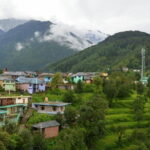
McLeod Ganj can feel like sensory overload in the best way. Temples, prayer flags, souvenir stalls, monastery walls, and pilgrims all mix together in a small hill town. This guided mini-Tibet culture tour helps you sort it out without turning it into a long, exhausting day.
What you’re really paying for is context. When you visit Tsuglag Khang (the Dalai Lama’s temple complex) or step into Tibetan cultural institutions, the details matter. You’ll understand why certain places are important to the Tibetan government in exile and how Tibetan culture keeps moving forward in Dharamsala. That turns a casual look into something you can actually remember and explain later.
And because it’s built for a 3 to 4 hour window, it fits neatly into a half-day plan. If you’ve got limited time in the area, this is the kind of tour that helps you make progress instead of wandering randomly.
Meeting at Main Square and pacing through McLeod Ganj
You meet at Main Square, McLeod Ganj (Himachal Pradesh 176215). The tour ends back at the meeting point, which is convenient because you don’t have to think about a complicated drop-off. Pickup and drop-off from your hotel aren’t included, so you’ll want to plan to get there on your own.
The tour is listed as a walking tour. That means the “time cost” is mostly spent moving between sites and doing short, guided visits. The actual duration can vary a bit based on the day and traffic, so don’t schedule anything tight right after. I like tours like this for a simple reason: even if you start late or the group moves slower, you’re still working through the key McLeod Ganj anchors.
A small group size (up to 15) also changes the vibe. You’re not just herded. You can usually catch up if you pause for photos or want to hear an explanation again.
You can also read our reviews of more guided tours in Dharamsala
Kalachakra Temple inside Thekchen Choumlling: a calm first stop
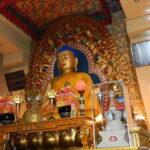
Your first stop is Kalachakra Temple, located within the Thekchen Choumlling temple complex in McLeod Ganj. This is a good “warm-up” stop because it’s still within the temple environment, but it doesn’t hit you with the biggest crowd immediately.
Why it works: starting in a temple complex like Thekchen Choumlling helps you get grounded in the visual language of Tibetan Buddhism before you walk into the larger, more famous sites. You’ll also get a sense that McLeod Ganj isn’t only about one iconic building. It’s a whole network of spiritual spaces.
One heads-up: the Kalachakra Temple stop is shown as a short visit (about 15 minutes) and the admission ticket is not included. So treat it as a quick, guided introduction rather than a deep, spend-the-afternoon stop.
Tsuglag Khang (Dalai Lama’s temple complex): what you’re really looking at
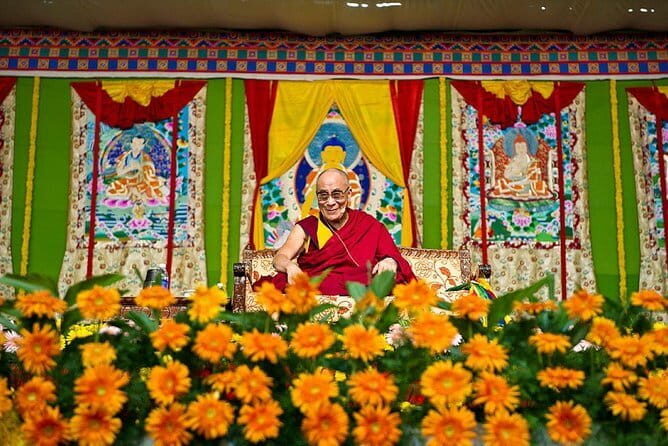
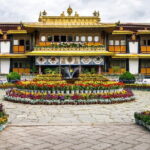
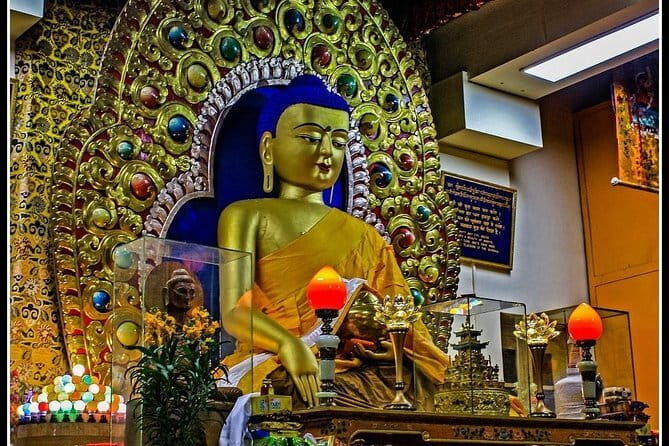
Next comes Tsuglag Khang, also called the Dalai Lama’s Temple Complex. It’s home for His Holiness the Dalai Lama and one of the world-renowned religious centers that draws Buddhist pilgrims year-round.
This is the emotional core of a McLeod Ganj culture visit, but it’s also where people often feel uncertain about what to notice. That’s where a guide earns their place. You’ll learn the role of this religious center in Tibetan life in exile, including why it’s still alive with activity and significance.
Practical reality check: this isn’t a quiet museum experience. It’s active, with pilgrims coming and going. You’ll likely be spending around 20 minutes here, with guidance that helps you understand the setting without needing to already know the names, traditions, and symbols.
Again, entrance tickets aren’t included for this site.
Library of Tibetan Works and Archives: how a library becomes cultural protection
After the main temple complex area, you’ll visit the Library of Tibetan Works and Archives (LTWA). This library was founded by Tenzin Gyatso, the 14th Dalai Lama, on 11 June 1970, and it’s considered one of the most important institutions for Tibetan cultural preservation.
Here’s why this stop is more than a “cool building.” A library like LTWA represents a strategy: preserve language, record knowledge, and keep cultural memory from disappearing. In an exile context, those choices become urgent. When you see a place like this during your walk, it reframes the trip. McLeod Ganj isn’t only about worship. It’s also about study, safeguarding, and ongoing cultural continuity.
The visit is brief (around 15 minutes) and admission ticket details are not included, so expect that cost at some point during the tour.
The Tibet Museum + Men-Tsee-Khang: culture, information, and Tibetan medicine/astrology
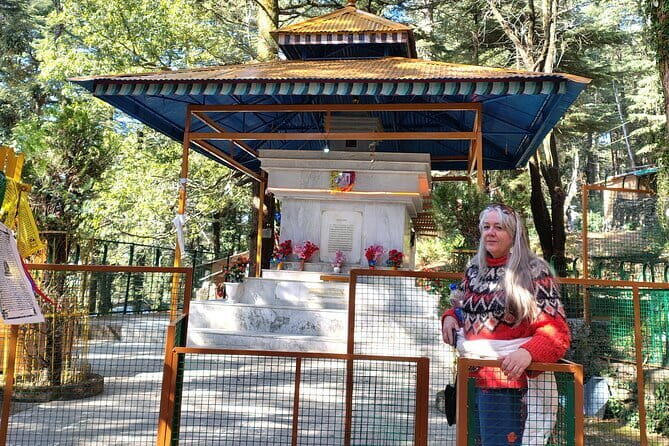
Two of the more satisfying stops are The Tibet Museum and Men-Tsee-Khang.
The Tibet Museum
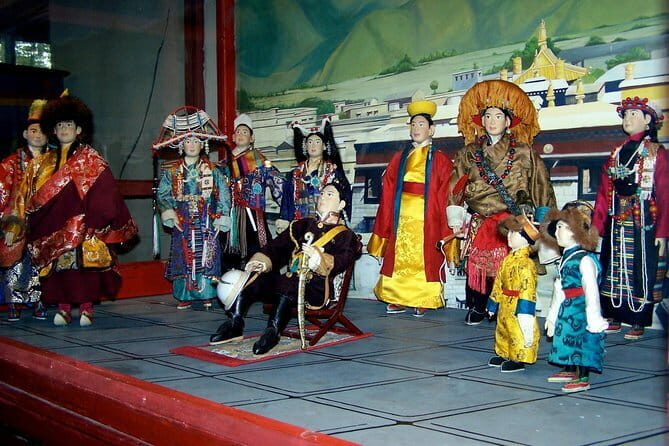
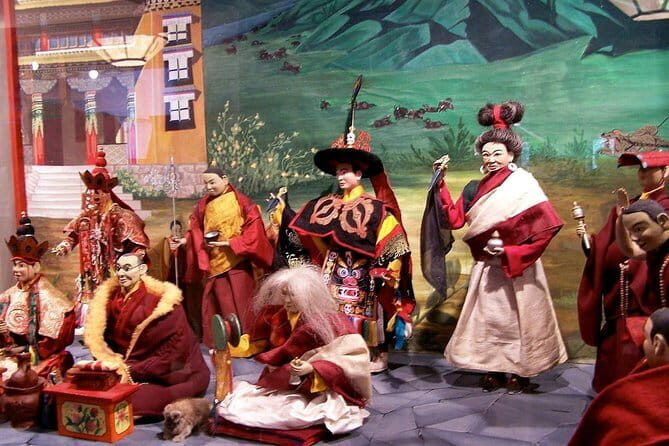
The Tibet Museum is the official museum of the Central Tibetan Administration’s Department of Information and International Relations. It’s located near the main temple of the 14th Dalai Lama, Tsuglag Khang.
What I like about this museum stop is the way it ties culture to communication. Instead of being purely decorative, it’s meant to convey Tibetan life and identity through curated displays. You’ll get a clearer sense of what the institutions in McLeod Ganj are trying to accomplish and how information fits into cultural survival.
This stop runs about 20 minutes, and entrance fees are not included.
Men-Tsee-Khang (Tibetan Medical and Astro Institute)
Then you’ll visit Men-Tsee-Khang, also known as the Tibetan Medical and Astro Institute. It’s a charitable institution based in Dharamsala and was founded by the 13th Dalai Lama in Lhasa in 1916.
The big value here is variety. Not everyone thinks about Tibetan medicine and astrology as part of “culture,” but that’s exactly why this stop makes the tour feel complete. You’re seeing how Tibetan traditions include health practices and spiritual timekeeping alongside art and religion.
This stop is longer than the previous ones (around 30 minutes), which suggests the guide will have more room to explain what Men-Tsee-Khang is and why it matters. Entrance tickets are also not included.
Nechung Monastery: spirituality beyond the headline temples
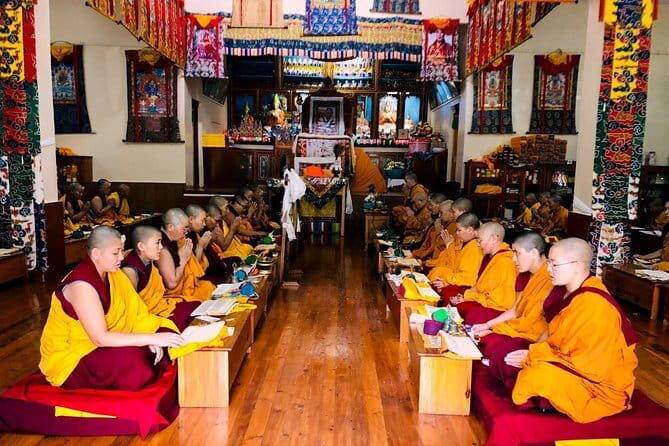
Your tour description also references Nechung Monastery as part of the cultural route. Nechung Monastery is tied to Tibetan religious life, and it adds another texture to your understanding of McLeod Ganj as more than a single landmark.
What I’d tell you to do here is stay open-minded. Monasteries can feel similar at first glance, but each place has a different role in how Tibetan life is organized and practiced. With a guide’s commentary, the differences can click quickly.
Even if your time at Nechung is shorter than the major sites, you’ll still come away with a more connected picture of Tibetan spiritual institutions in exile.
What you’ll pay: $31 value, plus about ₹150 in entrance fees
The price is $31.00 per person, and the tour runs about 3 to 4 hours. For a guided walk through multiple important sites, that’s a fair value—especially because you get an English-speaking local guide and bottled water included.
What’s not included is the real cost bump: entrance fees for the indoor institutions:
- The Tibet Museum
- Library of Tibetan Works and Archives
- Men-Tsee-Khang
These are listed as ₹150 per person.
So when you’re budgeting, think of the total as the tour price plus the museum/archives/medical-institute entrance fee. The tour is still good value because you’re not paying extra separately for guide time. But you should plan to have cash or a way to cover those fees when you reach them.
If you’re traveling solo and you want a quick culture framework, the small-group format helps you get more from your money than a do-it-yourself wander.
Guide quality matters: why Arjun Malik is the kind of guide you want
One name shows up in strong feedback: Arjun Malik. People appreciated his knowledge of Buddhism and Tibetan culture, plus his helpful, flexible approach.
That matters because this tour is about interpretation. Without guidance, some of these institutions can feel like “another temple” or “another museum.” With the right guide, you’re learning why these places sit where they do and what role they play in the continuing Tibetan community in exile.
If you’re hoping for a tour where questions feel welcome, this is the type of guide you want.
Who should book this mini Tibet tour?
Book this tour if you:
- Want a time-efficient way to understand Tibetan culture in McLeod Ganj
- Like getting context from a local English-speaking guide
- Prefer guided visits over trying to plan multiple institutions yourself
- Are interested in the religious center (Tsuglag Khang), cultural archives (LTWA), and institutions like the Tibet Museum and Men-Tsee-Khang
It might be less ideal if you want a long, slow, independent day where you can linger for hours in one place, because the visits here are short and paced.
Should you book it? My straight answer
Yes, I’d book it if you’re short on time and you want your McLeod Ganj experience to feel coherent. This tour focuses on the places that explain how Tibetan culture operates in the Dharamsala/McLeod Ganj area: spiritual centers, archives that protect knowledge, and institutions that communicate culture and traditions like medicine and astrology.
Just go in with two expectations: you’ll walk, and you’ll budget extra entrance fees for the indoor stops. If you’re okay with that, you’ll leave with a far clearer picture than you’d get from a random stroll.
FAQ
How long is the Guided India’s Own Mini Tibet McLeod Ganj culture tour?
It’s about 3 to 4 hours.
Where does the tour start?
The meeting point is Main Square, McLeod Ganj, Himachal Pradesh 176215.
Do I get picked up from my hotel?
No. Pick up and drop off from the hotel is not included.
How many people are in a group?
The tour has a maximum of 15 people per booking.
Is bottled water provided?
Yes, a water bottle is included.
Are entrance fees included in the tour price?
No. Entrance fees for the Tibet Museum, Library of Tibetan Works and Archives, and Men-Tsee-Khang are not included.
What entrance fee should I budget for the paid sites?
It’s listed as ₹150.00 per person for those locations.
Does the tour include lunch?
No. Lunch is not included.
What language is the guide?
The tour includes an English speaking local guide.
Is the ticket mobile or paper?
The tour uses a mobile ticket.
Can I cancel and get a refund?
No. The experience is non-refundable and cannot be changed for any reason.