REVIEW · NEW DELHI
From Delhi: New and Old Delhi Private Sightseeing Tour
Book on Viator →Operated by India Tours Plan · Bookable on Viator
Delhi in one day feels manageable.
This private tour strings together Old Delhi’s Mughal streets and New Delhi’s colonial-to-modern sights in one efficient sweep, with a live guide and a chauffeur doing the heavy lifting. You’ll move from grand monuments to busy market lanes without spending your day figuring out transport.
I especially like the flow: pick-up, A/C car, and timed stops so you’re not stuck waiting around. The rickshaw ride in Old Delhi is also a highlight, turning Chandni Chowk spice-and-market chaos into something you can actually enjoy.
One thing to consider: the schedule is packed, and Old Delhi can feel intense—crowds, noise, and lots of walking in between. Plan to keep your pace steady, and bring a little patience for traffic no matter what the clock says.
In This Review
- Key things I’d mark on your mental map
- What this tour feels like in the real world
- Price and what you actually get for $35
- The drive that saves your day: pickup, route, and pacing
- Humayun’s Tomb: first garden-tomb stop and why it sets the tone
- Jama Masjid: scale, crowd energy, and a lesson in Mughal power
- Chandni Chowk and Pasar for a proper Old Delhi sensory hit
- Khari Baoli: spices shopping zone with built-in purpose
- Red Fort: the iconic Mughal fortress moment
- Gurudwara Bangla Sahib: calm, free entry, and a reset
- India Gate and Rashtrapati Bhavan area: New Delhi’s monumental geometry
- Qutub Minar: a big-ticket structure without the wait-game
- Lotus Temple: a modern spiritual shape to end on
- How the guide changes the day (and why names show up again)
- What I’d do differently if I booked it again
- Who this tour is best for
- Should you book this tour?
- FAQ
- How long is the tour?
- Does the tour include pickup and drop-off?
- Is this a private tour or a shared group?
- Do I ride in a car with air conditioning?
- Is there a rickshaw ride?
- Are monument tickets included?
- What is included besides the guide and transport?
- Are meals included?
- What weather happens if conditions are bad?
- How does cancellation work?
Key things I’d mark on your mental map
- Private A/C car with chauffeur so you spend energy on sights, not directions
- Rickshaw ride in Old Delhi for a close-up look at the market lanes
- Major monuments across eras: Mughal, colonial, and modern Delhi in one day
- Admission tickets depend on your option, but several stops are listed as free
- Umbrellas and bottled water are provided, a small comfort that adds up in Delhi heat
- Guides can shape the day, with names like Daniyal, Ramesh, Subash, and Danish appearing in praise
What this tour feels like in the real world
This is a same-day Delhi sampler, designed for people who want the big scenes without doing math on buses or bargaining with taxi drivers every hour. The private setup matters here: your group stays together, and the chauffeur drives you between areas while your guide focuses on what you’re seeing.
The time window is about 7 to 8 hours, which is enough for a meaningful route—but not enough for wandering every side street forever. If you like taking long photo breaks or stopping for snacks, you’ll want to keep it efficient or add time another day.
You can also read our reviews of more private tours in New Delhi


Price and what you actually get for $35
At $35 per person, the value comes from stacking multiple “heavy hitters” into one day with transport included. You’re paying for: a private A/C car with chauffeur, a live guide, rickshaw time, parking/tolls/fuel/taxes, and water bottles plus umbrellas.
The only cost ambiguity is monument entry. The tour notes that tickets are included if you choose the entrance-fees option, and some stops are listed as free admission—so confirm what’s included in your exact selection before you go.
If you’re traveling with someone and splitting costs, private tours like this can start to feel surprisingly practical compared with trying to piece together drivers and guides for each area.
The drive that saves your day: pickup, route, and pacing
Your tour starts with pickup from your hotel, airport, or railway station in Delhi, Noida, or Gurugram. That matters because Delhi logistics can turn a sightseeing plan into a timing headache, especially if you’re starting near one end of the city.
You’ll ride in an air-conditioned private car, with the chauffeur handling the driving and parking. The guide rides along as part of the experience, so explanations happen while you’re moving—not only after you arrive.
One practical tip: since the tour uses both vehicle time and short walking windows, wear comfortable shoes. You’ll be stepping in and out often enough that your feet will notice.
Humayun’s Tomb: first garden-tomb stop and why it sets the tone
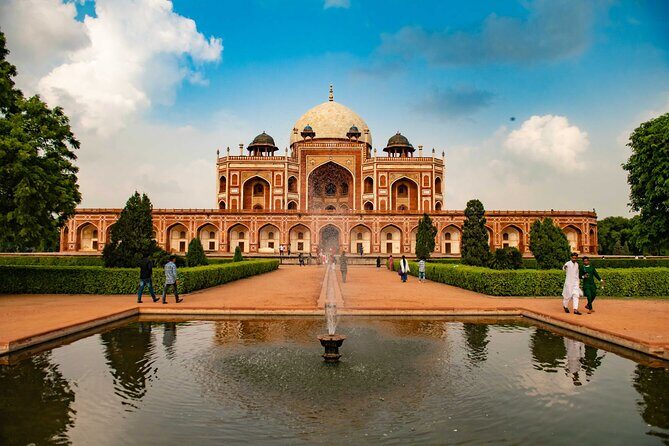
You’ll begin with Humayun’s Tomb, described as the tomb of Mughal Emperor Humayun and noted as the first garden-tomb on the Indian subcontinent. This stop is more than a photo moment. It’s a calm introduction to Mughal design—symmetry, gardens, and layered architecture that helps you “read” the rest of the day.
The listed duration is about 1 hour, and admission is marked as included. If your goal is to understand why Delhi became so important to the Mughals, this is a smart opener because it frames the style you’ll keep seeing later.
Jama Masjid: scale, crowd energy, and a lesson in Mughal power
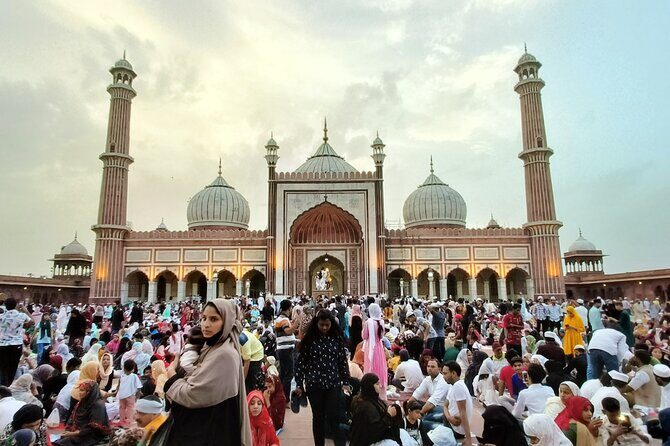
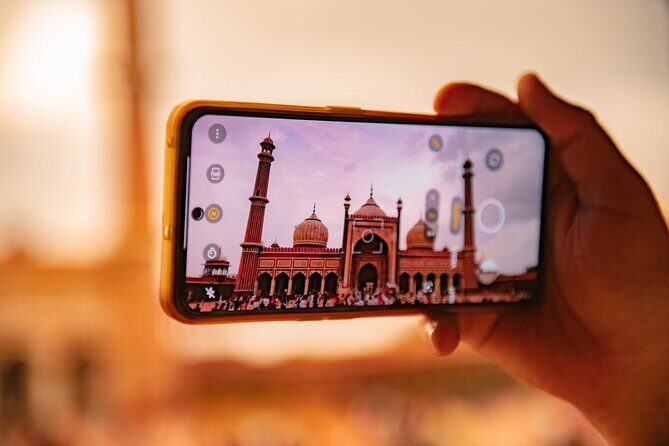
Next comes Jama Masjid, the Grand Mosque built by Shah Jahan and known for its huge capacity (up to 25,000 people). That scale isn’t just a fun fact—it changes the atmosphere of the stop. You’re entering a working religious space with a very public, monumental presence.
Expect about 1 hour here. Admission is listed as included, so you can focus on the visit rather than ticket logistics.
Practical note: Old Delhi around Jama Masjid can be lively. Even with a guide, you’ll want to keep an eye on your belongings and be comfortable moving through crowded areas.





Chandni Chowk and Pasar for a proper Old Delhi sensory hit
The tour then shifts into Old Delhi’s market zone with Chandni Chowk and the Pasar area. This is where the day turns from monument viewing to street-level Delhi: lanes, trade, and the kind of food and spice culture that doesn’t happen in museum rooms.
You’ll enjoy a rickshaw ride through Old Delhi, plus about 1 hour at this stop. The tour specifically aims at you experiencing the busy lanes and spices up close, with the market area associated with Jahanara, Shah Jahan’s eldest daughter.
If you’re not sure you’ll enjoy markets, give this part a chance. The rickshaw format helps you see more without constantly weaving through foot traffic on your own.
Khari Baoli: spices shopping zone with built-in purpose
Right after Chandni Chowk, the tour includes Khari Baoli, another famous spice market area. Here, the point isn’t just shopping—it’s learning how spices are used, and letting your senses lead the story.
This stop is also about 1 hour, and admission is listed as free. Even if you don’t buy anything, it’s a good place to understand what “spice culture” means in everyday Delhi life.
If you do buy, keep expectations realistic. Market prices can be variable, so stick to what you’d pay for the same item at home, and treat any impulse purchase as a souvenir—not a “deal you must win.”
Red Fort: the iconic Mughal fortress moment
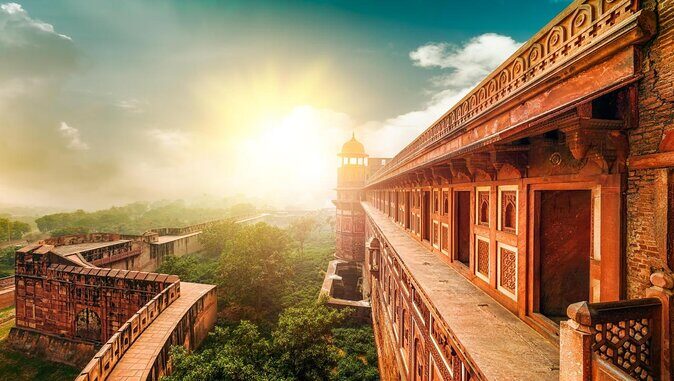
The route continues to Red Fort (Lal Qila), a magnificent Mughal-era fortress built by Shah Jahan on the banks of the Yamuna. Even from outside viewpoints, it’s a dominant presence, and inside it feels built for ceremony and control.
The itinerary includes Red Fort as a stop, but it doesn’t specify a ticket-free status in the same way as some other locations. Since tickets depend on your entrance-fees option, plan for the possibility that you’ll need the paid-entry selection to avoid any surprises.
This stop is a useful bridge: from the street intensity of Old Delhi into the more structured “monument Delhi” of the next phase.
Gurudwara Bangla Sahib: calm, free entry, and a reset
After the Old Delhi rush, you’ll move toward Gurudwara Bangla Sahib, a Sikh temple and tourist stop built to commemorate Guru Har Krishan’s visit in 1664. The listed duration is 30 minutes, and admission is free.
This is a great breathing space in the itinerary. Temples can slow you down, and the energy here tends to feel different from the market streets. If you’ve been walking and absorbing sound and crowds, this is where you can regroup.
India Gate and Rashtrapati Bhavan area: New Delhi’s monumental geometry
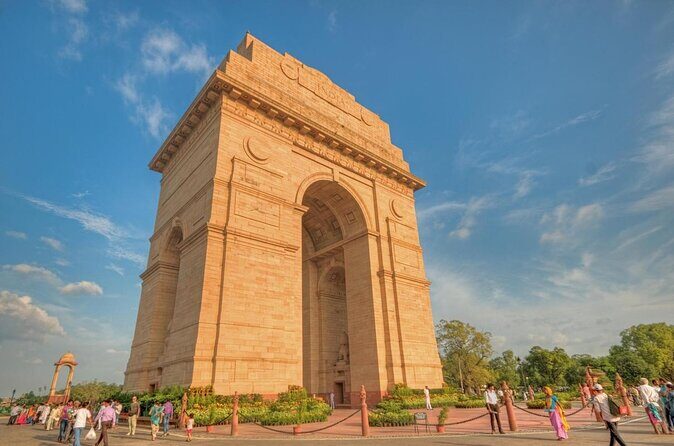
Next up is India Gate, a war memorial British-established to honor Indian soldiers who died in World War I. You’ll spend about 1 hour, with admission listed as free.
From there, the tour also includes President Estate, known as Rashtrapati Bhavan, located on Raisina Hill. This is where New Delhi’s design language shows clearly—broad avenues, formal buildings, and a more “planned city” feel than Old Delhi.
If you like architecture, this stretch is visually rewarding even without reading a single plaque. You’ll see how New Delhi became a stage for governance and public symbolism.
Qutub Minar: a big-ticket structure without the wait-game
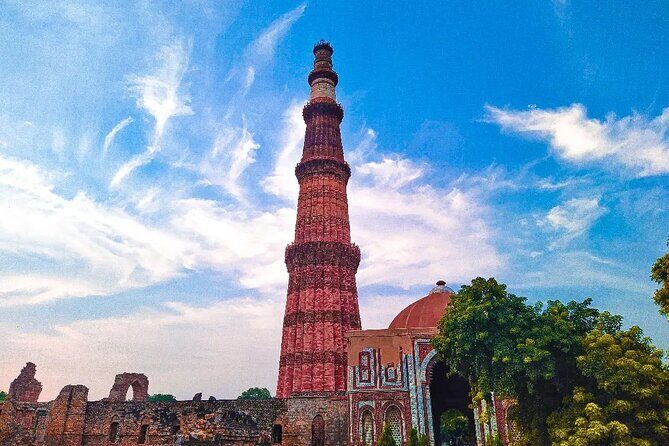
Your Delhi day then includes Qutub Minar, described as an iconic site commissioned in 1192 by Qutub-Ud-Din Aibak and continued by his successor Iltumish. You’ll get about 1 hour, with admission listed as included.
This stop is famous for a reason: it gives you the sense of how far back Delhi’s monumental building traditions go. It also helps balance the day, since you’ve already covered Mughal-era power in Old Delhi.
For photos, aim to arrive with a steady sense of what angles you like. The structure is tall and dramatic, and a bit of planning can mean better shots in less time.
Lotus Temple: a modern spiritual shape to end on
Finally, the itinerary includes Lotus Temple, dedicated to the Baha’i faith and famous for its petal-like white structure. You’ll spend about 1 hour, and admission is listed as free.
This is a nice ending because the design feels contemporary compared with everything you saw earlier. After Mughal forts and old market lanes, the Lotus Temple reads as a modern Delhi symbol—simple, clean lines, and a quiet rhythm once you’re inside.
How the guide changes the day (and why names show up again)
This tour includes a private live tour guide, and the difference is noticeable when your guide connects the buildings to the city’s logic. In feedback, certain guide names come up repeatedly—Danish, Javed khan, Vivek Kumar, Zayn, Daniyal, Ramesh, and Subash—often praised for history explanations and for helping with pacing and photos.
You don’t need your guide to be a walking encyclopedia. What you do need is someone who can:
- point out what matters in each stop
- keep your movement realistic within 8 hours
- explain the “why” behind what you’re seeing
What I’d do differently if I booked it again
If I were repeating this route, I’d treat Old Delhi as the sensory sprint and New Delhi as the breathing-space section. That way, you don’t get tired right before the best photo zones.
I’d also plan a simple strategy for the market stops. Decide in advance whether you’re buying spices or just sampling the experience. With rickshaw time and monument time in the same day, you’ll move faster if you’re not stuck making a dozen “maybe” decisions.
Finally, I’d keep your expectations aligned with the time: this is not a slow, deep study of every monument. It’s a smart “big best-of Delhi” day.
Who this tour is best for
This tour is a strong fit if you:
- want Old Delhi and New Delhi in one day
- like structure and clear guidance over solo navigation
- value comfort features like A/C transport, water bottles, and umbrellas
- are short on time but still want the major monuments
It’s less ideal if you want a laid-back day with lots of optional detours. The schedule has momentum, and you’ll get more out of it if you’re comfortable moving.
Should you book this tour?
Yes—if your priority is seeing Delhi’s main eras (Mughal, colonial-era planning, and modern icons) with minimal hassle, this is a solid choice. The combination of private transport, a live guide, and a rickshaw ride gives you a lot of “Delhi payoff” for the money.
Book it with two checks in mind:
- confirm whether monument entrance tickets are included in your option
- be ready for a fast pace in Old Delhi and bring comfortable shoes
If that fits your travel style, you’ll likely feel like you covered a lot of Delhi ground without feeling like you survived it.
FAQ
How long is the tour?
It runs about 7 to 8 hours.
Does the tour include pickup and drop-off?
Yes. You can be picked up from your hotel, airport, or railway station in Delhi, Noida, or Gurugram, and you’ll be dropped off at your preferred location afterward.
Is this a private tour or a shared group?
It’s a private tour/activity, so only your group participates.
Do I ride in a car with air conditioning?
Yes. The tour uses a private air-conditioned car with a chauffeur.
Is there a rickshaw ride?
Yes. A rickshaw ride in Old Delhi is included.
Are monument tickets included?
It depends on the option you choose. Tickets are included for monuments if you select a tour with entrance fees. Some stops are listed as free admission.
What is included besides the guide and transport?
The tour includes complimentary water bottles and umbrellas, plus all parking fees, tolls, fuel, and taxes.
Are meals included?
No, meals are not included.
What weather happens if conditions are bad?
The experience requires good weather. If it’s canceled due to poor weather, you’ll be offered a different date or a full refund.
How does cancellation work?
You can cancel for a full refund if you cancel at least 24 hours before the start time. If you cancel less than 24 hours before, the amount paid is not refunded.