REVIEW · VARANASI
From Varasani: Private Half Day Tour to Sarnath
Book on GetYourGuide →Operated by INDIATOR · Bookable on GetYourGuide
Sarnath is the kind of place you feel quickly. This private half-day tour from Varanasi focuses on the big names—Dhameka Stupa, Chaukhandi, the museum, and the Lion Capital of Ashoka—without turning it into a marathon.
I especially like the setup: you get a private, air-conditioned car with pickup from your hotel and a guide who explains what you’re seeing. I also like that the visit includes the Sarnath Archeological Museum, where artefacts help connect the monuments to the stories people came here to witness.
One thing to watch: the tour price should match what you actually get inside—there’s been confusion in the past about whether all site entry is handled, and it’s also worth confirming the guide’s English and the time spent at Mulagandhakuti Vihara.
In This Review
- Key highlights worth getting excited about
- A 4-hour Sarnath half day from Varanasi: the practical setup
- Your private ride: comfort for a short hop outside the city
- Dhameka Stupa: the most important stop on the route
- Chaukhandi Stupa and the feel of the ruins
- Sarnath Archeological Museum: where the stories get anchored
- The Lion Capital of Ashoka: a national emblem on sacred ground
- Mulagandhakuti Vihara and wall paintings: what you should confirm
- Price and value: what $40 buys on a private 4-hour route
- What I’d pack and plan for (so the day feels easy)
- Who this private Sarnath tour suits best
- Should you book this private Sarnath tour with INDIATOR?
- FAQ
- FAQ
- What time does the Sarnath tour start?
- How long is the private tour?
- Where are you picked up and dropped off?
- Is transportation private and air-conditioned?
- What’s included with the tour?
- Which sights are included during the half day?
- Is the tour wheelchair accessible?
- Are there any extra costs?
Key highlights worth getting excited about
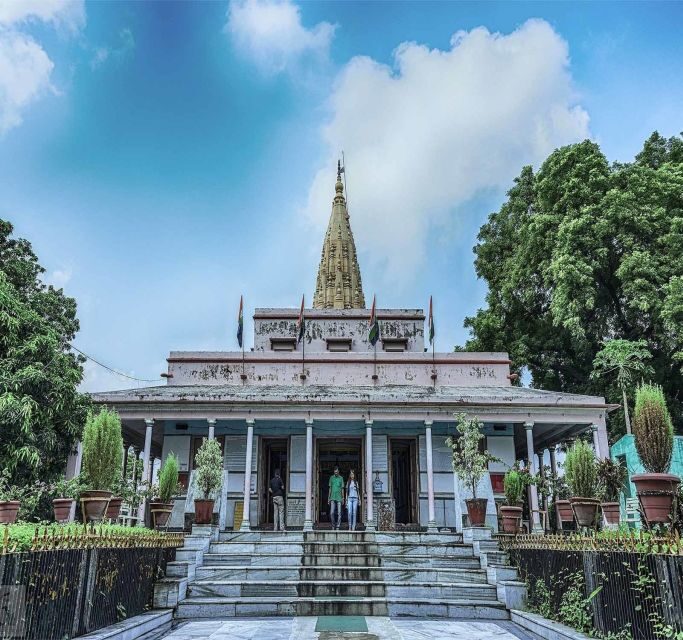
- Dhameka Stupa, tied to Buddha’s first sermon after enlightenment
- A focused museum stop at Sarnath Archeological Museum with artefacts to anchor the day
- Lion Capital of Ashoka, the national emblem of India, included on the route
- Chaukhandi Stupa and the ruins you can walk through without rushing
- Mulagandhakuti Vihara, where wall paintings are part of the experience
A 4-hour Sarnath half day from Varanasi: the practical setup
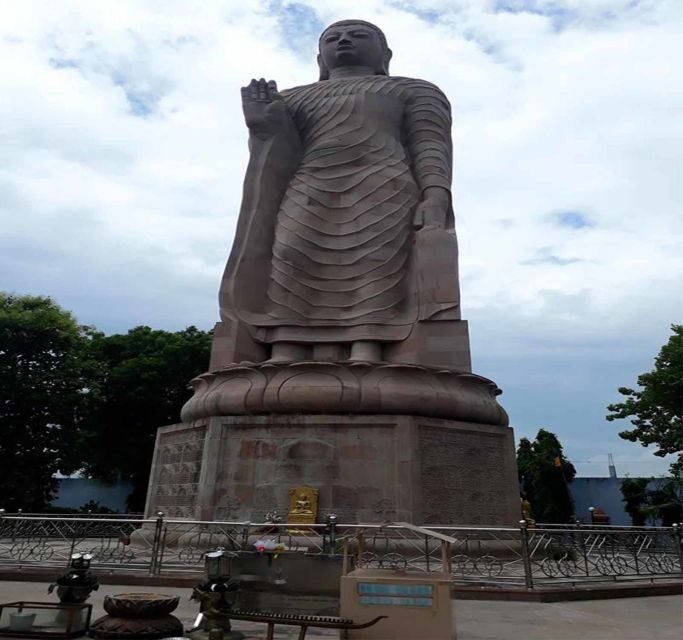
This tour is built for people who want meaning without a full day of travel. It starts at 11:00am in Varanasi, and it runs for about 4 hours, which means you can still have a relaxed afternoon back at your hotel.
The driving time is short—Sarnath sits roughly 10 km outside Varanasi—so you’re not spending your day stuck in traffic. That matters, because the whole point is to use your energy on the site itself.
Because it’s a private group, the pace feels more flexible than the usual bus-and-queue circuit. You’ll still have a structured route, but you can ask questions and look longer when something catches your eye.
You can also read our reviews of more private tours in Varanasi
Your private ride: comfort for a short hop outside the city
You’re picked up from your Varanasi hotel and returned there at the end. The vehicle is described as a private, air-conditioned car with a chauffeur, which is exactly what you want for a midday start—especially if you’re already tired from arrival travel or a morning of exploring.
Sarnath is a pilgrimage zone with areas that feel more rustic than modern. Having reliable transport matters because you’re less likely to waste time figuring out local rides between stops.
If you’re sensitive to timing, this is a big plus: the day is designed around the 4-hour window, not a “sometime today” plan.
Dhameka Stupa: the most important stop on the route
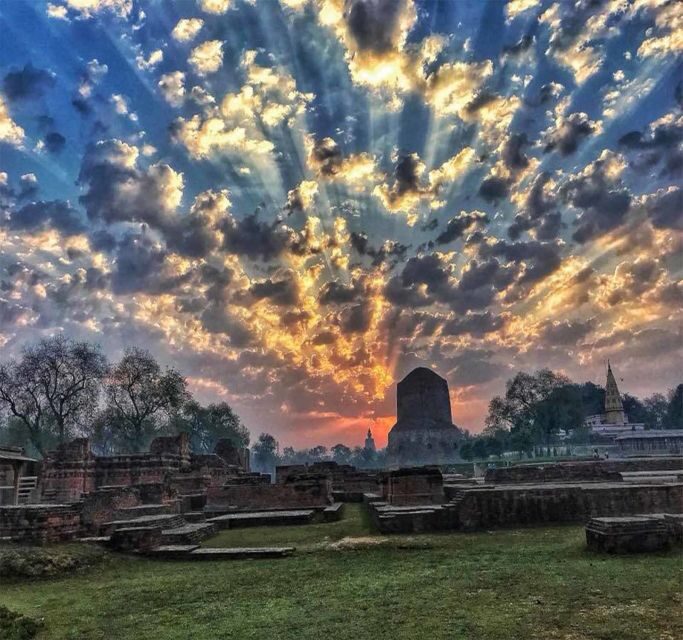
Dhameka Stupa is the headline attraction, and it’s not just because it’s famous. It’s tied to a core Buddhist moment: it’s associated with Buddha’s first sermon after attaining enlightenment.
What I like about this stop is how clear the connection is between place and teaching. Even if you’re not a scholar, your guide can translate the site into something you can feel—why this spot matters, why pilgrims come, and what the monuments are pointing toward.
Practical tip: wear shoes you can walk in. Even when the terrain is manageable, you’ll still want traction for uneven ground and the kind of footwork that comes with moving between ancient structures.
Chaukhandi Stupa and the feel of the ruins
From Dhameka Stupa, you continue to Chaukhandi Stupa and then spend time around the rustic ruins of Buddhist monuments associated with important teachings.
This part of the visit is where the site starts to feel more human. You’re not only looking at one perfectly framed structure—you’re seeing how Buddhist history sits in layers across the landscape, with scattered remnants that reward slow attention.
The best way to enjoy it is to let your guide do the heavy lifting on context. You’ll get explanations connecting monuments to Buddhism’s four supreme sites, and that framing helps the ruins stop feeling like “just old stones.”
Possible drawback: if your guide is rushing or your group is limited on time, this is where the tour can feel like a quick pass-through. If you care about photography or simply want to read details on-site, speak up early.
Sarnath Archeological Museum: where the stories get anchored
The Sarnath Archeological Museum is an important middle step, because it turns vague impressions into something more concrete. Instead of only seeing monuments, you’ll also see artefacts that help explain what was here over time.
I like museum stops on pilgrimage days. Outdoors, it’s easy to get overwhelmed by scale, light, and crowds. Indoors, you can slow down and connect names, symbols, and objects to what your guide just told you.
Look for the way the museum reinforces relics and historical context. The tour description points to learning through relics and historical monuments, and the museum is where that tends to click for many people.
If you’re the type who likes “see it, then understand it,” this museum timing works well. It breaks the day into two modes: walking and observing outside, then steady reading and looking inside.


The Lion Capital of Ashoka: a national emblem on sacred ground
One of the route highlights is the Lion Capital of Ashoka, noted as India’s national emblem.
It’s a strange and satisfying contrast. You’re at a Buddhist pilgrimage site, and right in your visit plan is a monument associated with national identity. That blend is part of what makes Sarnath feel layered rather than one-dimensional.
This is also the kind of stop that’s easy to underappreciate if you’re only hunting for big “stupa moments.” Give it a few minutes. Your guide can connect what you’re seeing to why the emblem matters, not just what it looks like.
If you’re curious about symbolism, ask your guide to point out what makes the Lion Capital important and how it fits into the broader story of ancient India.
Mulagandhakuti Vihara and wall paintings: what you should confirm
Your tour includes Mulagandhakuti Vihara, described as a monastery with beautiful wall paintings.
This is the kind of stop that can make the whole experience feel more personal and less purely archaeological. Paintings inside a monastery aren’t just decorative; they’re visual teaching. They can help you understand how Buddhist practice expresses itself beyond stone monuments.
Here’s my advice: when you’re with the guide, confirm that you’ll actually be spending enough time at Mulagandhakuti to see the wall paintings clearly. The tour data says you’ll visit it, but there have been real-world cases where that part felt short or skipped.
If this is high on your wish list, it’s worth stating it at pickup: you want time to look at the paintings, not just a quick exterior glance.
Price and value: what $40 buys on a private 4-hour route
At $40 per person for a 4-hour private half-day, the value depends on one thing: how much you get from the guide versus the cost of the car.
Yes, you’re paying for:
- Hotel pickup and drop-off in a private, air-conditioned vehicle
- An English-speaking guide
- Monument and museum entry fees (as listed)
But Sarnath is only about 10 km from Varanasi, so the driving component alone isn’t the selling point. The guide is.
That’s why the best way to judge this tour is to ask yourself: do you want someone to explain the why behind Dhameka Stupa, Chaukhandi, and the museum? If yes, $40 can feel fair for a private plan with entry handled. If you just want to walk the grounds, you may find cheaper ways to get there—then pay a guide separately if you want just one or two key explanations.
Also keep expectations realistic about time. This is a half day, so the stops are focused, not endless. If you prefer slow museum time or long ruin wandering, you may want to plan your own extra time after the tour.
What I’d pack and plan for (so the day feels easy)
You’re outside for much of this half day, so comfort matters. Bring:
- Water (especially with a midday start)
- Sun protection (hat or cap)
- Comfortable walking shoes
Also, think about how you’ll use your time back in Varanasi. Since the tour ends with a return to your hotel, it’s a great slot for people who want a spiritual anchor during a trip that’s otherwise city-heavy.
If you’re a “photos-first” person, do that on the big monuments, then let the museum be your slow, detail moment. It keeps the day from feeling chaotic.
Who this private Sarnath tour suits best
This tour fits best if you want:
- A structured half-day that covers the key Sarnath sights
- A private experience with pickup and drop-off handled
- A guide to connect monuments to Buddhist teaching and site meaning
It’s also a good choice if you’re short on time in Varanasi but still want more than one temple stop. Sarnath is one of those places where a little context goes a long way.
If you’re traveling with limited mobility, it’s listed as wheelchair accessible, which is another plus for planning a manageable route.
If you already know you want a DIY, go-slow day with lots of independent exploring, you might prefer a flexible plan where you can linger longer at whichever stop grabs you.
Should you book this private Sarnath tour with INDIATOR?
I’d book it if you value a tidy plan and you want a guide to make sense of Dhameka Stupa, Chaukhandi Stupa, and the museum. For many people, the joy of Sarnath comes from understanding what you’re looking at—and this tour is built to do that in a 4-hour window.
I’d be cautious if you’re very sensitive about inclusions and guide quality. Since there have been past concerns about entry handling and time spent at Mulagandhakuti Vihara, you should confirm two things before you go:
1) what entry fees are covered for your specific booking
2) that you’ll have enough time to see the wall paintings at Mulagandhakuti Vihara
Do that, and you’ll likely end up with the right kind of day: calm, focused, and deeply Sarnath.
FAQ
FAQ
What time does the Sarnath tour start?
The tour begins at 11:00am, with pickup from your hotel in Varanasi.
How long is the private tour?
It lasts about 4 hours.
Where are you picked up and dropped off?
You’re picked up from your hotel in Varanasi and dropped back at your hotel after the tour.
Is transportation private and air-conditioned?
Yes. You travel in a private, chauffeur-driven, air-conditioned vehicle.
What’s included with the tour?
The tour includes an English-speaking guide, monument and museum entry fees, plus hotel pickup and drop-off.
Which sights are included during the half day?
You’ll visit Dhameka Stupa, Chaukhandi Stupa, Sarnath Archeological Museum, the Lion Capital of Ashoka, and Mulagandhakuti Vihara.
Is the tour wheelchair accessible?
Yes, the tour is listed as wheelchair accessible.
Are there any extra costs?
The listing notes that any personal expenses during the tour are not included.