REVIEW · NEW DELHI
From Delhi: Private 3-Day Golden Triangle Tour with Hotel Options
Book on Viator →Operated by Travel Creators Of India · Bookable on Viator
A fast way to tick off three icons. This private Golden Triangle tour strings together Old Delhi landmarks, the Taj Mahal, and Jaipur’s forts with door-to-door hotel pickup, plus guides who actually explain what you’re seeing. I’m especially taken with the on-the-ground guidance from folks like Akil and the site hosts (including Kamal in Jaipur) who keep the stories clear, not random.
I love that you get private transport with a uniformed driver and a personal tour guide at the sites, so you’re not stuck figuring out timing, entrances, or what to prioritize. I also like the built-in logistics extras, like rickshaw time in Old Delhi and the golf-cart transfer to the Taj Mahal area.
One thing to watch: the headline price doesn’t cover most monument spending. Meals and entry tickets are listed as extra, so your total budget will land noticeably higher once you factor those in.
In This Review
- Key points before you go
- The Big Picture: What This 3-Day Golden Triangle Gets You
- Price and Value: What $80 Really Covers (and What Doesn’t)
- Day 1 in Delhi: From Gurudwara Peace to Old Delhi Power
- Gurudwara Bangla Sahib: A calm start
- Jama Masjid and the Chandni Chowk approach
- Rickshaw through Chandni Chowk and Khari Baoli spice market
- India Gate: short stop, strong symbolism
- Humayun’s Tomb and Lotus Temple: Mughal gardens and modern faith
- Evening transfer to Agra
- Day 2 in Agra: Taj Mahal in the early light
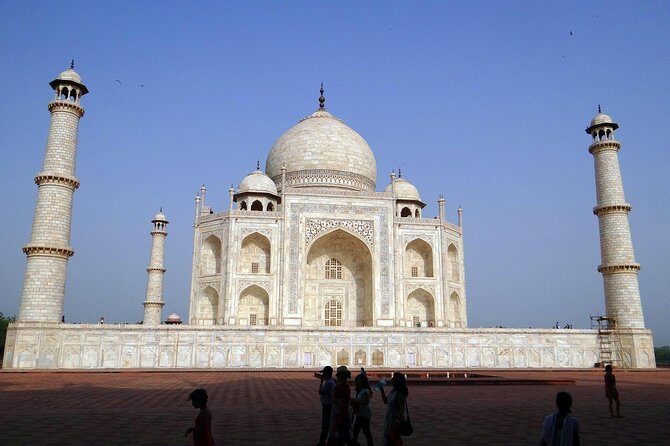
- Taj Mahal: why the guide changes the visit
- Agra Fort: UNESCO fortifications with shifting power
- Travel to Jaipur and a hotel night
- Day 3 in Jaipur: Palaces, stepwell calm, and the royal view ladder
- Hawa Mahal: the Palace of Wind
- Amber Fort: courtyards, rooms, and the hill views
- Panna Meena ka Kund: symmetrical stepwell time
- Jal Mahal: a palace in the lake
- Gaitore Ki Chhatriyan: quiet cenotaphs
- City Palace: Mughal–Rajasthani in one place
- Jantar Mantar: UNESCO astronomical instruments
- Guides, Drivers, and the Safety Factor: Why the Human Touch Matters
- What to Expect With the Schedule Swaps
- The Hidden Cost Check: Tickets, Cash, and Meals
- Who This Tour Fits Best (and Who Might Prefer a Different Style)
- Should You Book This Golden Triangle Tour?
- FAQ
- What’s included in the tour price?
- Are meals included?
- Are entry tickets included?
- Does the tour include hotel accommodations?
- Is the Taj Mahal ever visited differently?
- What happens if the tour date falls on a Monday?
- Is this tour private or shared?
- Can the itinerary be changed after booking?
- Is there any extra fee during holidays?
Key points before you go
- Door-to-door hotel pickup and drop-off each day saves you from Delhi traffic stress
- Private guide at every major stop turns checklists into context and practical tips
- Hotel upgrades (4- or 5-star) with breakfast make Day 2 and Day 3 smoother
- Taj Mahal logistics include golf cart access and shoe covers, which helps on a busy day
- Built-in schedule swaps cover closures like Taj Mahal on Fridays, and Red Fort/Lotus Temple on Mondays
- Operator responsiveness and safety emphasis showed up in reviews mentioning Akil and careful driving by Naval
The Big Picture: What This 3-Day Golden Triangle Gets You
The Golden Triangle is famous for a reason: Delhi, Agra, and Jaipur pack big-name sights into a tight loop. The hard part is that doing it well takes planning—timing, ticket lines, getting from place to place, and knowing what matters most once you’re there.
This tour works because it removes the friction. You’re picked up from your hotel (or the airport, if arranged) and taken in a private air-conditioned vehicle with a uniformed driver. At the sights, you’re not just dropped off—you have a tour guide. That changes the feel of the trip. Instead of spending your energy scanning for where to go next, you can focus on learning and looking.
I also like that you can choose hotel options. If you’re upgrading to 4- or 5-star accommodation and breakfast, the days feel less like a sprint and more like a planned route.
You can also read our reviews of more private tours in New Delhi


Price and Value: What $80 Really Covers (and What Doesn’t)
The listed price is $80 per person for the 3-day tour. But two big add-ons are clearly stated: meals ($70 per person) and entry tickets (listed as $70 per person). So a realistic all-in total is often closer to around $220+ per person, depending on what you select and how spending aligns with those estimates.
Is it still good value? For many people, yes—especially if you compare what you’d spend and how much time you’d lose building this plan yourself.
Here’s why the math can work:
- You’re paying for private transport and a guide across multiple cities.
- The itinerary includes several sights in a short timeframe, which usually costs more when you hire taxis and guides separately.
- Included touches like rickshaw ride in Old Delhi and golf cart access for the Taj Mahal reduce hassle and save small but real time.
The main value question is your style. If you like DIY travel and you already know how to navigate ticketing and long drives, you might find cheaper options. If you want your time protected—especially with tight scheduling—this setup is the easier way to get it done.
Day 1 in Delhi: From Gurudwara Peace to Old Delhi Power

Day 1 is a strong mix: spiritual calm, Mughal grandeur, and the street-level rhythm of Old Delhi—then an evening check-in in Agra.
Gurudwara Bangla Sahib: A calm start
The day begins at Gurudwara Bangla Sahib, linked to the eighth Sikh Guru and known for its healing sarovar. Even if you’re not religious, these places help you reset before the big-city sightseeing starts. The atmosphere tends to be orderly and welcoming, and your guide can point out what to notice so you’re not guessing.
Timing note: about 30 minutes here, and admission isn’t included.
Jama Masjid and the Chandni Chowk approach
Next comes Jama Masjid, India’s largest mosque, built in 1656 with 5,000 workers. Your visit includes about two hours, with the scale and architecture doing most of the work for you. Your guide can help you understand where the grandeur comes from and how the mosque’s location connects to the city’s layout.
Then you move into Chandni Chowk for a rickshaw ride. This is one of my favorite parts of Day 1 because it’s not just seeing markets from afar—you get pushed through the same lanes people have used for generations.
A few more New Delhi tours and experiences worth a look





Rickshaw through Chandni Chowk and Khari Baoli spice market
You’ll do:
- Chandni Chowk (about an hour) with bazaar context
- Khari Baoli (about an hour) for the spice market experience
Khari Baoli is all about smell, color, and everyday ingredients. It’s also a good photo stop, but expect a sensory overload if you’re sensitive. Let your guide know what you want—things like spices used in regional cooking versus everyday pantry items.
Admission for Khari Baoli isn’t included, so you’ll want to keep cash on hand.
India Gate: short stop, strong symbolism
You also stop at India Gate, the 1921 Tomb of the Unknown Soldier memorial honoring 13,300 Indian soldiers from World War I. It’s brief—about 30 minutes—and it works as a pause between Old Delhi intensity and the next major site.
Humayun’s Tomb and Lotus Temple: Mughal gardens and modern faith
Humayun’s Tomb is next, about an hour, and it matters because it’s a UNESCO World Heritage site and often described as India’s first Garden Tomb. This is the kind of stop where a guide helps you connect architectural choices to the meaning behind them.
Then you go to the Lotus Temple, a Bahá’í House of Worship opened in December 1986. It’s about an hour, and admission is free. Even if you’ve seen photos before, the structure reads differently in person because you can see how people move around it and how light hits the petals.
Evening transfer to Agra
After Delhi sightseeing, you travel to Agra and check into your hotel. You get leisure time—about three hours mentioned—so you can reset after a long day. This downtime matters because Day 2 starts early and runs hard.
Day 2 in Agra: Taj Mahal in the early light
Day 2 is built around one centerpiece: the Taj Mahal. Your schedule includes a personal tour guide at the Taj, and the timing is meant for early light. That early timing can change everything: the monument looks calmer, and the crowds may feel less intense than later.
Taj Mahal: why the guide changes the visit
The Taj Mahal is listed as about two hours, with admission not included. What makes it work is that a guide can point out details you’ll miss if you treat it like just a postcard. The included golf cart ride to/from the parking lot and shoe covers are helpful on a practical level—when the ground is busy, muddy, or hot, you’ll appreciate anything that reduces friction.
Practical tip: wear shoes that you’re comfortable covering and that you can remove easily if needed.
Agra Fort: UNESCO fortifications with shifting power
Next is Agra Fort, another UNESCO World Heritage site, built by Emperor Akbar in 1565 along the Yamuna River. About an hour is planned, and the fort’s story connects the dots between different rulers. The fort also gives you a better sense of the political world that produced the Taj Mahal rather than treating the Taj as an isolated masterpiece.
Travel to Jaipur and a hotel night
After Agra, you head to Jaipur, the Pink City. You’ll check into your hotel for an overnight stay. The itinerary gives about four hours for the Jaipur segment, which typically includes arrival and time to settle.
If you upgrade your hotel to 4- or 5-star plus breakfast, Day 3 becomes less stressful. You’ll start fresher for forts and viewpoints.
Day 3 in Jaipur: Palaces, stepwell calm, and the royal view ladder
Day 3 is packed with architecture and viewpoints, but it’s also broken up with short stops so you’re not stuck in one place too long. Think of it like a series of “look and learn” moments.
Hawa Mahal: the Palace of Wind
First is Hawa Mahal (about 30 minutes). It’s known for intricate latticework and panoramic city views from the top. This is a great orientation stop because the building shape helps you understand why Jaipur’s royal life looked outward as much as inward.
Amber Fort: courtyards, rooms, and the hill views
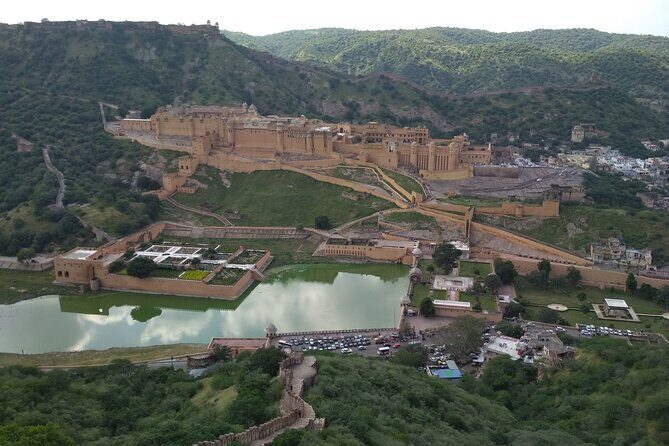
Then comes Amber Fort, about two hours. You explore courtyards, temples, and lavish rooms with a guided tour. The fort also gives you views of the hills and Maota Lake below, which adds a “sense of place” you won’t get from photos alone.
A practical consideration: fort steps can be uneven. If you’re sensitive to walking distances, plan for slower movement and take the breaks your body asks for.
Panna Meena ka Kund: symmetrical stepwell time
Next is Panna Meena ka Kund, a stepwell known for symmetrical architecture and an historic water system. About 30 minutes. This is also a calmer pause in a day heavy with palaces. It’s good for photos, but more importantly, it helps you see how water shaped life in Rajasthan.
Jal Mahal: a palace in the lake
You then drive to Jal Mahal in the middle of Man Sagar Lake. It’s about 30 minutes, and you admire it from the shore. This stop is more visual than educational, but your guide can add context so you’re not just looking at a postcard view.
Gaitore Ki Chhatriyan: quiet cenotaphs
Then you visit Gaitor Ki Chhatriyan, a peaceful site with cenotaphs for Jaipur’s royal family. About 30 minutes. This is one of those stops where the calm is the point. The carvings and the setting make it feel different from the major palace blocks.
City Palace: Mughal–Rajasthani in one place
At City Palace of Jaipur, about an hour, you’ll see a fusion of Mughal and Rajasthani architecture. Museums, courtyards, and palaces are on the menu here. This is where you start noticing how royal style functions as both power and identity.
Jantar Mantar: UNESCO astronomical instruments
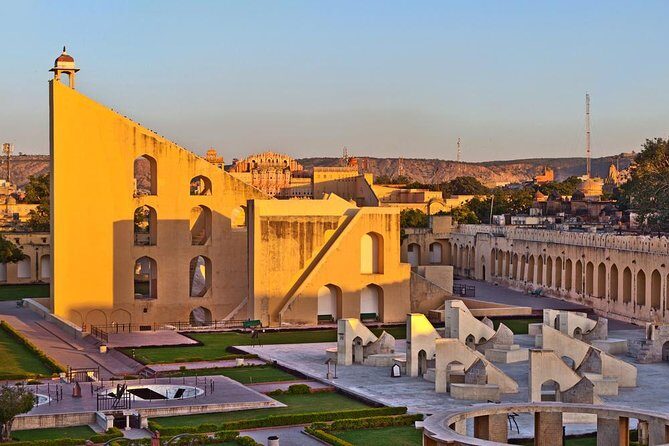
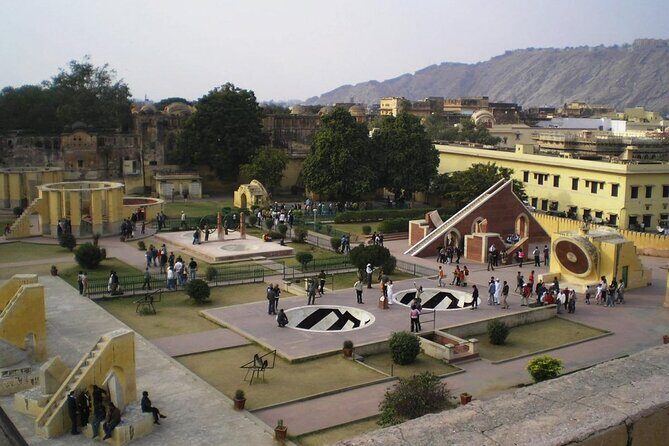
Finally you end at Jantar Mantar, a UNESCO World Heritage site and an astronomical observatory built by Maharaja Jai Singh II. About an hour. The big instruments make sense once you have a guide explaining how measurement tools connect to the sky. If you like science-as-culture, this stop earns its time.
Guides, Drivers, and the Safety Factor: Why the Human Touch Matters
You’re paying for more than transport. You’re paying for competent people who keep the day moving and help you feel secure.
Reviews and operational notes point to strong responsiveness from Akil, and the experience includes mention of guides like Kamal in Jaipur and careful driving by Naval. That matters because in India, the “how” of travel can make or break the trip. A smooth pickup, clear guidance inside monuments, and careful driving give you headroom to enjoy.
Also, this tour is explicitly private. Only your group participates. That’s not just a comfort perk; it helps your guide keep timing realistic, especially when traffic shifts or when you linger longer at a site.
What to Expect With the Schedule Swaps
This route is designed to keep major sights covered even when closures hit. You just need to know the swaps:
- Taj Mahal is closed on Fridays. If your dates include a Friday, the route adjusts to Delhi – Jaipur – Agra – Delhi.
- Red Fort and Lotus Temple are closed on Mondays. In that case, the itinerary swaps in Gurudwara Bangla Sahib instead.
Also, the tour is customizable. If you want to add or remove monuments, the operator indicates you can request changes even after booking. That flexibility is useful if you’re traveling with kids, have mobility limits, or care more about forts versus temples.
The Hidden Cost Check: Tickets, Cash, and Meals
Two practical points will save you headaches.
First: entry tickets aren’t included (listed as $70 per person). Some monuments don’t accept credit cards, so carry cash in INR for entrance fees. Your guide can help locate an ATM if needed.
Second: meals are not included (listed as $70 per person). You’ll want to plan how you’ll eat—especially on a day that starts with early Taj timing. Having meals built into the itinerary could reduce decision fatigue, but since meals aren’t included here, you’ll need to stay flexible and follow your guide’s suggestions for timing and locations.
Who This Tour Fits Best (and Who Might Prefer a Different Style)
This is a great fit if:
- you want a tight 3-day loop with minimal planning
- you prefer a guide’s explanations over reading on your phone all day
- you’re working with limited time and want to hit Delhi, Agra, and Jaipur without day-long guesswork
- you value safety and clear logistics, especially if you’re traveling solo or with family
You might consider a different approach if:
- you want maximum independence and don’t mind ticket lines or self-navigation
- you’re on a strict budget and want to minimize guide and private-vehicle costs
- you dislike packed schedules and prefer to spend more time in fewer places
Should You Book This Golden Triangle Tour?
If your goal is to see Delhi, Agra, and Jaipur highlights with less stress and more explanation, this tour makes sense. The best reasons to book are the ones that are hard to DIY: private transport across cities, a guide at the sites, and logistics support like Taj-area golf carts and shoe covers.
My call: book it if you want your time protected and you like learning as you go. Budget for meals and monument entries, carry some cash in INR, and you’ll start each day knowing exactly what comes next. If you want a smooth first Golden Triangle experience, this one is built to deliver.
FAQ
What’s included in the tour price?
Pickup and drop-off (hotel or airport if arranged), a private air-conditioned vehicle, a uniformed personal driver, a Rickshaw ride through Old Delhi, golf cart rides to/from the Taj Mahal entrance, shoe covers for the Taj Mahal, and a tour guide at all sites. You also get 2-night hotel accommodation and breakfast if you choose the hotel option.
Are meals included?
No. Meals are listed as an additional cost of $70 per person.
Are entry tickets included?
No. Entry tickets are listed as an additional cost of $70 per person, and some monuments may not accept credit cards.
Does the tour include hotel accommodations?
Yes—2-night hotel accommodation is included if you select the hotel option.
Is the Taj Mahal ever visited differently?
Yes. The Taj Mahal is closed on Fridays. If your dates include a Friday, the schedule changes to Delhi – Jaipur – Agra – Delhi.
What happens if the tour date falls on a Monday?
Red Fort and Lotus Temple are closed on Mondays. The itinerary swaps in Gurudwara Bangla Sahib in place of those.
Is this tour private or shared?
It’s private. Only your group participates.
Can the itinerary be changed after booking?
Yes. The tour is customizable. You can request additions, removals, or modifications to attractions after booking.
Is there any extra fee during holidays?
A mandatory Gala dinner fee applies on New Year’s Eve and Christmas.