REVIEW · NEW DELHI
Delhi City Tour: Old, New, or Both – Half & Full Day Options
Book on GetYourGuide →Operated by Maria Luxury Tours · Bookable on GetYourGuide
Delhi changes moods fast, and this tour keeps up. You’ll split your time between Old Delhi’s religious landmarks and the big-deal sights of New Delhi, with a private guide doing the hard work of timing and explanations. I especially liked the tuk-tuk ride in Old Delhi and the way the tour bundles major stops with monument tickets so you don’t waste hours figuring out logistics.
The one thing to plan for is Delhi traffic. Even with a private car, you’re still at the mercy of roads and crowds, so half-day options are often the smarter pick if you’re short on time or energy.
Second, a lot of guests praise the guides by name, and that matters here because Delhi is a lot to process on your own. Guides like Anas, Raghuveer Singh, Junaid, and Kaushal Pandey are repeatedly called out for clear explanations and good pacing, plus drivers who handle the chaos calmly.
If you’re doing the New Delhi side on a Monday, keep in mind the Lotus Temple is closed, so the tour swaps in Qutub Minar instead.
In This Review
- Key highlights at a glance
- Old Delhi tuk-tuk rides and the Chandni Chowk plan
- Jama Masjid: a monument that feels bigger up close
- Gurudwara Bangla Sahib: the sacred pond and community kitchen
- Passing the Red Fort from the right angle
- New Delhi highlights: Agrasen ki Baoli, India Gate, Parliament, Rashtrapati Bhavan
- Humayun’s Tomb: the UNESCO stop that’s worth your full attention
- Lotus Temple (and the Monday swap to Qutub Minar)
- Full day combo: the best way to see Delhi in one shot
- Private car value: tickets, bottled water, and not wasting your day
- Who should book each option
- What to bring and how to make the day smoother
- Price and time: is $32 good value?
- Should you book this Delhi City Tour?
- FAQ
- FAQ
- What are the tour duration options?
- Do I get to see both Old Delhi and New Delhi?
- Is the Lotus Temple always included?
- What transport is included?
- Are monument tickets included?
- How do hotel pickup and drop-off work?
Key highlights at a glance

- Old vs. New Delhi choices: half-day or full-day combo depending on your stamina
- Old Delhi tuk-tuk + Chandni Chowk walk: fast access to the most photo-friendly chaos
- Jama Masjid and Bangla Sahib: two major faith landmarks with different vibes
- New Delhi monuments by car: India Gate, Parliament, and Rashtrapati Bhavan from the road
- UNESCO-listed Humayun’s Tomb: the classic “how was this built” moment
- Lotus Temple timing rule: Monday swap to Qutub Minar
Old Delhi tuk-tuk rides and the Chandni Chowk plan
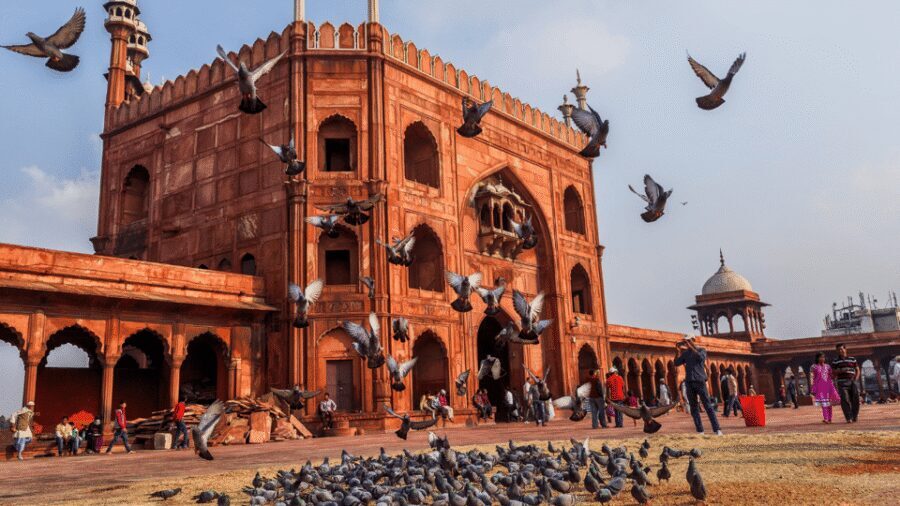
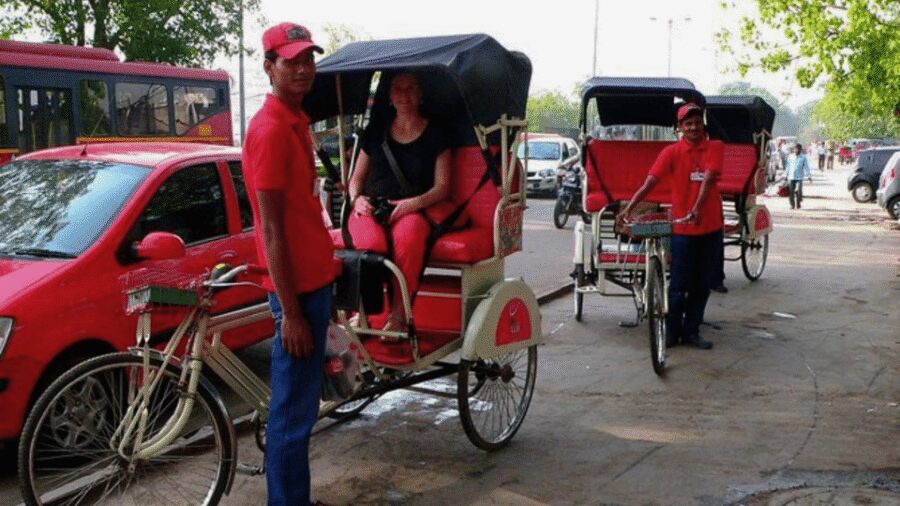
Old Delhi is where Delhi stops pretending it’s orderly. You’ll move through narrow streets, thick with smells and sound, and you’ll do it with a guide who knows how to keep the walk purposeful. The tour option for Old Delhi (and the full-day combo) uses a traditional tuk-tuk for getting around, then shifts into walking for the best street-level views.
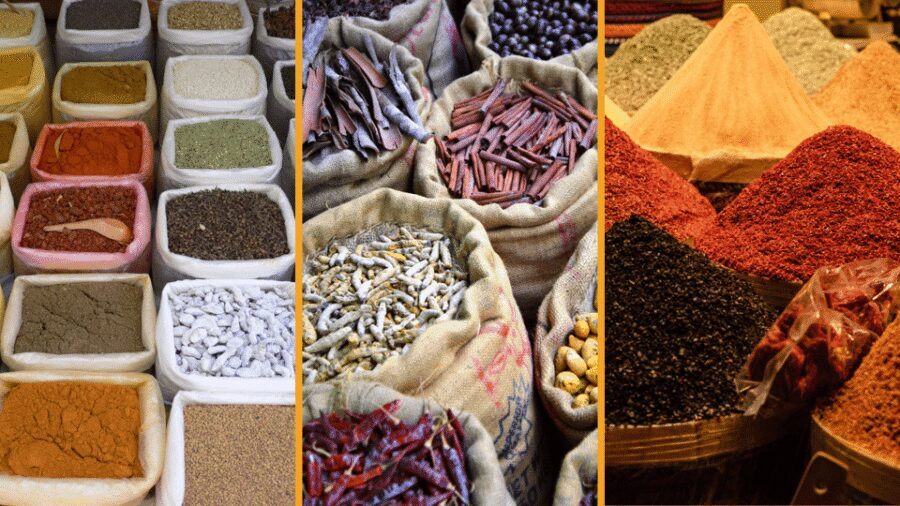
The star move here is the Chandni Chowk area. You’ll get a guided walk through the main shopping streets, and this is where the city feels most real: people bargaining, stalls stacked high, and constant motion. If you’re the kind of traveler who likes markets but hates getting lost, this is the sweet spot. The guide helps you orient quickly, so you can enjoy what you see instead of staring at your phone like a tourist-shaped stress ball.
You’ll also get time to connect the dots between what you’re seeing and why it exists. A big lesson in Old Delhi is how different the city feels block to block—religion, commerce, and everyday life all share the same streets.
Practical watch-outs:
- Old Delhi walking can be hot and crowded, so comfy shoes help more than you’d think.
- For mosque visits, plan for modest clothing and expect security checks.
You can also read our reviews of more city tours in New Delhi



Jama Masjid: a monument that feels bigger up close
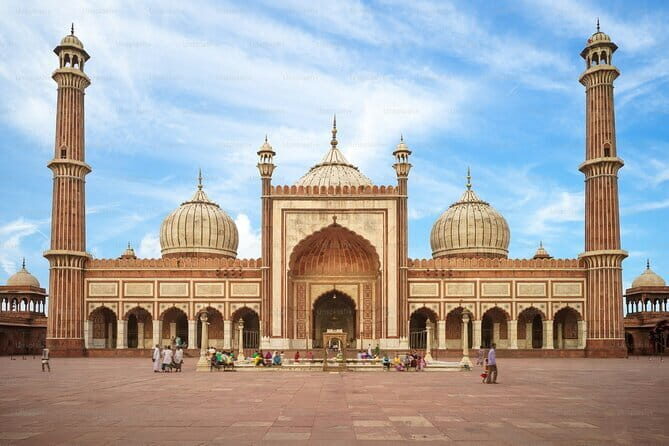
Jama Masjid (India’s largest mosque) is not just a “stand in front and take a picture” stop. Even though you’ll be there for a guided visit, the main value is how the space changes the way you look at Old Delhi. The scale hits you the moment you arrive, and your guide’s explanations help you understand the role this mosque plays in daily religious life.
You’ll spend about 45 minutes during the guided visit and sightseeing. That’s a solid chunk for getting inside, taking photos from sensible angles, and listening before you drift into the crowd.
One thing I like about this setup is that you don’t rush through. Instead, you’re guided to notice details—materials, layout, and how people move through the space.
If mosques and architecture are your thing, this stop is worth it even if you only do half a day in Old Delhi.
Gurudwara Bangla Sahib: the sacred pond and community kitchen
Next on the Old Delhi side is Gurudwara Bangla Sahib. This is a different kind of “wow” from Jama Masjid. Here, you get a guided visit with time to see the sacred pond area and the community kitchen side of the gurudwara.
The community kitchen matters because it’s part of the living tradition, not just a building. It’s the kind of experience that makes your trip feel more human and less like a checklist.
Expect around 45 minutes for the guided visit. It’s long enough to take in the setting, watch how visitors participate, and understand what you’re seeing without feeling stuck.
Also, if you’re traveling solo, this is one of the stops where you’ll likely feel most grounded. It’s calm compared to the market streets, and the guide keeps things clear and respectful.
Passing the Red Fort from the right angle

In Old Delhi, you may not always step inside every big-ticket landmark. But you will pass the Red Fort area from the outside, which still gives you a meaningful reference point.
Why that matters: once you’ve seen Chandni Chowk and the major religious sites, the Red Fort becomes less of an isolated “big wall” and more of a piece of the city’s political and historical story. Even a brief pass-by can connect the geography in your head.
New Delhi highlights: Agrasen ki Baoli, India Gate, Parliament, Rashtrapati Bhavan

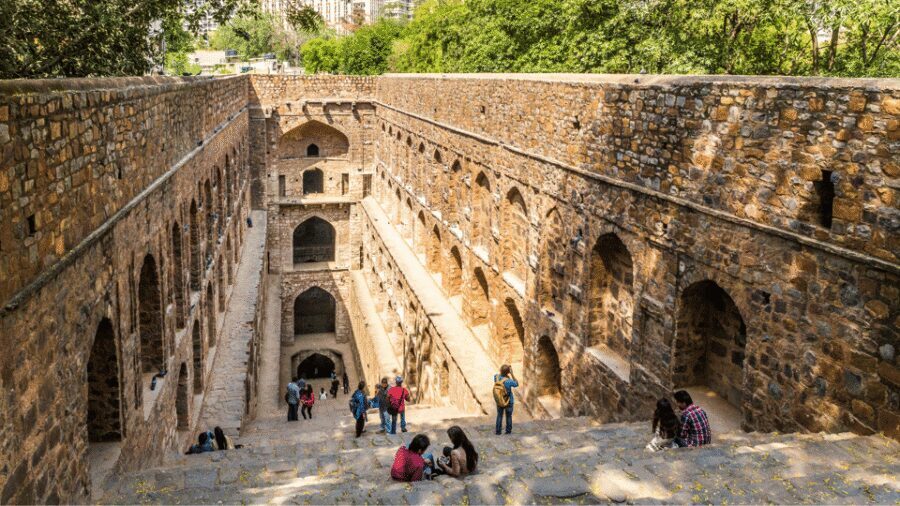
If Old Delhi is the energy, New Delhi is the structure. The New Delhi option starts at Agrasen ki Baoli, a stepwell with a very different feeling than the main monuments. This is a good opening because it sets the tone: Delhi isn’t only about the famous Mughal and colonial-era landmarks. It also has older layers you don’t notice unless someone points them out.
From there, you’ll drive past the big icons from the road:
- India Gate
- Parliament House
- Rashtrapati Bhavan
This pass-by format is practical. It helps you see where things are without spending time fighting for the perfect spot and then getting stuck in crowds around the most famous viewpoints.
Then you move into the “stay and look” section of the day with Humayun’s Tomb.
A few more New Delhi tours and experiences worth a look



Humayun’s Tomb: the UNESCO stop that’s worth your full attention
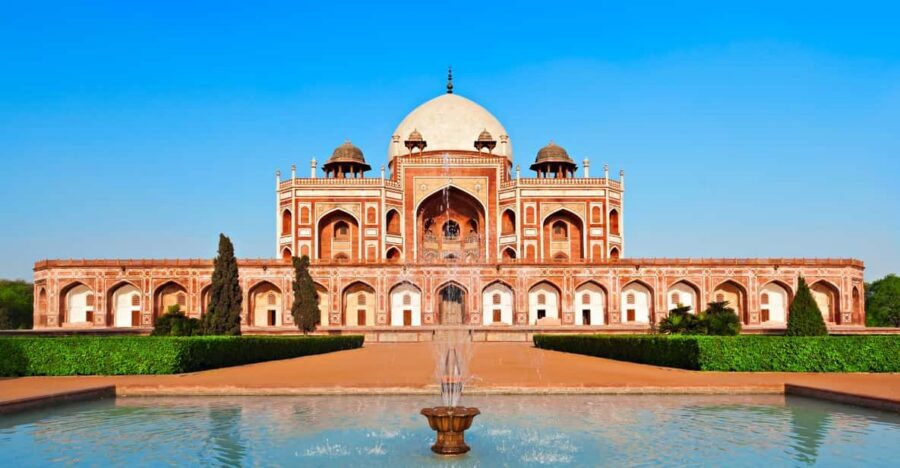
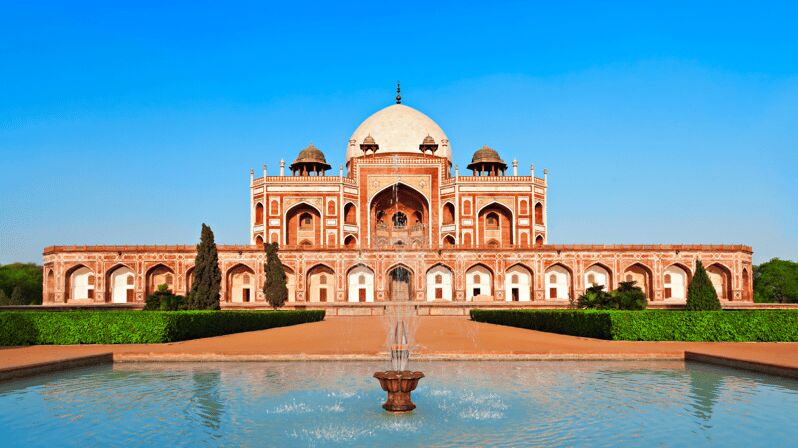
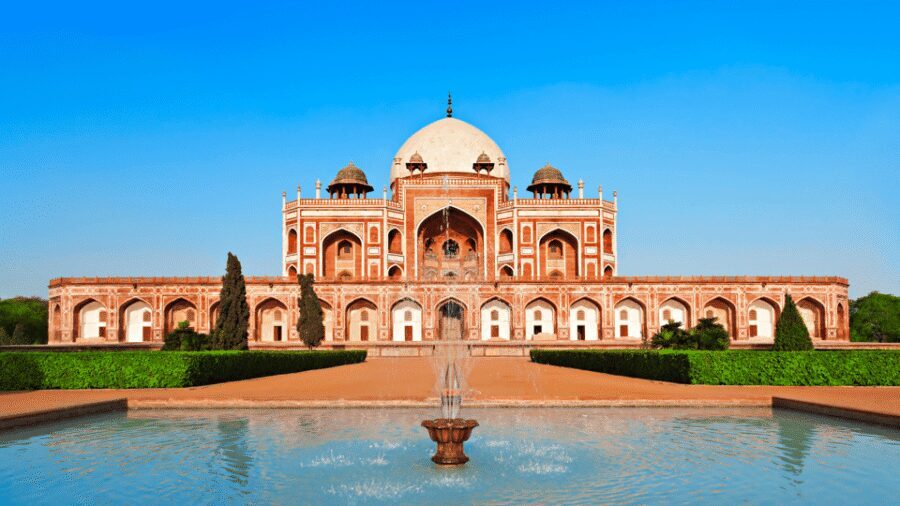
Humayun’s Tomb is on the UNESCO World Heritage list, and you’ll get about an hour for the guided visit and sightseeing. This is one of those sites where your brain needs a few minutes just to register the design and scale.
Your guide’s job here is to translate “old stone” into a story you can follow: influences, layout, and why it’s considered a turning point in Indian architecture. With a good guide, you start noticing patterns instead of just staring at beauty.
The result: you leave with more than photos. You leave with an understanding of what makes the site important.
Lotus Temple (and the Monday swap to Qutub Minar)
The New Delhi tour often ends at the Lotus Temple, which is timed for a guided visit and sightseeing of about 30 minutes. This stop has a calming feel after the historical weight of Humayun’s Tomb and the formal grandeur of the drive-by monuments.
But here’s the important rule: the Lotus Temple is closed on Mondays. If your tour lands on a Monday, the tour replaces it with Qutub Minar instead. That means you still get a major architectural anchor at the end of the day, just a different one.
If you’re the kind of traveler who plans around lighting and atmosphere, check your day. Morning and late-day timing changes how these spaces photograph, so knowing the swap in advance helps you set expectations.
Full day combo: the best way to see Delhi in one shot
If you want both sides without deciding between them, the full day combo is the move. You’ll experience the key Old Delhi and New Delhi highlights in one continuous flow, with the same private car and guide handling the transitions.
Why this works: Delhi is too big to do well on your own in a single day. Old Delhi rewards walking and street-level attention. New Delhi rewards a more structured route and time spent at the big monuments. Combining them lets you shift modes while a guide keeps the day efficient.
Just remember the rhythm. This kind of day is active—cars for distance, walking for the best sights. If you’re traveling with limited mobility or you prefer a slow pace, you may prefer a half-day option instead.
Private car value: tickets, bottled water, and not wasting your day
A lot of Delhi tours look similar on paper. This one stands out because it wraps several “hidden costs” into the price: private air-conditioned car, a professional English-speaking guide, monument entry tickets, bottled water, and skip-the-ticket-line access.
That matters because Delhi is time-heavy. Traffic eats plans, and ticket lines eat patience. When you already have tickets and a guide to manage timing, you spend your energy on seeing, not waiting.
From the experiences guests shared, drivers also get credit for safe handling of chaotic traffic. People mentioned names like Asif and Wasim, and praised the calm, careful driving. That’s not a small detail. In Delhi, comfort and safety aren’t luxuries—they’re part of how you enjoy the day.
Also, your guide’s job isn’t just to narrate. Several guests specifically praised clear English and the ability to answer questions without turning the day into a lecture. You’ll get context as you go, which helps you understand what you’re looking at right now, not three days later.
Who should book each option
Here’s a practical way to choose:
- Choose Half Day Old Delhi if you want markets, mosques, and the street-life vibe—plus the tuk-tuk ride and Chandni Chowk walk.
- Choose Half Day New Delhi if you prefer monuments, architecture, and a calmer pace after a structured route.
- Choose the Full Day Combo if it’s your first time in Delhi or you have limited time and want a broad, balanced snapshot.
If you’re traveling solo, you’ll likely appreciate the structure and the fact that pickup and drop-off are handled. If you’re short on time between flights, the half-day options are often the cleanest match.
What to bring and how to make the day smoother
You don’t need much, but bring what you’ll actually use.
- Bring your passport or ID card.
- Wear comfortable shoes for market walking and uneven surfaces around historical sites.
- If you plan to visit religious spaces, dress modestly so you feel confident.
Also, plan for midday heat and crowds. The tour includes bottled water during the day, but it’s still smart to pace yourself and take slow moments when you get them.
Finally, if you’re visiting on a Monday, expect the Lotus Temple swap to Qutub Minar. Knowing that in advance prevents the kind of last-minute disappointment that ruins a good day.
Price and time: is $32 good value?
At around $32 per person, the biggest value isn’t only the sightseeing. It’s what you’re not paying for separately: private air-conditioned transport, an English-speaking guide, monument tickets, and a tuk-tuk experience in Old Delhi (where applicable), plus bottled water and skip-the-ticket-line access.
For a city like Delhi, that bundle can save both money and energy. You’re buying a structured route plus someone who can explain what you’re seeing while also managing timing between areas that can take real time to cross.
The other key value factor is duration. The tour runs about 4 to 7 hours depending on which option you pick. That range is helpful if you want a meaningful day without committing to something that swallows your entire vacation.
Bottom line: if you want major sights with minimal stress, this is priced like a practical first-pass tour, not a premium-only splurge.
Should you book this Delhi City Tour?
Yes, if you want an efficient, guided first taste of Delhi’s two faces: Old Delhi’s religious landmarks and street markets, and New Delhi’s landmark architecture and monumental planning.
I’d especially recommend it if:
- it’s your first trip to Delhi,
- you want a mix of mosques, a stepwell, a UNESCO tomb, and signature city architecture,
- you’d rather spend your time looking at Delhi than planning how to get from place to place.
Skip it only if you’re chasing a slow, unstructured experience or you already know you want deep-dive neighborhoods beyond the major highlights. For most people, this tour is a smart way to get oriented fast and enjoy the day instead of battling it.
FAQ
FAQ
What are the tour duration options?
The tour lasts about 4 to 7 hours, depending on whether you choose a half-day Old Delhi, half-day New Delhi, or a full-day combo option.
Do I get to see both Old Delhi and New Delhi?
Yes. You can choose either half-day Old Delhi, half-day New Delhi, or a full-day combo that covers highlights from both sides of the city.
Is the Lotus Temple always included?
No. The Lotus Temple is closed on Mondays, and if your tour falls on a Monday, the itinerary swaps it for Qutub Minar.
What transport is included?
The tour includes a private air-conditioned car with a chauffeur. In the Old Delhi and full-day combo options, you also get a traditional tuk-tuk ride in Old Delhi.
Are monument tickets included?
Yes. Monument entry tickets are included, along with skip-the-ticket-line access.
How do hotel pickup and drop-off work?
Pickup and drop-off are included from your hotel, airport, or preferred location in Delhi, Noida, Gurugram, Faridabad, or Ghaziabad. Wait in the hotel lobby or at the main entrance.