REVIEW · JAIPUR
Jaipur Tour by Tuk-Tuk
Book on Viator →Operated by Marigold Tuktuk and Car Tours · Bookable on Viator
Nine hours, countless palace views. This Jaipur tuk-tuk tour is a smart way to see the big names in the Pink City without burning out on sidewalks, and you get an English-speaking driver-guide who can explain what you’re looking at as you move. I like that it includes hotel/airport/rail/bus pickup and drop, and I like that the route is flexible enough to match your speed. One thing to plan for: monument entry fees and meals cost extra, so the true day budget is the tours price plus tickets.
The best part of traveling by tuk-tuk is the pacing. You can cover more ground than a walking tour, but you still get a more personal feel than a crowded bus day, and the vehicle is designed for local streets. In the guide department, the names Naresh and Rauf show up in the most praise-heavy feedback, and the common thread is clear directions, safety, and the ability to tailor the day.
In This Review
- Key highlights you’ll care about
- Why a tuk-tuk day works so well in Jaipur
- Price and value: what the $5 actually buys
- Pickup, pacing, and how the English driver-guide changes everything
- Albert Hall Museum: Indo-Saracenic architecture and an easy late-day stroll
- Hawa Mahal: the Palace of Breeze and the story behind the façade
- Jantar Mantar: huge sundials that were built for real work
- City Palace: Chandra Mahal, Mubarak Mahal, and still-living royal spaces
- Amber Fort (Amber Palace): 16th-century grandeur with a scenic ride
- Panna Meena ka Kund and Jal Mahal: quick stops that change the tone
- Gaitore Ki Chhatriyan: royal tombs near Nahargarh
- Pink City bazaar time: practical shopping streets and people-watching
- What to watch for on the day: tickets, camera fees, and timing
- Should you book the Jaipur Tuk-Tuk Tour?
- FAQ
- What is included in the Jaipur tuk-tuk tour?
- Are entrance fees included for the main monuments?
- How long is the tour?
- Is this a private tour or a shared group?
- Does the driver speak English?
- Which stops are free?
- Is pickup available from hotels and other locations?
- What is the cancellation policy?
Key highlights you’ll care about
- Hotel pickup and drop makes this an easy full-day plan
- English-speaking driver-guide turns stops into real context
- Low base price, pay-when-you-go admissions keeps the booking simple
- Amber Fort plus “outside-the-postcard” stops like Jal Mahal and the stepwell
- Private tour for your group, not a shared bus herd
- Flexibility during the day, including options to extend or adjust
Why a tuk-tuk day works so well in Jaipur

Jaipur is spread out enough that “just walk it” can turn into a long grind fast. A tuk-tuk day solves that by using a fun, local vehicle while still giving you a guide who can talk you through what matters at each stop. The route is built for first-timers who want the highlights, but it’s also paced so you don’t feel rushed at every doorway.
I also like that the day isn’t only about one monument. You rotate between royal architecture, an astronomy site, museum time, and a bit of everyday Jaipur through the bazaar area. That mix makes the city feel like more than a photo checklist.
You can also read our reviews of more tours and experiences in Jaipur.


Price and value: what the $5 actually buys
The base price is listed as $5 for a 9 to 10 hour day, and it includes a lot of “hidden” costs that can add up on your own. You get the private tuk-tuk with an English-speaking driver, plus fuel charge, parking, and taxes. You also get bottle water and a cup of tea, which is a small thing until you’re halfway through the day and happy you didn’t have to hunt for drinks.
Now the important part: admission fees are not included. From the listed prices, you can expect to add at least:
- Albert Hall Museum: $3.62
- Hawa Mahal: $2.41
- City Palace & Amer (Amber): $6.64
- Jantar Mantar: $2.41
That’s already around $15 in museum/monument tickets per person, before any extra stops with fees and before camera fees (camera fees at monuments are specifically noted as not included). Meals are also extra. In other words: the tour price is a bargain for transportation and guiding, but your “real” budget should account for tickets.
Pickup, pacing, and how the English driver-guide changes everything

This tour includes transfers from your hotel or other Jaipur locations, and the time on the clock is used to get you from sight to sight efficiently. For most people, that’s what makes a full-day tour feel manageable: you don’t waste your morning trying to figure out logistics, and you can start enjoying Jaipur sooner.
The driver is also your English-speaking guide, which matters because Jaipur’s highlights aren’t all obvious at first glance. Hawa Mahal, for example, looks like a single iconic façade from outside, but it’s more meaningful when you understand why it exists and who it was meant for. Jantar Mantar works better when someone explains what those huge instruments are for. Having the guide in the driver seat means you get context without adding extra guide expenses.
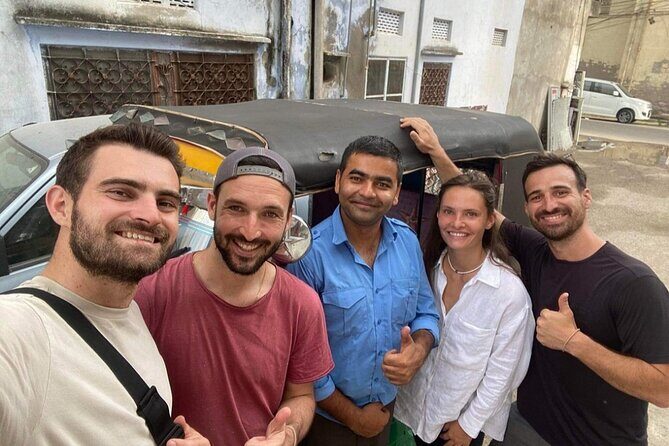
The feedback you’ll want to pay attention to: several accounts praise guides like Naresh for being friendly, professional, and willing to adjust the schedule based on what you want more of.
Albert Hall Museum: Indo-Saracenic architecture and an easy late-day stroll
Albert Hall Museum is a great “reset” stop when your legs need a break. You’ll get about 1 hour 30 minutes here, and it’s described as Rajasthan’s state museum, housed in a building known for Indo-Saracenic architecture. Even if you’re not the type to read every label, the exterior and overall feel help you understand Jaipur’s blend of design styles.
One practical note: this stop is placed towards the end of the day, and that’s intentional. It’s a calmer tempo compared to forts and courtyards, so you’re less likely to feel museum-time fatigue right after a big climb.
If you want a smooth day, treat Albert Hall as a lighter block. Use it for photos outside, a quick scan inside, and then let the rest of the evening bring you back into the city’s energy.
Hawa Mahal: the Palace of Breeze and the story behind the façade
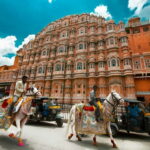
Hawa Mahal, the Palace of the Winds, is the postcard you came for. You’ll have around 1 hour at the stop, and you’ll see that famous pink pyramid façade. The tour details note it was constructed by Maharaja Sawai Pratap Singh to house the ladies of the royal court, which gives the façade a purpose beyond looks.
Here’s what to watch for: Hawa Mahal entry is listed as extra, so you’ll want to keep that budget in mind. Also, the best photos usually come down to timing and angle, not just showing up. If you want cleaner shots, ask your driver-guide when the light is best from the viewpoint you care about.
Even without going deep into the museum-like parts, Hawa Mahal is valuable because it’s tied directly to how the royal household functioned.






Jantar Mantar: huge sundials that were built for real work
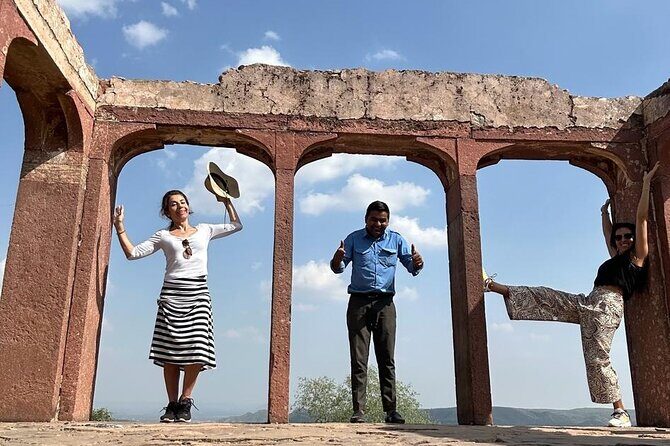
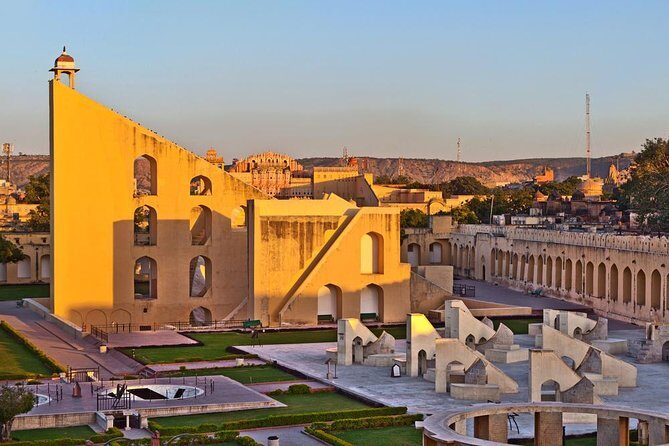
Jantar Mantar is one of those sites where you’ll either love it instantly or need a quick explanation to click. The tour frames it as Maharaja Jai Singh’s astronomical observatory, and it’s a World Heritage Site. You’re looking at huge sundials and angular constructions designed to measure and calculate.
You’ll get about 1 hour here. That’s usually enough time to walk the area, spot the major instruments, and understand how they relate to the sky. The key is to ask questions while you’re there, not after you leave—because the concepts are easier when someone ties them to what you’re seeing in front of you.
Jantar Mantar’s value is that it’s not just a landmark; it’s a working idea made stone and math.
City Palace: Chandra Mahal, Mubarak Mahal, and still-living royal spaces
City Palace is close to Jantar Mantar and gets about 1 hour 30 minutes on this day plan. The complex includes areas noted as Chandra Mahal and Mubarak Mahal, and it’s described as still being home to the royal family. That ongoing connection is what makes City Palace feel different from a purely “museum” experience.
Entry fees are listed as extra, and camera fees at monuments are noted as not included, so plan for that. If you’re serious about photos, you’ll want to treat this stop as one where you confirm what’s allowed before you start shooting.
What I like about pairing City Palace with Jantar Mantar is the contrast: one site explains how people studied the universe, and the other shows how power shaped everyday royal life and space.
Amber Fort (Amber Palace): 16th-century grandeur with a scenic ride
Amber Fort is the big fort stop on the day, around 2 hours. You’ll drive about 11 km outside the Pink City, and you’ll be told the fort dates from the 16th century. The hours are listed as open from 8:00 am to 5:30 pm, so your driver’s timing matters if you want comfortable conditions inside.
The tour also notes that after the vehicle you’ll reach the entrance after a short walk. That’s a small detail, but it affects comfort—so wear shoes you trust and don’t count on the entire visit being totally car-friendly.
Amber Fort is usually a “wow” moment for first-timers because it combines scale with a strong sense of place. If you’re in Jaipur for the first time, this is the stop that helps the rest of the city’s royal architecture make sense.
Panna Meena ka Kund and Jal Mahal: quick stops that change the tone
Near Amber Fort you get two very different low-key photo moments.
Panna Meena ka Kund is a 16th-century stepwell (baoli) with 8 levels of steps down to the water. It’s no longer in use, but you can follow the steps toward the water if you want. The time block is short—about 15 minutes—but it’s the kind of place that makes you slow down because it looks unusual compared to what most people expect from forts and palaces.
Then there’s Jal Mahal, the Rajput-style water palace that appears to float on the Man Sagar Lake. It dates to the 17th century and was described as a favorite palace of the Jaipur Royal Family. You’ll also have about 15 minutes here.
Why this works: after the heavy architecture of Hawa Mahal, City Palace, and Amber Fort, these stops shift your senses toward water, geometry, and atmosphere. They also keep the day from feeling like you’re only standing in lines.
Gaitore Ki Chhatriyan: royal tombs near Nahargarh
Gaitore Ki Chhatriyan, also noted as Royal Gator close to Nahagarh Fort, is one hour on the plan. You’ll see tombs and mausoleums of Jaipur Maharajas and royal family members, including the tomb of the city’s founder Jai Singh. The setting is described as marble domes and columns, and the details help you understand why the architecture here is built for ceremony and memory.
This isn’t the most famous stop like the Hawa Mahal, but it’s often the one that helps you feel the quieter side of royal Jaipur. If you like details—materials, layout, symbolism—this stop tends to reward you.
Entry fees are listed as not included, so if you’re adding it as a “maybe,” treat it as a ticketed decision rather than assuming it’s fully free.
Pink City bazaar time: practical shopping streets and people-watching
The day ends in the Pink City, with about 1 hour 30 minutes set aside for bazaars. The tour describes busy shopping streets with stalls selling everything from spices and fruit to jewellery and clothes, plus traditional hand-made items.
This is where Jaipur turns into something you experience instead of something you just look at. If you’re the type who likes gifts, this is your window. If shopping isn’t your thing, you can still use it for photos, snacks (at your own cost), and watching daily life move around the monuments you’ve seen.
Since the bazaar time is listed as free for admission, it’s also the part of the day where you can make choices without worrying about another ticket.
What to watch for on the day: tickets, camera fees, and timing
This tour is built to move fast enough to cover major Jaipur sights, but slow enough to take in what you came for. The main thing you control is your comfort with ticketed stops and walking.
- Admissions are extra, including for Albert Hall Museum, Hawa Mahal, City Palace/Amber, and Jantar Mantar. Budget for that before you go.
- Camera fees at monuments are noted as not included, so bring your expectations down to match the rules you’ll be given at each site.
- Amber Fort includes a short walk from the vehicle, so good shoes matter.
- You get water and tea included, but meals are extra, meaning you should expect to pay for lunch or snacks.
The best “hack” is to use your English-speaking driver-guide to time what you care about. If you want more photos, tell them early. If you want to linger longer at one place like Jantar Mantar, say so at the start of the day so the schedule can flex.
Should you book the Jaipur Tuk-Tuk Tour?
Book it if you want a first-time-friendly Jaipur hit list with transportation and guiding bundled together. The base price is hard to beat for a private, full-day tuk-tuk plan with pickup/drop, plus an English-speaking driver-guide who can explain what you’re seeing. It’s also a good fit if you dislike the “stand in a bus line” feeling but still want to cover major landmarks in one day.
Skip it (or at least budget extra carefully) if you’re not interested in paying monument admissions. With multiple ticketed stops like Hawa Mahal, Jantar Mantar, Albert Hall Museum, and Amber Fort/City Palace, the day’s total cost grows once you add entries and any camera fees.
If you’re deciding between doing this on your own and taking a guide, I’d lean guided for your first Jaipur day. It’s the quickest way to get your bearings fast while still seeing real, iconic places.
FAQ
What is included in the Jaipur tuk-tuk tour?
The tour includes a private tuk-tuk with an English-speaking driver, hotel/airport/railway station/bus station pickup and drop, fuel charge, parking, and taxes, plus a bottle of water and a cup of tea.
Are entrance fees included for the main monuments?
No. Admission fees are listed as not included, including Albert Hall Museum, Hawa Mahal, City Palace and Amber (Amer), and Jantar Mantar.
How long is the tour?
The duration is listed as approximately 9 to 10 hours.
Is this a private tour or a shared group?
It’s private. Only your group will participate.
Does the driver speak English?
Yes. The driver is English-speaking and works as your guide.
Which stops are free?
Panna Meena ka Kund, Jal Mahal, and the Pink City bazaar are listed with admission ticket free.
Is pickup available from hotels and other locations?
Yes. Pickup and drop are included from your hotel or other Jaipur locations.
What is the cancellation policy?
Free cancellation is available up to 24 hours in advance for a full refund. Canceling less than 24 hours before the start time isn’t refundable.