REVIEW · NEW DELHI
Delhi Agra Jaipur 3 Days Golden Triangle Tour
Book on Viator →Operated by Bagga India Tour · Bookable on Viator
Golden Triangle in three days can feel rushed. This one earns its place with a sunrise Taj Mahal plus a classic cycle rickshaw moment in Old Delhi. You cover Delhi, Agra, and Jaipur with hotel pickup, private transfers, and a tight plan that still leaves room for photos and breathing breaks.
What I like most is the way the day-to-day moving parts are handled for you. You get an air-conditioned vehicle with chauffeur and live, government-approved city guides, so you spend less time guessing and more time looking at what matters. In practice, it also tends to mean smoother communication with guides who can answer questions clearly, even when you show up with a long list.
One trade-off: hotel stays and meals aren’t included, so you’ll pay for your own accommodation and food on top of the tour price. Also, the schedule is monument-heavy, so if you want slow travel and long, lazy mornings, this plan will feel like a sprint.
In This Review
- Key highlights from this Delhi–Agra–Jaipur setup
- How this 3-day Golden Triangle tour actually runs
- Delhi with a plan: Lotus Temple, Humayun’s Tomb, then Old Delhi energy
- Taj Mahal sunrise: when light matters and how to avoid disappointment
- Jaipur in a day: Amber, palaces, and Jantar Mantar’s science-meets-art vibe
- Price and value: what you’re really paying for
- Practical tips to keep the schedule from feeling like a chore
- Who should book this Golden Triangle, and who should think twice
- Should you book this 3-day Delhi–Agra–Jaipur tour?
- FAQ
- Is hotel accommodation included in this tour price?
- What’s included for transport and guides?
- Are monument entrance fees included?
- Does the tour include meals?
- Is the Taj Mahal always available on this itinerary?
- Is the Lotus Temple always available on this itinerary?
Key highlights from this Delhi–Agra–Jaipur setup
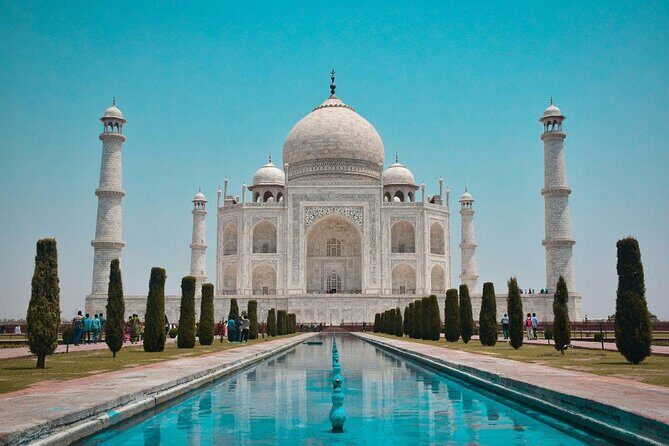
- Taj Mahal at sunrise for the best light and fewer crowds
- Old Delhi cycle rickshaw ride paired with major Mughal-era sights
- Skip-the-line ticket handling plus entrance fees if you choose that option
- Agra Fort and Itmad-ud-Daula (Baby Taj) as more than just photo stops
- Jaipur’s Jantar Mantar and City Palace in one coordinated day
- On-route Fatehpur Sikri as a smart add-on during the Agra-to-Jaipur drive
How this 3-day Golden Triangle tour actually runs
This is a private, group-only tour, meaning only your group travels together. You’ll start with pickup from your New Delhi area hotel (or the airport), ride in an air-conditioned car with chauffeur, and go sightseeing with live guides in each city. The plan is built for first-timers and for anyone short on time who still wants the headline sights.
Hotels are not included. That’s good if you already know what kind of place you want to stay in (budget, mid-range, more central, quieter). It’s also one less thing you have to book before the tour starts. Just make sure the tour has your hotel details early so pickup is smooth.
A practical note: you’ll need a passport photo copy for the travel days. And you’ll want to pack with an early start mindset—Day 2 is structured around sunrise at the Taj Mahal, so sleep plans need to match the itinerary.
A few more New Delhi tours and experiences worth a look



Delhi with a plan: Lotus Temple, Humayun’s Tomb, then Old Delhi energy
Day 1 is a strong mix of calm religious architecture, Mughal-scale monuments, and big-city landmarks—then it ends in the lanes of Old Delhi before you drive to Agra overnight.
You begin with Lotus Temple for about an hour. It’s a Bahá’í House of Worship known for its striking lotus-like design and serene feel. This stop is free (per the plan). One heads-up: Lotus Temple is closed on Mondays. If your dates fall on a Monday, you may need an alternate temple option (the plan suggests visiting Birla Temple that day).
Next comes Humayun’s Tomb, the Mughal emperor’s tomb, with a longer visit (about two hours). This is one of those places where the gardens and symmetry do half the storytelling. The admission is included here, and the guide time matters because it helps you connect what you’re seeing to the Mughal context.
Lunch is left flexible near India Gate, then you head to Gandhi Smriti (about 30 minutes). This is where Gandhi spent much of his life and where he was assassinated. It’s a quick, direct stop—worth it if you want the human story next to all the stone and marble.
Then it’s the classic New Delhi postcard circuit:
- India Gate (short stop) with the names of 13,300 Indian soldiers carved in memory of World War I
- Rashtrapati Bhavan (brief exterior/area viewing)
- Parliament House (brief photo time)
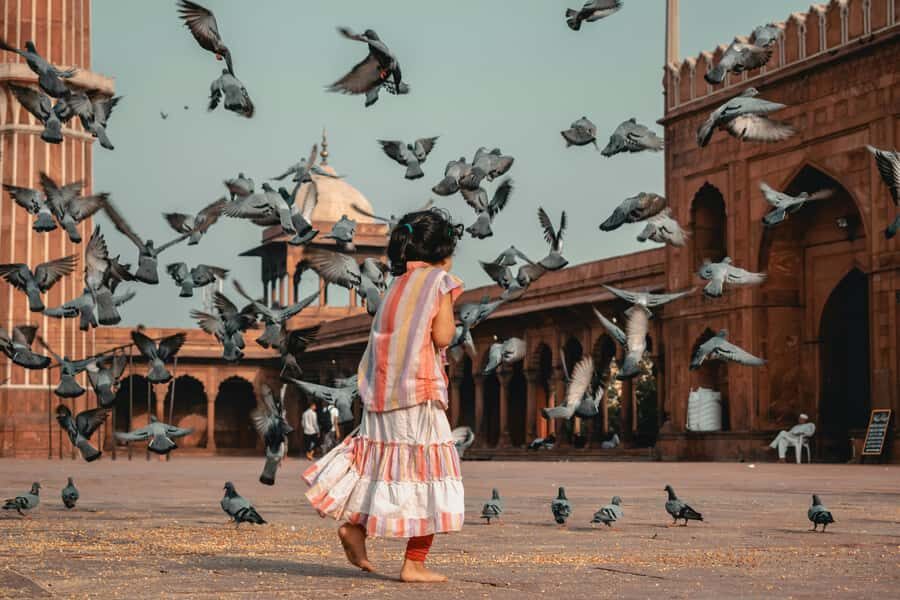
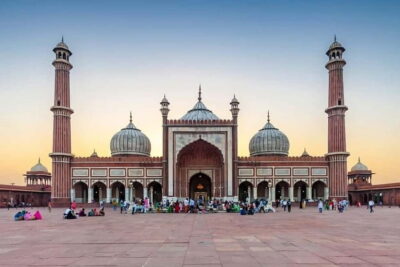
After that, the tour turns the volume up for Jama Masjid and Red Fort in Old Delhi. Jama Masjid is UNESCO-listed and among the world’s largest mosques, with about an hour on-site and admission included. Red Fort follows with another hour, built in the 1600s as part of Mughal rule and a symbol-heavy stop you’ll recognize even if you’re not a monument nerd.
There’s also a market stop at Chandni Chowk (about 30 minutes). It’s a big 17th-century market area where you can feel the city’s everyday rhythm. This is not a deep shopping tour, but it’s a good place to buy a small snack, a simple souvenir, or just soak in the energy.
One bonus that makes Day 1 feel more alive: the plan includes a cycle rickshaw ride in Old Delhi. That’s the kind of moment you remember later because it changes your speed and your viewpoint—perfect for seeing lanes and street-scale details you’d miss from a car.
By the end of Day 1, you drive to Agra for an overnight stay. The “drive day” energy is real here, so I’d treat the first night in Agra as your reset.
Taj Mahal sunrise: when light matters and how to avoid disappointment
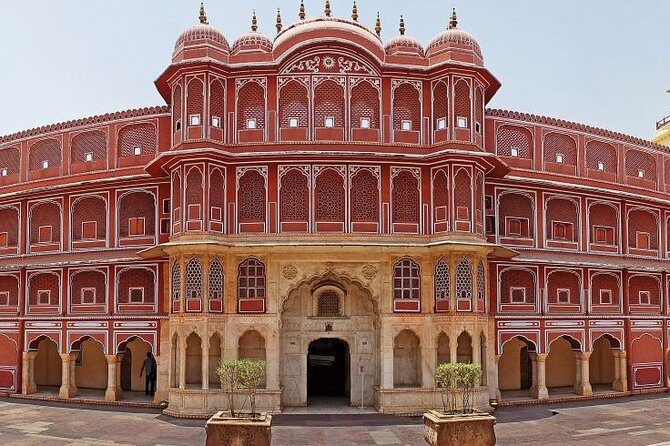
Day 2 is the reason many people book this tour: Taj Mahal at sunrise. The plan targets early morning since sunrise is when you get softer light and a better atmosphere for photos. You’ll be at the Taj long enough to do more than just snap-and-run (the itinerary lists about three hours for this stop).
Important constraint: the Taj Mahal is closed every Friday. If your trip includes a Friday, don’t assume you’ll still see it at sunrise. That closure is fixed, so plan your dates around it if Taj Mahal is the big priority.
After the Taj visit, you return for breakfast, then you check out of your Agra hotel. The afternoon flow is a classic follow-up sequence:
- Itmad-ud-Daula (Baby Taj): a “mini Taj Mahal” style complex, with admission included and about 30 minutes. The plan also notes you can choose to go inside or stick to outside photos, depending on your energy.
- Agra Fort: built in 1565 by Akbar, with about one hour and admission included.
Agra Fort is a useful add-on because it shifts the story from romance to power. The Taj is about love and legacy; the fort is about administration, defense, and Mughal control. Seeing both in one day helps you understand why Agra mattered so much.
Next comes Fatehpur Sikri, the on-route stop toward Jaipur. It’s described as a small city founded by a 16th-century Mughal emperor, with red sandstone structures and a centerpiece entrance gate area (Buland Darwaza is referenced). You get about one hour there. This is a “see the highlights” pace, not a full-day exploration, but it’s a smart time use because you’re already traveling.
The drive from Agra to Jaipur is where many tours either waste hours or use time well. Here, Fatehpur Sikri helps the travel days feel intentional.
Jaipur in a day: Amber, palaces, and Jantar Mantar’s science-meets-art vibe
Day 3 is Jaipur with a tight, well-known cluster of stops—forts, palaces, observatory architecture, and a couple of scenic water and stepwell moments. After breakfast you check out of your hotel and head out with your driver and guide.
Start with Amber Fort area in the day flow (the plan lists Amber Fort among the main stops). Amber is one of those places where the architecture looks “busy” in the best way: layered, detailed, and built for both display and defense. Even if you only spend about an hour at the fort area, you’ll come away with a clear sense of why Jaipur’s rulers invested in monumental walls and gates.
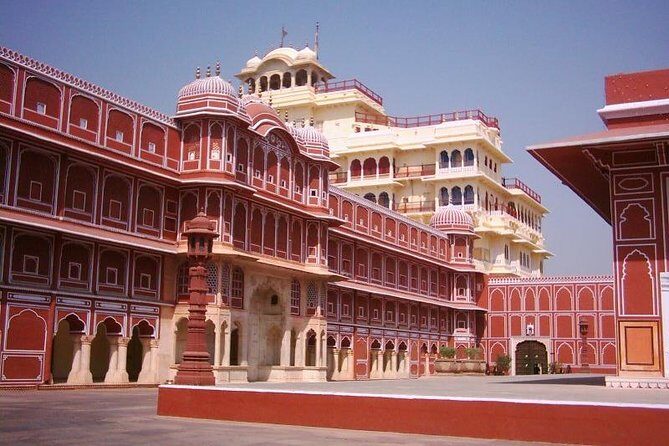
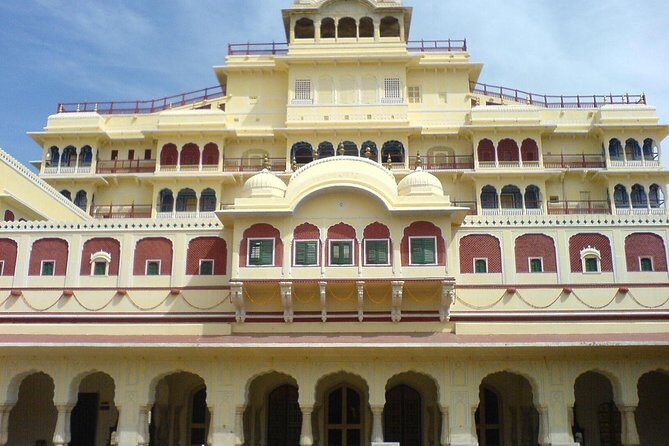
You also visit City Palace (about one hour). This is the official palace complex connected to the former royal family. It’s a good contrast to the fort: City Palace feels like governance and court life, while Amber reads more like a defensive royal stronghold.
Then comes Hawa Mahal (Palace of Breeze). This is the iconic honeycomb facade you recognize immediately. The plan also includes Jal Mahal (Water Palace) near Man Sagar Lake for about 30 minutes. Jal Mahal is worth it mostly for the setting—this is less about wandering and more about taking in the visual of a palace-like structure framed by water.
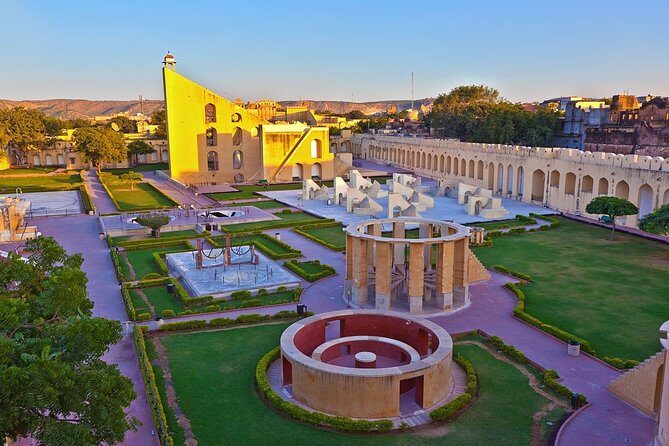
The scientific standout is Jantar Mantar, the UNESCO-listed set of astronomical instruments built by Rajput king Sawai Jai Singh. The itinerary points out the world’s largest stone sundial and gives you about an hour here. You’ll get more out of this stop if you slow down for a few minutes and watch how the instruments work with light and shadow. It’s one of those rare monument visits where you get to feel the logic behind the design.
A short time after that is Panna Meena ka Kund, a three-step stepwell near Amber Fort, tied to heritage water harvesting. Even though it’s a shorter stop, it adds a practical layer: Jaipur wasn’t only building for beauty. It was building for water and survival too.
Finally, you drive back to Delhi, dropping you at the airport, railway station, or your Delhi/Gurgaon/Noida hotel. This ending matters because it saves you from the usual last-day logistics scramble.
Price and value: what you’re really paying for
The tour price listed is $30.00 per person, but the real value depends on what you choose for entrance fees and what you budget for hotels and meals.
Here’s what the tour includes:
- Air-conditioned vehicle with chauffeur
- Live government-approved city guides
- Pickup and drop-off in New Delhi area
- All tolls, taxes, fuel, and parking
- Skip-the-line ticket handling
- Complimentary mineral water bottles
- Entrance fees if you select the option that includes monuments entrance fees
If you select the tour option without entrance fees, the plan lists monuments entrance fees as $70.00 per person. So your all-in cost can look different depending on your choice. Also, accommodation isn’t included, and meals aren’t included. That’s the biggest reason to budget beyond the tour price.
So is this good value? For the kind of itinerary you’re getting—three cities, major monuments, private vehicle, guide time, and a sunrise Taj visit—yes, it can be efficient and stress-free. Instead of piecing together tickets, timing, and transport across Delhi–Agra–Jaipur, you’re buying someone else’s logistics brain.
One caution: the itinerary is dense. If you don’t love crowds and fast transitions, you may feel the time pressure on Day 1 and Day 2. The tour gives you structure; it doesn’t slow down the pace of big-city sightseeing.





Practical tips to keep the schedule from feeling like a chore
A few small adjustments can make this tour feel smooth rather than frantic.
First, plan your days around closures. Taj Mahal closes every Friday, and Lotus Temple closes every Monday. If your dates hit either day, expect swaps or changes in how you experience those landmarks.
Second, bring the document you’re asked for: the plan specifies a passport photo copy needed for travel days. Don’t toss it in a folder at the last minute.
Third, wear shoes that can handle mixed surfaces. You’ll go from formal sites (marble courtyards, tomb complexes) to market streets like Chandni Chowk, and you’ll do it with short time blocks. Comfortable footwear pays you back fast.
Fourth, keep your expectations realistic on time at each stop. Many monuments have around an hour or less in the schedule. That’s enough for key sights and photos, but not for super slow, linger-at-each-corner travel. If you like to read every plaque, bring a bit of patience.
Finally, hydration matters. The plan includes mineral water bottles, but you’ll still want to bring a small personal refill habit—especially on travel-drive days.
Who should book this Golden Triangle, and who should think twice
This tour fits you if:
- You’re a first-timer and want the Golden Triangle highlights without negotiating transport
- You care about sunrise Taj Mahal timing
- You want private transfers and guides rather than self-guided hopping
- You like a structured itinerary with major monuments and short market flavor
Think twice if:
- You want hotels included or you’re not ready to choose your own accommodation
- You dislike early mornings (Day 2 is built around sunrise)
- You prefer fewer stops and more time per sight
It’s not a slow, meandering route. It’s a practical plan that tries to hit the biggest wins in the time you have.
Should you book this 3-day Delhi–Agra–Jaipur tour?
I’d book it if your priority is seeing core sights efficiently: Old Delhi with the rickshaw ride, Taj Mahal at sunrise, Agra Fort, and Jaipur’s palaces plus Jantar Mantar. The biggest reason to choose this specific setup is that the logistics are handled—chauffeur-driven movement, guide time, and ticket management—so you spend your limited trip hours on the places themselves.
Before you commit, do two quick checks:
- Match your travel dates against the fixed closures (Taj on Fridays, Lotus on Mondays).
- Decide whether you want the entrance-fee option included, since monuments entrance fees are otherwise listed separately.
If that lines up with your travel style and budget, this is a solid way to do the Golden Triangle without getting lost in the planning.
FAQ
Is hotel accommodation included in this tour price?
No. Accommodation/hotel stays are not included. You choose your own hotel, and the tour provides pickup and drop-off.
What’s included for transport and guides?
The tour includes an air-conditioned vehicle with chauffeur, live government-approved city guides in each city, and hotel or New Delhi airport pickup and drop-off.
Are monument entrance fees included?
It depends on the option you book. Entrance fees are included if you choose the tour with entrance fees. If you book without entrance fees, monuments entrance fees are listed as $70.00 per person.
Does the tour include meals?
Meals are not included. Breakfast, lunch, and dinner are your responsibility.
Is the Taj Mahal always available on this itinerary?
No. The Taj Mahal is closed every Friday.
Is the Lotus Temple always available on this itinerary?
No. Lotus Temple is closed every Monday (with an alternate temple suggested for that day).