REVIEW · VARANASI
Buddhist Tour From The Birth To Death
Book on Viator →Operated by Varanasi Excursion · Bookable on Viator
Buddhist sites, from water to stupa stones. This 12-day circuit links Varanasi to Lucknow with a morning Ganges boat ride and a day-by-day focus on the Buddha’s life, from sacred preaching sites to places tied to birth and final passage. I also love that you travel with an English-speaking private guide, so key details land fast instead of getting lost in translation.
One thing to plan for: the days are heavy with road time and long temple walks, and your lunch and dinner aren’t included, so you’ll want to budget and be ready to choose meals on the go.
In This Review
- Key things to know before you go
- A Buddhist circuit that starts with Varanasi ritual and ends with Lucknow monuments
- Varanasi’s temple half-day and Ganga Aarti at Dasaswamedh Ghat
- Ganges boat ride: why the river view changes how you understand the city
- Sarnath’s Deer Park: stupas, sermons, and Ashoka’s Lion Capital
- Bodhgaya’s Mahabodhi Temple area: enlightenment sights in one concentrated zone
- Rajgir: Vishwashanti Stupa, chairlift views, and the Buddha’s four-stage symbolism
- Patna Museum stop: when you need a break from temples
- Kushinagar: Parinirvana Stupa and Rambhar Stupa for the final passage
- Lumbini and Mayadevi Temple: the birth-place feeling
- Kapilvastu childhood settings: palace ruins and a quieter kind of wonder
- Sravasti and Jetavana: sermon sites, Anand Bodhi tree, and Angulimal caves
- Lucknow’s final monument day: a calmer landing after pilgrimage intensity
- Price and what you really get for $950 per person
- Transportation flow and comfort: the real trade-off is road time
- Who should book this Buddhist Birth to Death tour
- Should you book this tour?
- FAQ
- How long is the Buddhist tour from Varanasi to Lucknow?
- How much does the tour cost?
- What’s included in the price?
- Are lunch and dinner included?
- Where does the tour take place?
- Does the tour include a Ganges boat ride?
- Is pickup offered?
- What kind of tickets will I receive?
- What cancellation options are available?
- Is the guide always English-speaking?
Key things to know before you go
- Ganges morning boat ride plus evening ritual at Dasaswamedh Ghat in Varanasi
- English-speaking private guide keeps the story of the Buddha clear as you move site to site
- 11 nights with breakfast in 3-star hotels helps you start early without hunting breakfast
- Big drives between cities (Bodhgaya, Kushinagar, and Lucknow days can run long)
- Major sacred stops including Sarnath, Bodhgaya, Rajgir, Kushinagar, Lumbini, Kapilvastu, Sravasti
- A tuk-tuk ride is included, though the timing depends on the day’s sightseeing flow
A Buddhist circuit that starts with Varanasi ritual and ends with Lucknow monuments
If you want your Buddhism pilgrimage to feel like a journey, not a checklist, this route works. You begin in Varanasi, a city where belief shows up in daily life, then you move through the major pilgrimage centers tied to sermons, enlightenment, and the Buddha’s final days. The trip is called Birth To Death, and even though the path isn’t perfectly chronological, you still get the emotional arc: beginnings, teachings, and the closing chapter.
You’ll also travel with structure. A private vehicle, an English-speaking guide, and pre-planned site stops mean less guesswork and more time looking closely at what’s in front of you. And the day pacing is built around meaningful blocks: temple/ritual time, stupa and relic-site time, then travel.
You can also read our reviews of more tours and experiences in Varanasi.
Varanasi’s temple half-day and Ganga Aarti at Dasaswamedh Ghat
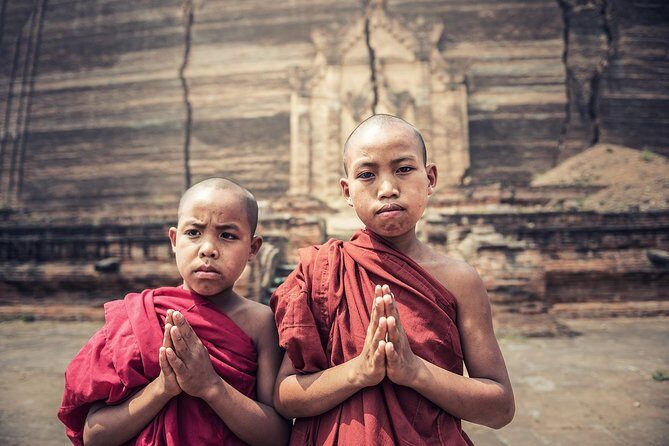
Your first day is a strong entry point. After arriving in Varanasi and transferring to your hotel, you head out for a half-day temple tour. You’ll visit places like Bharat Mata (Mother India) Mandir, Durga, Tulsi Manas, Sankat Mochan Temple, and the new Vishwanath Temple.
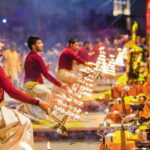
Then comes the part that many people remember most: Ganga Aarti at Dasaswamedh Ghat. This is one of those scenes where you don’t need to overthink it. You watch the ritual, you notice the rhythm, and you feel how the river fits into worship here. It’s also a practical advantage for new arrivals: you’re busy, but you’re not rushing through too many sites in one day.
A small note for your planning: Varanasi can feel intense. If you’re sensitive to crowds or sensory overload, give yourself a breather after the Aarti before dinner plans and sleep.
Ganges boat ride: why the river view changes how you understand the city
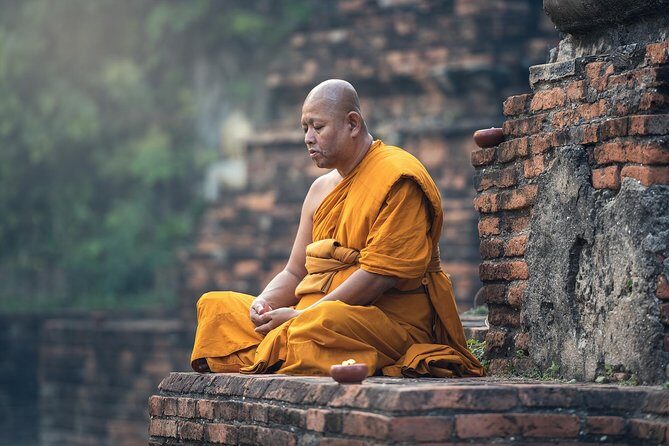
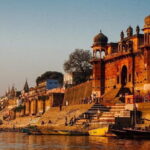
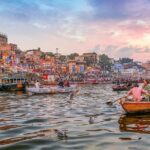
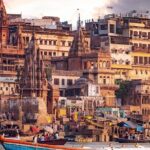
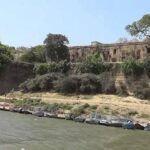
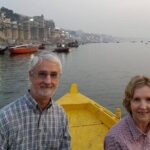
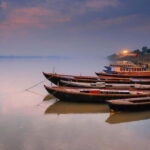
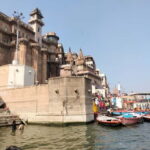
The tour includes a boat ride on the Ganges, and it’s a smart choice. On foot, Varanasi is all narrow lanes and busy ghats. From the water, you get a different scale—how the river links neighborhoods, how the ghats line up, and how long the city’s waterfront story really is.
This matters for the pilgrimage theme. A lot of Buddhist travel is about sacred ground. Here, the river becomes part of the experience too. Even if your focus is the Buddha, you’re also learning why places like Varanasi sit at the crossroads of faith, daily ritual, and history.
Sarnath’s Deer Park: stupas, sermons, and Ashoka’s Lion Capital
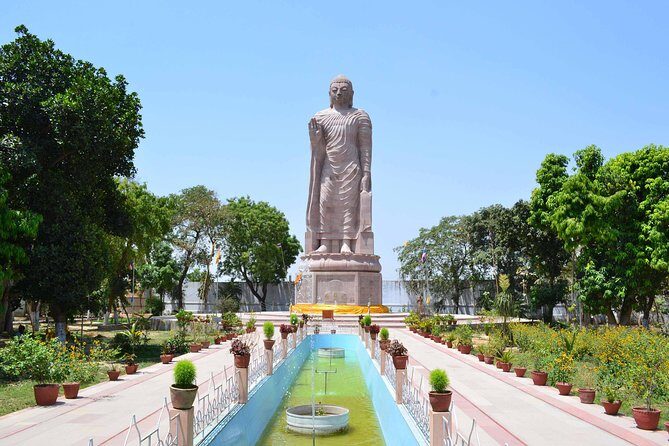
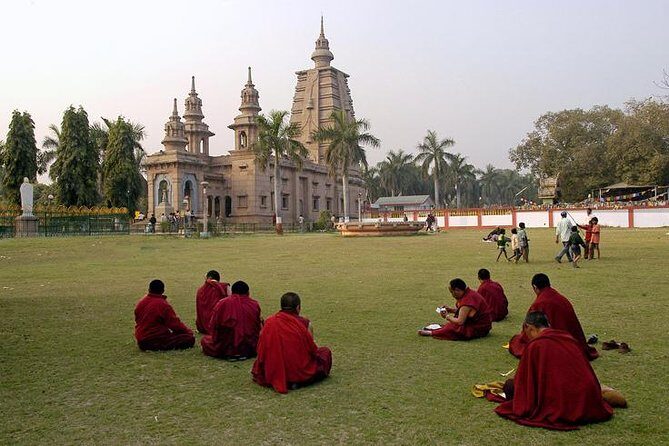
Day 2 takes you to Sarnath, about 10 km from Varanasi. This is where the Buddha is tied to his first sermon in the Deer Park. The site is arranged so you can walk from one sacred landmark to the next without feeling like you’re trapped in a single monument.
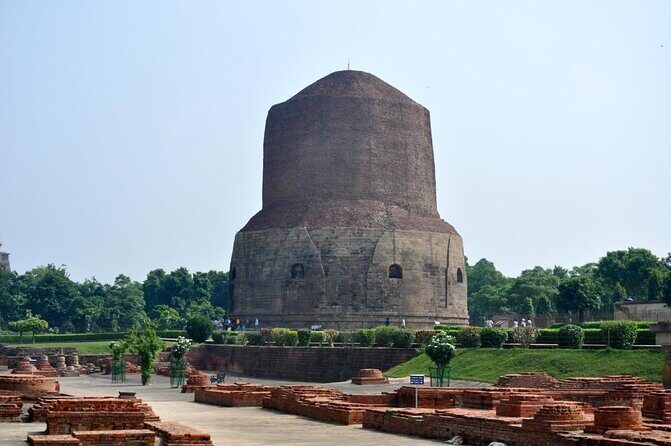
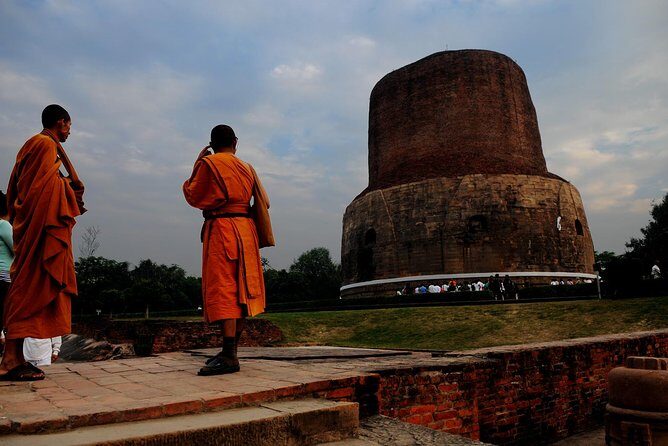
You’ll see the Dharmarajika, Chaukhandi, and Dhamek stupas, plus remains of a monastery. There’s also the polished Lion Capital of Ashoka, which gives you a satisfying “this was supported by real power” feeling. It’s not just religious symbolism; it connects to an emperor-era story.
A practical tip: wear comfortable shoes. Sarnath rewards a slow walk, but it’s not set up as a gentle stroll for everyone.
Bodhgaya’s Mahabodhi Temple area: enlightenment sights in one concentrated zone
Bodhgaya is the big spiritual magnet on this route. After a drive of about 247 km (around 6–7 hours), you check in and keep the rest of the day flexible. You can attend evening prayer at Mahabodhi Temple, which is a nice way to transition from travel mode into pilgrimage mode.
Day 4 then turns into a walking and exploring day around the Bodhgaya complex. You’ll visit the Maha Bodhi Temple and Bodhi Tree, plus the Great Buddha Statue. You’ll also see places tied to the story nearby, including Niranjana River and Sujata Temple, and you can visit the Chinese Temple.
One more detail that I think makes this day feel human: you’re also shown the school of the destitute. It’s not just about old stones. It reminds you that faith here exists alongside daily lives and community support.
Rajgir: Vishwashanti Stupa, chairlift views, and the Buddha’s four-stage symbolism
From Bodhgaya you go to Rajgir, about 70 km by road. Rajgir is a pilgrimage area for more than one tradition, and that cross-current can make the day feel more layered.
You’ll visit the Vishwashanti Stupa on Ratnagiri Hill, which you can access by chairlift. That chairlift isn’t a gimmick; it saves time and gives you a clearer view of the hills and surrounding shrines. The stupa has statues of Buddha at the four stages of his life: birth, enlightenment, teaching, and death.
You’ll also hear about Griddhakuta on Ratnagiri Hill, another spot where the Buddha is said to have preached. If you like sites where legend is tied to specific terrain, Rajgir will make you slow down.
Patna Museum stop: when you need a break from temples
After Rajgir, you head to Patna (about 80 km). This part of the trip adds a useful balance: museums and ruins give your feet a rest from nonstop temple climbing.
You’ll do a local sightseeing tour that includes Golghar, the Gandhi Museum, Patna Museum, Har Mandir Takht, and options like Qila House or Jalan Museum. The description also calls out rare relics such as Napolean’s bed and Marie Antoinette’s porcelain. Whether you’re a museum person or not, this is a chance to see how the region’s story and its global connections show up in artifacts.
You’ll also visit the ruins of Pataliputra. It’s a reminder that the Buddha’s time wasn’t isolated; it sat inside big political and cultural shifts.
Kushinagar: Parinirvana Stupa and Rambhar Stupa for the final passage
Kushinagar is one of the most emotionally heavy stops on the circuit. You drive about 256 km (around 7 hours), and en route you stop at Vaishali, described as the place where the Buddha announced the approach of Mahaparinirvana.
Then you continue on to Kushinagar, where you visit Mahaparinirvana Temple in the afternoon and also Rambhar Stupa, described as the cremation site of the Buddha. This is the “end chapter” side of the Birth To Death theme, even if the earlier parts weren’t strictly chronological.
For me, the value here is pacing. You’re not just racing to check off a name. You get a day that feels designed for quiet attention.
Lumbini and Mayadevi Temple: the birth-place feeling
Next comes Lumbini, the birth place of the Buddha. You drive about 180 km (around 5 hours) and then settle in before your afternoon visit to the Mayadevi Temple.
This is a site where atmosphere matters. The description emphasizes serenity and natural beauty as part of why it fits the legend. That matters for your expectations. If you go hoping for one dramatic main building, you might miss the point. If you go expecting a calmer, story-soaked setting, you’ll likely feel more connected.
Kapilvastu childhood settings: palace ruins and a quieter kind of wonder
Day 9 moves you to Kapilvastu, described as the childhood home of Gautam Buddha. You’ll visit the Kapilvastu Palace Temple area and also the ruins of the palaces.
This stop can feel different from the bigger “anchor” sites. Instead of one famous complex, you’re dealing more with remnants and the shape of where life unfolded. It’s a good fit if you like imagining the Buddha’s world as lived space, not just monumental stone.
Sravasti and Jetavana: sermon sites, Anand Bodhi tree, and Angulimal caves
Sravasti is where the tour leans into teaching and miracle stories. You’re told that the Buddha preached many sermons here and performed miracles, including levitation. During the monsoon, he is said to have stayed at Jetavana monastery.
You’ll visit several related places: the Anand Bodhi tree, ruins of the Jetavana monastery, and age-old stupas. You’ll also visit Sahet Mahet and Angulimal caves.
Two practical thoughts:
First, bring patience. These ruins and cave-like areas can take time to appreciate, because you’ll often be looking at what’s left rather than what’s been fully rebuilt.
Second, don’t rush photographs. If you use your camera, pause and look up at the space too. Caves and monasteries change how sound travels, and that can affect how you feel while you stand there.
Lucknow’s final monument day: a calmer landing after pilgrimage intensity
After Sravasti, you drive about 190 km (roughly 5.5 hours) to Lucknow. This is your transition day, and it’s a smart place to slow down before the trip ends.
On the last full sightseeing morning, you cover monuments like Imambara and Rumi Darwaza, plus other historical sites. In the evening you transfer to the airport for departure.
For many people, this stop works as a breather. You’re still in historic India, but you’re not constantly in the heaviest sacred sites. It’s a gentle landing into regular travel rhythm.
Price and what you really get for $950 per person
At $950 per person for 12 days, the value depends on how you like to travel. You’re not just buying a list of sites. You’re buying planning, transport, and a guide for most of the trip, plus 11 nights with breakfast in 3-star hotels.
Here’s what that means for you:
- You save time figuring out routes between far-apart cities like Bodhgaya, Kushinagar, and Lucknow.
- You get an English-speaking guide for 12 days, which helps a lot when sites can be confusing without context.
- You get a private air-conditioned vehicle, which is a big quality-of-life boost in India.
What to watch: lunch and dinner aren’t included. That’s not a dealbreaker, but it does affect daily budgeting. Also, the hotels are 3-star, so if you’re expecting luxury, adjust your expectations and focus on cleanliness, sleep, and location convenience rather than extra amenities.
On the plus side, pickup is offered, and you’ll have a mobile ticket. That makes last-mile logistics smoother.
Transportation flow and comfort: the real trade-off is road time
A tour like this is built on movement. Distances between key sites are significant, and the schedule includes multiple long road days. If you’re prone to travel fatigue, consider packing light and using the car time intentionally: water, snacks (if allowed), and quick breaks when your guide suggests them.
Also, this is a private tour/activity, meaning only your group participates. That can improve comfort and flexibility, especially when everyone wants to move at a similar pace.
One more practical detail from the service experience: the smoothness of the driving and coordination matters a lot on tours like this. In the feedback I saw, a driver named Bablu and an operator named Aamir were praised for making things run smoothly and keeping people comfortable with timing and decisions. You can use that as a signal: the operator’s value here isn’t just sightseeing; it’s the “make the day work” part.
Who should book this Buddhist Birth to Death tour
This tour is a great fit if you:
- Want Buddhism pilgrimage sites linked by an English-speaking private guide
- Like early-morning and ritual experiences, especially in Varanasi
- Prefer organized travel across major pilgrimage cities rather than independent planning
- Are okay with long drives and a structured schedule
You might choose something else if you:
- Want lots of free time and minimal travel days
- Need full meals included every day
- Are sensitive to crowds at highly visited sacred sites
Should you book this tour?
If your goal is a guided Buddhist pilgrimage circuit from Varanasi toward Lucknow with standout moments like the Ganges boat ride, Sarnath’s stupas, Bodhgaya’s Mahabodhi area, and the end-chapter feeling of Kushinagar, then this is a strong match. The included breakfasts, private vehicle, and guide make it easier to focus on the spiritual story instead of the logistics.
My advice: budget for lunch and dinner, wear shoes that can handle temple walking, and expect travel days to be real. If you’re good with that, you’ll come away with a coherent trail of sites tied to preaching, enlightenment, birth, teaching, and final passage—plus a sense of how Buddhism lives on in daily ritual, not just museum cases and ruins.
FAQ
How long is the Buddhist tour from Varanasi to Lucknow?
It lasts about 12 days.
How much does the tour cost?
The price is $950.00 per person.
What’s included in the price?
Transport by private air-conditioned vehicle, an English-speaking private guide for 12 days, 11 nights in 3-star hotels with breakfast, a boat ride at Varanasi, and a tuk-tuk ride. Breakfast is included for 12 breakfasts.
Are lunch and dinner included?
No. Lunch and dinner are not included.
Where does the tour take place?
It covers sites in Varanasi and additional Buddhist pilgrimage areas up to Lucknow, including stops tied to Sarnath, Bodhgaya, Rajgir, Patna, Kushinagar, Lumbini, Kapilvastu, and Sravasti.
Does the tour include a Ganges boat ride?
Yes. A boat ride at Varanasi is included.
Is pickup offered?
Yes, pickup is offered.
What kind of tickets will I receive?
A mobile ticket is included.
What cancellation options are available?
Free cancellation is available if you cancel at least 24 hours in advance for a full refund.
Is the guide always English-speaking?
The tour includes an English-speaking private guide for 12 days. It also notes it may be operated by a multi-lingual guide.