REVIEW · BANGALORE
Anglo Mysore heritage walk in Bangalore
Book on Viator →Operated by 5 Senses Walks · Bookable on Viator
Bangalore history feels walkable here. This Anglo-Mysore heritage walk strings together the city’s biggest landmarks with real architectural variety, from Cubbon Park to Attara Kacheri, so you see how power, culture, and design changed over time. I love that it’s built for people with limited time, yet still feels like a proper city walk through tree-lined streets and classic civic buildings.
I also like the mix of places that actually teach you something: the Central State Library (with more than 250,000 books) and the Government Museum’s collection that reaches back into ancient India, including Indus Valley material and the Halmidi script. One thing to consider: it’s about four hours on foot with a moderate fitness level, so you’ll want comfortable shoes and an easy pace.
If you enjoy museums, libraries, and architecture more than shopping and crowds, this is a strong fit. The group stays small (up to 15), which usually helps your guide keep things moving without turning it into a race.
In This Review
- Key things I’d bookmark before you go
- How Anglo-Mysore shows up in Bangalore (and why this tour works)
- Cubbon Park: your opening act of trees, monuments, and civic Bangalore
- What you should watch for at Cubbon Park
- Attara Kacheri and the Central State Library: Gothic courts and bookish power
- A practical consideration
- Government Museum (1877): Indus Valley artifacts, Tipu’s fort model, and the Halmidi script
- Why this stop adds value to your day
- Venkatappa Gallery: a modernist island with a lotus moat
- Consideration
- Sir M. Vishveshwariah Technology Museum: live demos and inventions you can picture
- Price and what you’re actually getting for about $43
- Who this walking tour suits best
- Tips to make the most of the 4-hour route
- Should you book the Anglo-Mysore heritage walk in Bangalore?
- FAQ
- How long is the Anglo-Mysore heritage walk?
- Where does the tour start and end?
- Is hotel pickup available?
- Are entrance fees included?
- Do I receive a mobile ticket?
- What’s the group size limit?
- Is the tour suitable for people with limited mobility?
Key things I’d bookmark before you go
- A true walking format for getting your bearings in Bangalore in about four hours
- Attara Kacheri (built 1867): Gothic design tied to Tipu Sultan’s administrative past
- Central State Library: over 250,000 books, plus a local belief about statewide publishing history since 1970
- Government Museum: artifacts from early Indian civilizations and the Halmidi Kannada script
- Venkatappa Gallery: a modernist building designed like an island with a moat and lotus pond
- Vishveshwariah Technology Museum: hands-on explanations from zippers to jet engines, with a Wright brothers Flyer replica
How Anglo-Mysore shows up in Bangalore (and why this tour works)
This walk focuses on Bangalore’s Anglo-Mysore influence, but it doesn’t treat it like a dry timeline. Instead, it uses the city itself—parks, courthouses, museums, and galleries—to show you how British-era administration and Mysore’s cultural legacy overlapped and evolved.
For me, the best part is how the tour’s flow mirrors that story. You start in Cubbon Park, a green lung where civic buildings and monuments sit side by side. Then you move into architecture that feels distinctly formal and Western, like the Gothic-style Attara Kacheri. After that, you jump into culture and science through the Government Museum, Venkatappa Gallery, and the Vishveshwariah Technology Museum.
This setup is ideal if you’re the type of person who likes to understand why a building looks the way it does, or why a museum collection is arranged the way it is. If you’re hoping for entertainment-style sightseeing only, you might find the educational angle a bit heavy—but if you like learning, you’ll probably feel right at home.
You can also read our reviews of more walking tours in Bangalore


Cubbon Park: your opening act of trees, monuments, and civic Bangalore
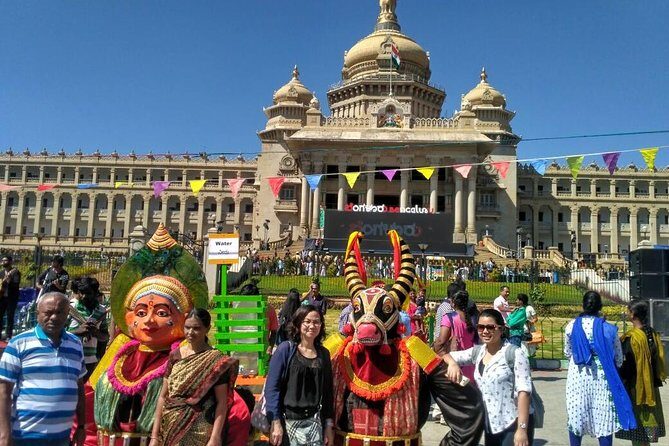
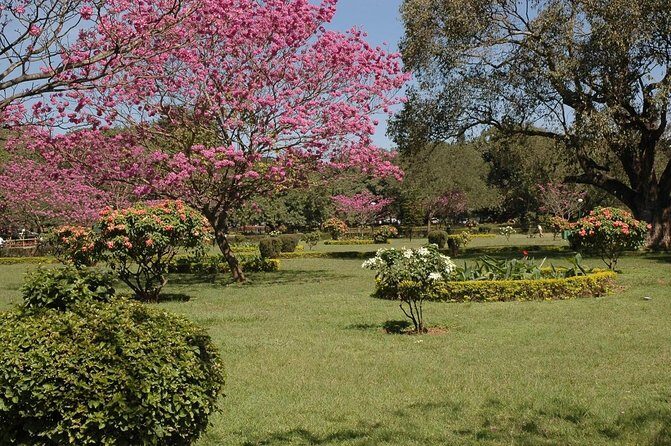
The tour begins at Cubbon Park, Bangalore’s large central green space. Right away, it gives you an anchor point that’s easy to find and a good place to start your orientation. The park also does something clever: it keeps the walking enjoyable. Even when the route passes big landmarks, the tree-lined setting makes the whole experience feel less rushed.
You’ll walk past statues of towering personalities and impressive buildings, but the point isn’t just photo stops. Cubbon Park works like a living “front porch” to Bangalore’s heritage—where modern-day civic life and older political history still sit close together.
If you’re choosing this tour because you want to feel the city quickly, this first section is a big reason why. It turns a quick morning or afternoon into something more grounded than hopping from point to point in a car.
What you should watch for at Cubbon Park
- How the park frames civic architecture (buildings feel closer and more “belonging” to the landscape)
- The shift from nature to administration as the tour heads toward historic institutions
- The guide’s linking of places to Anglo-Mysore influence, so the stops feel connected rather than random
Attara Kacheri and the Central State Library: Gothic courts and bookish power
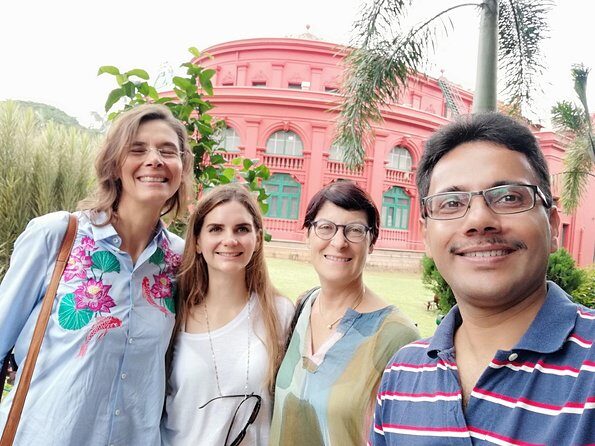
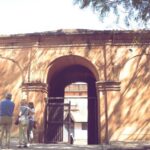
One of the standout moments is Attara Kacheri, a High Court building with Gothic-style design. It dates back to 1867, and it was commissioned by Tipu Sultan to house offices for 18 departments of revenue and general secretariat. Today, it continues in public service as the High Court for Karnataka.
That continuity matters. You’re not only seeing architecture from a certain era—you’re seeing a building whose role evolved while its status stayed civic and important.
From there, you head to the Central State Library, located within the Cubbon Park area. This is the kind of stop that makes the tour special if you like libraries and ideas. Built in memory of Diwan Sir Seshadri Iyer, Diwan of Mysore, it now holds more than 250,000 books. There’s also a local belief that the library has a copy of every book published in the state since 1970.
Even if you don’t plan to read a single page, this is a powerful experience because it changes what you expect from a heritage walk. Most tours focus on buildings as symbols. This one adds the idea that cultural power also lives in collections—organized knowledge, catalogued memory, and public access to books.
A practical consideration
If you’re short on patience for indoor reading spaces, spend a few minutes scanning the library environment and focus on what your guide points out. The value here is the story and the scale, not a long quiet session.
You can also read our reviews of more historical tours in Bangalore





Government Museum (1877): Indus Valley artifacts, Tipu’s fort model, and the Halmidi script
Next up is the Government Museum, housed in a magnificent structure built in 1877. The building was designed by Col. Richard Hieram Sankey, the Chief Engineer of Mysore State. That detail helps you understand that this museum isn’t just a collection container—it’s also part of the architectural statement of the time.
Inside, the museum’s collection reaches across early Indian civilizations. You’ll see ancient artifacts connected to the Indus Valley, and you’ll also find a model of Srirangapatna fort of Tipu Sultan. If you like history that shows up in concrete objects and scale models, that fort model is a nice bridge between “big names” and something tangible.
One stop within the museum experience that will stick with many visitors is Halmidi, described as the oldest Kannada script. Even without getting lost in scholarly detail, it’s an eye-opener because it roots the region’s cultural identity in language and writing—not only in monuments.
Why this stop adds value to your day
This is a heritage walk that doesn’t only talk about colonial and princely power. It connects that story to cultural depth: artifacts, scripts, and how societies preserved and communicated knowledge.
One drawback to keep in mind: museums take attention. If you’re expecting everything to be super hands-on at every moment, the museum side is more observational than interactive.
Venkatappa Gallery: a modernist island with a lotus moat
After the Government Museum, the tour moves to the Venkatappa Gallery. This space is different in mood and design. The modernist building was built in 1975 and is designed like an artificial island surrounded by a moat and a lotus pond.
That design choice isn’t just pretty. It changes how you experience the gallery. Instead of feeling like you’re inside a box, you feel like the building sits apart, like a destination you approach deliberately.
Inside, you’ll find paintings and other art objects collected by Karnataka’s greatest artist Venkatappa, who was a court painter of the Mysore Kings. So now the tour shifts from artifacts and ancient civilization to the visual language of regional kingship and court culture.
If you’re the kind of visitor who likes art history tied to real people and political context, this stop rewards you. Venkatappa’s connection to the Mysore court gives the gallery a clearer purpose than an art museum that feels purely decorative.
Consideration
If you’re not particularly drawn to paintings and display collections, this can still be enjoyable for the architecture alone. Just don’t expect it to be as interactive as the tech museum later in the day.
Sir M. Vishveshwariah Technology Museum: live demos and inventions you can picture
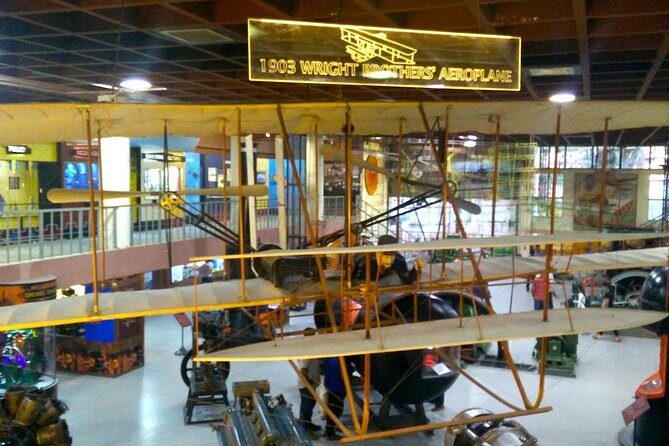
The last major stop is Vishveshwaraiah Park and the Vishveshwariah Technology Museum, a place that feels made for curious minds. The museum covers the history behind major technological inventions—from a zipper all the way to jet engines—with explanations described as simple and clear.
What really changes the experience is that many exhibits include live demonstrations. So instead of only reading about how something works, you often get a chance to see a concept in action. That’s a big reason this end of the tour tends to land well with both adults and kids, even though the walk itself is mostly heritage-focused.
One notable exhibit is a replica of the Flyer, the first airplane flown by the Wright brothers in 1903 near Kitty Hawk, North Carolina. It’s noted that the brothers flew it four times on December 17, 1903. The explanation also includes a detail that helps you visualize the early flight setup: to reduce drag, the pilot flew lying on his stomach on the lower wing with his head toward the front.
This ending stop makes the whole day feel more balanced. You started with administration and architecture, moved through culture and scripts, and then finished with engineering and experiments. That arc gives your brain something to connect: societies may fight and rule, but they also build, invent, and teach.
Price and what you’re actually getting for about $43
At $43 per person for roughly 4 hours, this tour is positioned as a value option if you want multiple major sites without planning each one yourself. Entrance fees are included, and the tour also includes all taxes and handling charges.
That matters because museum-style sites can add up quickly when you’re paying at the door. Here, you’re buying a guided route that strings together Cubbon Park landmarks plus three major institutions—Government Museum, Venkatappa Gallery, and the technology museum.
It’s also small-group friendly, with a maximum of 15 travelers. In practical terms, that usually means fewer bottlenecks when you’re entering buildings or waiting for explanations. If you hate slow-moving tours where you can barely hear the guide, that small size is a real benefit.
One more value point: there’s mobile ticket support, and you get a group discount (not a guarantee of a lower price for everyone, but it signals they’re designed for group value).
If you’re doing Bangalore for the first time and you have limited time, this tour is a tidy way to cover a lot of ground while still feeling like a coherent theme.
Who this walking tour suits best
This is a good fit if you fall into one of these categories:
- You like museums, libraries, and learning over quick sightseeing
- You want a walking experience so Bangalore’s neighborhoods and civic buildings feel real
- You appreciate architecture—Gothic courts, 19th-century museum buildings, and modernist gallery design
- You’re curious about how Tipu Sultan’s era and British-era administration shaped institutions still in use
It might not be ideal if you want an all-action tour with frequent breaks, or if you struggle with steady walking for about four hours. The tour is described as needing moderate physical fitness, which is fair warning that you shouldn’t plan on a long, slow shuffle without considering your stamina.
Tips to make the most of the 4-hour route
You’ll get the best experience if you treat this like a guided lecture you can walk through.
- Wear comfortable shoes. You’ll be on foot for several linked stops, including park walking.
- Go in curious, not checklist-only. The value is in the connections your guide makes between institutions and eras.
- Take a breather mid-day inside museums. If the pace feels brisk, use the indoor spaces to reset rather than forcing yourself to keep moving at the same tempo.
- Use your eyes on buildings. The Gothic-style courthouse, the modernist gallery island design, and the 19th-century museum building are all part of the story.
If you want the best balance, aim to enjoy each place for what it offers: the library and script material for culture, the museums for artifacts, and the technology museum for hands-on explanations.
Should you book the Anglo-Mysore heritage walk in Bangalore?
I’d recommend it if you want a smart first-pass introduction to Bangalore’s Anglo-Mysore influence without building a complicated itinerary. The route hits major landmarks in a tight time window, and the museum and library emphasis makes it feel genuinely educational—not just scenic.
Book it when:
- You want a 4-hour walking tour that covers multiple civic and cultural sites
- You enjoy history plus architecture, especially with stories tied to specific buildings like Attara Kacheri
- You like a finish that’s practical and fun, like the Vishveshwariah Technology Museum with live demonstrations
Skip it if:
- You want mostly outdoor sights with minimal indoor time
- You don’t enjoy museums and would rather spend your day on markets or nightlife instead
If your schedule allows, this is a high-utility tour: you get bearings in the city, a solid cultural education, and a couple of really distinct building styles all in one day.
FAQ
How long is the Anglo-Mysore heritage walk?
It lasts about 4 hours.
Where does the tour start and end?
It starts at Cubbon Park, Shivaji Nagar, Bengaluru, and ends at the Government Museum, Venkatappa Art Gallery Building on Kasturba Rd, in the Sampangi Rama Nagar area.
Is hotel pickup available?
Pickup and drop-off from Bangalore hotels are available if you select that option.
Are entrance fees included?
Yes. Admission tickets for the stops are included.
Do I receive a mobile ticket?
Yes, the tour uses a mobile ticket.
What’s the group size limit?
The tour has a maximum of 15 travelers.
Is the tour suitable for people with limited mobility?
The tour notes that travelers should have a moderate physical fitness level, so it involves walking that may not suit everyone.