REVIEW · NEW DELHI
7 Days Golden Triangle India Tour
Book on Viator →Operated by Alkof Holidays · Bookable on Viator
Delhi in a week is a lot. In this Golden Triangle trip you get the big-name sights plus enough context to make them make sense fast. I like that it runs start-to-finish from New Delhi, with an organized flow from Old Delhi to Mughal Agra to Jaipur’s forts and palaces.
Two things I really like: first, you get English-speaking local guides and an air-conditioned vehicle for the transfers, so you spend less time figuring things out and more time seeing. Second, the timing on the Taj Mahal day is built around an early visit (and the added Mehtab Bagh stop helps you see the site from another angle). One possible drawback to note up front: several major monuments have entrance fees not included, so your total cost can creep up once you add tickets and any camera fees.
From what I’ve seen in the way this tour operates, the handoff at the airport and the on-the-ground organization are the strengths. Alkof Holidays reps are named in feedback as responsive (Sachin comes up as a point person), and that matters when plans change or you need clarity quickly. Still, you’ll want to plan for long sightseeing days, since the stops pack a lot into each city.
In This Review
- Key highlights worth paying attention to
- Price and value: what $450 really buys
- Day 1 in New Delhi: welcome pick-up and your first taste of Old Delhi
- Delhi Day 2: Gandhi’s memorial, Mughal mega-mosques, and the Qutb Minar zone
- Transit Day 3: Agra’s Mughal “jewel box” stops
- Day 4: Taj Mahal before sunrise (and why that schedule matters)
- Fatehpur Sikri: the abandoned city that still feels lived-in
- Day 5 in Jaipur: City Palace, Hawa Mahal, Jantar Mantar, and Amer
- Day 6: back to Delhi for a calmer finish
- Day 7: departure day with an airport transfer
- What’s included (and what that means for how your days feel)
- What’s not included (so you can budget without guessing)
- Special dates to watch: gala dinner costs around late December/early January
- Who this tour suits best
- Should you book this Golden Triangle tour?
- FAQ
- Where does this tour start?
- Is airport pickup and transfer included?
- What’s included in the tour price?
- Are monument entrance fees included?
- How long is the tour?
- Which meals are included?
- Is the Taj Mahal always open?
- Is this a group tour or private?
- Is there a special charge during late December and early January?
- Can I cancel for a full refund?
Key highlights worth paying attention to
- Airport pickup and hotel transfers: you’re not left hunting for transport on arrival or between cities.
- Early Taj Mahal visit plus Mehtab Bagh: timing helps you beat the worst crowds and harsh light.
- UNESCO stops across three cities: Delhi’s heritage sites, Agra’s Mughal landmarks, and Jaipur’s astronomical and fort architecture.
- Most monument tickets are not included: build a rough budget for entrances as you go.
- Private group format: it’s your group doing the tour, not a mixed crowd shuffle.
- Mobile ticketing: easier day-to-day coordination once you’re on the ground.
Price and value: what $450 really buys
At $450 per person for a 7-day, three-city “triangle” route, the value is mostly in what’s already lined up: 6 nights of accommodation, all transfers, guided sightseeing, and 6 hotel breakfasts. For many travelers, the “hidden cost” on India trips is time—time spent figuring out transport and ticket logistics. This tour aims to trade your time for structure.
What’s not included is equally important. Monument entrance fees (and any camera fees) are not part of the package, and Taj Mahal is explicitly noted as closed on Fridays. In practice, that means you should budget extra and keep your schedule flexible around closures.
If you’re traveling as a couple or small group, the private format can feel like good leverage: you get a full itinerary without turning your day into a shared scramble with strangers.
A few more New Delhi tours and experiences worth a look


Day 1 in New Delhi: welcome pick-up and your first taste of Old Delhi
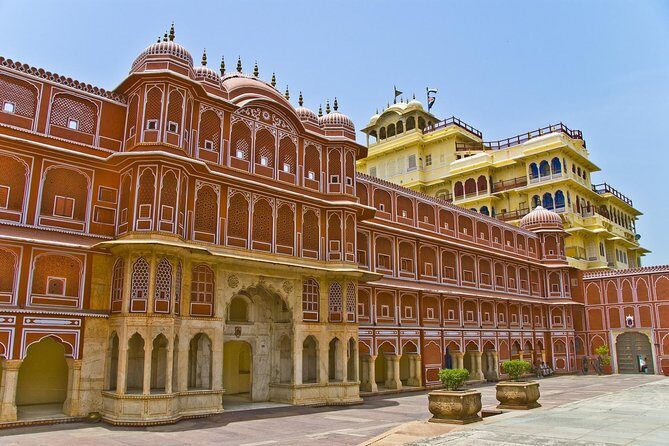
Your trip starts at Indira Gandhi International Airport with an Alkof Holidays representative meeting you and transferring you to the hotel. That sounds basic, but it’s the kind of relief you feel immediately when you land tired and jet-lagged.
Day 1 is mostly a chill landing day. Once you’ve settled in, you get the “let the city breathe” approach—no marathon schedule on arrival day, just leisure and an overnight stay.
On later Delhi days you’ll see the real intensity, but starting with rest helps. Delhi is big, and moving too fast on Day 1 can turn sightseeing into stress.
Delhi Day 2: Gandhi’s memorial, Mughal mega-mosques, and the Qutb Minar zone
Delhi Day 2 is built like a guided highlights circuit across time periods. You’ll start with the calmer, reflective spots, then shift into Old Delhi’s energy.
- Raj Ghat is a simple memorial tied to Mahatma Gandhi. It’s free and takes about 30 minutes, but it sets a tone for the rest of the day. You’re not just “looking at buildings”—you’re landing on the idea of modern India right away.
- Jama Masjid follows. It’s free, built by Mughal Emperor Shah Jahan between 1644 and 1656, and it’s one of the largest mosques in India. Expect big scale and strong atmosphere.
- Chandni Chowk is where your senses get busy. This area is famous for spice and dried fruit shops, jewelry, saris, and lots of smaller side-street stalls. It’s free entry, but plan to move slowly and watch your footing in the narrow lanes.
Then you swing back to “government-and-ceremony” landmarks:
- Rashtrapati Bhavan at the end of Rajpath is the presidential home. You’ll get a short look, around 30 minutes.
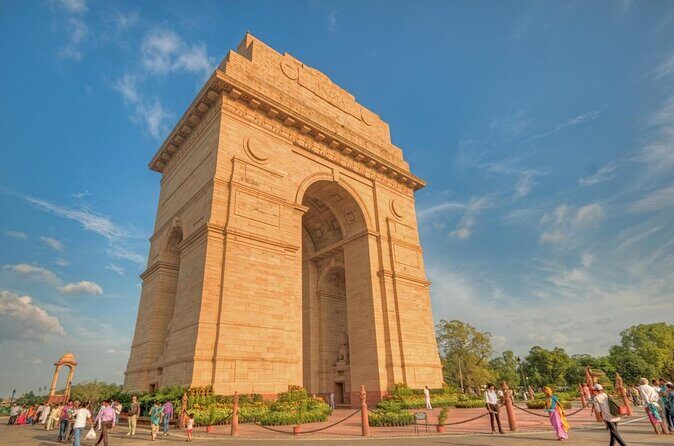
- India Gate is next, a war memorial along the same ceremonial axis.
You’ll also cover Qutub Minar in the Qutb complex. It’s around a UNESCO World Heritage Site and takes about 2 hours, but the admission fee is not included. The big practical point here: build in time and money for these ticketed UNESCO stops if you’re budgeting tightly.
A note on optional-feeling additions: the plan also includes Lotus Temple (open to all regardless of religion) and Humayun’s Tomb (both with tickets not included). These are the kind of stops that make Delhi feel less like a checklist and more like a story.
Transit Day 3: Agra’s Mughal “jewel box” stops
By the time you reach Agra, the vibe shifts. You’re moving from Delhi’s layered religious and political landmarks into the Mughal love affair with stone, symmetry, and gardens.
Two stops anchor your time:
- I’timād-ud-Daulah, often called the “Baby Taj.” It’s about 2 hours and described as a draft of the Taj Mahal. Admission is not included, so you’ll likely pay extra if you want to go inside.
- Agra Fort takes about 2 hours. It was the main Mughal residence until the capital moved to Delhi. Admission is not included here as well.
Agra Fort can feel heavy and grand. It’s worth it if you enjoy forts and you like seeing how power worked through architecture.
Day 4: Taj Mahal before sunrise (and why that schedule matters)
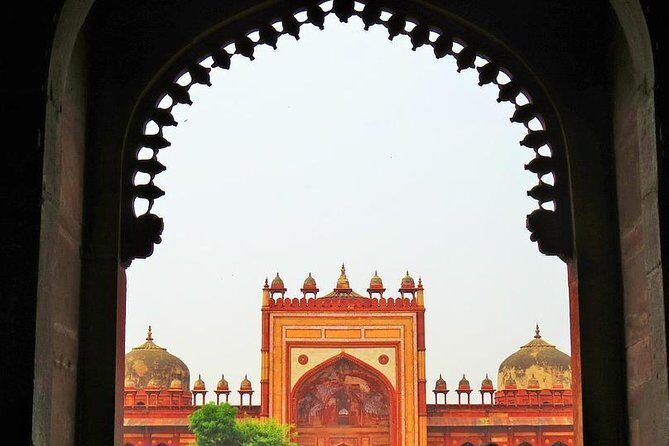
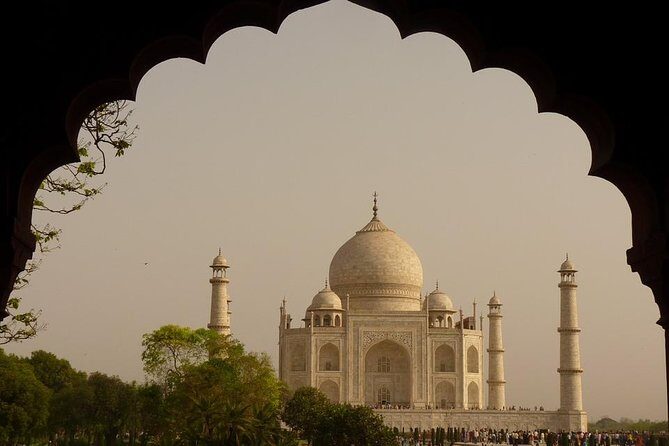
This is the star day. You’ll get an early morning pickup from the hotel before sunrise, plus a guided sightseeing tour of the Taj Mahal and Mehtab Bagh.
That early timing is not just romantic—it’s practical:
- You get softer light for photos.
- You tend to face fewer crowds than later in the day.
- The site feels calmer when you’re seeing it with your day still fresh.
Important constraint: the Taj Mahal remains closed on Friday. If your dates land on a Friday, you’ll need to understand how the operator handles that within the broader schedule.
Admission isn’t included for the Taj Mahal. It’s the one place where skipping the ticket expectation can lead to surprise. If you want to do this comfortably, plan on paying the entry fee and any camera costs.





Fatehpur Sikri: the abandoned city that still feels lived-in
Later on the same day, you move to Fatehpur Sikri, a UNESCO World Heritage Site built by Akbar in the late 16th century. You’ll have about 3 hours here, and admission is listed as free.
This place hits a special note because it’s described as a walled city abandoned after only 14 years, yet many of the elegant buildings remain intact. That contradiction is the magic: you get grand space, but also a sense of sudden stillness.
Fatehpur Sikri is the kind of stop that rewards slow walking and looking up. If you rush, you’ll miss the design details that make it worth the detour.
Day 5 in Jaipur: City Palace, Hawa Mahal, Jantar Mantar, and Amer
Jaipur is where the trip leans into the “pink city” aesthetic and the Rajput architectural imagination. Day 5 includes several major sites close enough to stack into one day, but you should expect a lot of moving.
Here’s how the stops shape your understanding of Jaipur:
- City Palace (about 1 hour). It was established when Jaipur was founded, and it served as the ceremonial and administrative seat until 1949. Admission is not included.
- Hawa Mahal (Palace of Wind) (about 1 hour). Built in 1799 and famous for its red and pink sandstone façade. Admission not included.
- Jantar Mantar (about 1 hour). This is a UNESCO World Heritage Site with 19 astronomical instruments, including the world’s largest stone sundial. Admission not included.
Then you head to the bigger “hill and fort” portion:
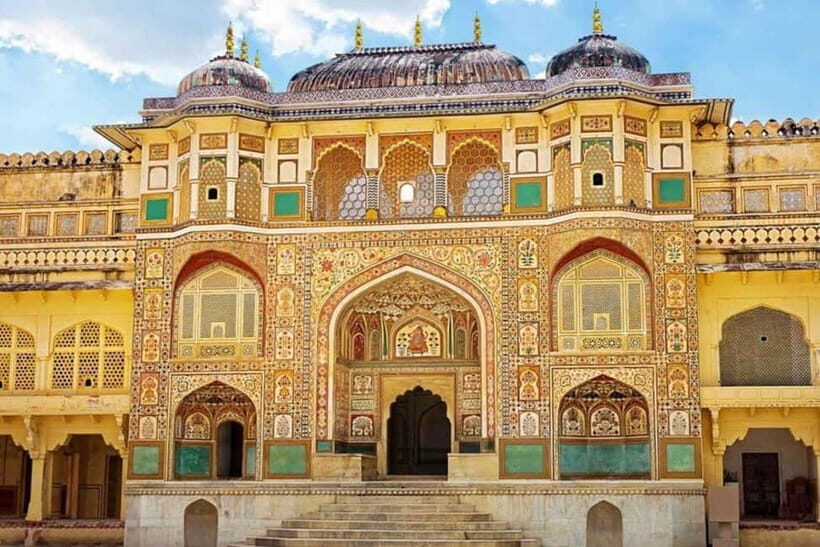
- Amber Palace (Amer Fort area) (about 2 hours). It sits high on a hill about 11 km from Jaipur. Admission not included.
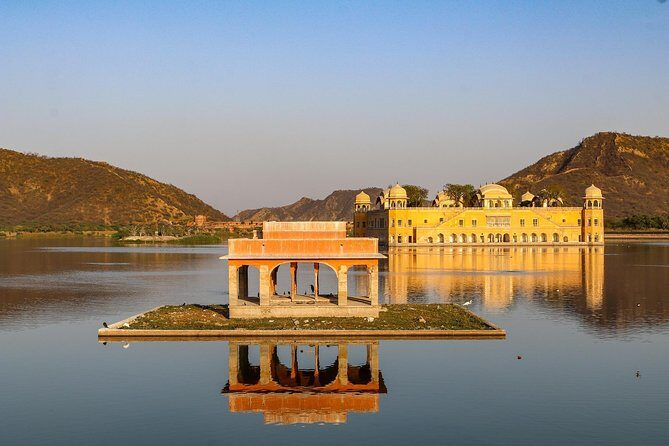
- Jal Mahal (about 1 hour). The palace in the middle of Man Sagar Lake. Admission not included.
A practical thought: Amer Fort can be tiring if you have mobility issues or if it’s hot. The trip gives you time (around 2 hours), but you should still pace yourself and take breaks when you can.
Day 6: back to Delhi for a calmer finish
After breakfast, you transfer back to New Delhi. When you arrive, you check in again and have the rest of the day free.
This matters more than people think. After days of forts, tombs, and long drives, having a flexible afternoon helps you reset. You can rest, snack, and handle any last-minute shopping or logistics without being shoved into another scheduled stop.
Day 7: departure day with an airport transfer
On departure day, after breakfast, the representative transfers you to the New Delhi airport for your flight home or onward.
You won’t be cramming in last-minute sightseeing. That’s a relief if you hate racing against time on travel days. It also helps keep the final day from turning stressful.
What’s included (and what that means for how your days feel)
The tour includes:
- Air-conditioned vehicle
- English speaking local destination guides
- 6 breakfasts at the hotel
- All transfers
- 6 nights accommodation
- Mobile ticket
In plain terms: you’ll have a guide to explain what you’re seeing and how it connects across the route. The air-conditioned vehicle is a real quality-of-life factor in India, especially when you’re moving between Delhi, Agra, and Jaipur.
The mobile ticket part can reduce friction at the start of each day. It’s one less thing to print, scan, or chase.
What’s not included (so you can budget without guessing)
Not included:
- Any monument entrance fee
- Camera fee
This is the big “unknown cost” for many people because the main sites are exactly the ones where entry fees exist. Since the tour also notes Taj Mahal closure rules and tickets for several sites not included, I’d strongly suggest you set aside a separate budget for entrances.
Also remember: Qutub Minar, Humayun’s Tomb, I’timād-ud-Daulah, Agra Fort, City Palace, Hawa Mahal, Jantar Mantar, Amber Palace, and Jal Mahal are listed with admission not included (except Fatehpur Sikri and a few Delhi stops that show as free).
Special dates to watch: gala dinner costs around late December/early January
There’s a specific note that a Mandatory Gala Dinner charge applies during New Year’s Eve and Christmas days from 20th December to 05th January, at an additional cost of INR 3500 per person.
If your dates fall inside that window, factor this into your total budget. It’s mandatory during those periods, so don’t assume it’s optional.
Who this tour suits best
This fits you if:
- You want a classic Delhi–Agra–Jaipur route with a guided structure.
- You prefer an organized schedule over independent planning.
- You like cultural sights, not just “one photo and leave.”
It may be less ideal if you want to wander freely with no schedule pressure, or if you dislike paying extra for monument entrances.
Should you book this Golden Triangle tour?
I’d say yes if you want the major highlights done with a guide, good logistics, and less day-to-day decision fatigue. The mix of free Delhi landmarks, UNESCO sites, and a properly timed Taj Mahal day is a strong combo for value.
Before you book, do two things:
- Confirm your travel day is not on a Friday if Taj Mahal access is a priority.
- Budget for monument entrance fees, since many of the key stops are explicitly listed as not included.
If you want an efficient, culturally grounded first look at North India—and you’d rather ride in an air-conditioned vehicle than bargain for every ride—this 7-day Golden Triangle is a sensible choice.
FAQ
Where does this tour start?
It starts with pickup at Indira Gandhi International Airport in New Delhi.
Is airport pickup and transfer included?
Yes. The tour includes transfers, including meeting you at the airport on arrival and transferring you back to the airport on departure.
What’s included in the tour price?
The package includes air-conditioned vehicle, English speaking local destination guides, 6 nights accommodation, all transfers, sightseeing, and 6 breakfasts.
Are monument entrance fees included?
No. Monument entrance fees and any camera fees are not included.
How long is the tour?
It’s listed as 7 days (approx.).
Which meals are included?
You get 6 breakfasts at the hotel.
Is the Taj Mahal always open?
No. The Taj Mahal remains closed on Fridays.
Is this a group tour or private?
It’s described as a private tour/activity, with only your group participating.
Is there a special charge during late December and early January?
Yes. A mandatory gala dinner charge applies during New Year’s Eve and Christmas days from 20th December to 05th January at an additional INR 3500 per person.
Can I cancel for a full refund?
Yes, free cancellation is offered if you cancel up to 24 hours in advance for a full refund.