A full day trip to the Taj Mahal needs good timing. This one links Taj Mahal, Agra Fort, and the quieter tomb of Itmad-ud-Daula into a practical 7–10 hour route, run by a private guide and driver so you spend less time negotiating and more time looking.
I especially like two things: the door-to-door car transfer from Delhi/Noida/Gurugram/Ghaziabad, and the fact that you’re not just dropped at gates—you get a local guide who explains what you’re seeing (and helps with photos; names like Mehran Khan and Abdul come up often).
One consideration: monument tickets are not automatically included for major stops like the Taj Mahal and Agra Fort unless you choose the all-inclusive option, so double-check what you’re paying for before you go.
In This Review
- Key Highlights You’ll Actually Care About
- Why This Delhi-to-Agra Car Day Trip Works
- Price, Tickets, and What the $20 Gets You
- Getting Started: Pickup, Mobile Ticket, and a Realistic Day Plan
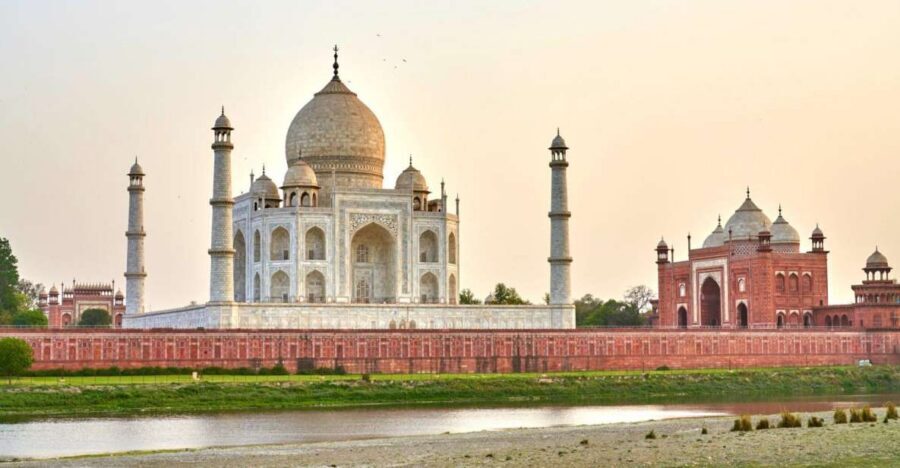
- Stop 1: Taj Mahal With a Local Guide and Photo-Friendly Pace
- Stop 2: Agra Fort’s Red Sandstone Power (Diwan E Aam to Diwan E Khass)
- Stop 3: Baby Taj at UP Handicraft Palace (Free Entry, Quick Break, Souvenirs)
- Stop 4: Itmad-ud-Daula as the Taj’s Earlier Cousin
- Comfort That Makes or Breaks a 7–10 Hour Monument Day
- Who This Tour Fits Best (And Who Should Skip It)
- Should You Book This Same-Day Taj Mahal Tour?
- FAQ
- How long is the Taj Mahal, Agra Fort and Baby Taj day trip from Delhi?
- What’s included in the tour price?
- Are monument tickets included?
- Is Baby Taj included, and where do we see it?
- How many hours do we spend at each stop?
- Do I get pickup from my hotel or airport?
- Is this tour private or shared?
- What about drinks during the day?
- What’s the cancellation policy?
Key Highlights You’ll Actually Care About
- Private air-conditioned car from Delhi-area pickup zones, plus bottled water for the ride
- Local guides at the sights, with praise for clear, calm explanations and photo help (Mehran Khan, Sohel, Abdul)
- Balanced route: Taj Mahal first, then Agra Fort, then Baby Taj, then Itmad-ud-Daula
- UP Handicraft Palace stop includes Baby Taj display and is free (with time to browse souvenirs)
- Time-boxed visits that keep the day moving: about 3 hours at Taj and 2 hours at Agra Fort
Why This Delhi-to-Agra Car Day Trip Works
Agra is close to Delhi in travel terms, but it still eats a chunk of your day. Expect roughly a 3 to 4 hour drive each way, depending on traffic. Add that to the on-site time and you’re in the 7–10 hour range the tour promises.
The big win is that you’re not rolling the dice on transit schedules or hiring random drivers at the last minute. This is a private same-day tour by car with hotel/airport transfers from Delhi-area locations (Delhi, Noida, Gurugram, Ghaziabad). That matters because Agra’s traffic can be stubborn, and being late to the Taj Mahal is the fastest way to turn a dream day into a rushed checklist.
Also, the ride is air-conditioned and includes bottled mineral water, which sounds basic until you’re in the car for hours. Your back may not forgive you, but your comfort will.
A few more New Delhi tours and experiences worth a look



Price, Tickets, and What the $20 Gets You
The price shown is $20 per person, which sounds like a bargain—until you understand how monument entry works here. The itinerary lists admission as not included for Taj Mahal and Agra Fort, and it’s also marked not included for Itmad-ud-Daula.
So what are you really buying at that $20 level?
- Transport by a private, air-conditioned car
- Private local professional guides
- Transfers to/from Delhi-area hotels/airports
- Bottled mineral water
- Taxes/fees/handling/fuel/GST included by the operator
Monument tickets become part of the deal only if you choose an all-inclusive option. One stop is clearly different: UP Handicraft Palace is listed as free and you’ll see the Baby Taj there.
My advice: if you want to avoid surprises, pick the option where monument tickets are included, then budget for what you’ll still spend on snacks and local purchases.
And yes—tips/gratuities are not included, so plan a little extra if you want to thank your driver and guides. Even small amounts feel meaningful when the driving and guiding are good.
Getting Started: Pickup, Mobile Ticket, and a Realistic Day Plan
This is a private tour, meaning it’s just your group (not a shared shuttle with strangers). You also get a mobile ticket, plus pickup offered, which reduces the classic stress of wondering where the guide is waiting.
Because the tour moves through multiple sites, you should think like this:
- Start early enough to enjoy the Taj Mahal experience without feeling like you’re sprinting
- Use the car time as your buffer for traffic delays
- Keep your essentials ready in the bag you can reach fast
The schedule includes specific time blocks:
- Taj Mahal: 3 hours
- Agra Fort: 2 hours
- UP Handicraft Palace: 1 hour
- Itmad-ud-Daula: 1 hour
That adds up to a satisfying pace, but it’s still a full day. If you’re the type who needs a long, slow lunch and a nap between monuments, you’ll want to keep expectations grounded.
Stop 1: Taj Mahal With a Local Guide and Photo-Friendly Pace
The Taj Mahal is the reason most people make this trip, and this tour gives you about 3 hours there. That’s enough time to:
- See the main façade and gardens from the right angles
- Spend time on the details (the famous inlay work is what you came for)
- Walk slowly enough to actually notice how the white marble changes with light
Here’s why the guide part matters. The Taj can feel like a pretty picture until someone points out why it looks the way it does—where to focus, what the craftsmanship is doing, and how the stories connect to the rest of Agra’s Mughal sites.
In the feedback, guides like Mehran Khan are repeatedly praised for calm explanations and for helping with photos. One thing I’d do with any day-trip guide: ask where you’ll get the best photo angles before you start walking, so you’re not chasing spots with tired legs later.
Practical tip: wear comfortable shoes. The Taj Mahal isn’t a museum you can enjoy while standing still. You’ll be moving, and the better your footwear, the more you’ll enjoy the details.
Stop 2: Agra Fort’s Red Sandstone Power (Diwan E Aam to Diwan E Khass)
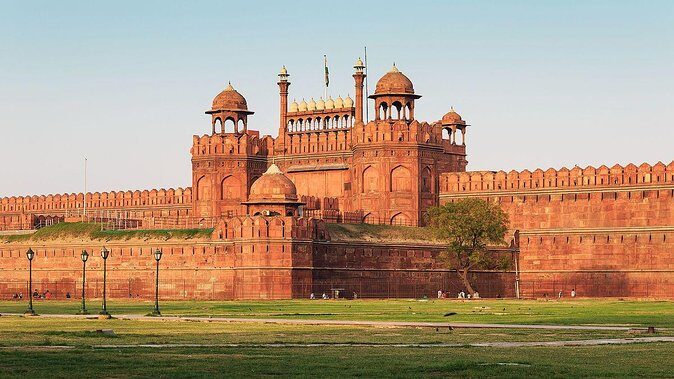
Next up is Agra Fort, a UNESCO World Heritage Site built from red sandstone, with a mix of Mughal and Hindu architectural influence. You get about 2 hours here.
The tour guide typically points out highlights such as:
- Diwan E Aam
- Diwan E Khass
- Jahanara Place
Even if those names don’t ring a bell right now, don’t worry. A good guide will translate the stones into meaning—who would have used each space, what the architecture is trying to communicate, and how this fort fits into Agra’s imperial story.
One advantage of doing Agra Fort the same day as the Taj Mahal: the contrast helps. The Taj Mahal is about beauty and symbolism in white marble. Agra Fort is about power, defense, and court life in stone. Seeing them back-to-back makes the city feel like one connected chapter instead of separate stops.
Note again: admission for Agra Fort is listed as not included unless you select the all-inclusive ticket option.






Stop 3: Baby Taj at UP Handicraft Palace (Free Entry, Quick Break, Souvenirs)
This stop is a fun curveball: UP Handicraft Palace, where the Baby Taj Mahal is kept. You’ll have about 1 hour, and entry here is listed as free.
Why it’s worth a slot even if you’re already Taj-saturated:
- It’s a smaller version that helps you spot design ideas without the scale shock
- It gives you a break between the bigger, heavier sights
- You get a chance to browse local souvenirs if you want something small and tangible
If you like shopping, this is the moment. If you don’t, use the hour for a breather and a slow look, then move on while you still have energy.
Stop 4: Itmad-ud-Daula as the Taj’s Earlier Cousin
The final scheduled sight is Itmad-ud-Daula, also known as Mirza Ghiyas Beg. You’ll get about 1 hour, and admission is listed as not included.
This one is a great choice for travelers who like architecture and craftsmanship, because the story connects directly to the Taj Mahal. The tomb (built between 1622 and 1628) is often considered an inspiration or precursor to the Taj Mahal’s marble grandeur. It’s also known for intricate marble work, and it can feel more intimate than the Taj simply because the scale is less overwhelming.
The guide context you’ll hear here is also useful: Itmad-ud-Daula was a prominent Mughal courtier during Emperor Jahangir’s reign, and he’s connected to Nur Jahan as her father. That kind of family and political context helps the stones make sense. Otherwise, the tomb is just beautiful—still worth it, but less memorable.
If you’re a photo person, this is where you’ll appreciate time. Smaller marble details reward patience, and you’ll be glad you saved some energy for the end of the day.
Comfort That Makes or Breaks a 7–10 Hour Monument Day
This is where the tour earns its keep. The included bottled mineral water is a simple but real win on a long route. And when the driving is smooth, you’ll arrive in Agra feeling human instead of rattled.
The best feedback also mentions drivers who handle the day carefully. Abdul is specifically praised for safe, efficient movement around Agra and for taking lots of pictures. That matters because day trips often fail at the small stuff: waiting at the wrong place, messing up timing, or forgetting your group at a crossing.
I’d still bring your own travel common sense:
- Keep a small bag with essentials you’ll need quickly at each stop
- Use the car time to check your phone battery and water situation
- Decide up front how you want your day to feel: photos first, or details first
Also, keep an eye on the order. Taj first, forts second, then Baby Taj and Itmad-ud-Daula works because you start with the biggest emotional payoff and end with calmer, detail-heavy sights.
Who This Tour Fits Best (And Who Should Skip It)
This works especially well for:
- First-time Agra visitors who want a one-day highlights circuit
- People who dislike complicated planning and want private, guided logistics
- Travelers who value architecture explanations more than random quick stops
It may not be the best fit if:
- You want a slow, linger-all-day pace at each monument
- You hate ticket budgeting and prefer everything included up front (double-check the all-inclusive ticket option)
- You’re traveling with someone who needs frequent long breaks beyond the set visit times
The private format is a big deal if you’re traveling as a couple or family. You won’t get pulled along by other people’s timing, and guides like Mehran Khan and Sohel are praised for keeping the experience organized and easy to follow.
Should You Book This Same-Day Taj Mahal Tour?
If your goal is to see the Taj Mahal and get real context—not just photos—this is a strong value play. The combination of private air-conditioned transport, local guides at every stop, and the sensible route through Agra Fort and Itmad-ud-Daula makes it a practical way to experience Agra in one day.
My main check before booking is straightforward:
- Pick the option that best matches how you want to handle monument ticket costs
- Plan for a full, active day based on the fixed time blocks (3 + 2 + 1 + 1 hours)
If you want a confident, organized day trip where your guide can explain the why behind the wow, I’d say go for it—then focus on the details once you’re inside.
FAQ
How long is the Taj Mahal, Agra Fort and Baby Taj day trip from Delhi?
The tour typically runs about 7 to 10 hours total.
What’s included in the tour price?
You get private transportation in an air-conditioned car, private local professional guides, bottled mineral water, and hotel or airport transfers to/from Delhi, Noida, Gurugram, and Ghaziabad. Taxes and fees are also included.
Are monument tickets included?
Admission tickets are listed as not included for Taj Mahal and Agra Fort and also for Itmad-ud-Daula, unless you choose the all-inclusive option, which includes monument tickets.
Is Baby Taj included, and where do we see it?
Yes. The tour includes a stop at UP Handicraft Palace, where the Baby Taj Mahal is kept. Entry for this stop is listed as free.
How many hours do we spend at each stop?
You get approximately 3 hours at Taj Mahal, 2 hours at Agra Fort, 1 hour at UP Handicraft Palace, and 1 hour at Itmad-ud-Daula.
Do I get pickup from my hotel or airport?
Yes. The tour offers hotel or airport transfers from Delhi, Noida, Gurugram, and Ghaziabad.
Is this tour private or shared?
It’s a private tour/activity, so only your group participates.
What about drinks during the day?
The tour provides bottled mineral water during the journey.
What’s the cancellation policy?
You can cancel for a full refund if you do so at least 24 hours before the experience’s start time.