REVIEW · NEW DELHI
7 Day Golden Triangle with Udaipur-Delhi Agra Jaipur Udaipur Tour
Book on Viator →Operated by Joyful Holidays · Bookable on Viator
Golden Triangle plus Udaipur is a smart way to see India’s classics in one sweep. This 7-day route mixes sunrise Taj Mahal magic with Udaipur’s lake views, then links it all with air-conditioned driving and guided stops. If you want the highlights without constantly figuring out logistics, the structure here helps.
What I like most is the attention to pacing in the big moments. You get a very early Taj Mahal sunrise start, plus planned time for the main sights in Delhi, Agra Fort, Fatehpur Sikri, and Jaipur. Second, the tour keeps you comfortable on the road with a private vehicle, bottled water, and even WiFi in the car.
One possible drawback: entrance tickets and many lunches/dinners are not included, so you’ll need to budget extra at each major site. Also, you’re on the move between cities, so it’s not a slow, leisurely vacation.
In This Review
- Key things that make this tour work
- Entering Old Delhi: Jama Masjid, Chandni Chowk, and Qutub Minar
- Highway to Agra: Agra Fort and Mehtab Bagh without the stress
- Sunrise Taj Mahal: why 5:45 AM changes everything
- Jaipur’s pink-city sights: fort, palaces, and the Observatory
- The drive to Udaipur: from big monuments to lake air
- Lake Pichola by boat and City Palace views: the best payoff day
- The practical part: price, comfort, and how the days really feel
- Should you book the 7-Day Golden Triangle with Udaipur?
- FAQ
- FAQ
- What cities does the tour cover, and where does it end?
- What time is pickup on Day 1 in Delhi?
- Are monument entrance fees included for stops like the Taj Mahal and Agra Fort?
- Is there a guide included during sightseeing?
- What transportation and comfort are included between cities?
- How far in advance can I cancel for a full refund?
Key things that make this tour work
- Sunrise Taj Mahal timing that gives you softer light on the marble and fewer crowds at the start of the day
- Private, air-conditioned transfers from city to city, so you’re not hopping between shared rides
- Delhi highlights in one day, including Old Delhi by rickshaw and Qutub Minar
- Fatehpur Sikri stop en route to Jaipur, so you don’t waste a whole day just getting there
- Udaipur city tour with boat time on Lake Pichola, plus City Palace and Saheliyon ki bari
- Sonia support mentioned in reviews, including smooth trip coordination and ongoing check-ins during the tour
Entering Old Delhi: Jama Masjid, Chandni Chowk, and Qutub Minar
Day 1 is built like a best-of sampler of Delhi’s two faces: Mughal-era grandeur, then the old market world. You’re picked up from the airport or your hotel between 0700 and 1000, which matters because it lets you start sightseeing while the day still feels manageable.
Jama Masjid is a great first stop. It’s one of India’s best-known mosques, and you’ll see Mughal architecture made with red sandstone and marble. The stop is short, but it works as a quick orientation to Delhi’s layers: big imperial monuments, then the dense streets of Old Delhi.
Next comes the Chandni Chowk experience, including a rickshaw ride through the markets. This is one of those “you’ll know you’re in India” moments. The streets here can be tight and busy, and being on a rickshaw keeps you from having to navigate traffic on foot right away. You’ll want comfortable shoes because even short market time adds up.
Red Fort is handled in a practical way: the tour drives around the monument from the outside for photos. The reason is straightforward. A large part of the complex is used by the Indian Army, so your viewpoint is mainly external rather than an inside visit.
Then you shift from empire to modern India with Raj Ghat, the memorial to Mahatma Gandhi where the cremation took place. It’s a quiet contrast after the mosque and market energy. After that, you get a quick stop at India Gate, an arc-style war memorial, and photo stops for Parliament House and Rashtrapati Bhavan.
Finally, Qutub Minar ties the day together with a UNESCO-listed structure. The minaret’s early-Delhi story starts with Qutub-ud-din Aibak (constructed in the late 1100s) and continues with later completion work. You get about an hour here, so it’s enough time to absorb the shape and take photos without feeling rushed.
What to watch for: this is a long first day with many stops. It’s well-structured, but if you’re the kind of person who likes slow museum pacing, you’ll probably feel the “tour rhythm.” Still, it’s an efficient way to get your bearings quickly.
A few more New Delhi tours and experiences worth a look


Highway to Agra: Agra Fort and Mehtab Bagh without the stress
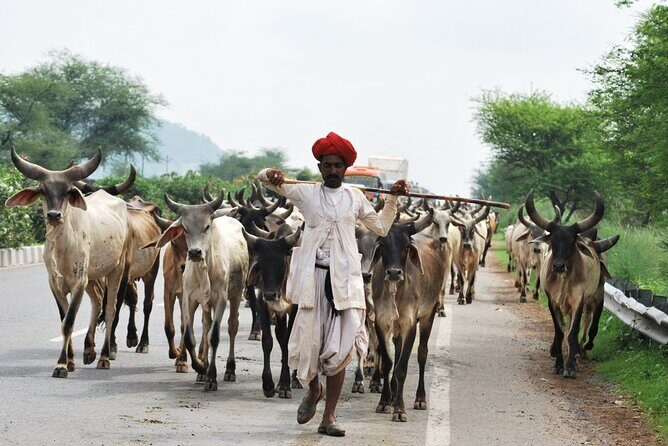
On Day 2, you drive from Delhi to Agra via express highway, about 200 km (around 3–4 hours). This kind of transfer is one of the reasons package tours stay popular. You don’t have to plan routes or worry about what mode of transport works best at every step.
Once you arrive, you check into your hotel and then start with Agra sightseeing. Agra Fort is the big anchor for the afternoon. The fort is tied to Mughal power and was built in the era of Emperor Akbar. The description matters: it’s a walled-city feel, built from red sandstone and associated with the Mughal residence. Even with an outside-only view for some parts of the day, the monument’s scale comes through fast.
You also stop at Mehtab Bagh, the “Moonlight Garden,” which sits across the Yamuna from the Taj Mahal. The timing here is a practical photo angle: Shah Jahan identified this spot as a viewing point for Taj Mahal sunsets. Even if you don’t get a full sunset view on this day, it’s valuable because it gives context for where people used to line up for famous Taj views.
Agra is a city where distances can be deceiving. The tour’s schedule keeps you from losing daylight, and your return to the hotel is built in. That’s a small thing, but it’s one of the best “hidden” values of a good itinerary.
Possible drawback: Agra Fort and other major sites often mean extra ticket costs. The tour says monument entrances are not included, so you’ll likely pay at the gate when you arrive.
Sunrise Taj Mahal: why 5:45 AM changes everything
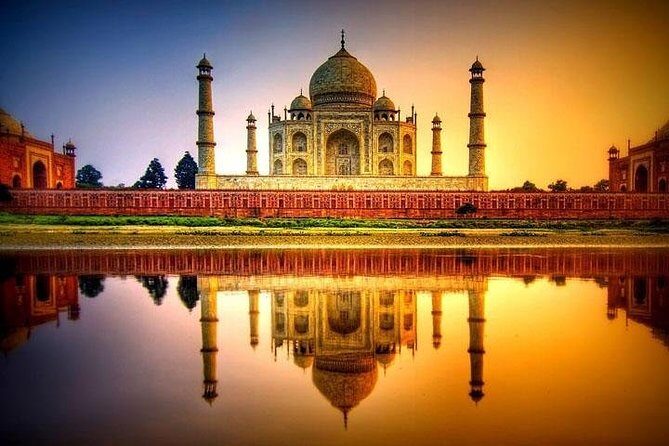
Day 3 starts at 5:45 AM for the Taj Mahal sunrise visit. I know sunrise sounds like something only early birds love, but here it actually makes sense. The Taj Mahal’s look shifts with light. At sunrise, the marble takes on softer golden hues, and you spend your time before the heat and crowds build.
You’ll meet your guide in the hotel lobby and head out for about a 2-hour Taj Mahal visit. This is one of the most important parts of the whole tour. The Taj Mahal is UNESCO-listed and famous for a reason. The experience isn’t only about the final photo. It’s also about the proportions: the symmetry, the way the white marble holds light differently across the day, and the calmer atmosphere that comes with an early start.
After the sunrise visit, you return for breakfast and freshen up. Then comes the long but worthwhile travel move to Jaipur, with an en route stop at Fatehpur Sikri.
Fatehpur Sikri is a historic Mughal city built by Emperor Akbar in the late 1500s. You’ll learn the key idea here: it served as a capital for about 15 years before being abandoned due to water shortages. That detail is more than trivia. It helps you understand why a site that looks so monumental can still feel strangely quiet. The stop is about an hour, which is enough to connect the story to what you see.
You then continue to Jaipur and check into your hotel for overnight.
What to watch for: sunrise days are mentally demanding. Bring water, take your time at the Taj itself, and don’t plan a lot of shopping right after. You’ll need a slow moment later, not just another quick stop.
Jaipur’s pink-city sights: fort, palaces, and the Observatory
Day 4 is Jaipur in a packed, highlights-first approach. You start after breakfast with guided sightseeing in the pink city of Rajasthan.
The day’s main monument block is the Jaipur Fort, described as a must-see with an extensive palace complex built from sandstone and white marble. The location on a rocky rise gives you that classic fort silhouette. This is usually the sort of place where a guide helps most. You’re not just walking through buildings; you’re seeing how power and design worked together.
Next is a Jal Mahal photo stop, the Water Palace on Man Sagar. You don’t get long here, and that’s okay. The value is the unusual visual: the palace looks like it floats when the lake is higher, and the setting gives you a memorable break between forts and indoor palaces.
Then you move to City Palace of Jaipur, the royal family’s residence in the center of the Old City. The tour frames it as a combination of Rajasthani and Mughal architecture, with courtyards, gardens, and buildings. This kind of stop is ideal if you like when a city’s history is still visible in everyday layout.
You also get a photo stop at Hawa Mahal, the Palace of Wind. The honeycombed pink facade and its role for ladies of the royal household to watch city life is a useful detail. Even as a photo stop, it helps you see why the building exists beyond looks.
The final guided stop is Jantar Mantar, a UNESCO World Heritage site and a set of geometric structures calibrated to track stars and planets. This is the kind of monument that feels “different” from forts and palaces because it’s science and design mixed. If you’re tired after the day’s walking, Jantar Mantar is still a good payoff because it’s compact enough to stay interesting.
Possible drawback: multiple photo stops mean less time for deep wandering. If you love browsing craft shops for hours, you may wish this day had a slower option. But if your priority is major monuments and good guiding, it’s a strong balance.
The drive to Udaipur: from big monuments to lake air
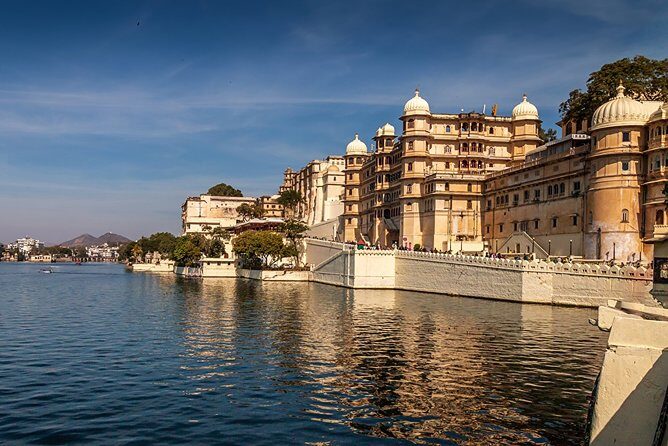
Day 5 shifts the tone. After breakfast, you check out and head to Udaipur by road, about 5 hours. This transfer is long enough that you’ll be glad it’s included in a private vehicle with WiFi and bottled water. And arriving in Udaipur feels like a change in pace.
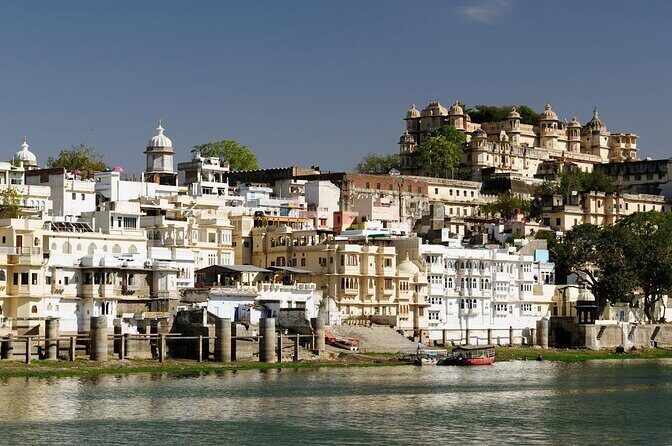
Udaipur is described as the city of lakes and the Venice of the East, hemmed in by the Aravallis. The tour’s schedule gives you time to check in and settle. You get overnight in Udaipur, which is important. Too many itineraries don’t build in the decompression time, and then day two becomes exhausting.
If you’re the type of traveler who likes your last leg of a trip to feel calmer, Udaipur is a good choice. The itinerary sets you up for that by saving the slower, scenic portion for later.






Lake Pichola by boat and City Palace views: the best payoff day
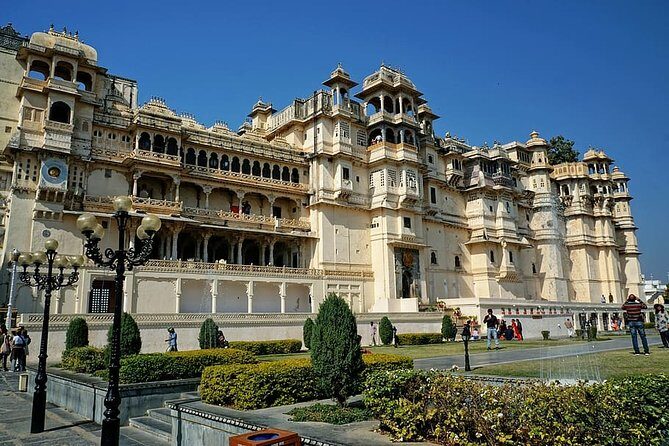
Day 6 is Udaipur sightseeing with a guided city loop and some of the most iconic lakeside stops.
You start with Jagdish Temple, dedicated to Lord Vishnu. It’s described as one of the oldest temples in Udaipur, and it’s an easy introduction to how the city’s religious life remains part of daily space.
Then comes City Palace of Udaipur overlooking Lake Pichola. The palace complex is built over nearly 400 years, shaped by multiple rulers. That time span matters because you don’t just see one style. You see evolution. The tour gives about 2 hours at the palace, and it’s enough to feel the scale without turning it into a full-day indoor marathon.
After the palace, you head to Lake Pichola for a boat ride (about 30 minutes). Boat time is one of the best “value moments” in Udaipur because it adds perspective quickly. You see the palaces and ghats from the water level, and the city’s layout makes more sense after you’ve been on the lake.
Next stop is Saheliyon ki bari, the Garden built for the queen and her maids. This is a breather after temples and palaces. Fountains, pools, pavilions, and marble elephants are part of the design, and the setting feels more relaxed even within a guided schedule.
What to watch for: City Palace and the boat ride are listed as not included for monument entrances. In real life, you’ll pay those fees on-site. The upside is that these are the experiences that people remember.
The practical part: price, comfort, and how the days really feel
This tour costs $649 per person and runs about 7 days, from Delhi to Udaipur. That price is not cheap in the usual sense, but it covers the main cost drivers: private air-conditioned transfers, hotel stays in 3, 4, or 5-star options (based on what you choose), guided city tours, and breakfast for 6 days.
Here’s the value math I’d use: you’re paying for convenience and time control. The itinerary strings together multiple UNESCO-listed sights and keeps you moving without needing to plan every connection. If you tried to do this yourself, you’d still need transport, guides, hotels, and tickets. What you’re really buying is a working schedule and a person to handle coordination.
Comfort details are genuinely helpful:
- bottled water in the car
- WiFi in the car
- pickup timing in Delhi (0700–1000 window)
- private vehicle with transfers and sightseeing
The tour is also private in the sense that it’s only your group. That typically makes the experience smoother because the guide can pace to your group rather than constantly adapting to mixed-speed travelers.
One more note from reviews: Sonia is mentioned as a key coordinator. There are comments about planning the itinerary ahead of departure and staying connected during the trip. That kind of ongoing help matters most when something changes or when you need clarity on what happens next.
The main trade-off: not everything is included. Entrance tickets, and meals beyond breakfast, are not covered. Also, the drive between cities means you should keep your daypacks light and plan for road time. If you hate early mornings, the sunrise Taj Mahal day is the biggest stress point.
Should you book the 7-Day Golden Triangle with Udaipur?
If your goal is classic India in one week, with guided context and less logistics stress, I’d say yes. This itinerary is especially good for you if:
- you want a structured route from Delhi to Udaipur
- you care about seeing the Taj Mahal at sunrise
- you like having a guide for major monuments (Delhi’s Islamic architecture, Mughal-era sites, and Jaipur’s observatory)
- you want Udaipur to be your final, calmer finish with City Palace and Lake Pichola boat time
I’d hesitate if:
- you have a low tolerance for long drives and early mornings
- you hate paying site-by-site ticket fees
- you want tons of free time for independent wandering in every city
If you’re somewhere in the middle, this is a strong fit. The schedule hits the major sights, and the comfort details (private vehicle, water, WiFi) make the travel days feel less like lost time.
FAQ
FAQ
What cities does the tour cover, and where does it end?
The route covers Delhi, Agra, Jaipur, and Udaipur, and it ends in Udaipur, with transfer to the airport/railway station or your chosen location.
What time is pickup on Day 1 in Delhi?
Pickup is offered from the airport or your hotel/desired location between 0700 to 1000 hours.
Are monument entrance fees included for stops like the Taj Mahal and Agra Fort?
No. Monument entrances are not included. Lunch and dinner are also not included, while breakfast is included for 6 days.
Is there a guide included during sightseeing?
Yes. The tour includes professional city tour guides for the sightseeing parts.
What transportation and comfort are included between cities?
You travel by air-conditioned private vehicle with packaged drinking water in the car, and WiFi is provided in the car.
How far in advance can I cancel for a full refund?
You can cancel up to 3 days in advance for a full refund. If you cancel less than 3 days before the start time, the amount paid is not refunded.