REVIEW · NEW DELHI
6-Day Private Tour of Delhi, Agra, Jaipur and Varanasi from Delhi
Book on Viator →Operated by Limra Holiday · Bookable on Viator
Six cities of meaning, tightly planned in six days. This private tour stitches together India’s most famous sights with easy, air-conditioned transfers and the once-in-a-lifetime payoff of sunrise at the Taj Mahal. You’ll also get a front-row pass to Varanasi’s spiritual rhythm, from early ghat walks to the evening Ganga Aarti. One thing to weigh: this is a fast-moving route with long travel days and a domestic flight, so you’ll want to travel light and keep your pace steady.
I like how the days are structured around landmarks that feel connected, not random checklists. You start in Delhi with major Mughal-era and British-era markers, move into Agra and Jaipur for the Mughal-to-Rajput shift, then end in Varanasi where the river becomes the main character. And the human side matters here too: reviews highlight strong guidance and even Spanish support from guides such as Sartaj, plus helpful, respectful service from staff including Shadil.
You should know one practical consideration up front: your schedule includes several early starts, and the winter/summer timing in Varanasi can mean very early mornings. If you’re the type who likes slow, late breakfasts every day, this may feel intense.
In This Review
- Quick Hits That Make This Tour Worth Your Time
- What You’re Really Buying: Comfort + Flow Across Four Cities
- Day One in Delhi: From India Gate to Jama Masjid to Qutub Minar
- A practical note for day one
- The Agra Switch: Taj Mahal Sunrise and the Mughal “Must-See” Pairing
- How to get the most out of Agra Fort + Itmad-ud-Daulah
- Jaipur Day Three: Palaces, Astronomical Stones, and a Step Well
- Day Four to Varanasi: Fly, Reset, Then Let the River Pull You In
- Early-Start Varanasi Day Five: Ghats, Temples, Sarnath, and Aarti
- Respect note (important)
- Day Six: Fly Back to Delhi and Finish With a Simple Drop-Off
- What’s Included vs. What You’ll Still Need to Plan
- Guide Service and the Human Touch: Why Reviews Matter Here
- Price and Logistics: Is $998 a Good Deal?
- Who This Tour Fits Best
- Should You Book This Private Delhi–Agra–Jaipur–Varanasi Tour?
- FAQ
- What’s the total duration of this tour?
- Do I get a private car and a guide?
- Are entrance tickets included?
- Is sunrise Taj Mahal part of the plan?
- How does the Varanasi morning timing work?
- What are the domestic flight baggage limits?
Quick Hits That Make This Tour Worth Your Time
- Private A/C car for smoother city driving (less mental load than public transit).
- Sunrise Taj Mahal timing gives you the “before the crowds” mood.
- Delhi monument sweep: India Gate, Raj Ghat, Jama Masjid, Lotus Temple, Qutub Minar.
- Agra Fort + Itmad-ud-Daulah so you’re not Taj-only.
- Varanasi rituals: Assi Ghat early visit, temple time, Sarnath, and the evening Ganga Aarti.
- English/Spanish-speaking guide support is a recurring theme in the feedback, including Sartaj.
What You’re Really Buying: Comfort + Flow Across Four Cities
This is a private, guided plan that connects Delhi, Agra, Jaipur, and Varanasi in a way that usually costs you time when you DIY it. You get a private air-conditioned car, pickup and drop-off assistance, and entrance tickets included for the monuments on your route. That matters because India’s best sights don’t just require time—they require the right order, good timing, and less friction between stops.
At $998 per person for about six days, the value is strongest if you hate logistics. You’re paying to remove the juggling: who drives, where you meet, which ticket lines you avoid, and how you handle transfers between cities. You’re also paying for the “big moments” to land when they work best—like the sunrise Taj.
The plan is also realistic about pace. You’re not getting a deep, week-long stay in just one city. Instead, you’re getting a guided snapshot that’s thick with landmarks and then finishes with Varanasi, where the experience is less about museums and more about daily life along the Ganga.
You can also read our reviews of more private tours in New Delhi


Day One in Delhi: From India Gate to Jama Masjid to Qutub Minar
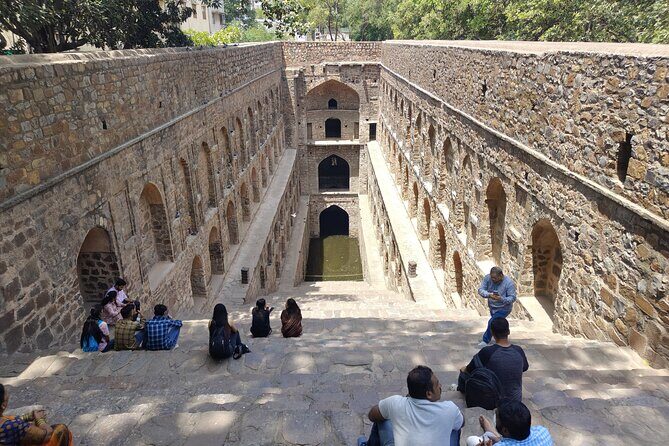
Your first day reads like a tour of Delhi’s eras, moving from national memory to Mughal architecture to modern religious landmarks.
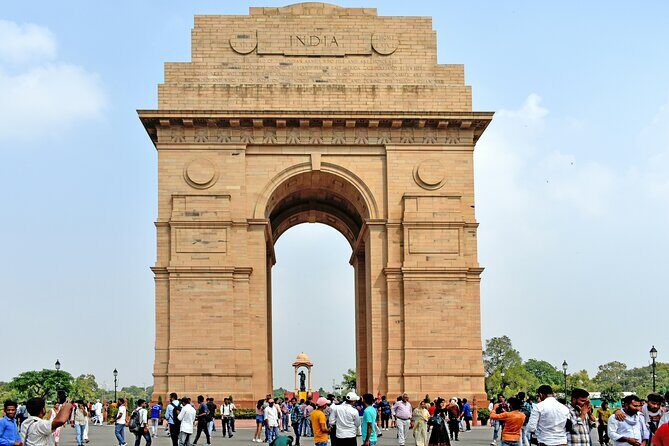
India Gate is your opening stop, built to honor soldiers who died in World War I. It’s more than a photo spot; it’s a quiet kind of monument where you start understanding how much weight history carries in public spaces here.
Then you head to Raj Ghat, a memorial dedicated to Mahatma Gandhi. The interesting detail is that Raj Ghat is tied to earlier ghat history on the Yamuna too—so the place feels layered rather than brand-new.
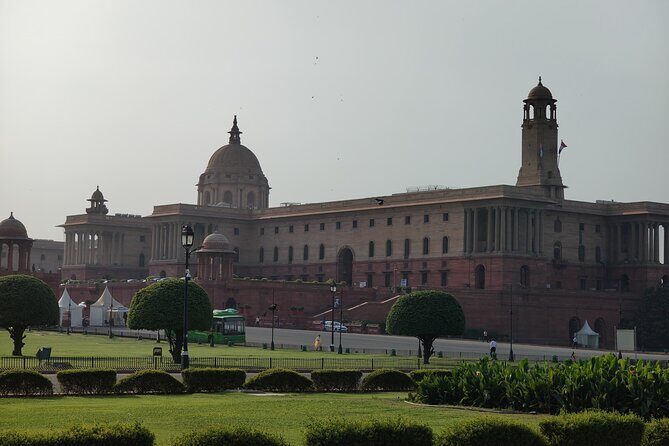
From there, you pause at Parliament House (Sansad Bhavan). Even if you don’t go inside, it helps orient you in modern India’s political geography.
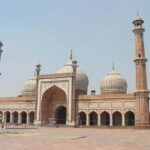
Next comes Jama Masjid, one of Delhi’s biggest mosques, built by Shah Jahan between 1650 and 1656. It’s a major Mughal-era anchor, and it’s the kind of stop where you’ll notice scale immediately—both the building and the surrounding streetscape.
After that, your route turns architectural and unusual with the Lotus Temple. It’s Baháʼí, designed with a striking petal-like form, and it’s open to people regardless of religion. For many first-time visitors, this is a welcome break from only Mughal-era stone and gives Delhi a more modern spiritual mood.
Finally, you end at Qutub Minar, part of the Qutb complex and a UNESCO World Heritage Site. It’s a tall tapering victory tower, built as part of the old fortress city area of Lal Kot. This is one of those “look up and understand the place” stops. It also works well as a day-ender because you can watch the light shift on the stone as you move through the complex.
A practical note for day one
You’ll likely do a lot of walking and standing with multiple short stops. Wear comfortable shoes and plan for sun/heat. Since many entrances are included and tickets are free for these sites in your plan, the main variable is your own stamina.
The Agra Switch: Taj Mahal Sunrise and the Mughal “Must-See” Pairing
Agra arrives right after your Delhi day finishes, with a drive that takes about four hours and a hotel check-in afterward. That hotel stay is covered for five nights in Agra and Jaipur with breakfast, so you’re not paying extra just to keep the base moving.
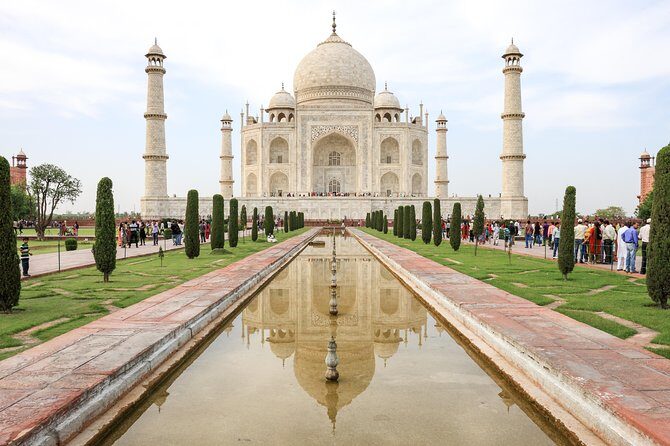
The next morning is built around sunrise at the Taj Mahal. The story here is part of why the monument hits so hard: Shah Jahan built it in memory of Mumtaz Mahal, and the work began in 1631 after her death, with the finished form taking shape by 1653. Sunrise timing isn’t just a scheduling trick; it’s when the marble looks best and the day feels calmer.
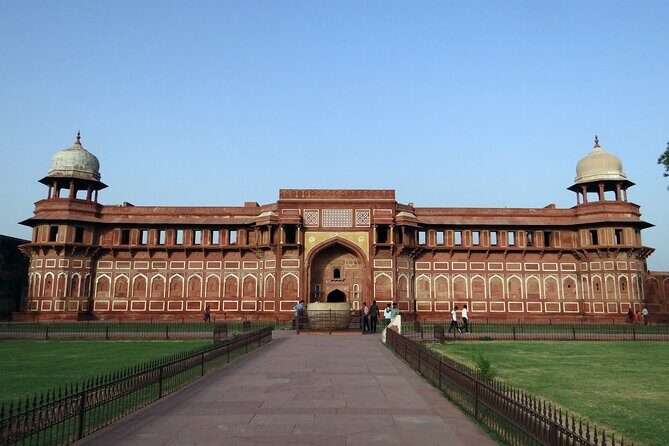
After the Taj, you visit Agra Fort, a UNESCO site and the Mughal emperors’ main residence until the capital shifted to Delhi. Your route also includes Itmad-ud-Daulah, often called the “Baby Taj.” If you only see the Taj Mahal, you miss how Mughal design evolves in smaller, more intimate settings.
How to get the most out of Agra Fort + Itmad-ud-Daulah
These two sites are easier to appreciate if you slow down just slightly. The Taj is overwhelming on first sight. Then Agra Fort and Itmad-ud-Daulah help you see craftsmanship and design patterns without feeling like you’re still in “main character mode.”
If you like history but get fatigued by long explanations, the good news is that your plan includes a tour guide service, so you don’t have to read everything yourself.
A few more New Delhi tours and experiences worth a look




Jaipur Day Three: Palaces, Astronomical Stones, and a Step Well
You reach Jaipur after about a five-hour drive. Once you’re there, your day leans into Rajput architecture and city planning details.
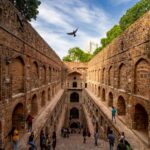
You start with Panna Meena ka Kund, described as an old step well used in Hindu ceremonies. It’s a quick stop, but step wells are one of those things you don’t get in most cities, and they instantly make the landscape feel functional, not just decorative. The design is connected to water harvesting during the rainy season, which gives the site meaning beyond “pretty stairs.”
Then you float to Jal Mahal, the palace in the middle of Man Sagar Lake. The building dates to 1699, with renovations and expansions later by Maharaja Jai Singh II of Amber. It’s the kind of stop that works well even if you’re short on time, because the idea is simple: you’re seeing royal design meet water and reflections.
Next is Hawa Mahal, the Palace of Wind, built from red and pink sandstone. It sits along the edge of City Palace and extends toward the women’s chambers (Zenana). The design choice—window-like facades—helps explain why Jaipur became famous for creating beauty that also served court-life needs.
Your longer stop comes with City Palace of Jaipur, once the royal residence and administrative headquarters. It’s tied to the early movement of the court to Jaipur, with construction beginning soon after the city’s founding in the era of Maharaja Sawai Jai Singh II.
Then comes Jantar Mantar, Jaipur’s astronomical instrument complex, completed in 1734. You’ll see the world’s largest stone sundial and other instruments. Even if you don’t fully understand the calculations, it’s still a memorable way to experience how scientific observation and royal power overlapped in everyday city life.
Day Four to Varanasi: Fly, Reset, Then Let the River Pull You In
After breakfast in Jaipur, you transfer to the airport for a flight to Varanasi. Your plan specifies baggage allowance on the domestic flight: 15 kg checked and 7 kg carry on. That’s genuinely important because it affects what you can pack. If you’re traveling with heavy souvenirs or lots of extra layers, you may want to plan earlier than you think.
When you land, you’ll be picked up from the Limra Holiday driver and dropped at your hotel. The rest of the day is leisure, which gives you breathing room before the early mornings kick in.
Varanasi doesn’t run on the same timeline as Delhi or Jaipur. You’ll feel it in the way your body gets used to river air, crowds, temple bells, and the rhythm of evening rituals.
Early-Start Varanasi Day Five: Ghats, Temples, Sarnath, and Aarti
This day is a sequence of spiritual stops that also works as a sensory journey. The schedule is built around early light and quieter moments.
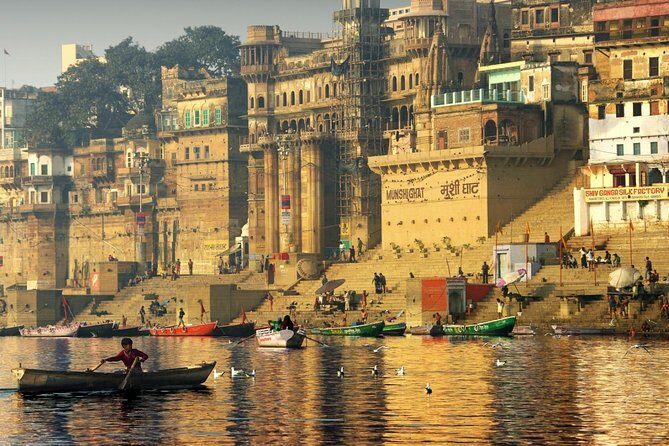
You visit Assi Ghat first, one of Varanasi’s oldest and most important ghats. Your pickup depends on season: around 6 am in winter and 5 am in summer. That timing helps you catch the river before it becomes fully chaotic, and it’s often the best moment of the day to understand why people come here.
Next, you walk toward Shri Kashi Vishwanath Temple, also associated with the Golden Temple area and the Jyotirlinga temple zone. After temple time, you return to your hotel for breakfast. This is a smart pacing choice: religious sites can take emotional and physical energy, and breakfast keeps the day from turning into one long sprint.
After breakfast, you visit Banaras Hindu University and its temple area, plus Kina Ram, described as an aghori’s temple and ashram. Even if you’re not an expert in the traditions, university spaces and temple complexes in Varanasi reveal how modern education and devotion share the same geography.
Then you head to Manikarnika Ghat, listed among the oldest ghats and described as having the highest position among ghats in holy scriptures. Your guide-led context here matters because this ghat is linked to beliefs about moksha if someone is cremated there. This stop is one of those moments where you’ll likely want a respectful, quiet mindset.
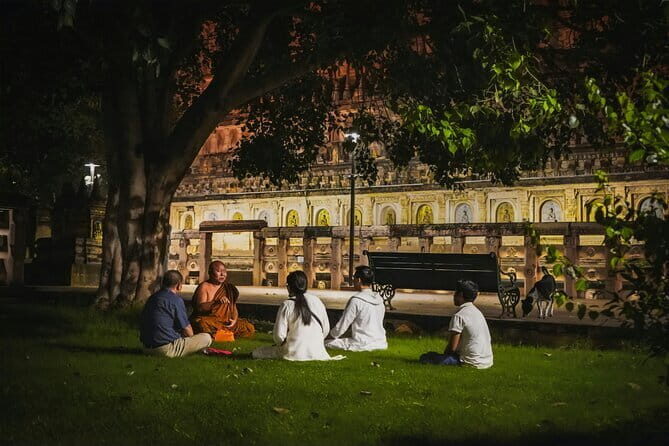
After that, you travel about 10 km to Sarnath, where Gautama Buddha first taught the Dhamma, and where the Buddhist Sangha came into existence through enlightenment of Kondanna. You’ll have about two hours here, which is a good chunk of time to see the deer park setting without feeling rushed.
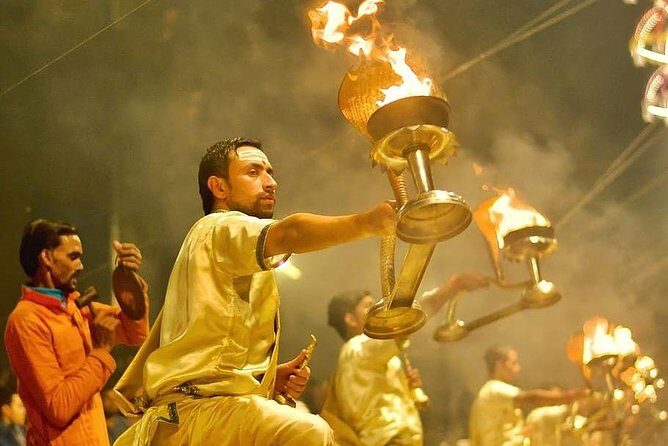
You return to Varanasi for Dashashwamedh Ghat, one of the main ghats on the Ganga, located close to the Vishwanath Temple area. Then the day ends with the big one: Ganga Aarti at dusk, performed daily by a group of priests. This is where the tour stops feeling like sightseeing and starts feeling like you’re watching a daily ritual that locals have carried for generations.
Respect note (important)
Varanasi is powerful. You’ll see practices you may not be used to. Follow your guide’s cues on where to stand and when to move. Dress comfortably and keep a calm, observant attitude.
Day Six: Fly Back to Delhi and Finish With a Simple Drop-Off
On your final day, you fly from Varanasi back to Delhi. Baggage allowances are again part of the domestic flight plan: 15 kg checked and 7 kg carry on.
Once you land, a driver picks you up and drops you at your desired location in Delhi, Gurugram, or Noida. It’s a clean end point, and it avoids the common DIY headache of figuring out last-mile transport when you’re tired.
What’s Included vs. What You’ll Still Need to Plan
Here’s the practical breakdown of the value you’re getting:
Included:
- Private air-conditioned car
- Pick-up and drop-off assistance
- Entrance tickets for the included monuments
- Tour guide service
- 5 nights hotel accommodation in Agra and Jaipur with breakfast
Not included:
- Tipping for guide and driver
- Other personal expenses
What I like about this setup is that it reduces the “surprise costs” feeling. Since entrance tickets are covered for the stops listed, you can focus on pacing and photography rather than figuring out ticketing on the fly.
Guide Service and the Human Touch: Why Reviews Matter Here
The feedback I see places heavy weight on safety, comfort, and respectful service. One recurring detail is that the guide support includes Spanish-speaking ability, with Sartaj highlighted as a standout, and Shadil mentioned in connection with generosity and help.
That matters because in India, the difference between a good day and a great day often comes down to communication and timing. When your guide can explain what you’re seeing and help with how to move through sites, you get more than a route—you get context.
Price and Logistics: Is $998 a Good Deal?
For a private, guided six-day route connecting four major cities—including private A/C driving, included monument entrance tickets, and hotel nights with breakfast—the price can be fair, especially if you value convenience.
The biggest reason it can feel worth it:
- You avoid building the plan yourself: transfers, guides, and ticket coverages.
- You get sunrise timing at the Taj Mahal, which is hard to replicate well without coordination.
- Your route includes Varanasi rituals and Sarnath—places where timing and local navigation really help.
The biggest reason it might not be worth it for you:
- If you love slow travel, this is not that. It’s structured and time-tight, with a domestic flight and multiple early starts.
- If you’re comfortable DIY’ing using trains and arranging tickets on your own, you may be able to spend less.
Who This Tour Fits Best
This tour is a strong match if:
- you want private comfort without the stress of planning
- you care about seeing iconic sights in the right order, including sunrise at the Taj Mahal
- you like having a guide explain what you’re seeing rather than guessing
It’s less ideal if:
- you’re sensitive to early mornings
- you hate travel days and want more time in one place
Should You Book This Private Delhi–Agra–Jaipur–Varanasi Tour?
I’d book it if you want an organized, guide-led run through four distinct cultural zones, with the payoff of Varanasi at dusk and Taj Mahal at sunrise. It’s also a smart pick if you prefer clear inclusions—private car, included monument tickets, and hotel breakfast—so you can spend your energy on the sights, not the admin.
Don’t book it if your ideal trip is slow and flexible. This one is efficient, and you’ll feel it. If you go in with that mindset, you’ll likely enjoy how much meaning you pack into six days.
FAQ
What’s the total duration of this tour?
The tour runs for about 6 days, connecting Delhi, Agra, Jaipur, and Varanasi.
Do I get a private car and a guide?
Yes. The tour includes a private air-conditioned car and tour guide service, along with pick-up and drop-off assistance.
Are entrance tickets included?
Yes. Entrance tickets for the monuments included in the tour are provided.
Is sunrise Taj Mahal part of the plan?
Yes. The Taj Mahal visit is scheduled for sunrise.
How does the Varanasi morning timing work?
In winter, the Assi Ghat pickup is set for around 6 am; in summer it’s around 5 am.
What are the domestic flight baggage limits?
For the domestic flight, baggage allowance is 15 kg checked and 7 kg carry on.