REVIEW · NEW DELHI
Private Golden Triangle Tour for 5 nights/6 days
Book on Viator →Operated by Rajasthan Cab · Bookable on Viator
Golden Triangle tours are easy to mess up with bad timing. This one works because you get private transport plus a driver-guide who handles the in-between moments, so you can focus on monuments and neighborhoods. I also like how the route packs in key UNESCO sites without making you hunt for tickets or transit. One thing to keep in mind: monument entry fees (and some camera fees) are not included for most stops, so you’ll want a little extra cash in your daypack.
If you’re the type who wants to see a lot, but still stay comfortable, this format fits. You’ll start in New Delhi at 9:00 am, travel by clean air-conditioned car, and finish with a drop at Jaipur Airport. The possible drawback is pacing: several days are packed with multiple major sights, so you’ll need flexible energy (and good shoes).
In This Review
- Key Highlights You’ll Actually Feel
- Private Car From New Delhi to Jaipur: The Comfort Trade-Off
- Day 1 in New Delhi: Connaught Place and India Gate for an Easy Landing
- Day 2: Humayun’s Tomb, Qutub Minar, Red Fort, Jama Masjid, Gurudwara Bangla Sahib, and Chandni Chowk
- Day 3: Agra Fort, Itmad-ud-Daula, and Akbar’s Tomb Before the Taj Moment
- Day 4: Taj Mahal (Plus Fatehpur Sikri and Bharatpur Bird Sanctuary)
- Day 5 Jaipur: Panna Meena ka Kund, Jal Mahal, City Palace, Hawa Mahal, Jantar Mantar, and Albert Hall Museum
- Day 6: Jaipur Airport Drop-Off Without Extra Sightseeing Pressure
- Price and Value: What $850 Covers (and What You Should Budget For)
- How the Private Driver-Guide Changes Your Day
- Practical Tips That Help You Enjoy the Long Days
- Should You Book This Private Golden Triangle Tour?
- FAQ
- How long is the Private Golden Triangle Tour for 5 nights/6 days?
- Where does the tour start and what time does it begin?
- Does the tour include pickup and drop-off?
- Which cities are included?
- Is transportation private and air-conditioned?
- Are tour guides included?
- Is accommodation and breakfast included?
- Are monument entry tickets included?
- Is the tour suitable for most travelers?
- What is the cancellation policy?
Key Highlights You’ll Actually Feel
- Private AC car all the way between New Delhi, Agra, and Jaipur, with less friction than DIY
- UNESCO-heavy Delhi and Agra days, including Humayun’s Tomb, Qutub Minar, Red Fort, and the Taj Mahal
- Old Delhi market time at Chandni Chowk, where you can snack and browse without planning stress
- Iconic Jaipur architecture from Hawa Mahal’s 953 jharokhas to the big stone instruments at Jantar Mantar
- Driver-guide continuity, with past feedback praising drivers like Mohan Singh Rathore and Pushpendra for safe, helpful guidance
- 5 breakfasts included when you book the accommodation option that includes meals
Private Car From New Delhi to Jaipur: The Comfort Trade-Off
The best part of this tour is the basic structure: you’re not juggling buses, taxis, or ticket lines between cities. You’re riding in an air-conditioned private vehicle, and you have a professional driver who doubles as your guide for the excursions. That matters because the Golden Triangle is famous for big sights, but the real challenge is timing—getting from one place to another without wasting hours.
The route is also set up as a true “car tour,” not a hop-on, hop-off plan. You start at Indira Gandhi International Airport in New Delhi, with pickup offered, and you’re dropped at Jaipur Airport on the last day. That kind of door-to-airport rhythm is great if you want your trip to feel organized without losing spontaneity.
Value-wise, the $850 price makes sense if you count what you’re getting beyond sightseeing: private transport, driver-guide time during outings, and breakfast included when you book the right accommodation option. The trade-off is that this isn’t a budget-only experience. You’re paying for convenience and guidance, not for a pile of free entrance tickets.
You can also read our reviews of more private tours in New Delhi


Day 1 in New Delhi: Connaught Place and India Gate for an Easy Landing
Your first day keeps things light and good for jet lag. You’ll spend around two hours at Connaught Place, New Delhi’s major commercial hub, where the streets feel more “planned” and walkable than Old Delhi. It’s also a great spot to orient yourself—wide sidewalks, familiar building lines, and plenty of places to grab a drink and reset before the more intense days.
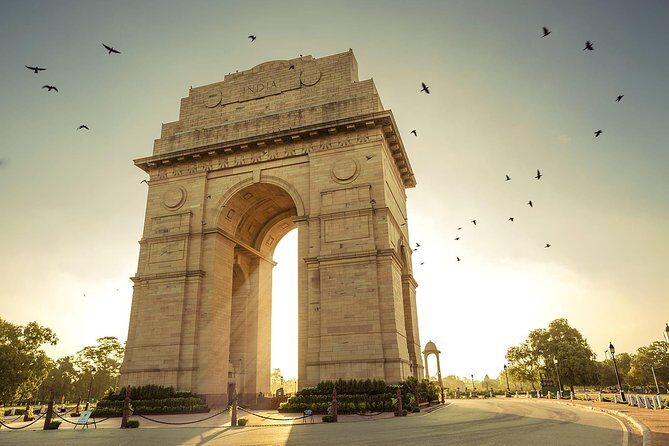
Next comes India Gate, the grand war memorial designed by Sir Edwin Lutyens. The structure is about 42 meters tall and is often compared to France’s Arc de Triomphe, which gives you an instant visual reference even if you don’t know the full context. Entry here is listed as free, so this is one of those days where you can enjoy the atmosphere without worrying about ticket logistics.
What I like about starting with these two stops is the pacing. You’re not immediately thrown into the densest parts of Delhi. You’re getting your bearings fast, and then the tour ramps up over the next days.
Day 2: Humayun’s Tomb, Qutub Minar, Red Fort, Jama Masjid, Gurudwara Bangla Sahib, and Chandni Chowk
This is the “big day” in Delhi. You start with Humayun’s Tomb, a UNESCO World Heritage site and the final resting place of Mughal Emperor Humayun. The standout idea here is that it’s known as the first garden-tomb—so you’re not just looking at a building. You’re looking at a designed landscape meant to frame the tomb and guide your eye.
Then you have Qutub Minar in the Qutub Complex, another UNESCO site. It’s described as a victory tower and is the second tallest monument in the world. Your time allocation is very short (about one minute listed), so expect this stop to be more about quick orientation and photos than a deep crawl through the complex.
From there, the tour moves into Old Delhi’s major power sites:
- Red Fort on the Yamuna riverbank, a UNESCO site built with red sandstone and known to include museums.
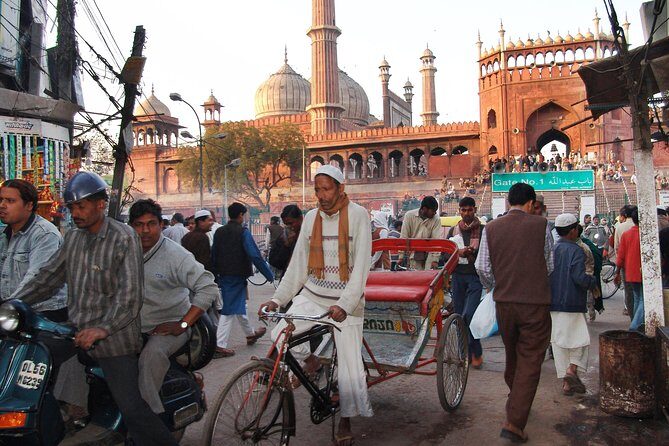
- Jama Masjid, the largest mosque built by Shah Jahan, and a place that draws crowds on Fridays and Eid for special Namaz.
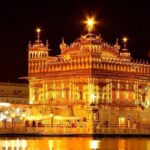
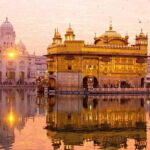
- Gurudwara Bangla Sahib, a major Sikh pilgrimage site first built as a small temple in 1783.
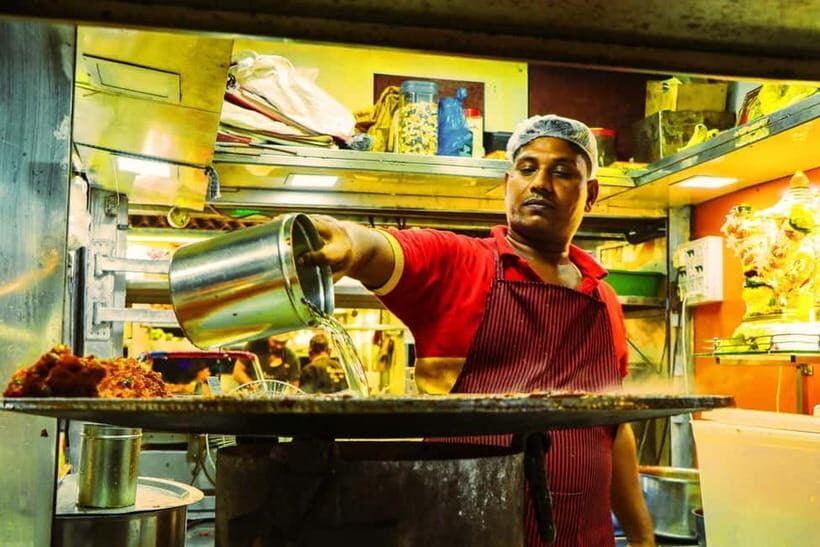
- Chandni Chowk, one of the oldest and busiest markets in Old Delhi, still famous for food and all kinds of shopping.
Here’s the practical reality: this is a long day of landmark-hopping. If you want to enjoy it, plan to go slower inside your head. Take a breath between stops. Drink water. And remember that religious sites (mosques and gurudwaras) are living places—show respect with your clothing and behavior.
A possible consideration: many of these monuments list entry fees as not included, so budget for that. Also, with so many stops in one day, your “favorite moment” might be a quieter one—like a short pause on a side street in Chandni Chowk—rather than the headline attraction.
Day 3: Agra Fort, Itmad-ud-Daula, and Akbar’s Tomb Before the Taj Moment
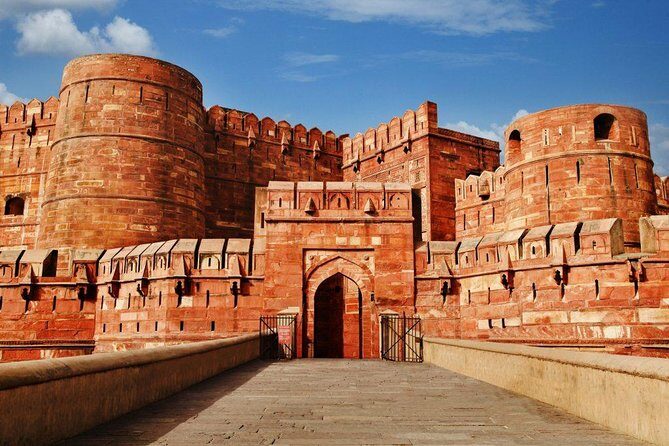
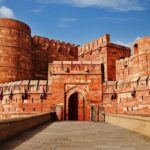
Agra days hit different. You’re trading Delhi’s sprawl for the Mughal grandeur concentrated along the Yamuna. You start with Agra Fort, a UNESCO World Heritage site. The fortress is a hands-on architectural lesson in Mughal-era legacy—great if you like stone, layouts, and power structures.
Next is Itmad-ud-Daula, often nicknamed the Baby Taj. It’s a Mughal mausoleum noted as the first tomb in India entirely built with marble. The tour also points out that it inspired the construction of the Taj Mahal. That’s a useful fact because it helps you see the Taj later with better context—like spotting an artist’s earlier style.
You then visit Akbar’s Tomb, built between 1605 and 1613, described as an iconic Mughal architectural jewel and the final resting place of Emperor Akbar. I like this sequence because you’re building toward the big finale: first fortress and mausoleum foundations, then the deeper narrative of Mughal design.
If you’re photo-focused, this day is actually excellent. The shapes and craftsmanship at mausoleums and forts often look better with softer light than you might expect. If you’re more museum-focused, you’ll likely appreciate the fort sections and how they tie together.
Day 4: Taj Mahal (Plus Fatehpur Sikri and Bharatpur Bird Sanctuary)
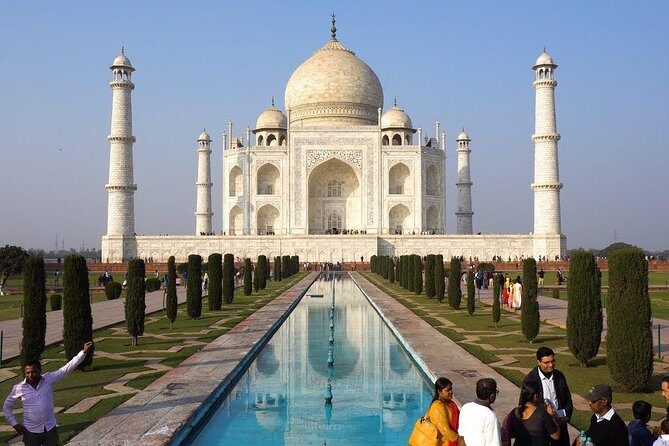
Now comes the obvious highlight: the Taj Mahal. It’s a UNESCO World Heritage site and the tour explains it as a memorial built by Shah Jahan for his third wife, Mumtaz Mahal. Even if you’ve seen photos before, standing before it works because the building is designed to be viewed from multiple angles, not just one.
After the Taj, the plan continues “away from the obvious.” You stop at Fatehpur Sikri on the way to Jaipur. This place is described as a fortified city founded by Emperor Akbar in 1571, and it was the capital of the empire for about 14 years. Admission here is listed as free, which is a nice bonus in a day that already includes one of the most ticketed sites in India.
Then there’s a nature reset with Bharatpur Bird Sanctuary, another UNESCO site and described as a bird-watching paradise. The tour notes it’s home to diverse species—birds, flora, fishes, snakes, and more fauna. This stop is valuable because it breaks the “monuments only” rhythm. It also gives you a different kind of wow: less architecture, more living ecosystems.
Real talk: this is a day with many emotional peaks. The Taj is huge, Fatehpur Sikri adds another layer, and Bharatpur shifts your senses. If you want the day to feel enjoyable instead of rushed, don’t chase every photo. Pick a few moments to really look.
A few more New Delhi tours and experiences worth a look



Day 5 Jaipur: Panna Meena ka Kund, Jal Mahal, City Palace, Hawa Mahal, Jantar Mantar, and Albert Hall Museum
Jaipur is where the tour turns from Mughal power to Rajput-era and design-driven city icons.
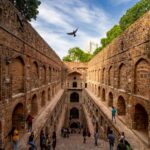
You begin at Panna Meena ka Kund, a stepwell described as a magical maze of stairs and steps, constructed in the 16th century as a major water source. Stepwells can seem like “just another structure” until you remember what they represented in daily life—cool access to water shaped by architecture.
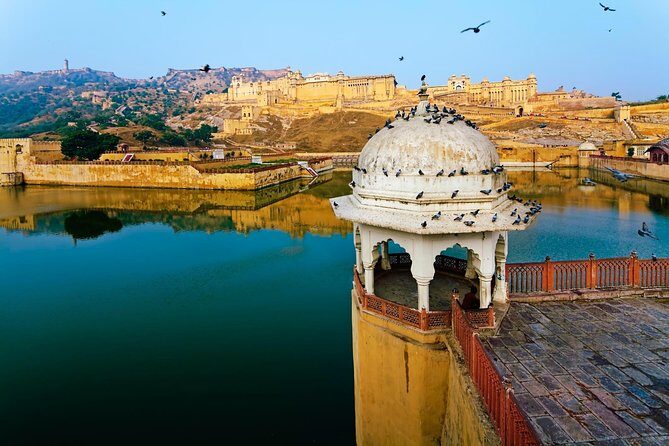
Next is Jal Mahal, the Water Palace in the middle of Man Sagar Lake. The tour notes views that are especially good around sunrise and sunset, and it lists entry as free. Even if you don’t get perfect timing, this is a strong visual break from temples and forts.
Then you move into the city’s signature landmarks:
- City Palace of Jaipur, the residence where the Maharaja reigned, including Chandra Mahal and Mubarak Mahal.
- Hawa Mahal (Palace of Wind), famous for its 953 small jharokhas. The tour explains the Venturi-effect idea: air passes through openings and helps cool the interior.
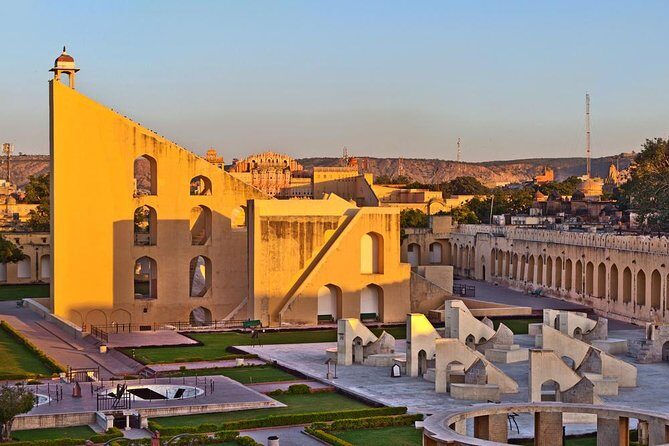
- Jantar Mantar, UNESCO World Heritage listed, with the largest stone sundial in the world and a collection of 19 astronomical instruments.
- Albert Hall Museum in Ram Niwas Garden, noted for collections including carpets, stones, paintings, work of crystal, ivory, and metal sculptures.
If you like variety, this day is a win: water engineering, palace life, wind-cooling architecture, astronomy tech, and museum artifacts all in one sequence. The only drawback is that each stop needs a little mental shift. If you’re tired, focus on the parts that match your interests rather than trying to “do it all perfectly.”
Day 6: Jaipur Airport Drop-Off Without Extra Sightseeing Pressure
On the last day, the plan is straightforward: you get a 30-minute stop in Jaipur and then a drop at Jaipur Airport to conclude the tour. That clean finish is useful if you have a flight and don’t want a last-minute scramble.
If you’re the kind of traveler who enjoys a final café stop or quick souvenir run, Day 5 is your better day for that. Day 6 is for getting to the airport feeling calm.
Price and Value: What $850 Covers (and What You Should Budget For)
At $850 per person for about 5 nights/6 days, this is priced for convenience and private service, not for barebones travel. Here’s what’s clearly included in the package:
- Private transportation with an air-conditioned vehicle
- Professional private tour guides cum driver for all excursions
- Mineral water bottle
- Accommodation with breakfast if you book with the suitable option
- Breakfast (5) in that case
- Mobile ticket
- Pickup is offered
What you should plan for separately:
- All fees and taxes not included
- Anything not mentioned
- Camera fees at monuments
So how do you decide if it’s worth it? I think it’s a strong deal if you want:
- a driver-guide to manage timing and context across many sites
- less stress moving between Delhi, Agra, and Jaipur
- multiple high-profile attractions where “getting there” matters as much as “being there”
It may feel expensive if your main goal is just photos and you’re comfortable handling entry tickets and route planning yourself. But if you’re paying for a smooth, private flow, $850 starts looking reasonable.
One small caution based on service feedback patterns: some people have said the overall price felt higher than expected. That’s not a deal-breaker, but it’s a reminder to check what accommodation category you’re selecting and confirm what entry fees you’ll likely need.
How the Private Driver-Guide Changes Your Day
Private travel is only as good as the person behind the wheel. In feedback connected to this operator, multiple drivers are singled out for behavior and service quality. Names that come up include Mohan Singh Rathore, Pushpendra, Avedesh Sharma, Nanda Kishore, Nemi Nayak, Ranjeet Singh Khangarot, Santhosh Sharma, Guman, and Rakesh Yadav.
Even without naming every driver, the pattern is clear: good guidance tends to mean:
- safe, confident driving
- flexibility when a site is busy
- explanations that make the monuments make sense quickly
- punctual pickup and drop comfort
You’ll also benefit from having someone who understands where you’ll spend your time. With a packed Golden Triangle route, the difference between a good plan and a stressful one is often those small time-management decisions.
Practical Tips That Help You Enjoy the Long Days
You’ll be walking at many monument sites, including forts, palaces, tomb complexes, and market areas. Comfortable shoes are not optional.
Also keep expectations realistic:
- Some stops are quick (like the listed brief time at Qutub Minar), so your goal there is orientation, not perfection.
- Expect a few days where you see many major landmarks. Pick your personal priorities early and don’t try to “score” everything.
Finally, for religious sites and crowded areas, dress and behavior matter. The tour includes Jama Masjid and Gurudwara Bangla Sahib, so follow local norms and keep your tone respectful.
Should You Book This Private Golden Triangle Tour?
I’d recommend it if you want a classic Delhi–Agra–Jaipur introduction with private comfort and guided context across multiple UNESCO sites. It’s especially good for first-timers who don’t want to gamble on transit timing, and for people who value a clean, air-conditioned ride between big sights.
Skip it (or at least think twice) if you’re chasing the lowest possible cost and you’d rather handle entry tickets and routing yourself. The monument fees are not included for most major attractions, and the schedule is packed enough that you’ll want energy and good walking shoes.
If you book, I’d do two simple things: confirm what accommodation option you’re choosing (since breakfast depends on it), and budget extra for entrances and camera fees. Then you can spend the trip doing the fun part—looking closely at places like the Taj Mahal, Hawa Mahal’s jharokhas, and the stepwell engineering at Panna Meena ka Kund.
FAQ
How long is the Private Golden Triangle Tour for 5 nights/6 days?
It runs for about 6 days.
Where does the tour start and what time does it begin?
It starts at Indira Gandhi International Airport in New Delhi at 9:00 am.
Does the tour include pickup and drop-off?
Pickup is offered, and on the last day you’re dropped at Jaipur Airport.
Which cities are included?
The tour covers New Delhi, Agra, and Jaipur.
Is transportation private and air-conditioned?
Yes. It includes private transportation in an air-conditioned vehicle.
Are tour guides included?
Yes. You’ll have professional private tour guides cum driver for all excursions.
Is accommodation and breakfast included?
Accommodation with breakfast is included if you book with a suitable option, and breakfast is listed for 5 days.
Are monument entry tickets included?
All fees and taxes are not included. Some locations are listed as free (like Connaught Place, India Gate, Fatehpur Sikri, and Jal Mahal), but many monuments are listed as not included.
Is the tour suitable for most travelers?
The tour notes that most travelers can participate.
What is the cancellation policy?
Free cancellation is available if you cancel up to 24 hours in advance for a full refund.