REVIEW · KOLKATA
Temple and spiritual trail in Kolkata
Book on Viator →Operated by 5 Senses Walks · Bookable on Viator
Four temples, one fast-moving morning. This Kolkata spiritual trail strings together Hindu and Jain worship sites with just enough context to make the sights click, even if you only have a day. I love the practical flow: hotel pickup and drop-off mean you spend energy on temples, not traffic. I also like that admission tickets and lunch are part of the package, so you’re not hunting for details mid-day. One caution: the schedule moves, so if you want long pauses, lots of photos, or time to linger in quiet corners, this isn’t the slow-and-calm option.
The upside is efficiency. For example, a guide named Anirban has a reputation for keeping things on track, and you can cover all four stops by around noon even in hot, humid weather. The tradeoff is that you may feel a bit rushed at each temple and spend less time than you’d like taking pictures or asking deeper follow-ups—so be ready to ask your questions early and at each stop.
In This Review
- Key highlights you’ll feel the most
- Getting Started: 7:30am Pickup and a Tightly Timed Temple Trail
- Belur Math: Ramakrishna Mission Headquarters and a Reflective First Stop
- Dakshineswar Kali Temple: Rani Rashmoni’s Dream and the Focus on Kali
- Pareshnath Jain Temple: Jain Presence in Kolkata and Merchant Roots
- Kalighat Kali Temple: Pilgrims, Popularity, and King Manasingha’s Origins
- Lunch Included: Making the Midday Reset Work in Humid Kolkata
- Price and Value: Why $120 Can Be Fair for Four Sites and Transport
- How to Squeeze More Meaning From Each 45 Minutes
- Who This Temple and Spiritual Trail Suits Best
- Should You Book This Kolkata Temple Trail?
- FAQ
- What’s the duration of the Temple and spiritual trail in Kolkata?
- How much does the tour cost?
- Does the tour include hotel pickup and drop-off?
- Which temples are included?
- Are admission tickets included?
- Is lunch included?
- Are drinks included?
- Can I cancel for a full refund?
Key highlights you’ll feel the most
- 4 iconic holy sites in one day: Belur Math, Dakshineswar Kali, Pareshnath Jain, and Kalighat Kali
- Round-trip hotel pickup that keeps the day simple and stress-free
- Admission tickets included so you can focus on the visit, not the desk
- Lunch included as part of the timing, not as an afterthought
- Frequent Q&A opportunities during the guided segments between temples
Getting Started: 7:30am Pickup and a Tightly Timed Temple Trail
The day begins early, around 7:30am, with hotel pickup. That matters here because Kolkata temple life happens in waves—morning tends to be manageable for sightseeing, and you’ll cover more ground before the day heats up. You’ll start with a quick orientation, then head out to the first site.
This is set up as a private experience for just your group, not a free-for-all with strangers. On the ground, that usually means you can ask questions without feeling drowned out. You also get a mobile ticket, which helps if you’re trying to move through multiple entry points smoothly.
Keep expectations realistic: the whole tour is about 8.5 hours, but it’s built around four stops with fairly short temple windows. That’s not a problem if your goal is to see the main places and learn the connections. It can feel cramped if your goal is worship that lasts hours. The route is designed for limited time, so the best results come when you treat each stop like a focused visit with time for questions, not a relaxed stroll.
You can also read our reviews of more tours and experiences in Kolkata.



Belur Math: Ramakrishna Mission Headquarters and a Reflective First Stop
Your first temple stop is Belur Math, the worldwide headquarters of the Ramakrishna Mission. The site is a strong way to start the day because it sets a tone that’s more reflective than purely ceremonial. Belur Math is noted as having been built in 1938, and that detail helps you understand it isn’t just a centuries-old ruin that tourists pass through—it’s part of a modern, living spiritual organization.
You’ll spend about 1 hour here, including admission. In that time, the key is to look for how the campus communicates spirituality through layout, not just through a single shrine. Even if you’re not deeply familiar with the Ramakrishna Mission, you’ll likely catch the theme quickly: this is a place where teachings and discipline are part of the daily environment.
A practical tip: arrive with one or two questions ready for your guide. Since the schedule is tight, you’ll get more value if you ask early—things like how Ramakrishna Mission teachings connect to what you’ll see later at Kali temples. A good guide can turn those connections into a mental map you carry through the day.
Dakshineswar Kali Temple: Rani Rashmoni’s Dream and the Focus on Kali
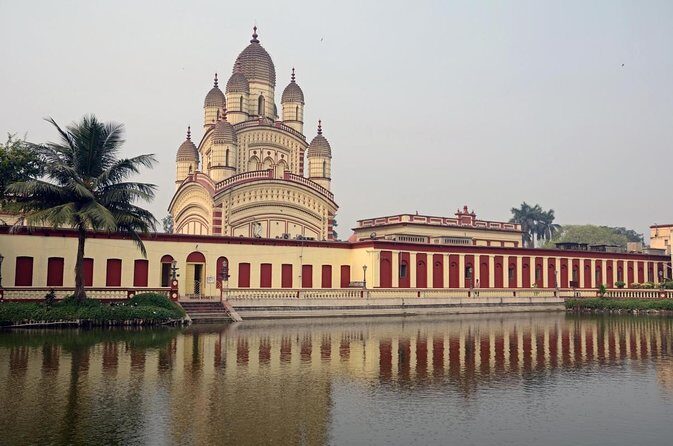
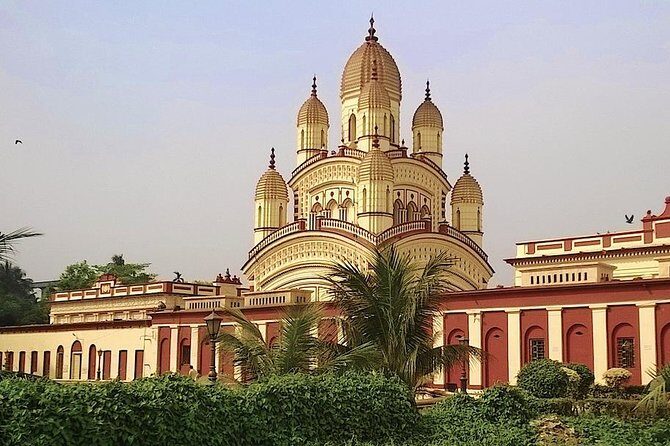
Next comes Dakshineswar Kali Temple, scheduled for around 9:30am with about 45 minutes on site. This is one of Kolkata’s best-known Kali destinations, and it’s centered on the Goddess Kali. The story attached to the temple is specific and memorable: it was founded by Rani Rashmoni, linked to a dream she had when she was about to start on her undertaking.
That origin story matters because it changes how you view the temple experience. You’re not just seeing a major shrine—you’re stepping into a narrative about devotion, decision-making, and faith driving action. When your guide explains that background, the place starts to feel less like a checklist item and more like a living tradition with a founder’s motive behind it.
You’ll likely find the mood intense and focused. Kali temples are not subtle in atmosphere. People come to pray, and the energy reflects that. If you care about photos, don’t assume you’ll get tons of time; use the moments you have well—shoot wide first to capture the setting, then move in only if it’s comfortable and respectful.
Pareshnath Jain Temple: Jain Presence in Kolkata and Merchant Roots
At about 11:00am, you visit Pareshnath Jain Temple for roughly 45 minutes. This stop is a smart contrast to the Kali temples. It shifts the spiritual lens from one dominant Hindu goddess focus to Jain worship and Jain community life.
The context here is key: Jain merchants followed the East India Company to Kolkata, and they became a significant part of society there. When your guide connects that movement of people to the presence of Jain temples today, the city stops feeling like a set of isolated monuments. You start seeing how trading routes and migration shaped religious geography.
In a short visit, your best approach is to focus on two things: the temple’s visual cues (how it’s organized and what symbols you notice) and the way your guide explains Jain values in plain terms. If you ask about what worship here centers on, you’ll likely leave with a clearer understanding than what you’d pick up from quick sightseeing alone.
This stop is also a reminder that Kolkata’s spiritual life isn’t one single lane. The day’s structure—Hindu, then Jain, then Kali again—makes that point fast.
Kalighat Kali Temple: Pilgrims, Popularity, and King Manasingha’s Origins
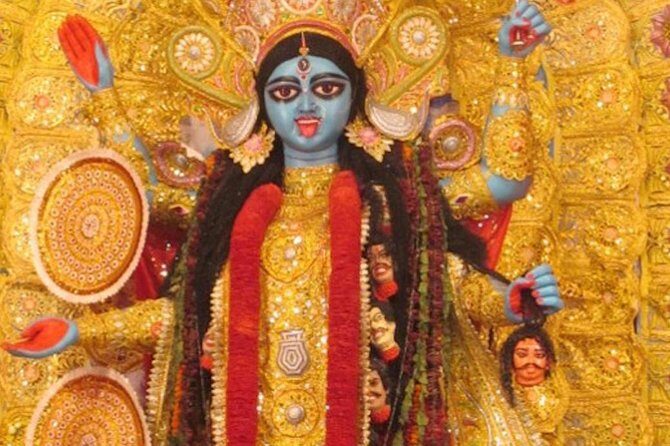
The last temple on the main route is Kalighat Kali Temple, around 12:30pm, again with about 45 minutes. This is described as one of Kolkata’s most popular Kali temples, with pilgrims thronging there to pray. The popularity isn’t just a “tourist factor.” It’s about real, ongoing religious practice.
The temple’s origin story is also concrete: it began as a small hut and was built by King Manasingha. That detail adds a grounded sense of place. You’re seeing how something small can become a major center of devotion over time. In a short time window, those stories help you “read” the temple instead of just looking at it.
Expect crowds and intensity. The best mindset is to treat this as a witness stop: you observe, you participate in a respectful way, and you let the scale of devotion hit you. If you’re easily overwhelmed by busy places, try to plan your photo strategy carefully and don’t wait until the last minute to ask questions. By this stage in the day, you’ll be tired—heat and movement stack up—so energy management is part of getting value.


Lunch Included: Making the Midday Reset Work in Humid Kolkata
Lunch is included in the tour, and it’s one of the reasons this itinerary feels practical rather than purely “temple shopping.” In an 8.5-hour schedule, you don’t want to spend your energy deciding where to eat, especially once you’ve already been out since 7:30am.
What’s missing on the package side is drinks. So if you’re sensitive to heat, bring that thinking into the day: hydrate before you set out, and consider grabbing water as needed during the gaps between temples. The reviews mention hot, humid conditions, and that’s exactly when planning around fluids makes the whole day feel easier.
Also, use lunch as your mental reset. After you’ve seen a temple focused on one faith and then another, it helps to pause long enough for your brain to connect the dots. If your guide offers quick comparisons—how the day’s stories relate—you’ll get more out of it at lunch than if you try to absorb everything while walking between sites.
Price and Value: Why $120 Can Be Fair for Four Sites and Transport
At $120 per person, this isn’t the cheapest thing you can book in Kolkata. But it’s also not trying to be. It’s paying for several concrete components bundled together: hotel pickup and drop-off, guided time across four temples, admission tickets included, and lunch.
Here’s how I’d think about value if you’re deciding quickly: if you had to arrange transport yourself, buy tickets at each stop, and still find time to get a guide who explains the differences between the four traditions, you’d likely spend more time and often more money. In other words, the price buys you coordination and context. That’s often what makes a temple trail feel worth doing, especially when your time in the city is limited.
Booking tends to happen ahead of time (on average about 20 days), which is a hint that this route works for people who want a structured day. If you’re the type who hates scrambling for details, this package can feel very clean.
How to Squeeze More Meaning From Each 45 Minutes
This tour works best if you travel with a “quality over quantity” mindset. Each temple gets around 45 minutes (Belur Math is longer at about 1 hour). That means you won’t have the luxury of sitting forever in one spot or taking endless photos.
So here’s what I recommend you do to get maximum return:
- Ask one question per stop. Save the deeper questions for the right site—especially about why each place matters and how the stories connect.
- Prioritize one photo goal: either the main shrine view or a wide establishing shot. Trying to do both every time can eat your time.
- Keep an eye on your pace. Your guide will keep moving to stay on schedule. If you want a moment for a closer look, signal it early.
- Dress and plan for heat. Humidity can slow you down fast. Comfortable clothes and a simple pace help a lot.
The biggest “value unlock” here is mental. If you understand what you’re seeing—Ramakrishna Mission’s headquarters role, Rashmoni’s dream-linked founding, Jain merchant roots, and Kalighat’s origins—you’ll walk away with a fuller picture even if you never stop for long.
Who This Temple and Spiritual Trail Suits Best
If you’re short on time and want to cover the most important religious sites in Kolkata, this fits well. It’s also a strong choice if you like variety in one day: two Kali-centered Hindu temples, plus a major Jain temple, all connected by your guide’s context.
It’s especially good for people who:
- prefer guided structure over self-planning,
- want hotel pickup to reduce friction,
- enjoy learning the backstories behind places you see.
It may not suit you as well if you’re looking for a slow, devotional visit at each stop. Since the schedule is efficient and designed to finish by around noon, you’ll likely feel the pace. If your travel style is calm wandering and long photo sessions, you may prefer a more flexible itinerary.
Should You Book This Kolkata Temple Trail?
I’d book it if your priority is seeing four major sites in one day with included transport, admission, and lunch, and if you’re happy with a focused visit style. The route is built for time-strapped travelers and people who want the “why” behind what they’re looking at, not just the “what.”
I would hesitate if you know you dislike feeling rushed or you want hours at a single temple. This tour’s value comes from efficiency, and that efficiency can feel tight when you’d rather linger.
If you’re in the sweet spot—curious, time-limited, and okay with moving through each place thoughtfully—this is a solid way to experience Kolkata’s spiritual texture without turning your day into a logistics puzzle.
FAQ
What’s the duration of the Temple and spiritual trail in Kolkata?
It runs for about 8 hours 30 minutes (approx.).
How much does the tour cost?
The price is $120.00 per person.
Does the tour include hotel pickup and drop-off?
Yes. Hotel pickup and drop-off are included.
Which temples are included?
You’ll visit Belur Math, Dakshineswar Kali Temple, Pareshnath Jain Temple, and Kalighat Kali Temple.
Are admission tickets included?
Yes. Admission tickets are included for the temple stops.
Is lunch included?
Yes. Lunch is included during the tour.
Are drinks included?
No. Drinks are not included.
Can I cancel for a full refund?
Yes. You can cancel up to 24 hours in advance for a full refund. Canceling less than 24 hours before the start time won’t be refunded.