REVIEW · NEW DELHI
5-Day Private Golden Triangle Tour: Delhi, Agra, and Jaipur
Book on Viator →Operated by Pacific Classic Tours India · Bookable on Viator
Delhi to Jaipur in five days, no map stress. This private Golden Triangle route trades last-minute planning for door-to-door logistics and a tight, well-paced hit list of UNESCO sights.
I love that the tour includes a private guide in each city, so you’re not just looking at monuments—you’re getting the why behind them. I also like the small comfort wins: unlimited bottled water and an air-conditioned vehicle that keeps travel time from stealing your energy.
My only real caution is the intensity. With early and midday starts plus a Taj Mahal sunrise visit that’s weather-dependent, this is best for travelers who enjoy structure more than lingering at every stop.
In This Review
- Key points worth your attention
- Why this Golden Triangle feels easier than DIY
- The guide factor (and why it matters here)
- Day 1 in Delhi: Mughal tombs, monumental minarets, and Old Delhi calm
- Humayun’s Tomb
- Qutub Minar
- Lotus Temple (Monday closed)
- India Gate and the Lutyens-era government center
- Jama Masjid and Raj Ghat
- Chandni Chowk by bicycle rickshaw (optional, extra)
- Swaminarayan Akshardham (included, Monday closed)
- Day 2: Agra Fort + the Taj Mahal photo moment from Mehtab Bagh
- Agra city arrival and hotel check-in
- Agra Fort
- Mehtab Bagh Taj photo tour
- Day 3: Taj Mahal sunrise is the whole point
- Taj Mahal sunrise visit (weather dependent)
- Battery bus / golf cart return ride
- En route to Jaipur: Chand Baori step well
- Day 3 into Day 4 in Jaipur: forts, palaces, and the city’s geometric thinking
- Amber Palace
- Jal Mahal photo stop
- Hawa Mahal photo stop
- City Palace
- Jantar Mantar Observatory
- Monkey Temple (Galtaji)
- Day 5: morning flexibility and a smooth departure
- Hotel options, breakfast, and why the upgrade can be worth it
- What you’re really getting for the price
- Who this tour suits best
- Should you book this Golden Triangle private tour?
- FAQ
- FAQ
- What’s the starting time for the tour?
- Does this tour include hotel stays?
- Is breakfast included?
- Are entrance fees included?
- Do I get bottled water during the tour?
- Is the Taj Mahal sunrise guaranteed?
- Are there extra charges for any activities?
- Which temples have weekday closures I should know about?
- Where do I end up on the last day?
Key points worth your attention
- Private guides in Delhi, Agra, and Jaipur: you get context, not just directions
- Hotel upgrade options (4-star or 5-star) with daily breakfast
- Entrance fees included for the listed monuments, so budgeting is simpler
- Taj Mahal sunrise is weather dependent and can affect timing
- Comfort-forward transfers with an AC private vehicle and bottled water
- Extra activities cost extra (like a rickshaw in Old Delhi) if you choose them
Why this Golden Triangle feels easier than DIY
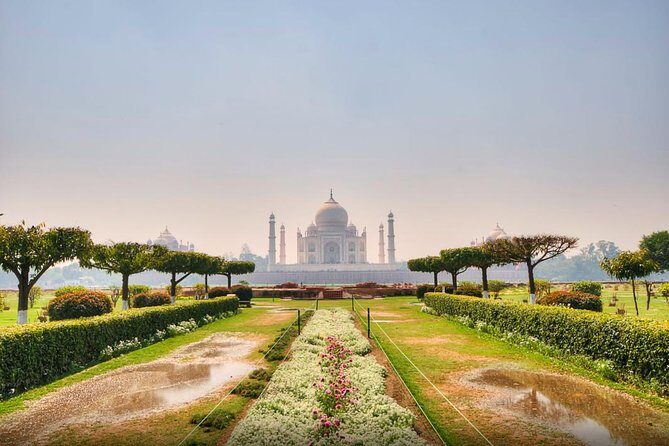
The Golden Triangle—Delhi, Agra, Jaipur—is famous for a reason, but it’s also famous for being a planning headache. Distances, traffic, ticket lines, opening hours, and knowing what’s worth your limited time can turn a dream trip into a frantic checklist.
What makes this tour work is that it quietly removes most of the chaos. You’re not coordinating transport between cities, re-confirming timing, or guessing your best route once you’re inside each place. Instead, you show up, meet your guide, and move through the day with a driver handling the driving (including traffic-heavy stretches).
I also like that it’s not trying to cram in random “extra stops” that dilute your main targets. The pace is built around headline sights: Mughal-era Delhi, the Taj Mahal experience, and the classic Jaipur forts and observatories.
You can also read our reviews of more private tours in New Delhi



The guide factor (and why it matters here)
Golden Triangle travel can turn into photo-collecting. A good guide changes the entire feeling of the day by connecting symbols, architecture, and history to what you’re physically standing in front of. The private guide format is especially valuable on days like Delhi’s Old City, where the streets, mosques, and memorials all sit within a living city—not a museum layout.
In real life, guides you might meet include names like Himmat in Delhi and Mukesh in Agra, with Jaipur leadership often handled by guides such as Ashok or Mahesh. Even without the exact name, you can expect the private-guide setup to be built for explanation and pacing.
Day 1 in Delhi: Mughal tombs, monumental minarets, and Old Delhi calm
Your day starts with a 9:00am pickup, then heads through Delhi’s biggest contrasts: grand Mughal architecture, a soaring medieval victory tower, and the emotional whiplash of Old Delhi streets.
Humayun’s Tomb
This is a strong first stop because it sets the Mughal tone. Humayun’s Tomb is an UNESCO World Heritage Site, and the arched facade with bands of white marble and red sandstone gives you an instant visual lesson in how Persian-influenced Mughal design often signals power through symmetry and detail. It’s also a good moment to reset after the morning drive.
Why it’s worth your time: early monuments like this help you read the later Taj Mahal sites with more understanding. You’re seeing the roots, not only the masterpiece.
Qutub Minar
Then you get Qutub Minar, another UNESCO highlight, built as a victory tower/minaret. The sheer scale and shape make it hard to ignore, and your guide can help you connect it to the broader early Sultanate story of Delhi.
Potential drawback: it can be busy. The value here is in having someone help you pace your viewing instead of rushing.
A few more New Delhi tours and experiences worth a look



Lotus Temple (Monday closed)
The Lotus Temple is a rare pocket of calm in Delhi. It’s shaped like a lotus flower with white-marble petals, and the visit is timed as a breathing space in the day’s heavier sightseeing.
Planning note: Lotus Temple is closed on Mondays. If your tour date lands on a Monday, expect this to be one of the places impacted, since the closure is explicit.
India Gate and the Lutyens-era government center
After the religious calm, you move into memorial and civic architecture:
- India Gate, a 42m-high stone memorial arch designed by Lutyens
- the area around the Rashtrapati Bhavan / President House, the former seat of the British viceroy
Even if you don’t linger long, it helps you understand how Delhi’s imperial layers stack on top of each other.
Jama Masjid and Raj Ghat
Next is the emotional pivot into Old Delhi:
- Jama Masjid, a massive mosque that can hold a very large number of people
- Raj Ghat, a peaceful riverside park marking where Gandhi was cremated in 1948
These two stops together can give you a sense of Delhi as both sacred and political. One is about shared devotion and scale; the other is about national memory and reflection.
Chandni Chowk by bicycle rickshaw (optional, extra)
You’ll pass into Chandni Chowk (Silver Street) and get the option of a bicycle rickshaw ride at your own expense (listed as $4.00 per person). This is where you feel the energy of the city—tight lanes, shopfront chaos, and constant movement.
My advice: If you’re comfortable in crowds and want the sensory overload, do the rickshaw. If you’d rather stay calmer, you can still enjoy the area without committing.
Swaminarayan Akshardham (included, Monday closed)
The day ends with Swaminarayan Akshardham, described as Delhi’s largest temple and noted as closed on Mondays. Admission fees are included on this tour for the sights listed, and the time window is set to let you experience it without turning your day into a sprint.
Real talk: Akshardham often feels like a full experience even if the day is already packed. Bring water (you’ll have it) and wear shoes that can handle a lot of walking.
Day 2: Agra Fort + the Taj Mahal photo moment from Mehtab Bagh
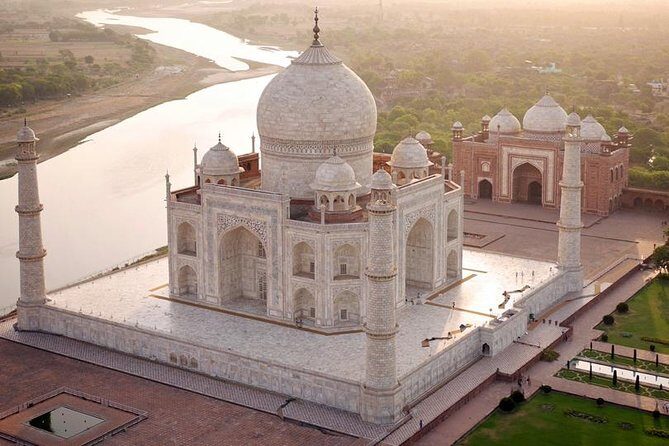
Agra is where the Golden Triangle earns its name. You drive after breakfast (about 3 hours) through countryside and then check into your pre-booked hotel.
Agra city arrival and hotel check-in
Check-in is built into the schedule, which matters. In DIY travel you often lose time chasing rooms, locating hotels, and dealing with late arrivals.
This tour gives you a clean break: you get settled, then you start sight work.
Agra Fort
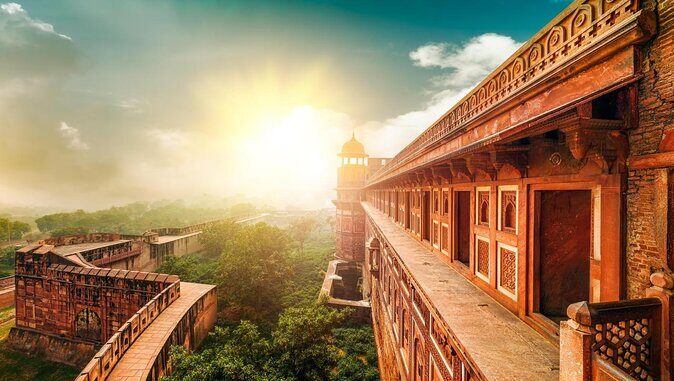
In the afternoon you visit Agra Fort (UNESCO). The tour frames it as a former main residence of the Mughal emperors until 1638. For me, forts are most powerful when you think beyond the walls—who lived here, how power operated, and how the landscape was used.
Why you’ll like it: it’s the Mughal “world behind the fame” of the Taj.
Mehtab Bagh Taj photo tour
Evening proceeds to Mehtab Bagh, the moonlit garden area used for Taj viewing away from some crowds. The tour includes a photo-style visit, tied to the idea of viewing the Taj from across the river.
Practical tip: evening light changes fast. If you’re serious about photos, you’ll want to be ready at the viewing spots as your guide cues the best angles.
Day 3: Taj Mahal sunrise is the whole point
Day 3 is built around one huge moment: the Taj Mahal at sunrise. The tour treats it as a UNESCO site and highlights it as the most beautiful building in the world.
Taj Mahal sunrise visit (weather dependent)
You’ll get a sunrise visit, which matters because the Taj can look different minute to minute as the light warms. The tour also flags that this sunrise experience is subject to weather conditions.
What to do with that information: if you’re traveling in season with unpredictable skies, keep your expectations flexible. The monument will still be stunning, but your timing can shift.
Battery bus / golf cart return ride
After Taj Mahal parking, the tour includes a battery bus / golf cart return ride. That’s a small line-item that can save real walking time, especially if you’re arriving early when everyone else is moving too.
En route to Jaipur: Chand Baori step well
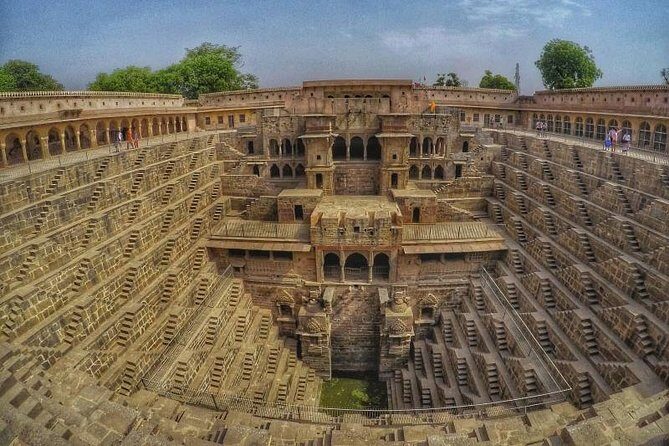
From Agra you head to Abhaneri and visit Chand Baori, the famous step well, plus mention of Harshat Mata Temple. This stop is smart because it breaks the Taj-and-fort pattern with something visually unique.
Why it works in the schedule: step wells feel almost like geometry in real life. If you like structures that reward close looking, this stop is a treat.
Day 3 into Day 4 in Jaipur: forts, palaces, and the city’s geometric thinking
By the time you reach Jaipur, the “Pink City” vibe kicks in. After check-in, you’re set up for a full day of major landmarks.
Amber Palace
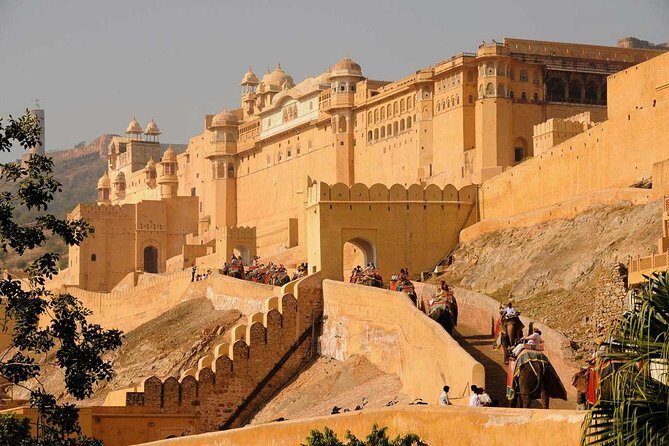
Day 4 begins at Amber Fort / Amber Palace, described as honey-hued and a major Rajput architecture highlight. It’s also positioned as about 11 km northeast of Jaipur.
Extra note: a jeep ride at Amber Palace is listed as not included, costing $3.00 per person for 5 and above travelers only. So if you want that shortcut, keep it in mind.
Jal Mahal photo stop
Next is Jal Mahal (Water Palace), a quick photo stop near the water. These short stops are often where you either love the viewpoint or wish you had longer.
Hawa Mahal photo stop
Then you hit Hawa Mahal (Palace of Breeze) for another photo stop. Even if you don’t go inside, the honeycomb facade is instantly recognizable.
City Palace
You spend time at City Palace, the royal residence area, with courtyards, gardens, and buildings from different eras. It’s a practical mid-day choice because it lets you slow down after more photo-focused stops.
Jantar Mantar Observatory
Then comes Jantar Mantar, a UNESCO World Heritage Site made of geometric structures intended to track the movement of stars and planets.
Why this matters: it’s not just “old instruments.” It’s a reminder that science and design were linked, and the city still uses those forms as cultural identity.
Monkey Temple (Galtaji)
Finally you visit Monkey Temple / Galtaji, a 15th-century temple with sacred pools and granite cliffs. Admission is listed as free on the tour.
Expectations check: this is a lively stop. If you don’t like monkeys, plan your photos carefully and keep your belongings secured.
Day 5: morning flexibility and a smooth departure
On the final morning you get morning at leisure, then you drive about 5 hours to Delhi / Gurugram / Noida for airport or other drop-off.
This is helpful because it reduces end-of-trip stress. In DIY mode, the last day is often where things go wrong: traffic, timing, and uncertain airport arrival windows.
Hotel options, breakfast, and why the upgrade can be worth it
This tour offers hotel accommodation for 4 nights on twin sharing when booked with the hotel option, plus daily breakfast.
So you’re not only paying for guides and transport—you’re paying for built-in recovery time between city days. Golden Triangle tours can drain you with early starts and walking. Breakfast included means you’re not scrambling for meals before you’re heading out.
The tour lets you choose 4-star or 5-star. In terms of value, a higher hotel tier makes the most sense if you want:
- quieter rooms after long driving days
- more comfort during downtime
- easier mornings before sunrise-type sightseeing
If you’re the type who sleeps just fine anywhere and plans meals on the fly, you might decide the basic option fits better. Just remember: you still have early mornings and full days ahead.
What you’re really getting for the price
At $464.79 per person, what you’re buying is not just access to monuments. It’s a bundle of high-friction items:
- a private air-conditioned vehicle for transfers and sightseeing
- professional private local guides for each city
- entrance fees included for the listed monuments
- unlimited bottled water
- a battery bus / golf cart return ride at Taj Mahal parking
- breakfast and hotel nights if you choose the hotel upgrade
Compared to building the trip yourself, the biggest savings often comes from time and stress, not only money. When you pay for private door-to-door movement in traffic-heavy cities, you protect your energy for the sights that matter.
Who this tour suits best
This is a great fit if you:
- want a structured 5-day plan across all three cities
- prefer private guidance over group tours
- don’t want to manage ticket logistics and city-to-city transport
- value comfort during transfers, including AC and bottled water
It may not be ideal if you:
- love slow travel with long unplanned wandering
- dislike fixed schedules, since multiple stops are set for timed experiences
- travel very lightly and would rather skip optional paid add-ons
Should you book this Golden Triangle private tour?
Yes, if you want the “big sights” of Delhi, Agra, and Jaipur handled with minimal friction. The inclusion of entrance fees, private guides, and comfort-forward transfers makes this one of the easier ways to do the Golden Triangle without turning your trip into logistics management.
I’d book it especially if you care about the Taj Mahal experience and want sunrise plus a guide explanation that helps you see more than the postcard version.
If you’re the kind of traveler who thrives on independent decision-making, you can still do the route yourself—but you’ll spend time solving the exact problems this tour removes. In other words: this tour is for people who want to get on with seeing India.
FAQ
FAQ
What’s the starting time for the tour?
The tour start time is 9:00am, with pickup arranged for Day 1.
Does this tour include hotel stays?
It includes 4 nights of hotel accommodation on twin sharing if you book with the option that includes hotels.
Is breakfast included?
Yes. When you choose the hotel-inclusive option, you get daily breakfast.
Are entrance fees included?
Yes. Monument entrance fees for the sights mentioned in the schedule are included.
Do I get bottled water during the tour?
Yes. You’ll have unlimited bottled water throughout the tour.
Is the Taj Mahal sunrise guaranteed?
The sunrise visit is subject to weather conditions, so timing can be affected.
Are there extra charges for any activities?
Yes. The bicycle rickshaw ride in Old Delhi is not included (listed as $4.00 per person). A jeep ride at Amber Palace is also not included (listed as $3.00 per person for 5 and above travelers only). Meals besides breakfast are not included.
Which temples have weekday closures I should know about?
Lotus Temple and Swaminarayan Akshardham are both marked as Monday closed.
Where do I end up on the last day?
On Day 5, after a morning at leisure, you drive about 5 hours to Delhi / Gurugram / Noida for airport, hotel, or another desired location.