REVIEW · NEW DELHI
4 Night 5 Days Golden Triangle (Delhi-Agra-Jaipur) Tour
Book on Viator →Operated by Rajasthan Dream Vacations · Bookable on Viator
A Golden Triangle that moves, but doesn’t rush. This 4-night, 5-day route stitches together Delhi’s Mughal and British-leaning monuments, Agra’s must-see masterpieces, and Jaipur’s Rajput royalty all with chauffeur-driven A/C transfers. You get a clear, efficient path through the triangle without making you solve transport between cities.
I especially like how the day-by-day flow strings big sights you actually want to see, from Qutub Minar and Red Fort to the Taj Mahal and then onward to Jaipur’s top photo stops. I also like that the tour keeps the logistics simple: pickup is offered, bottled water is included, and you’re not stuck figuring out parking, tolls, and intercity fuel.
One thing to plan for: monument entrance fees are not included, and meals and accommodation are also not included, so your total cost will be higher once you add those.
In This Review
- Key highlights you’ll notice fast
- Entering The Golden Triangle at a Relaxed, Real-World Pace
- Delhi Day One: Qutub Minar and Red Fort Without the Guesswork
- Qutub Minar: a towering benchmark of early architecture
- Red Fort: power in red sandstone
- Delhi Day Two: Humayun’s Tomb, India Gate, and Agrasen Ki Baoli
- Humayun’s Tomb: the Mughal garden-tomb blueprint
- India Gate and the National War Memorial: commemoration with a big scale
- Agrasen Ki Baoli: the stepwell that rewards slowing down
- Agra Day Three: Taj Mahal First, Then Agra Fort and Fatehpur Sikri
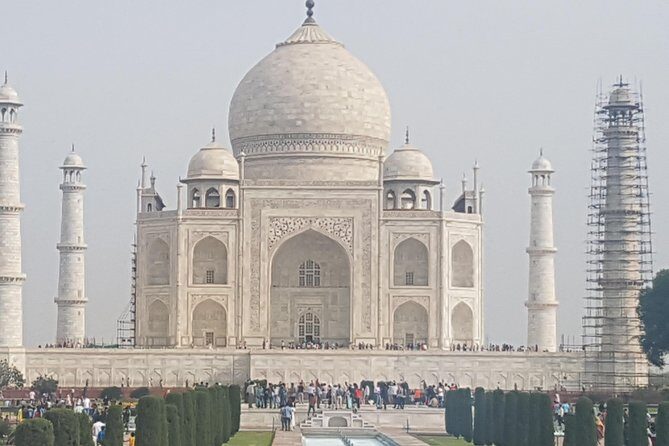
- Taj Mahal: the white-marble masterpiece you can’t ignore
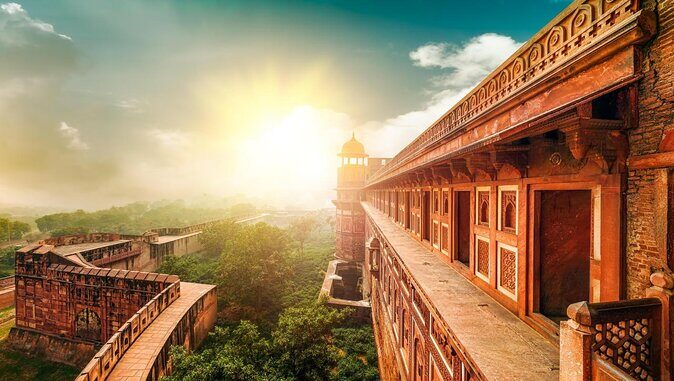
- Agra Fort: Mughal courts inside a fortress wall
- Fatehpur Sikri: a red-sandstone city of ideas
- Jaipur Day Four: Amber Palace, Jantar Mantar, City Palace, Hawa Mahal
- Amber Palace: Hindu-Mughal style on craggy hills
- Jantar Mantar: astronomy made into giant instruments
- City Palace: royal living space plus design fusion
- Hawa Mahal: the Palace of Winds and its jharokhas
- Transportation, Timing, and Why the A/C Driver Matters
- What $240 Really Buys You (and What You Must Add)
- Who This Tour Makes Sense For
- Should You Book This Golden Triangle Tour?
- FAQ
- What’s included in the tour price?
- Are monument entrance fees included?
- Is accommodation included?
- Is food included?
- Do you offer pickup and where do you end the trip?
- Is this a private tour or do I share with others?
- What documents do I need?
- Are there restrictions for children?
- What’s the cancellation policy?
Key highlights you’ll notice fast
- Private A/C transfers between Delhi, Agra, and Jaipur, so your trip stays comfortable even when traffic gets chaotic
- Delhi’s “great mix”: Qutub Minar, Red Fort, Humayun’s Tomb, India Gate, and Agrasen Ki Baoli in a single circuit
- Agra focus done right: Taj Mahal and Agra Fort, plus Fatehpur Sikri for a full contrast day
- Jaipur icons in one sweep: Amber Palace, Jantar Mantar, City Palace, and Hawa Mahal
- Guide availability if you choose it, and people often sing praise for strong driving and practical guidance from Jagadish
- Relaxing pace with room to adjust, based on what you choose day to day
Entering The Golden Triangle at a Relaxed, Real-World Pace
The Golden Triangle is famous for a reason, but most versions feel like a checklist sprint. This one feels more like a guided route you can actually live with. You’re covering three cities in about five days, yet the structure gives you enough time at each stop to actually look, not just snap and run.
That pacing matters in India. Sightseeing hits you in three ways: heat, walking, and attention span. When your transport is already handled by a driver and vehicle, you lose less time stuck in logistics. You also keep a calmer rhythm—especially on the days where the itinerary stacks major landmarks.
The cultural theme is clear too: Mughal grandeur (Taj Mahal, Humayun’s Tomb), Rajput splendor (Amber and Jaipur palaces), and a Delhi layer influenced by colonial-era commemoration (hello, India Gate). It’s not just pretty sights. It’s three different “ways of building power” seen through architecture.
You can also read our reviews of more evening experiences in New Delhi

Delhi Day One: Qutub Minar and Red Fort Without the Guesswork
Delhi on Day 1 is an effective one-two punch: Qutub Minar first, then Red Fort. Even if you’ve seen photos, both places work better in person because the scale hits you early.
Qutub Minar: a towering benchmark of early architecture
Qutub Minar rises about 73 meters and was started in 1193 by Qutab-ud-din Aibak after the fall of Delhi’s last Hindu kingdom. What I like here is how the monument is built to be read in sections: five storeys, each with a projecting balcony, tapering from a wide base to a narrow top.
For your visit, plan to spend time looking at the details, not only the silhouette. Close enough, you can notice how the design changes as it rises. This is one of those stops where your photos improve once you start paying attention to shape and texture.
Red Fort: power in red sandstone
Then you shift from open-air monument to political fortress at Red Fort (Lal Qila). The massive red sandstone walls rise about 33 meters, built in 1638. The fort was designed as a defensive statement, with the Lahore Gate acting as a major symbolic focus.
Here’s the practical point: this is a busy part of Old Delhi, and the area around it can feel loud and crowded. Having a plan to move cleanly from one landmark to the next helps you enjoy the architecture instead of just bracing yourself for the surroundings.
Delhi Day Two: Humayun’s Tomb, India Gate, and Agrasen Ki Baoli
Day 2 gives you a full spectrum of Delhi: Mughal garden-tomb design, modern memorial architecture, and a lesser-known stepwell that feels like a hidden pause.
A few more New Delhi tours and experiences worth a look



Humayun’s Tomb: the Mughal garden-tomb blueprint
Humayun’s Tomb is considered a major early example of Mughal architecture in India, built in 1565 by Bega Begam, Humayun’s senior widow. What makes it special is the enclosure’s chaharbagh concept: garden squares with pathways and water channels laid out around a central mausoleum.
If you want to understand what “Mughal” means beyond a single building, this is a strong place to start. The layout teaches you how these rulers used geometry and gardens to create calm around monumental power.
India Gate and the National War Memorial: commemoration with a big scale
Next comes India Gate, a 42-meter-high arch-like structure that commemorates Indian soldiers who died fighting for the British Army during World War I. It also lists names related to the Afghan war of 1919. Behind it sits the National War Memorial across 40 acres within the India Gate complex.
This pair is useful because it gives you a different kind of “history architecture.” Instead of palaces and tombs, you’re looking at how nations remember. It’s also a good midday break from the hottest walking—depending on how you manage your timing.
Agrasen Ki Baoli: the stepwell that rewards slowing down
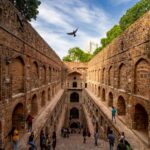
Finally, you end at Agrasen Ki Baoli (Chand Bawdi), a protected monument of 103 steps made of red stone. It’s about 60 meters long and 15 meters wide, located near Connaught Place.
This stop is quick on paper, but it’s a mood-changer. Stepwells are about water management, yes—but they’re also about coolness and stone craft. Even with a short visit window, you’ll get that sense of a different pace.
Agra Day Three: Taj Mahal First, Then Agra Fort and Fatehpur Sikri
Agra is where your trip hits its headline. Day 3 stacks the big Mughal masterpieces, and it’s the kind of day where you’ll feel the difference between “seeing a monument” and “seeing a whole visual language.”
Taj Mahal: the white-marble masterpiece you can’t ignore
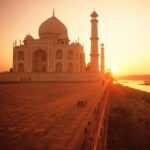
The Taj Mahal was built between 1631 and 1648 by order of Shah Jahan in memory of his wife. It’s UNESCO-listed and widely known as a masterpiece of Muslim art in India.
What helps your experience isn’t only the building itself—it’s the setting and how everything is arranged to pull you inward. You’ll likely want at least some time just to look at the symmetry and the way the architecture frames the view. And yes, it’s a high-demand site, so give yourself a buffer mindset.
Agra Fort: Mughal courts inside a fortress wall
After Taj, you move to Agra Fort, a UNESCO World Heritage Site near the Taj Mahal gardens. This red-sandstone fortress encloses the Mughal rulers’ imperial city within walls stretching about 2.5 kilometers.
Inside are palaces like Jahangir Palace and Khas Mahal, plus audience halls such as Diwan-i-Khas, and two mosques. It’s a different kind of Taj-adjacent experience: less romantic and more administrative, a reminder that beauty and governance often shared the same spaces.
Fatehpur Sikri: a red-sandstone city of ideas
Then you get a bigger off-routine stop: Fatehpur Sikri, west of Agra. This “small city” was founded by a 16th-century Mughal emperor and sits in red sandstone clusters at its center.
The entrance includes Buland Darwaza to the Jama Masjid mosque area, and you can also see the marble Tomb of Salim Chishti. The layout brings you through different elements—religious buildings, carved halls like Diwan-E-Khas, and a blend of Hindu and Mughal design at Jodha Bai’s Palace, plus the multi-story Panch Mahal overlooking the site.
One practical plus: Fatehpur Sikri’s admission ticket is listed as free in this experience. That can help balance your overall costs on the day.
Jaipur Day Four: Amber Palace, Jantar Mantar, City Palace, Hawa Mahal
Jaipur is where the route turns more “Rajput” visually, while still staying heavily Mughal in its influence. Day 4 is full, but it’s also structured so each stop teaches you something different.
Amber Palace: Hindu-Mughal style on craggy hills
Amber Palace is a UNESCO World Heritage Site and used to be the bastion of the Kachwahas of Amber until the capital shifted to the plains (modern Jaipur). It’s described as a fusion of Hindu and Mughal styles, set in craggy hills.
The hillside location matters. The palace looks different from different angles, and those angles are part of why this is such an iconic stop. You’ll want comfortable shoes, because your eyes will guide you toward details and viewpoints.
Jantar Mantar: astronomy made into giant instruments
Next is Jantar Mantar, another UNESCO site and the largest of the five astronomical observatories built by Maharaja Sawai Jai Singh II. It includes sixteen geometric devices designed to measure time, track celestial bodies, and observe orbits.
What I like about this stop is that it’s not just decorative. It helps you see how scientific thinking got built into public space. There’s also an Interpretation Centre that explains the working principles and chronology—handy if you want to understand what you’re looking at without needing a textbook.
City Palace: royal living space plus design fusion
Then you step into the City Palace Complex, conceived and built by Maharaja Sawai Jai Singh II. It’s a fusion of Mughal and Rajput architecture, and it still has the last ruling royal family living in a private section.
This means you’re not only looking at history as a museum display. You’re looking at lived-in space shaped by centuries of court culture.
Hawa Mahal: the Palace of Winds and its jharokhas
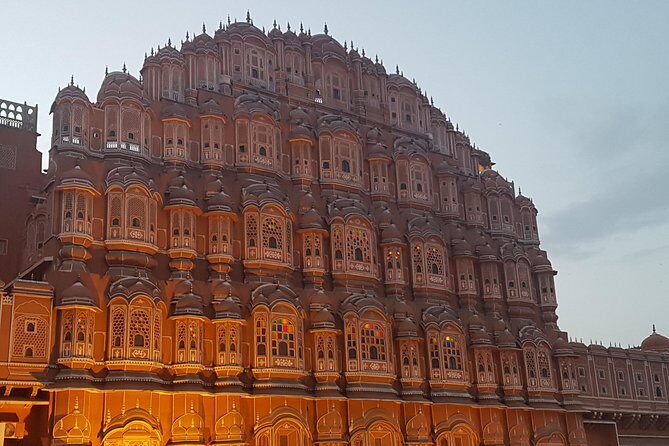
Finally, Hawa Mahal (Palace of Wind) gives you the Jaipur signature silhouette. Built in 1799 as a summer retreat by Sawai Pratap Singh, it also served as a place where royal women could observe everyday life without being seen. The exterior is covered in small latticed windows called jharokhas, described as resembling a crown of Krishna.
Even if you just glance at it from the outside, you’ll see why it’s famous. If you have time, you’ll appreciate how the window grid creates pattern and light effects.
Transportation, Timing, and Why the A/C Driver Matters
The biggest “value” in this tour isn’t only the monuments—it’s the way you get from point to point. You travel in a chauffeur-driven A/C private vehicle for all transfers, including fuel, parking charges, tolls, and taxes for interstate legs. That means you’re paying for movement that’s already planned.
On a Golden Triangle itinerary, traffic and logistics can eat your energy. A good driver makes it easier to stay on schedule and keep the experience enjoyable. In the reviews you can see this clearly through the name Jagdish. People describe him as punctual, great in chaotic traffic, and helpful with restaurant recommendations. If you get him, you’re likely to feel like you have a calm navigator rather than just a taxi.
Also, this is described as private, meaning only your group participates. That’s a big deal if you don’t want to plan your day around strangers.
Practical note: monuments list short time windows (like 1–3 hours), so you should come ready to move. Wear light layers, keep water handy (bottled water is provided), and plan your photo priorities in advance.
What $240 Really Buys You (and What You Must Add)
Let’s talk value plainly. At $240 per person, the core price looks built around transportation and guided structure, not around paying every museum ticket and hotel bill.
Included:
- A/C private vehicle with chauffeur for transfers
- Fuel, parking, tolls, and taxes for interstate transfers
- Bottled water
- A professional tour guide only if you book with the tour option
- Mobile ticket
- Pickup offered
Not included:
- Monument entrance fees
- Accommodation
- Food and drinks
- Tips and gratuities (recommended)
- Souvenir photos (sold separately)
- Alcoholic drinks
So your real budget depends on what you choose for hotels and how many paid sites you access (most of the listed stops have entrance fees excluded in the package details, with Fatehpur Sikri specifically listed as free).
If you want a more predictable budget, set aside extra money for monument tickets and build meals into your plan from the start. If you’re the type who likes to choose a good local meal each day, the lack of included meals can be a plus rather than a problem.
Who This Tour Makes Sense For
This Golden Triangle works best if you:
- Want a structured route with major Delhi, Agra, and Jaipur sights
- Prefer not to wrestle with intercity transport
- Like a private-group experience where your schedule is simpler
- Are comfortable arranging your own accommodation and meals
It may not be ideal if you:
- Expect all entry fees and hotels to be included in the base price
- Want a very long, slow museum-style deep stay at just one city
- Don’t want to manage ticket purchases on site
For first-timers, it’s a strong way to build an India foundation quickly: Mughal aesthetics, Rajput palace design, and Delhi’s memorial architecture in one circuit.
Should You Book This Golden Triangle Tour?
I’d book it if you want an organized Golden Triangle that keeps you moving comfortably between cities and hits the headline landmarks without turning the day into a chaotic sprint. The value is in the transport and the practical day structure, and the private setup is a big quality boost.
Hold back if you dislike planning for entrance fees, meals, and hotels. Since those are outside the package, you’ll want to budget for them before you commit.
If you’re flexible about timing and want a reliable driver experience, this tour route is a solid way to see Delhi, Agra, and Jaipur in a way that feels manageable.
FAQ
What’s included in the tour price?
The tour includes chauffeur-driven A/C private vehicle for all transfers, fuel and other transfer costs (parking charges, toll & taxes for interstate transfers), bottled water, and a mobile ticket. A professional tour guide is included only if you book with the tour option.
Are monument entrance fees included?
No. Monument entrance fees are not included. Fatehpur Sikri is listed as free for admission in the itinerary, but other sites are marked as admission ticket not included.
Is accommodation included?
No. Accommodation is not included.
Is food included?
No. Meals and food and drinks are not included.
Do you offer pickup and where do you end the trip?
Pickup is offered, and the tour starts in New Delhi. The experience ends with a drop at Jaipur airport.
Is this a private tour or do I share with others?
It’s described as a private tour/activity, meaning only your group will participate.
What documents do I need?
A current valid passport is required on the day of travel.
Are there restrictions for children?
Children must be accompanied by an adult.
What’s the cancellation policy?
Free cancellation is available up to 24 hours in advance of the experience for a full refund. If you cancel less than 24 hours before the start time, you won’t get a refund.