REVIEW · NEW DELHI
4 days Golden Triangle Tour
Book on Viator →Operated by Maharaja Trails · Bookable on Viator
Four days, three icons, one smooth route. This Golden Triangle trip strings together Delhi–Agra–Jaipur with a professional driver and English-speaking guides, so you can focus on the sights instead of figuring out logistics. It’s also a good “first India” route: big monuments, clear pacing, and comfortable base lodging.
I like the way the schedule gives you a proper early Taj Mahal start on Day 2, not just a rushed stop in the middle of the day. I also like the practical setup: pickup from the Indira Gandhi International Airport area, air-conditioned transport, and a daily breakfast waiting at your 3-star hotel.
One thing to plan for: monument entry fees are not included for several key stops (including Taj Mahal and Agra Fort), so you’ll want to budget extra money on arrival. That’s the main catch.
In This Review
- Key things to know before you go
- The “Golden Triangle” route, planned for real life
- Price and what your $400 really covers
- Day 1 in Delhi: India Gate, President Palace outside, then on the road
- Day 2 early: Taj Mahal first, then Agra Fort and Fatehpur Sikri
- Day 3 in Jaipur: Amber Fort, City Palace, and Jantar Mantar
- Short stops that matter: Jal Mahal and Hawa Mahal timing
- Day 4: back to Delhi for departure
- Hotels, breakfasts, and why the comfort matters on long drives
- Guides and drivers: the difference between seeing and understanding
- Is this tour for you?
- A quick packing and comfort checklist (the stuff that saves your day)
- Should you book Maharaja Trails Golden Triangle?
- FAQ
- What cities are included in the Golden Triangle tour?
- How long is the tour?
- Where does the tour start and what time does it begin?
- Is pickup included?
- Are hotel rooms and breakfast included?
- Do I need to pay for monument entry tickets?
- Is there an English-speaking guide?
- Is this a private tour?
- What is the cancellation window?
Key things to know before you go
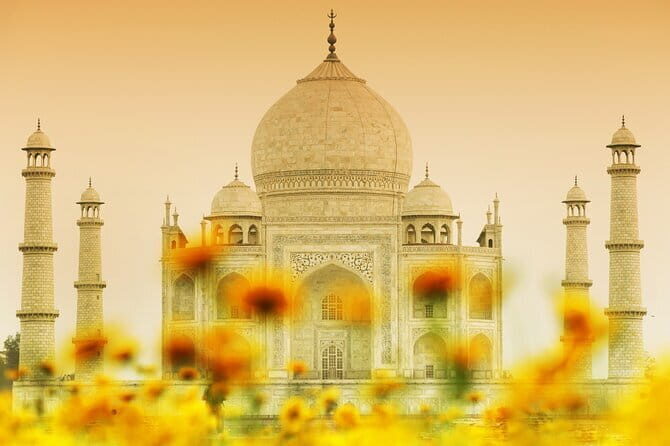
- Early Taj Mahal time sets you up for a more relaxed visit before the crowds (ticket is extra)
- English-speaking guide included means you’re not just wandering—someone explains what you’re looking at
- Air-conditioned vehicle + professional driver helps with the long stretches between Delhi, Agra, and Jaipur
- Some sites are free, many are not: India Gate and Rashtrapati Bhavan outside are free, but major palaces/forts often require paid entry
- 3-star hotels with daily breakfast make the days easier to handle
- Private group experience keeps the pace in your control (only your group rides together)
The “Golden Triangle” route, planned for real life
This is the classic India starter route: Delhi (big-city landmarks), Agra (Mughal highlights), and Jaipur (Rajput-era spectacle). The real value here isn’t that you see the big names. It’s that you see them with a guide, in the right order, and with transport that keeps the day from turning into a stressful scavenger hunt.
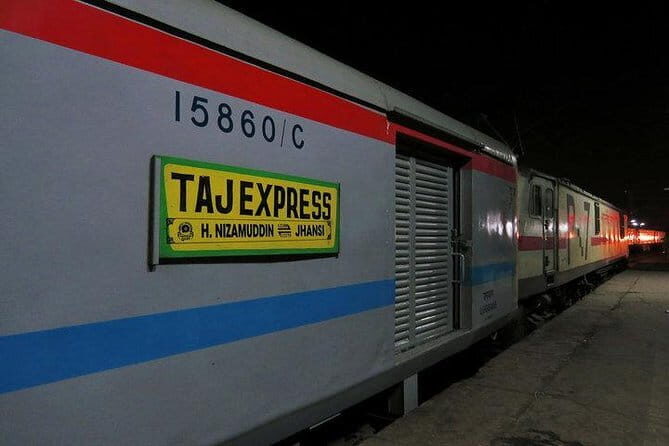
The tour runs about 4 days. It starts at 1:00 pm at Indira Gandhi International Airport in New Delhi. You’ll also get a mobile ticket, which usually keeps things simple when you’re on the move.
Since you’re driving between cities, the “feel” of the trip is more road-trip than hop-on-hop-off. If you dislike long car rides, this may not be your style. If you’re okay with travel time in exchange for a smooth route and fewer coordination headaches, it’s a strong format.
A few more New Delhi tours and experiences worth a look
Price and what your $400 really covers
At $400 per person, you’re paying for the parts that are hard to DIY quickly: an air-conditioned vehicle, driver, English-speaking guide, and 3-star hotel accommodation with daily breakfast. You also get the structure—so you don’t have to piece together city-to-city transportation plus multiple guided monument visits.
What’s not included is just as important. Monument entry fees are excluded, and air fare isn’t included. That means the biggest sights may cost extra once you’re on the ground. In this particular plan, that includes several major stops like the Taj Mahal and Agra Fort.
So, how do you judge value? If you’d otherwise pay separately for a guide, a private car, and city transfers, this price often feels fair. If you’re the type who loves independent travel with zero guide help, you might compare against a cheaper DIY approach. Just be honest about your tolerance for long drives, traffic, and ticket lines.
Day 1 in Delhi: India Gate, President Palace outside, then on the road
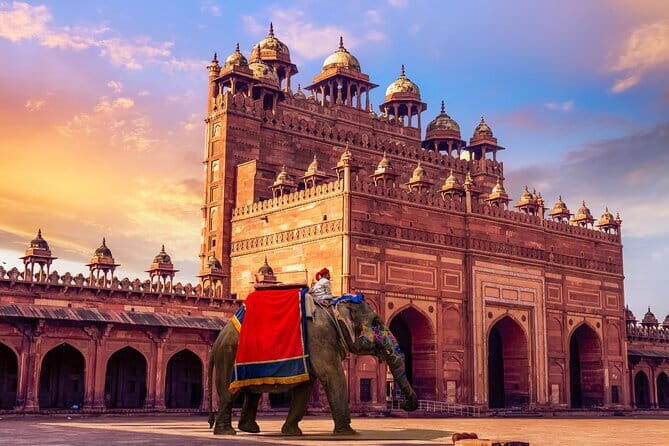
Your day begins in New Delhi at the airport meeting point. From there, the plan quickly swings you into a sightseeing warm-up with India Gate. This stop is about 45 minutes and is listed as free.
Right after that, you’ll see Rashtrapati Bhavan (President Palace) from the outside for around 15 minutes, also marked as free. These are quick “get oriented” sights—perfect for the first half-day when your brain is still switching from jet lag mode to sightseeing mode.
Then you head to Agra. Even without extra paid admissions on Day 1, the day still has a travel beat: you’re not hanging around Delhi all day. The payoff is that you arrive in Agra with less wasted time, so Day 2 can focus on the showstoppers.
Practical note: your first day is often where people get impatient. You’ll do better if you treat this as setup time, not the main event.
Day 2 early: Taj Mahal first, then Agra Fort and Fatehpur Sikri
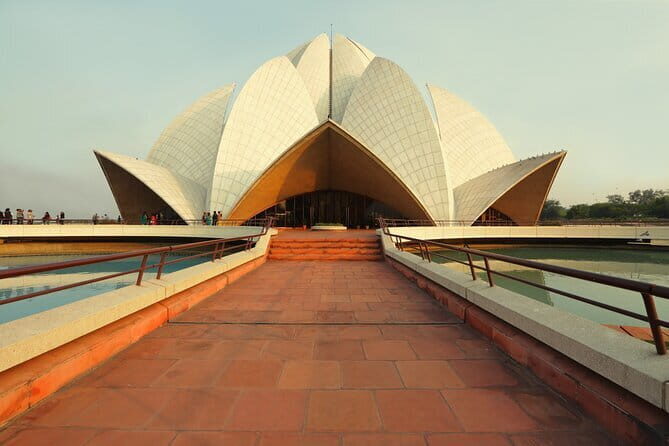
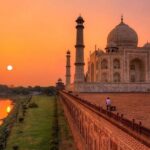
Day 2 is the money day. The schedule calls for an early morning visit to the Taj Mahal, lasting about 2 hours. Admission isn’t included in the tour price, so plan for that cost separately.
The Taj Mahal details in the tour description are specific: an ivory-white marble mausoleum commissioned in 1631 by Shah Jahan to house the tomb of Mumtaz Mahal, also with Shah Jahan’s tomb inside. When you have a guide, you’re not just chasing photos. You understand the symbolism you’re standing in front of.
After breakfast, you check out from the hotel and move to Agra Fort for about 1 hour 30 minutes. This one also has admission ticket not included. The tour description gives you a helpful historical anchor: Humayun was crowned at this fort in 1530; Akbar renovated starting in 1565; the present-day structure was completed in 1573.
Then comes Fatehpur Sikri for around 2 hours, marked as free admission on this plan. Fatehpur Sikri is described as a small city west of Agra, founded by a 16th-century Mughal emperor, with red sandstone buildings at its center. The itinerary highlights spots like Buland Darwaza (entrance to Jama Masjid mosque), the marble Tomb of Salim Chishti, the Diwan-E-Khas hall with its carved central pillar, Jodha Bai’s Palace (mix of Hindu and Mughal styles), and the Panch Mahal overlooking the site.
This combo—Taj Mahal, Agra Fort, then Fatehpur Sikri—means you get three different “types” of Mughal landmarks:
- the iconic marble monument
- the fortified palace complex
- the city-level architectural statement
If you like variety, this day will feel satisfying. If you’re the type who likes long, slow museum-style wandering, you may find Day 2 packed. The guiding force here is efficiency.
Day 3 in Jaipur: Amber Fort, City Palace, and Jantar Mantar
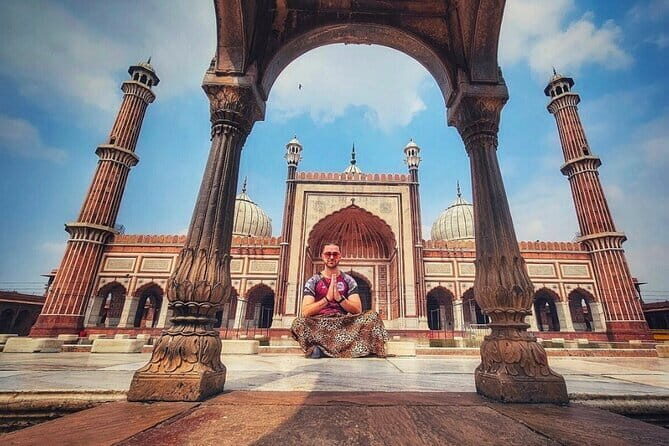
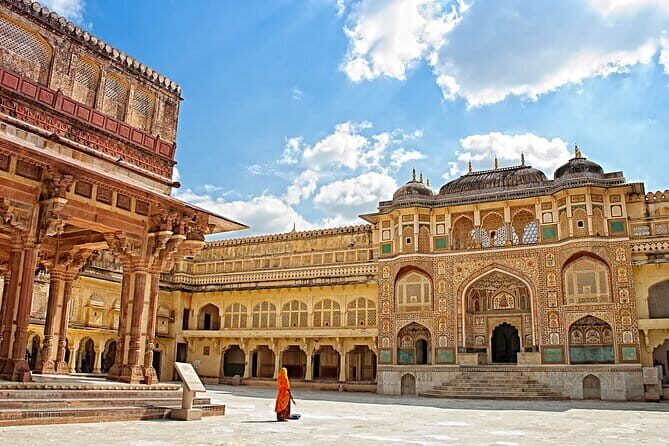
Day 3 shifts gears from Mughal power in Agra to the Rajput-leaning grandeur of Jaipur. You start with Amber Palace (Amer Fort) for about 2 hours. The description says it’s a UNESCO World Heritage Site built in the 16th century, combining Rajput and Mughal architectural styles, known for artistic style and stunning views.
Admission is not included, so again, expect additional ticket costs.
Then you move to the City Palace of Jaipur for about 1 hour. Admission is not included. This is described as the royal residence and former administrative headquarters of the rulers of Jaipur State, with construction starting soon after the founding of the city under Maharaja Sawai Jai Singh.
After that, you hit Jantar Mantar for about 1 hour (admission not included). The tour description is clear and nerd-friendly: it’s a collection of 19 astronomical instruments built by Sawai Jai Singh, completed in 1734, and a UNESCO World Heritage Site. It also features the world’s largest stone sundial. Having an included guide is a big help here, because these structures can look like “big sculptures” until someone explains how the measurements work.
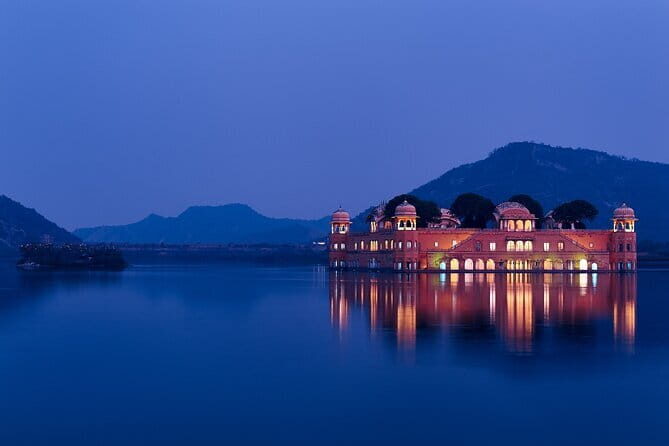
Then you get a quick stop at Jal Mahal for 15 minutes. Admission is listed as free. It’s described as a palace in the middle of Man Sagar Lake, originally constructed around 1699 and later renovated and enlarged in the early 18th century.
Finally, you see Hawa Mahal (Palace of Wind) for about 15 minutes. Admission is not included. The description notes it’s built from red and pink sandstone, sits on the edge of the City Palace extending into the women’s chambers, and was built in 1799 by Maharaja Sawai Pratap Singh.
Jaipur in a day can feel like sensory overload—in a good way. You’ll spend more time looking up at stonework and down at street-level chaos than you would in a museum-only itinerary. That’s the fun part: the city is part of the story.



Short stops that matter: Jal Mahal and Hawa Mahal timing
Jal Mahal and Hawa Mahal are quick, but don’t treat them as throwaway photo stops.
Jal Mahal is specifically timed at 15 minutes, which usually means you’ll catch it from the main viewpoint without getting stuck too long. The payoff is that it breaks up the heavier fort-palace segment of the day.
Hawa Mahal is also a quick 15-minute stop. But it’s built for a reason: its façade and windows are meant to create that wind-and-visibility effect. Even if you don’t go deep into architecture, you’ll appreciate the weird cleverness once you see it in person.
If you’re feeling rushed, here’s a practical trick: take 5 minutes for wide shots, then 5 minutes for details. That way you still leave with more than one good Instagram frame.
Day 4: back to Delhi for departure

On Day 4, you finish with a morning check-out after breakfast. Then you travel back to Delhi and the transfer back ends at the meeting point area for departure.
This is the kind of ending you want if you don’t want to spend your last morning figuring out transport. The plan is straightforward: sightseeing ends, you head back, and you’re done.
Hotels, breakfasts, and why the comfort matters on long drives
The tour includes 3-star hotel accommodation and daily breakfast. That might sound basic, but it matters on a multi-city route. When you’re driving through India’s traffic and temperature changes, you want sleep you can count on and a meal that doesn’t require a scavenger mission.
You should expect the “comfort level” to match 3-star standards, not luxury. But with breakfasts included every day, you’re less likely to lose time hunting for something reliable.
Guides and drivers: the difference between seeing and understanding
This kind of tour works or fails on people. The plan includes an English-speaking tour guide and a professional driver.
In past experiences shared with the company, names like Sanjay and Bunty come up alongside comments about punctuality and helpfulness. Another name that has shown up is Jitendra for managing a family itinerary smoothly. I like seeing that because it suggests consistency in service, not just a one-time good day.
Here’s what you should do: listen during the intro moments. Guides are often at their best when they’re setting context in the first 5–10 minutes of each stop. Ask one simple question early (what you should notice first, or why one structure matters). You’ll get more out of every photo after that.
Is this tour for you?
This fits best if you want:
- a guided Golden Triangle with an English-speaking guide
- city-to-city transport handled for you (air-conditioned vehicle and driver)
- a schedule that hits major highlights without turning your trip into admin work
- the comfort of a 3-star hotel base and breakfast daily
It may not fit as well if you:
- hate monument entry fees added on top of the price
- prefer fully independent pacing with no guide
- want to avoid car travel between cities
A quick packing and comfort checklist (the stuff that saves your day)
You’ll be walking in cities and spending time looking at stone monuments, forts, and open courtyards. Bring:
- comfortable shoes you can stand in for 60–90 minutes
- sun protection (hat/sunglasses) for outdoor stops like Taj Mahal and Jaipur viewpoints
- a light layer, since mornings can feel cooler before the day heats up
Also, keep small cash or payment options handy for monument entry fees since they’re not included.
Should you book Maharaja Trails Golden Triangle?
If you want the Golden Triangle but don’t want the stress of coordinating guides and transport across three cities, I’d book this kind of packaged setup. The core value is real-world logistics: English guidance, a driver, air-conditioned transfers, and hotel + breakfast so you can keep moving.
My only hesitation is the extra cost of monument tickets. If you budget for that up front, the trip feels like a solid, efficient way to see Delhi, Agra, and Jaipur without losing days to planning.
If you want a trip that’s structured, guided, and comfortable enough for a first big India route, this is a good bet.
FAQ
What cities are included in the Golden Triangle tour?
The tour covers Delhi, Agra, and Jaipur.
How long is the tour?
The duration is approximately 4 days.
Where does the tour start and what time does it begin?
It starts at Indira Gandhi International Airport in New Delhi at 1:00 pm.
Is pickup included?
Pickup is offered, and the tour starts at the airport meeting point.
Are hotel rooms and breakfast included?
Yes. The price includes 3-star hotel accommodation and daily breakfast at the hotel.
Do I need to pay for monument entry tickets?
Monuments entry fees are not included. The tour lists some stops with free admission and many other stops where the ticket is not included.
Is there an English-speaking guide?
Yes, an English speaking tour guide is included.
Is this a private tour?
Yes. It’s a private tour/activity, and only your group will participate.
What is the cancellation window?
You can cancel for free up to 24 hours in advance of the experience’s start time for a full refund.