REVIEW · NEW DELHI
3 Days Private Golden Triangle Tour – Delhi, Agra, and Jaipur
Book on Viator →Operated by Taj Private Tour · Bookable on Viator
Golden Triangle done without the daily chaos. This private 3-day route strings together Delhi, Agra, and Jaipur with pickup, an AC car, and an English-speaking guide, so you spend your time looking at monuments instead of figuring out traffic. The human touch also comes through in the way guides and drivers like Ali, Bobby (Naeem), Arthur, and Sanju are repeatedly credited for keeping things smooth and comfortable.
I especially like the day-to-day basics that make a long route feel manageable: breakfast is included each morning, and you get bottled drinking water for the ride. I also like that you can choose your hotel comfort level (3-, 4-, or 5-star) for the 2 nights, rather than being locked into one standard.
One consideration: not everything is fully paid for. Admission is included for several major sights, but camera fees/monument fees are not included, and lunch and dinner are on you—plus you’ll be doing long drives between cities.
In This Review
- Key things to know before you go
- Why this 3-Day Golden Triangle plan feels efficient
- Price and logistics: what $12 per person really means
- Day 1 in Delhi: Humayun’s Tomb to Parliament-area architecture
- Humayun’s Tomb (UNESCO) with admission included
- Qutub Minar (UNESCO) and the iconic minaret moment
- Lotus Temple (Bahá’í House of Worship)
- India Gate and the Parliament/President-area photo stops
- The long but necessary move to Agra
- Agra day: Taj Mahal time plus Agra Fort’s big-picture contrast
- Taj Mahal (UNESCO) with about 2 hours
- Agra Fort (UNESCO) for about 1 hour
- Drive to Jaipur and check-in
- Jaipur day: Hawa Mahal photos, City Palace depth, and Jantar Mantar meaning
- Hawa Mahal photo stop (about 15 minutes)
- City Palace (about 1 hour) with admission included
- Jantar Mantar (about 1 hour) with admission included
- Final drive back to Delhi (about 5 hours)
- How the private car experience really helps (and where it can feel tight)
- Who this tour suits best (and who should think twice)
- Should you book this private Golden Triangle tour?
- FAQ
- What cities does this 3-day Golden Triangle tour cover?
- Is the tour private?
- Do I get hotel pickup and drop-off?
- Is accommodation included?
- What meals are included?
- Are tickets and monument fees included?
- Is free cancellation available?
Key things to know before you go
- Private door-to-door pickup from New Delhi, Gurugram (Gurgaon), or Noida, with drop-off at your preferred location in the end
- English-speaking guide support during sightseeing, with credit in the experience for guides and drivers like Ali and Bobby (Naeem)
- Two breakfasts + bottled water to keep energy steady during travel days
- Admission coverage is partial: some big-ticket monuments are included, while camera fees and extra costs aren’t
- Hotel star level is your choice (3-, 4-, or 5-star) for the 2-night stay option
- A realistic pace for 3 days: Delhi sights, then Taj Mahal and Agra Fort, then Jaipur’s key stops
Why this 3-Day Golden Triangle plan feels efficient

The Golden Triangle route is famous for a reason, but it can also feel like a game of whack-a-mole. Delhi is fast and wide. Agra is focused but busy. Jaipur pulls you into old-city lanes and big-photo landmarks. This tour’s big value is that it compresses all three into 3 days while handling the logistics: pickup, a/c vehicle, and guided sightseeing blocks.
You’re not stuck with a “meet here at 9” shuffle. You start with pickup from your chosen location in Delhi/Gurugram/Noida, and you end with drop-off back in Delhi (or you can continue onward via airport/rail options listed for Jaipur). That matters because in India, time isn’t just time—it’s also traffic, walking, and decision fatigue.
The tour also makes the route feel more human. The names that come up—Ali, Bobby (Naeem), Arthur, Sanju—share a common theme: keeping you comfortable, on time, and not lost. Even when you’re not getting your own private city guide for every second, you are getting a guide-and-driver setup built around safety, pacing, and practical help.
You can also read our reviews of more private tours in New Delhi


Price and logistics: what $12 per person really means
The price shown is $12.00 per person, and it’s best to think of it as the base cost for the guided/private experience. What you pay total can still change depending on your chosen hotel level and what costs you choose to cover yourself during the tour.
Here’s what the provided plan includes:
- Hotel pickup and drop-off
- English-speaking tour guide during sightseeing
- Air-conditioned vehicle plus packaged drinking water
- Breakfast (2) on the two sightseeing mornings
- Optional 2 nights accommodation in 3-, 4-, or 5-star hotels
And here’s what’s not included:
- Monuments/camera fees (even when admissions are listed as free or included for certain stops)
- Lunch and dinner
- Tips during sightseeing
- Anything not explicitly stated
That split is the key to budgeting. For example, several major sights have admission noted as included or free, but you should still keep some cash ready for the extras—especially camera-related charges and whatever you decide for meals. If you like to snack and drink regularly while sightseeing, plan for lunch and dinner costs rather than assuming they’re covered.
Is the value good? For a 3-city private route with AC transport and an English guide built in, yes—especially because breakfast and bottled water help you avoid awkward “find food fast” situations between stops.
Day 1 in Delhi: Humayun’s Tomb to Parliament-area architecture
Day 1 is a classic Delhi sampler with a clear purpose: mix Mughal-era grandeur with Delhi’s modern landmarks and iconic religious architecture, then start the transit toward Agra.
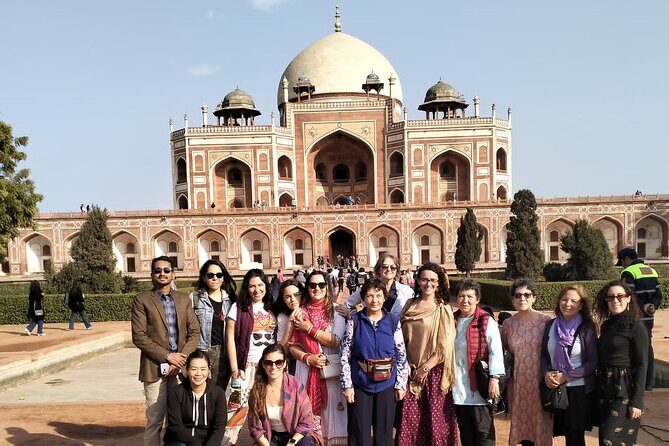
Humayun’s Tomb (UNESCO) with admission included
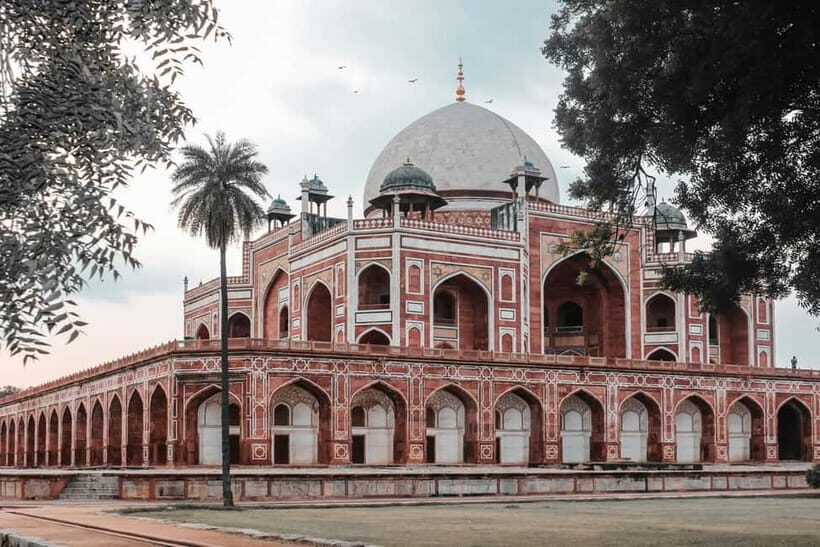
You start with Humayun’s Tomb, a UNESCO World Heritage site tied to the Mughal Emperor Huma… (the tour listing truncates the name, but the monument is clearly Humayun’s Tomb). The visit is allotted about 1 hour, and admission is listed as included.
What I like about starting here is that it sets a tone. It’s not just “another tomb.” It’s a design moment—symmetry, gardens, and that sense of scale you only get when you’re standing on-site. If you like architecture, it’s a strong first stop because it gives you something to look at immediately without needing context-heavy navigation.
A small practical note: Delhi sights can be photo-heavy and crowded at peak times. The guided timing helps, but bring patience and water, and expect some foot traffic.
Qutub Minar (UNESCO) and the iconic minaret moment
Next comes Qutub Minar, also UNESCO-listed, with about 1 hour here and admission listed as free in the plan.
Qutub Minar is one of those landmarks you’ll recognize even before you reach it—because it’s so visually distinct. If you want the fast payoff of a famous Delhi landmark, this is your spot.
A few more New Delhi tours and experiences worth a look





Lotus Temple (Bahá’í House of Worship)
Then you visit the Lotus Temple, known for its lotus-flower shape. The plan gives about 1 hour, and admission is free.
Even if you’re not chasing religion-specific details, the building itself is worth your attention. It’s one of those places where the design does the storytelling for you. In the practical sense, it’s also a calmer contrast after the more historic tomb and fort feeling.
India Gate and the Parliament/President-area photo stops
After the religious architecture, the tour moves to India Gate for about 30 minutes (free entry), and then stops for exterior views around Parliament House (Sansad Bhavan) and Rashtrapati Bhavan.
These are short stops by design. The payoff here is mostly visual and contextual: British-era planning influence shows up in the monumental layout, and you get a sense of Delhi’s government core.
The drawback of this part is also why it’s scheduled: these are typically not the kind of visits where you spend hours inside. If you’re hoping for deep inside access, you may find the time on these particular exteriors a bit brief.
The long but necessary move to Agra
By late afternoon, you begin a 3-hour drive to Agra and check in to your hotel.
This is the trade-off of the Golden Triangle in 3 days. You’re doing a lot. The upside is you’re not making multiple hotel-change decisions yourself, and you avoid the stress of finding transport for each city jump.
Agra day: Taj Mahal time plus Agra Fort’s big-picture contrast
Day 2 is where the itinerary earns its name. You get Taj Mahal first, then Agra Fort, then you transition onward to Jaipur.
Taj Mahal (UNESCO) with about 2 hours
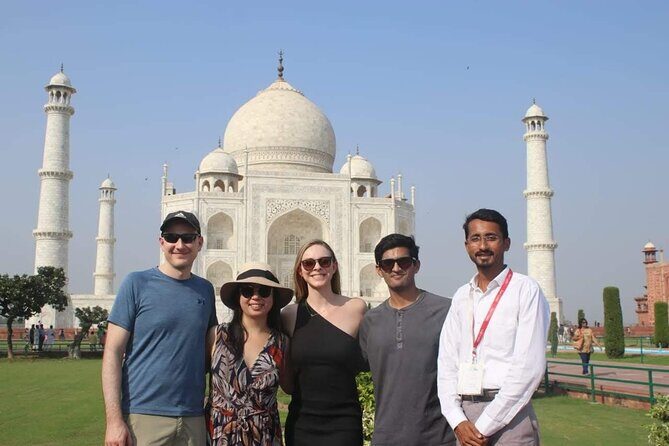
The Taj Mahal visit is listed with about 2 hours, and admission is included.
Two hours sounds “just enough,” and it usually is—because you’ll want time for the main view, plus slow walking for details around the complex. The big practical help here is that a guide helps you pace the experience so you’re not spending half the time trying to interpret what you’re seeing.
One consideration: Taj Mahal can be crowded and hot depending on the season. If you’re sensitive to long waits, keep your schedule flexible in how you approach the sight, and lean on the guide to steer you.
Agra Fort (UNESCO) for about 1 hour
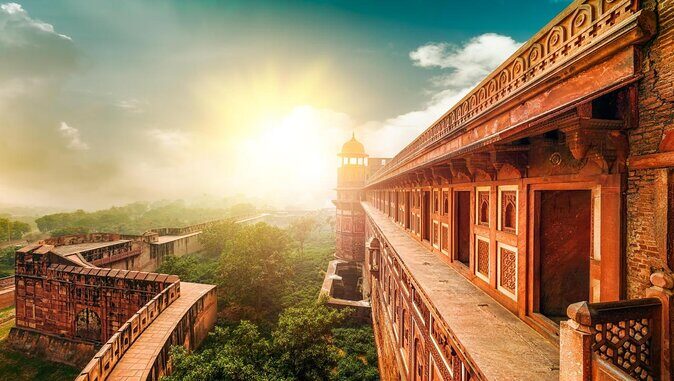
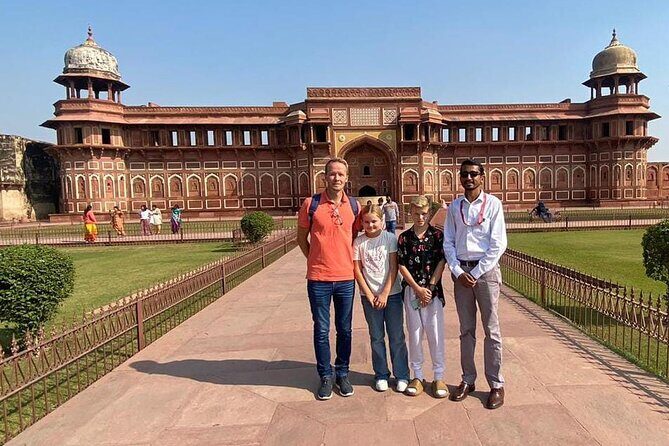
After Taj Mahal, you move to Agra Fort, another UNESCO World Heritage site. The plan sets aside about 1 hour, with admission included.
Agra Fort works as the counterweight to the Taj. The Taj is about romance and symmetry. The fort is about power, walls, and the hard logic of a stronghold. You’ll likely feel like you’re reading two different chapters of the same era.
Because the time is shorter here, focus on the big sections you can reach easily, and don’t try to sprint through everything. If you do, you’ll miss some of the visual storytelling.
Drive to Jaipur and check-in
Later, you take a 4-hour drive to Jaipur (the Pink City) and check in to your hotel.
This is a day of two big monuments plus a city change. That can feel full, but the value is you don’t have to coordinate transport or timing between the two.
Tip for this part of the day: if you’re the type who gets cranky after long drives, pack an easy snack and wear comfortable shoes for arrival. The tour includes bottled water, but lunch and dinner aren’t included.
Jaipur day: Hawa Mahal photos, City Palace depth, and Jantar Mantar meaning
Day 3 is classic Jaipur. You start with one of the easiest photo landmarks, then get into the old-city center, then finish with a UNESCO observatory.
Hawa Mahal photo stop (about 15 minutes)
You’ll make a photo stop at Hawa Mahal, often called the Palace of Breeze, with about 15 minutes on the schedule. Admission is listed as free.
This stop is designed for visual impact. Even in a short window, Hawa Mahal delivers its signature façade. If you’re visiting for photos, 15 minutes can actually be enough if you focus on angles and move efficiently.
The only drawback: if you want a longer, deeper visit here, the time is short by nature. Think of it as an architectural postcard, not a half-day attraction.
City Palace (about 1 hour) with admission included
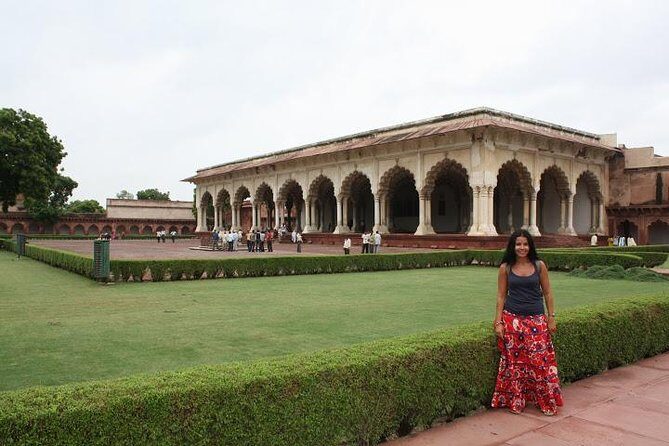
Next is the City Palace, set in the heart of the Old City. The plan gives about 1 hour, with admission included.
City Palace is where you get the sense of lived-in royal space—courtyards, buildings across periods, and the kind of layered design that makes Jaipur feel distinctly itself. A one-hour slot won’t let you read every detail, but with a guide it can still be satisfying because you’ll understand what you’re seeing as you move.
Jantar Mantar (about 1 hour) with admission included
Then you visit Jantar Mantar, a UNESCO World Heritage site and an astronomical observatory built in the early 18th century by Maharaja Sawai Jai Singh II. The tour lists about 1 hour, with admission included.
If you like the science side of travel, this is a standout. You’re not just looking at pretty structures—you’re seeing instruments designed for measuring the sky. A guide can help connect the dots so the place doesn’t feel like random stone objects.
Final drive back to Delhi (about 5 hours)
After Jaipur, you take a 5-hour drive back to Delhi/Gurugram/Noida with drop-off at your preferred location. The listing also notes options to continue your journey with drop-off at Jaipur airport or rail.
This is the “wrap it up” phase of the triangle. You’re packing in a lot, so I’d treat the final drive as travel time to recover rather than a time for constant sightseeing thoughts.
How the private car experience really helps (and where it can feel tight)
The heart of this tour is transportation: an air-conditioned vehicle plus pickup/drop-off. That matters most because the Golden Triangle route is all about motion. When the schedule is private, the driver and guide can often keep you from wasting time on extra stops.
From the names credited in the experience (Ali for safe driving and punctuality, Sanju for feeling safe and prepared, Arthur for clear explanations, Bobby (Naeem) for first-time-care), a pattern shows up: a focus on comfort and readiness. People specifically note things like cold water, juices or snacks, clean places during long drives, and the feeling of being well looked after.
One consideration: private tours can still feel like you’re on a clock. Your day includes multiple landmarks plus at least one big transfer drive. If you want total freedom to linger for 45 minutes longer at one spot, you’ll need to communicate that early, because the plan’s structure is built for fitting in all three cities.
In practice, the best mindset is to plan for efficient sightseeing and use downtime—between stops and during the drives—to reset.
Who this tour suits best (and who should think twice)
This tour fits you if:
- You want one planned route across Delhi, Agra, and Jaipur without self-coordinating transport
- You prefer private comfort with pickup/drop-off and an AC car
- You’d like a guide to handle monument timing, explanations, and navigation
- You want the option for hotel comfort level (3-, 4-, or 5-star)
You might want a different approach if:
- You’re extremely detail-focused and hate short stops (some stops here are photo stops or 1-hour blocks)
- You don’t want to pay extra for camera fees or meals (lunch/dinner aren’t included)
- You’re sensitive to long drives (Delhi to Agra and Agra to Jaipur, plus the final return)
It’s also a good pick for first-time India visitors who want confidence built into the schedule. Based on the guide name callouts, first-time visitors were specifically the kind of trip this style of service aims to support.
Should you book this private Golden Triangle tour?
If you want an efficient, comfort-first way to hit the Golden Triangle, I think this is a smart booking. You’re getting the big monuments—Humayun’s Tomb, Taj Mahal, Agra Fort, City Palace, and Jantar Mantar—plus Delhi highlights like Qutub Minar, Lotus Temple, and India Gate. You also get practical support: AC vehicle, bottled water, English guidance, and two included breakfasts.
Book it if you can accept the trade-offs: short windows at some spots, extra costs for cameras and meals, and the reality of long travel days. If you want a slower, more flexible India rhythm, you may feel cramped.
If you do book, go in prepared with a simple plan: comfortable shoes, sunscreen or hat, and a budget for lunch/dinner and camera-related charges. Then let the private schedule carry the heavy lifting.
FAQ
What cities does this 3-day Golden Triangle tour cover?
It covers Delhi, Agra, and Jaipur over about 3 days.
Is the tour private?
Yes. This is listed as a private tour/activity, and only your group participates.
Do I get hotel pickup and drop-off?
Yes. The tour includes hotel pickup and drop-off. Pickup is offered from New Delhi, Gurugram (Gurgaon), or Noida, and the final drop-off is back to your preferred location in Delhi/Gurugram/Noida after the return drive.
Is accommodation included?
Accommodation is included on the option chosen: the plan offers 2 nights in 3-, 4-, or 5-star hotels.
What meals are included?
The tour includes breakfast (2). Lunch and dinner are not included.
Are tickets and monument fees included?
Admission is included for some major sights and listed as free for others, but camera fees/monument fees are not included. In the itinerary, Taj Mahal, Humayun’s Tomb, Agra Fort, City Palace, and Jantar Mantar show admission as included, while Qutub Minar, Lotus Temple, India Gate, and Hawa Mahal show as free in the plan.
Is free cancellation available?
Yes. You can cancel for a full refund up to 24 hours in advance of the experience’s start time.