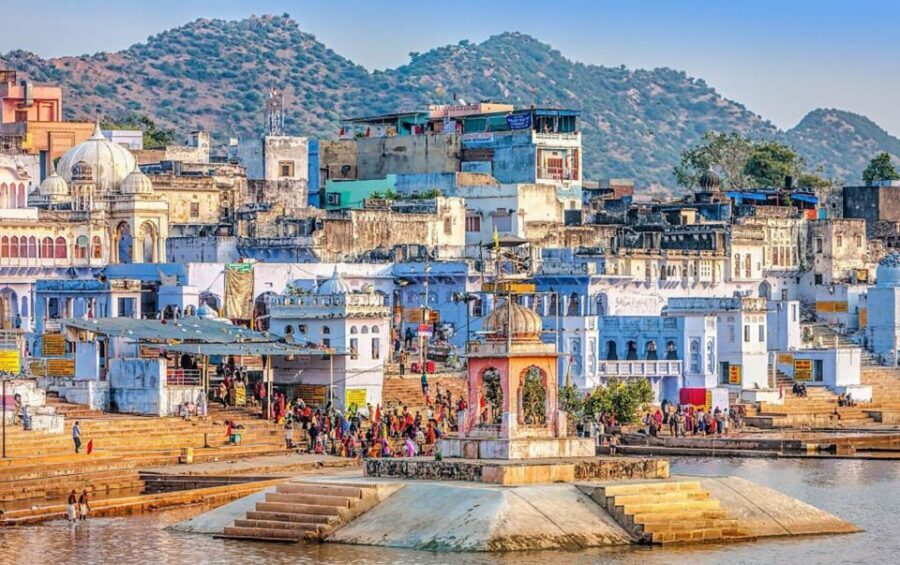
This route hits the big five fast. You’ll get private car transport between cities and a sunrise Taj Mahal start that keeps your mornings worthwhile, but the schedule is tight and you’ll spend real time on the road.
I like that the tour is built around major sights across all three cities, with many entry tickets included, so you’re not constantly stopping to figure out what costs extra. The other win is the hands-on support: pick-up/drop-off, a driver-managed plan, and small add-ons like a mobile charger and water/umbrella for the day.
One thing to weigh before you book: this is a fast triangle tour, and you’ll want energy for lots of viewpoints, palaces, forts, and markets in just three days.
In This Review
- Key highlights worth planning for
- Your 3-day “triangle” mindset: see more, move smarter
- Price and value: what you pay for, and what you still need to cover
- Included extras that actually help (especially in warm weather)
- Day 1 in Delhi: Qutub Minar to Red Fort, with Old Delhi energy
- Qutub Minar (built for the skyline)
- Lotus Temple (quiet modern contrast)
- India Gate + Rashtrapati Bhavan (big-axis Delhi)
- Agrasen Ki Baoli + Humayun’s Tomb (stepwell and Mughal calm)
- Chandni Chowk area + Red Fort (Old Delhi and Mughal power)
- The real consideration on Day 1
- Day 2 Agra: sunrise Taj Mahal, then forts and stepwell-like wow
- Taj Mahal at sunrise (when it’s most worth it)
- Agra Fort (UNESCO stop with real architectural punch)
- Itmad-ud-Daula, nicknamed Baby Taj
- Chand Baori, Abhaneri (stepwell: 3,500 steps energy)
- What you’ll feel by the end of Day 2
- Day 3 Jaipur: Amber Fort, palaces, astronomy tools, and Jal Mahal views
- Panna Meena ka Kund (quick stepwell stop near Amber)
- Amber Palace / Amber Fort (your classic hilltop wow)
- Jal Mahal (lake palace photo moment)
- City Palace (ceremonial power center)
- Jantar Mantar (UNESCO astronomy instruments)
- Hawa Mahal (brief exterior stop)
- Returning to Delhi from Jaipur
- Who this tour suits best (and who should consider another option)
- Booking confidence: what the smooth operation signals
- Should you book this 3-day private Delhi–Agra–Jaipur triangle tour?
- FAQ
- What is included in the tour price?
- Is this a private tour or shared group?
- Which major sites are visited in Delhi, Agra, and Jaipur?
- Are entrance tickets included?
- Do I need to arrange hotels and meals?
- What are the tour operating hours?
- Can I cancel and get a full refund?
Key highlights worth planning for
- Private cab across Delhi, Agra, and Jaipur, with parking/tolls/fuel handled
- Sunrise Taj Mahal timing, plus guided time inside the monument
- Many entrances included, including Taj Mahal and several fort/palace stops
- Classic Golden Triangle hits without the headache of coordinating between cities
- Added comfort extras like a mobile charger, water bottle, and umbrella
- Only your group does this tour, which usually means less waiting around
Your 3-day “triangle” mindset: see more, move smarter
A Golden Triangle tour is all about trade-offs: you see the famous places you came for, but you do it on a sprint. This one is built for that sprint. You’re not just sightseeing in one city—you’re jumping between Delhi, Agra, and Jaipur, with guided time at key monuments and structured breaks to regroup.
The private car matters more than it sounds. In India, driving time can eat your day if you’re coordinating taxis and changing plans. Here, the route is packaged so you can think about monuments (and where you want to eat later), not logistics. It also means fewer “where do we meet?” moments after each stop.
Also, the “private” part is real. This is only your group, so you’re not trapped behind a slow-moving crowd. Faster decisions happen—like which lane to use when you’re aiming to beat midday heat.
You can also read our reviews of more private tours in New Delhi


Price and value: what you pay for, and what you still need to cover
At $135.99 per person, this tour can feel like a steal if you compare it to paying for a private driver plus buying guided access to major sites. Many entrances are included on the stops listed as admission ticket included, and the car includes parking fees, tolls, fuel, and taxes.
But don’t forget the bigger cost buckets that are not included:
- Accommodations (the trip includes hotel check-in and overnight stays, but the rooms themselves are your responsibility)
- Foods and drinks (lunch is mentioned as local time for lunch, but meals aren’t included)
- Air/train fares to reach India or to travel on your own itinerary
- Personal expenses
- Alcohol/drinks
So the value is strongest if you’re comfortable handling hotels and meals yourself and you want a smooth “guided monuments + private transport” plan in return.
Included extras that actually help (especially in warm weather)
A lot of tours say they’re “comfortable.” This one backs it up with practical items:
- A mobile charger (helpful for maps, WhatsApp, translation apps, and sunrise photos)
- Complimentary water bottle and umbrella (shade and hydration matter when you’re walking)
- Pick-up and drop-off service, which reduces stress on arrival and departure days
If you’ve ever arrived somewhere new with a dead phone battery and a sudden downpour, you’ll appreciate these small things more than you think.
Day 1 in Delhi: Qutub Minar to Red Fort, with Old Delhi energy
Delhi on day one is a mix of grand monument scale and street-level life. The route is heavy, but it’s the kind of heavy that keeps you from getting bored.
Qutub Minar (built for the skyline)
You start at Qutub Minar, a UNESCO World Heritage site founded in 1193. You’ll get about 30 minutes, and the real star here is the design and its famous spiral staircase. Even if you don’t climb, the minaret’s shape reads as unmistakably “Delhi.”
Quick tip: plan your photos early. In later hours, crowds and harsh light can flatten details.
A few more New Delhi tours and experiences worth a look





Lotus Temple (quiet modern contrast)
Next comes the Lotus Temple, known for its flower-like shape, built in 1986. It’s listed as free admission with about 30 minutes.
This is your mental reset. After early history and big-stone architecture, the Lotus Temple gives you a calmer pace—even if you only spend a short stop.
India Gate + Rashtrapati Bhavan (big-axis Delhi)
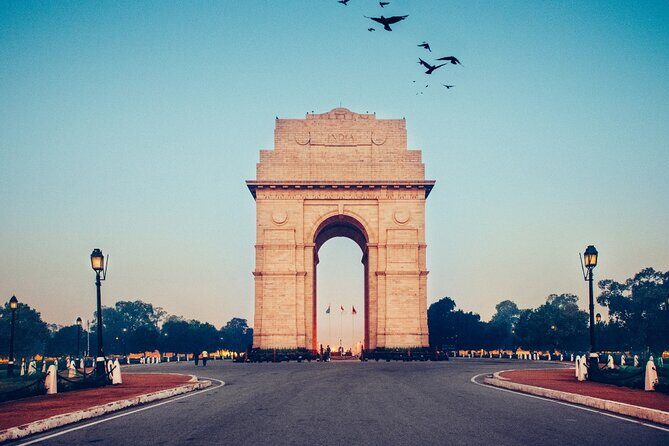
From there you pass India Gate (free admission) and then Rashtrapati Bhavan, with a shorter stop around 15 minutes. You also stop by Parliament House (Sansad Bhavan), where the building’s design is tied to the Ashoka Chakra circular motif.
These stops are less about entering and more about getting the overall layout of New Delhi. If you like “reading” cities visually, this day does that.
Agrasen Ki Baoli + Humayun’s Tomb (stepwell and Mughal calm)
You then visit Agrasen Ki Baoli (free admission), a long stepwell with protected monument status. It’s a great break from the bigger monuments because it feels like a pocket of stone geometry. After that, you go to Humayun’s Tomb for about 45 minutes (free admission).
Humayun’s Tomb gives you that Mughal layout—symmetry, garden space, and a slower way to look at details compared to fort walls.
Chandni Chowk area + Red Fort (Old Delhi and Mughal power)
The day ends with Chandni Chowk area time—about 45 minutes for markets and street browsing. This is where you can pick up practical souvenirs like spices or small gifts, but keep your pace steady. Markets move fast, and you’ll want to stay oriented so you don’t lose time.
Then you hit Red Fort with about 1 hour, and admission is included. This fort was the Mughal emperors’ main residence for centuries. Inside, you get that “fort as a city” feeling, plus a museum-like setting.
The real consideration on Day 1
Day 1 is packed and you’ll walk more than you expect. Your reward is that you’re covering a wide range—South Delhi grandeur, New Delhi state buildings, and Old Delhi street life—before you even reach Agra.
Day 2 Agra: sunrise Taj Mahal, then forts and stepwell-like wow
Agra is built around one headline: Taj Mahal. But the smart move is not treating the day like a single monument visit. This plan spreads your day across the Taj area, then deeper Agra landmarks.
Taj Mahal at sunrise (when it’s most worth it)
You wake early and start with a sunrise view of the Taj Mahal, then do a guided tour inside for about two hours. Admission is included, and this timing is the difference between “I saw it” and “I got it.”
Even if you’ve seen photos before, standing close is a different experience. The guided time matters because you’ll notice design points and not just the postcard look.
Practical advice: sunrise means cool air and nicer lighting, but it also means you should dress in layers. Once the day warms up, you’ll be walking in open areas.
Agra Fort (UNESCO stop with real architectural punch)
After the Taj, you move to Agra Fort, a UNESCO World Heritage site, for about 1 hour with admission included. Agra Fort is all about thick walls and palace-like sections, and the tour mentions you’ll learn its history and see different apartments.
This is where you see how power worked—more than romance, it’s fort and governance.
Itmad-ud-Daula, nicknamed Baby Taj
You then visit Itmad-ud-Daula, also called Baby Taj, for about 30 minutes with admission included. It’s Mughal mausoleum work, and the smaller scale can be an advantage: you can focus on craftsmanship instead of being overwhelmed by size.
If you care about details, this stop is one of the sneaky highlights of the day.
Chand Baori, Abhaneri (stepwell: 3,500 steps energy)
Next comes Chand Baori, Abhaneri, a massive stepwell reached by 3,500 steps. The tour lists admission included and about 1 hour here.
You might not climb all the steps, and the plan doesn’t promise you will—but even from key viewpoints, the scale is the show. It’s also a good photo stop once the light hits the geometric lines.
What you’ll feel by the end of Day 2
This is a full Agra day. You’ll be switching from a perfect symmetry mood (Taj) to fortress and mausoleum textures, then to a stepwell that feels almost like an optical illusion. It’s a lot, but it’s the right mix.
Day 3 Jaipur: Amber Fort, palaces, astronomy tools, and Jal Mahal views
Jaipur slows you down just enough to appreciate variety. You’re still moving fast, but the sights are more textured: hills, courtyards, palace rooms, and a scenic lake stop.
Panna Meena ka Kund (quick stepwell stop near Amber)
You start with Panna Meena ka Kund, another stepwell, near Amber Fort. It’s a free admission stop for about 15 minutes.
It’s short, but it gives you another “water architecture” moment before the big fort.
Amber Palace / Amber Fort (your classic hilltop wow)
You then head to Amber Palace, also known as Amber Fort, built by Raja Man Singh I. You’ll spend about 2 hours, and admission is included.
This is a big one. The tour notes the hilltop setting and artistic elements, plus the view across Maota Lake in front of the monument. That combination—architecture + setting—makes Amber a top choice for many first-timers.
Practical tip: bring comfortable shoes. Forts are uneven, and you’ll walk more than the time estimate suggests.
Jal Mahal (lake palace photo moment)
Next is Jal Mahal, a palace in the middle of Man Sagar Lake, renovated and enlarged by Maharaja Jai Singh II in the 18th century. The stop is about 30 minutes, admission included.
If you’re expecting a full interior visit, the plan’s timing suggests it’s more of a view-and-stroll stop. Either way, it works because the building sits in water, which makes it a different kind of Jaipur experience.
City Palace (ceremonial power center)
You move to City Palace of Jaipur for about 1 hour, admission included. The tour describes it as the administrative and ceremonial seat of the Maharaja, with many religious and cultural events held there.
This is more grounded than the iconic exterior postcards. You get a sense of how the palace functions as a state symbol.
Jantar Mantar (UNESCO astronomy instruments)
Then comes Jantar Mantar, a UNESCO World Heritage site built in 1734, with nineteen architectural astronomical instruments created by Rajput king Sawai Jai Singh II. You’ll spend about 1 hour, admission included.
If you like science and history mixing, this is a great mental curveball after forts and palaces. The instruments are built as tools you can actually see.
Hawa Mahal (brief exterior stop)
You finish with Hawa Mahal – Palace of Wind for about 15 minutes with free admission. The tour highlights the pink and red sandstone look and the architectural effect.
This stop is short on purpose. Even in a quick visit, it’s an iconic silhouette. Just manage expectations: it’s best for seeing the facade and enjoying the idea of the building, not for a long palace exploration.
Returning to Delhi from Jaipur
After Jaipur sightseeing, you take an approximately 5-hour journey back to Delhi or you can be dropped at Jaipur airport. So Day 3 includes more travel than Day 1, which is another reason the schedule feels packed overall.
Who this tour suits best (and who should consider another option)
This tour fits best if you:
- Want major monuments across all three cities without planning every segment
- Like a structured day plan with a private car
- Prefer having many key entrances already included
- Are okay with a sprint pace and travel time between cities
It may not fit if you:
- Want long, slow museum time and lots of free wandering
- Travel on a very tight schedule where the day-to-day transport time feels stressful
- Need meals and lodging handled for you end-to-end (those aren’t included)
Booking confidence: what the smooth operation signals
The tour is priced for a reason: it’s not only sightseeing. It’s also about reducing friction—getting you from place to place, covering parking and tolls, and handling the in-day flow.
The praised aspects from prior guests also point to the same idea: clear planning, a guide who keeps things moving in a friendly way (including a guide named Ram for a memorable, smooth experience), and comfortable travel between stops. That kind of management matters when you’re moving fast, because small delays multiply quickly.
Should you book this 3-day private Delhi–Agra–Jaipur triangle tour?
Yes, if you want a private, structured triangle that hits the headline monuments and keeps logistics off your plate. The combination of private transport, many included admissions, and the sunrise Taj Mahal start makes it a strong value for first-timers.
Maybe consider another approach if you hate tight schedules or you want a fully all-in package for hotels and meals. In that case, you might feel the cost creep after booking.
If you’re the type who likes checking off famous places but still wants good guidance along the way, this one is easy to recommend. Just pack for walking, plan for road time, and treat each day like a focused mission: see the big sights, then enjoy what’s left of the evening back at your hotel.
FAQ
What is included in the tour price?
The tour includes all sightseeing with a private cab, plus parking fees, tolls, fuel, and taxes. You also get a mobile charger, complimentary water bottle and umbrella, and pick-up and drop-off service.
Is this a private tour or shared group?
It’s a private tour, meaning only your group participates.
Which major sites are visited in Delhi, Agra, and Jaipur?
In Delhi you visit places including Qutub Minar, Lotus Temple, India Gate, Rashtrapati Bhavan, Agrasen Ki Baoli, Humayun’s Tomb, Chandni Chowk area, and Red Fort. In Agra you visit Taj Mahal, Agra Fort, Itmad-ud-Daula (Baby Taj), and Chand Baori, Abhaneri. In Jaipur you visit Amber Fort, Jal Mahal, City Palace, Jantar Mantar, Hawa Mahal, and Panna Meena ka Kund.
Are entrance tickets included?
Many stops list admission as included, including Qutub Minar, Red Fort, Taj Mahal, Agra Fort, Itmad-ud-Daula, Chand Baori, Amber Palace (Amber Fort), Jal Mahal, City Palace, and Jantar Mantar. Other stops are listed as free admission.
Do I need to arrange hotels and meals?
Yes. Accommodations and foods and drinks are listed as not included, even though the plan includes hotel check-in and overnight time in Agra and Jaipur.
What are the tour operating hours?
The experience is listed as running Monday through Sunday, 12:00 AM to 11:30 PM, within the date range 09/15/2023 to 12/07/2026.
Can I cancel and get a full refund?
Yes. You can cancel up to 24 hours in advance for a full refund. If you cancel less than 24 hours before the start time, the amount paid is not refunded.