REVIEW · NEW DELHI
Full Day Old and New Delhi City Tour
Book on Viator →Operated by Julie International Tours · Bookable on Viator
A full day in Delhi can feel like a blur—this one doesn’t. You’ll ride through Old Delhi and New Delhi in an air-conditioned car with a government-approved guide, hitting major sights like Jama Masjid and Qutub Minar while also getting practical context for how the city works. I love that the schedule packs in the big UNESCO stops plus real local scenes like Chandni Chowk, and I also like the fact that you get pickup and drop-off so you’re not piecing together transport all day.
The main thing to consider is pacing and inclusions: several stops are short (often 10–30 minutes), and the Red Fort is typically viewed from the outside, while some monument entrances (like Qutub Minar and Jama Masjid) are not included unless you choose the all-inclusive option for entrance fees.
In This Review
- Key highlights worth planning around
- First step: pickup, comfort, and a route that makes sense
- Jama Masjid: a major UNESCO moment in Old Delhi
- Chandni Chowk and the rickshaw ride: the market you can feel
- Red Fort: exterior photos and why you won’t feel shorted
- Raj Ghat and India Gate: memorial stops that are easier to process
- Rashtrapati Bhavan and Parliament House photo stops: the official face of New Delhi
- Lunch break: where value depends on your option
- Gurudwara Bangla Sahib: a calm, meaningful stop with community kitchen culture
- Agrasen ki Baoli: stepwell architecture and a surprising kind of quiet
- Qutub Minar: your final UNESCO stop (and entrances may cost extra)
- How the guide and driver affect the day (the part you can’t buy twice)
- Value: what you’re really paying for at $89
- Who this tour fits best
- Should you book this full day Old and New Delhi tour?
- FAQ
- FAQ
- How long is the Old and New Delhi full-day tour?
- What is included in the tour price?
- Is lunch included?
- Are entrance fees included?
- Do you enter the Red Fort?
- Where does pickup happen?
- Is this tour private?
- Can I cancel for a refund?
Key highlights worth planning around

- Hotel pickup and private air-conditioned transport across Old and New Delhi.
- Jama Masjid and Qutub Minar as your two UNESCO anchor points.
- Rickshaw ride through Chandni Chowk for a hands-on feel of a historic market street.
- Raj Ghat and India Gate for respectful, photo-friendly memorial stops.
- Gurudwara Bangla Sahib and Agrasen ki Baoli for a different side of Delhi beyond monuments.
- Driver efficiency matters on a route like this, and the guide/driver pairing is a major strength of the experience.
First step: pickup, comfort, and a route that makes sense
Your day starts with pickup at a time you choose, from your hotel (or the airport/train station) in Delhi, Gurugram, or Noida. You’ll travel by private vehicle, with a licensed driver and a professional tour guide—two people who change the whole feel of the trip. In a city where traffic and distance can surprise you, this structure helps you get from one major area to the next without wasting half the day.
The tour runs about 7–8 hours, and that matters. Delhi’s sights are spread out, and this itinerary doesn’t pretend you’ll linger at every stop. Instead, it hits a curated set of places in a logical order: Old Delhi in the morning, then the New Delhi government-and-monument zone, then quieter spiritual and heritage stops before the final UNESCO minaret.
What you’ll notice early is how the guide sets context while you move. You get short stops, but the explanations are meant to connect the dots—who built what, why the site matters, and what you’re looking at from the right angle. It’s a strong way to do Delhi for your first visit.
You can also read our reviews of more city tours in New Delhi



Jama Masjid: a major UNESCO moment in Old Delhi
The tour’s Old Delhi work begins at Jama Masjid (The Friday Mosque). You’ll spend about 30 minutes there, with the admission ticket not included. That means you’ll either want to plan on paying on-site or confirm whether your all-inclusive choice covers the fee.
Jama Masjid is famous for its scale and its relationship to Mughal architecture. From the itinerary timing, you should expect a focused visit: time to take in the courtyard and buildings, plus enough minutes to understand the architectural intent without feeling rushed out the door.
Two practical notes help you enjoy this stop more:
- Dress and behavior matter at religious sites, so keep clothing comfortable and respectful.
- Take a minute to orient yourself—then photos make more sense.
It’s one of those places where the size can hit you faster than the details. The guide’s job is to slow your eyes down and help you notice what you might otherwise miss.
Chandni Chowk and the rickshaw ride: the market you can feel
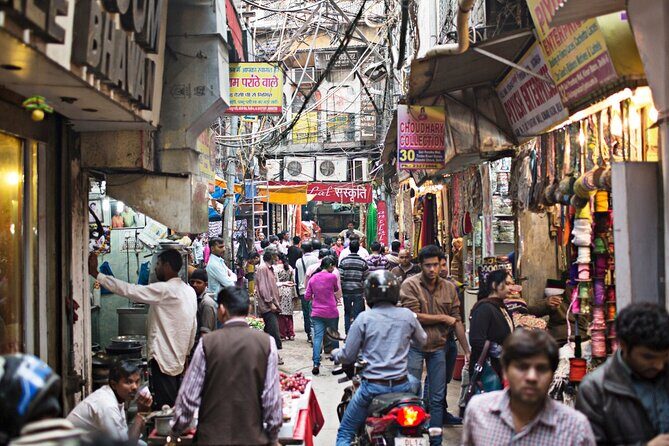
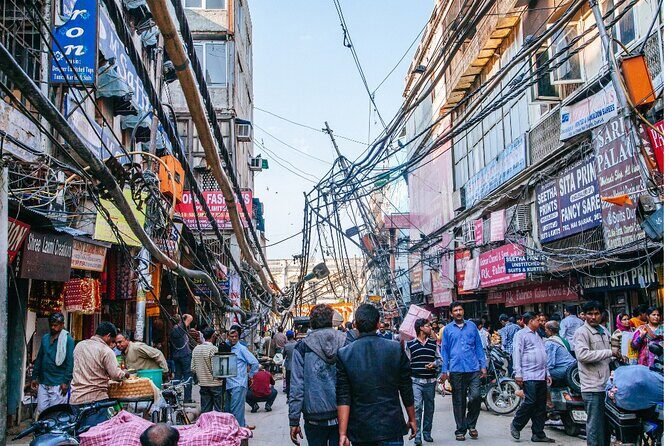
Next up is Chandni Chowk, one of Delhi’s oldest market areas. You’ll spend around 30 minutes here, and you’ll ride a rickshaw as part of the experience. Importantly, this portion is listed as admission free.
This is where the tour becomes more than monuments. Chandni Chowk is a sensory overload in the best way: narrow lanes, strong street energy, and lots of old-school commerce. The rickshaw ride is a smart touch because it gives you movement without forcing you to fight for space on foot.
If you’re sensitive to crowds or noise, keep expectations realistic. This is a market district, not a museum corridor. But that’s also the point: you’re seeing Delhi in action, not just looking at it behind glass.
When the guide explains the historical canal-and-layout idea connected to Shah Jahan’s era, it helps you make sense of why the market feels the way it does today. You stop seeing it as random chaos and start seeing it as city planning that kept evolving.
Red Fort: exterior photos and why you won’t feel shorted
The tour includes a Red Fort stop, but plan on a drive-by and photo stop from the outside. The reason given is that a large share of the building is used by the Indian Army, so your view is typically exterior.
You’ll get about 10 minutes here, and the admission is not included. In practice, that means you’re trading deep time inside the fort for more time elsewhere on the route.
Is that disappointing? Not if you treat it as a photo-and-context stop. In Delhi, permissions, access, and use of historic buildings can change. An exterior viewing time still gives you a strong first impression of the fort’s presence and red sandstone style—and it keeps your schedule moving toward sites you can actually enter.
If you want the full Red Fort interior experience, you’d likely need a separate plan. But for a single-day Old-and-New overview, the exterior approach is a time-efficient compromise.
Raj Ghat and India Gate: memorial stops that are easier to process
After Old Delhi, the tour turns to reflective stops.
At Raj Ghat, you’ll visit the memorial marking where Mahatma Gandhi was cremated after his assassination in 1948. This is about 30 minutes and admission is free. The value here is pacing and respect. You’re not rushing through it; you’re getting a quiet pause after the intensity of markets and major architecture.
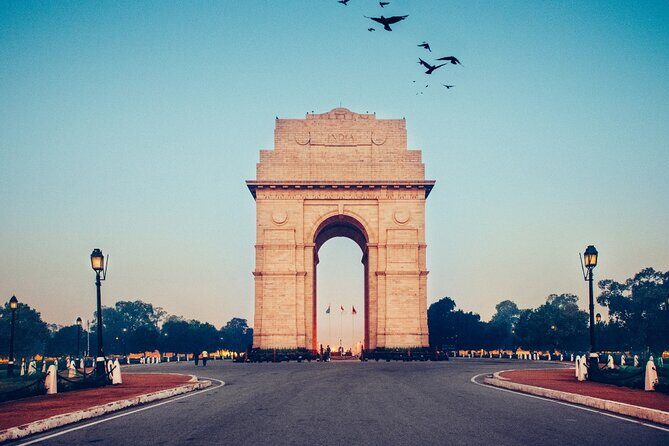
Then there’s India Gate. You’ll stop for photos and spend about 10 minutes. Admission is free here too. India Gate can feel like a simple sightseeing photo stop, but it’s also a war memorial that helps you understand how public spaces in New Delhi remember history.
My tip: treat these stops as anchors. They break up the day so it doesn’t become only walking and looking. In a jam-packed itinerary, that kind of mental reset matters.
A few more New Delhi tours and experiences worth a look





Rashtrapati Bhavan and Parliament House photo stops: the official face of New Delhi
You’ll also drive by and take photos at Rashtrapati Bhavan, the official home of the President of India, and the Parliament House area where India’s government sits.
These are listed as photo stops while driving, so don’t expect entry or long wandering time. The point is visibility and context: you’re seeing the design scale and the governmental center that shapes New Delhi’s look.
For first-time visitors, these stops are useful because they explain why New Delhi feels so structured compared with Old Delhi. It’s less about individual buildings you’ll walk inside and more about the city layout: wide roads, planned zones, and grand civic architecture.
Lunch break: where value depends on your option
You’ll have a break for a buffet lunch (about 1 hour) if you choose the all-inclusive option. The itinerary states that lunch is included under that selection.
This is where the price can shift in real terms. You’re paying for a private guide, private vehicle, and included logistics either way. But your overall value gets better if your all-inclusive choice covers lunch and entrance fees at monuments. If you opt out of all-inclusive, you may still have plenty included—but you’ll want to budget for any entrance fees not covered.
A practical strategy: check what’s included before you go, then plan your day based on where you’ll spend time and money. On a full-day route, surprises on the spot are the last thing you want.
Gurudwara Bangla Sahib: a calm, meaningful stop with community kitchen culture
After lunch, the itinerary heads to Gurudwara Bangla Sahib. You’ll have about 1 hour there, and admission is free.
This stop is one of the more emotionally grounding parts of the day. It’s described as one of the most important Sikh shrines, with grounds that include a gurudwara, a kitchen, and a large holy pond. The concept of Langer, the community kitchen, is specifically referenced—so the guide likely gives you context for why food and service are part of the religious experience.
The best way to enjoy it is to slow down during the visit. This is not a quick look-and-go stop. Even if you’re moving through the day, plan to spend that hour actively noticing the setting: the pond area, how visitors behave, and how the space works for community life.
Agrasen ki Baoli: stepwell architecture and a surprising kind of quiet
Next is Agrasen ki Baoli, an ornate stepwell in the center of Delhi. You’ll spend about 20 minutes here, with admission listed as free.
This is the kind of place you might overlook if you only chase the headline monuments, which is exactly why it’s a good inclusion. Stepwells are functional architecture—engineering disguised as beauty. Even without entering every nook and cranny, you get a sense of how people once stored and managed water in a city where timing and access mattered.
Because your time here is short, I’d focus on photos and a quick walk to find the best angles from the outside. The guide can help connect it to its age and original water-reservoir purpose, turning what could be a quick stop into a memorable one.
Qutub Minar: your final UNESCO stop (and entrances may cost extra)
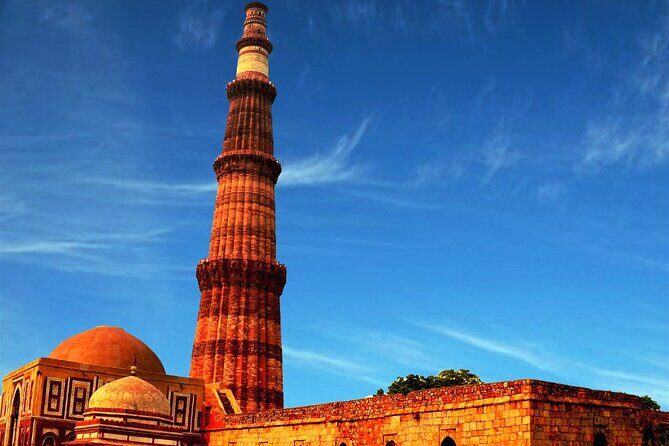
The day ends at Qutub Minar, the last major UNESCO site on the route. This stop is about 1 hour, and the itinerary notes that admission is not included.
Qutub Minar’s construction is tied to Qutab-ud-din Aibak in 1192, with later completion by his successor Iltutmish. You’ll see the tall conical minaret and the larger complex area, with the guide helping you understand why it’s considered such a landmark in Indo-Islamic architecture.
Since the entrance fee isn’t included, the key consideration is budgeting and planning. If you care about getting inside certain areas or the viewing experience, confirm on the day what’s available with your ticket type. The one-hour timing suggests the tour aims to give you enough to appreciate the site without turning this into a half-day detour.
Still, if Qutub Minar is your must-see UNESCO stop, this is a smart way to end the itinerary. By the time you arrive, you’ve already seen enough of Delhi’s layers to recognize patterns in design and power—so the minaret lands harder.
How the guide and driver affect the day (the part you can’t buy twice)
The standout strength of this experience is the guide-and-driver team. The tour’s best moments tend to be when the explanations click and the routing stays tight. When the guide clearly explains the monuments and their history while the driver moves efficiently between areas, the whole day feels coherent instead of chaotic.
This is especially important because many stops are relatively short. If you’re spending 10–30 minutes at each place, you need someone who can keep you oriented, not just someone who reads a script.
So if you’re choosing this tour, look at the pairing as part of the value. At $89 per person, you’re not just paying for transport—you’re paying for a structured plan that saves you time, stress, and guesswork.
Value: what you’re really paying for at $89
Let’s talk value plainly. At $89 per person, you’re getting:
- Hotel pickup and drop-off
- Private air-conditioned vehicle
- A licensed driver and professional tour guide
- Packaged water bottles
- A buffet lunch if you choose the all-inclusive option
- Entrance fees if you choose the all-inclusive option
If you go all-inclusive, it’s a strong deal for a day that covers major areas, multiple iconic stops, and at least one market experience with a rickshaw component. If you skip all-inclusive, the price still covers the core structure (transport, guide, and the free stops), but you’ll need to handle entrance fees separately for sites where they’re listed as not included.
Either way, the private nature matters. You’re not sharing a vehicle with strangers or getting stuck waiting for a big group. That privacy is what makes a packed day feel manageable.
Who this tour fits best
This tour is a great fit if:
- You want a first-time Delhi overview that connects Old and New Delhi in one day.
- You prefer short, guided stops rather than self-navigating across traffic-heavy areas.
- You like seeing major landmarks, but you also want at least one local flavor hit (Chandni Chowk by rickshaw).
- You’d rather spend time learning context than searching for how to get to each site.
It might be less ideal if:
- You want long, slow visits inside major monuments (Red Fort access isn’t part of this plan).
- You hate crowds and noise, since Chandni Chowk is a market area.
Should you book this full day Old and New Delhi tour?
Yes—if your goal is one efficient, guided day that covers the big names and a few “in-between” surprises. I like how the route balances UNESCO stops with memorials and cultural sites, so you don’t just collect photos. The strongest reason to book is the practical execution: pickup, private transport, and the guide/driver working together so the day stays on track.
Before you reserve, do one quick check: decide whether you want the all-inclusive option for lunch and entrance fees. That choice can meaningfully improve value, especially since some key sites in the plan (like Qutub Minar and Jama Masjid) list entrances as not included.
FAQ
FAQ
How long is the Old and New Delhi full-day tour?
It runs about 7 to 8 hours.
What is included in the tour price?
The tour includes hotel pickup and drop-off, packaged water bottles, a licensed driver, a professional tour guide, and transfers/sightseeing by private air-conditioned vehicle.
Is lunch included?
Lunch is included if you select the all-inclusive option. It’s listed as a delicious buffet lunch.
Are entrance fees included?
Entrance fees are included only if you select the all-inclusive option. Some monument entrances are listed as not included, such as Jama Masjid and Qutub Minar.
Do you enter the Red Fort?
The plan is a drive-around and exterior photo stop. The Red Fort is described as not fully accessible because a large portion is acquired by the Indian Army.
Where does pickup happen?
You can be picked up from your hotel, the airport, or a train station in Delhi, Gurugram, or Noida, at a time you choose.
Is this tour private?
Yes. It’s a private tour/activity, so only your group participates.
Can I cancel for a refund?
Yes, you can cancel for a full refund up to 24 hours in advance. If you cancel less than 24 hours before the start time, the amount paid isn’t refunded.