REVIEW · NEW DELHI
3 Days Golden Triangle Tour Delhi Agra Jaipur
Book on Viator →Operated by Delhi Routes Tour Transport · Bookable on Viator
If you want India fast and focused, this route works. In just three days you’ll see the big hitters of the Golden Triangle, from Delhi’s monumental sultan-era sights to the sunrise Taj Mahal, then on to Jaipur’s forts and palaces. I like that the plan handles the hardest part—timing and transfers—so you can spend your energy looking, not figuring.
I also like the pickup coverage (airport, train station, or your hotel) and the fact that breakfast is included on two mornings, which helps the budget on a tight trip. The main drawback to keep in mind: monument entry tickets are not included for most stops, and lunch/dinner aren’t included either, so you’ll want to budget extra cash for tickets and meals.
In This Review
- Quick hits: what makes this tour feel worth it
- Price and logistics: what $250 buys you (and what it doesn’t)
- Day 1 in Delhi: Qutub Minar, Lotus Temple, Humayun’s Tomb, and India Gate
- Qutub Minar: a skyline landmark with a long, stormy history
- Lotus Temple: modern symmetry, open doors
- Humayun’s Tomb: Mughal ambition on a human scale
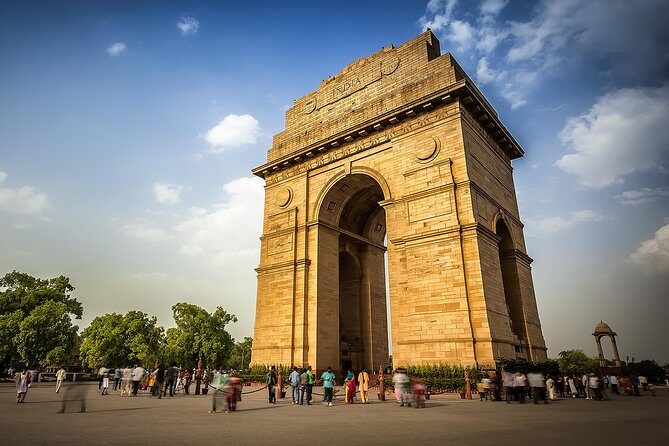
- India Gate: a war memorial you can actually enjoy walking around
- Day 2 in Agra: the sunrise Taj Mahal that people talk about
- Taj Mahal: plan for early light, not just dramatic views
- Agra Fort: where rulers lived, not just where they posed
- Fatehpur Sikri: the free-ticket side trip that expands the story
- Day 3 in Jaipur: Amber Fort, City Palace, and Hawa Mahal’s window-to-the-world feel
- Amber Fort: fort-life over postcard walls
- City Palace: where Jaipur’s royal story stayed official
- Hawa Mahal: the palace built for looking out
- Your guide: why names like Asha and Aish matter
- What I’d watch for before you go
- Tickets and meals can shift your real total
- Early mornings are part of the package
- It’s a lot of places for three days
- Who this tour suits best
- Should you book the 3 Days Golden Triangle Tour?
- FAQ
- What cities does the tour visit?
- Is accommodation included?
- Are breakfast, lunch, and dinner included?
- Are monument entrance tickets included?
- What pickup is provided and when does the tour start?
- What is the cancellation policy?
Quick hits: what makes this tour feel worth it
- Pickup from airport, station, or hotel so you lose less time on day one
- 2 nights of lodging: one in Agra, one in Jaipur, with breakfast included on 2 mornings
- Taj Mahal sunrise timing (around 5:30 in summer, 6:15 in winter) for better light and fewer crowds
- A guided day-by-day route through Delhi, Agra, and Jaipur without daily planning stress
- Lotus Temple and Fatehpur Sikri listed as free stops, which helps the ticket total
- Private tour setup (just your group), plus mask and hand sanitizer provided
Price and logistics: what $250 buys you (and what it doesn’t)
For $250 per person, you’re paying for the structure: guided sightseeing, intercity transfers, and 2-night accommodation (Agra + Jaipur). That’s the value piece. When you’re short on time, saving yourself the “where do we go next?” problem is often worth more than shaving a few dollars on a ticket here or there.
What’s not wrapped into that price is the “site cost” part. Monument entrys are not included, and lunch/dinner aren’t included either. So even though the tour price sounds simple, your real daily spend will split into two streams:
- Tickets and any optional upgrades at each site
- Your own lunch and dinner choices
One practical note: the meeting start time is 7:00 am at Indira Gandhi Intl Airport. If you’re landing later, you’ll want to confirm how pickup lines up with your arrival time before you lock it in.
A few more New Delhi tours and experiences worth a look



Day 1 in Delhi: Qutub Minar, Lotus Temple, Humayun’s Tomb, and India Gate
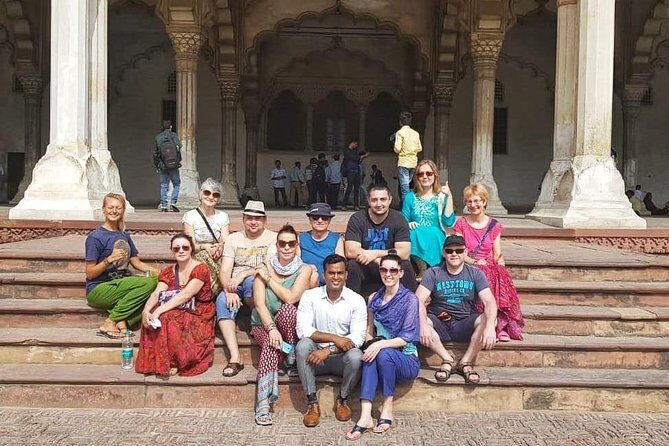
Day one is a strong “set the stage” day. It moves through Delhi’s layers: early Sultanate stonework, faith architecture, Mughal power, then a modern war memorial you can pace with on foot.
Qutub Minar: a skyline landmark with a long, stormy history
Qutub Minar is one of those places where you instantly get why people call Delhi old. It’s described as a five-storied brick tower built across centuries by different rulers. You’ll hear the origin story: commissioned around 1192 by Qutb-ud-din Aibak, then expanded by Shams-ud-din Iltutmish in 1220. Later, damage from lightning in 1369 led to rebuilding by Firoz Shah Tughlaq, who added the fifth and final story.
What I like for first-timers: the monument feels less like a single “date” and more like a timeline in brick and stone. What to watch: entry isn’t included here, so your ticket budget should account for it early.
Lotus Temple: modern symmetry, open doors
Next up is the Lotus Temple, a Baháʼí House of Worship dedicated in December 1986. It’s famous for its flowerlike shape, and the big practical detail is that it’s open to everyone—no religion check at the door. The temple is listed as free, so it’s a nice breather between paid monuments.
If you want a moment to reset your senses, this is it. You’ll also appreciate the contrast: ornate history shifts into calm geometry.
Humayun’s Tomb: Mughal ambition on a human scale
Then comes Humayun’s Tomb, the resting place of Mughal Emperor Humayun. The tomb was commissioned in 1558 by his chief consort Empress Hamida Banu Begum, supported by her son Akbar. The design is credited to Persian architects Mirak Mirza Ghiyas and Sayyid Muhammad, and it was opened in 1572.
This stop is valuable because it shows Mughal architecture thinking before the Taj gets all the fame. The layout and stonework help you understand how styles evolved. Like several other sites today, admission isn’t included, so plan on a ticket line item.






India Gate: a war memorial you can actually enjoy walking around
The day ends with India Gate, a sandstone arch memorial in the Rajpath area. It commemorates soldiers of the British Army (British India Army) who died during World War I and the Third Anglo-Afghan War of 1919.
This is a good choice for an evening-style finish because you can take your time. It’s not just photo-stop energy; it’s also a place to stand back and read what the monument is telling you about history and empire.
Day 2 in Agra: the sunrise Taj Mahal that people talk about
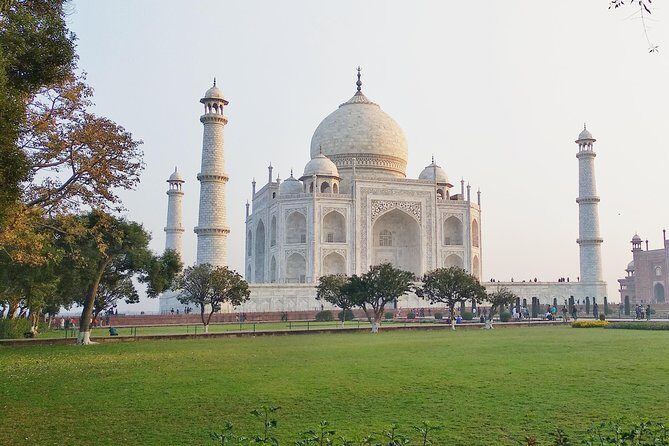
Agra is where your photos stop being just pretty and start feeling emotional—because the Taj is engineered for that effect. This day is built around early morning. The plan states pickup around 5:30 in summer and 6:15 in winter, then transfer you to the Taj Mahal.
Taj Mahal: plan for early light, not just dramatic views
The Taj Mahal is described as an ivory-white marble mausoleum on the south bank of the Yamuna River, commissioned in 1632 by Shah Jahan for Mumtaz Mahal. Sunrise timing matters because the light changes how the marble reads. You also tend to get a calmer experience than mid-day.
Practical takeaway: since admission tickets are not included, you’ll want to have your ticket budget ready before this morning. If you’re sensitive to cold mornings in winter, bring a layer—you’ll be up early, and the outside can feel sharp.
Agra Fort: where rulers lived, not just where they posed
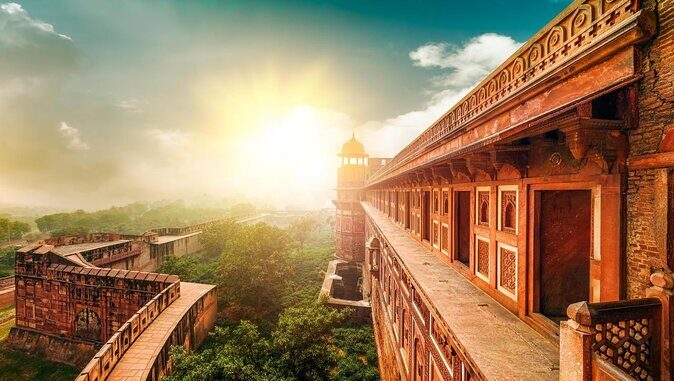
After the Taj, you’ll head for breakfast and then visit Agra Fort. The fort was built 1565–1573 for Mughal Emperor Akbar and served as a main residence. The description also notes earlier occupancy by the Sikarwar clan of Rajputs before the Mughals took over, and that the Mughal dynasty held it until the capital shifted to Delhi in 1638.
This pairing is smart. Taj Mahal tells you romance and symbolism. Agra Fort tells you how power actually worked day to day: walls, control, and the space leaders needed to operate.
Like other key stops, admission isn’t included—so treat this as a second paid monument day in your budget.
Fatehpur Sikri: the free-ticket side trip that expands the story
You’ll also visit Fatehpur Sikri, described as a 16th-century Mughal-founded city west of Agra. It’s known for red sandstone buildings clustered around the center. The itinerary highlights:
- Buland Darwaza as the entrance to Jama Masjid mosque
- the marble Tomb of Salim Chishti
- Diwan-E-Khas with a carved central pillar
- Jodha Bai Palace, mixing Hindu and Mughal styles
- the Panch Mahal, a five-story structure overlooking the site
The key practical win: Fatehpur Sikri is listed as free. It’s also a great “thinking stop.” If Taj and Agra Fort feel like big statements, Fatehpur Sikri feels like a whole complex idea—religion, court culture, and architecture in one place.
Day 3 in Jaipur: Amber Fort, City Palace, and Hawa Mahal’s window-to-the-world feel
Jaipur is where the Golden Triangle shifts from imperial monuments into a city shaped by royal planning. Day three is your “forts and palaces” day, and the pacing is designed to keep you moving without feeling like a sprint.
Amber Fort: fort-life over postcard walls
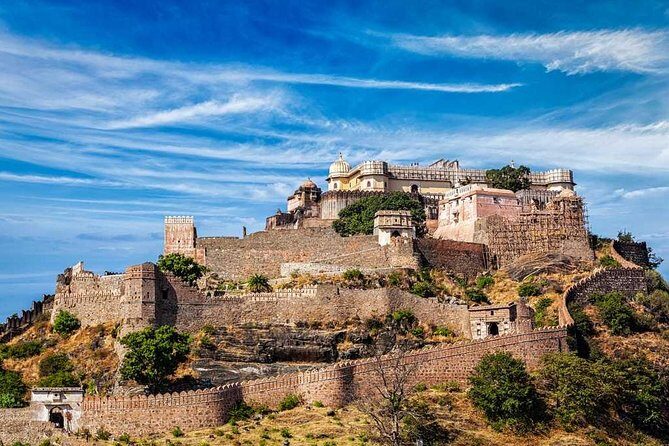
You’ll start with Amber Fort (Amer Fort), about 11 km from Jaipur. The description notes Amer as a town area of 4 square kilometres, and that the fort and town were originally built by Raja Man Singh, with later additions by Sawai Jai Singh.
Spending about two hours here is the right amount. You get enough time to see why this place holds attention: it’s not one view, it’s a sequence of courtyards and defensive design. Expect to do walking, and wear shoes you’ll trust. Since admission isn’t included, again: tickets are your likely extra cost.
City Palace: where Jaipur’s royal story stayed official
Next is the City Palace. It was established alongside the founding of Jaipur by Maharaja Sawai Jai Singh II, who moved his court to Jaipur from Amber in 1727. This stop is useful because it gives context. Amber Fort is power and defense. City Palace is the administrative and ceremonial side of power.
The listed time is about one hour, which can feel quick if you like to read and linger. Use the guide time wisely, and if something catches your interest, ask for one more detail—this is where those “small history moments” help the city make sense.
Hawa Mahal: the palace built for looking out
Finally, you’ll see Hawa Mahal, built in red and pink sandstone along the edge of the City Palace. It extends toward the zenana, or women’s chambers. The design is distinctive: it’s basically a facade that lets people inside observe street life while staying screened.
This is one of those “stop and look” monuments. You’ll get better enjoyment if you slow down and watch the rhythm of the building—how it’s meant to function. The itinerary doesn’t specify ticket details here, so treat it like a possible pay-at-site item unless you’re told otherwise.
Your guide: why names like Asha and Aish matter
A good guide is the difference between seeing monuments and actually understanding what you’re seeing. I love when a guide can turn the dates into cause-and-effect: why a ruler built this here, what the architecture meant, how a monument’s purpose changed over time.
Two guide names have popped up in the tour’s orbit: Asha and Aish. Both are described as positive, well organized, and focused on making the experience work for real people. Asha is noted for knowing where to try exceptional quality cuisine, which is more valuable than you might think on a tight schedule. Aish is credited with caring enough to learn a group’s language—Polish—which can instantly make a guided day feel personal instead of rigid.
Even if your guide isn’t named in this exact way, the lesson holds: on a three-day loop, you want someone who can keep things moving while still explaining what you’re looking at.
What I’d watch for before you go
This tour hits major sites hard, so the main considerations are energy and budgeting.
Tickets and meals can shift your real total
Because monument entry tickets aren’t included and lunch/dinner aren’t included, your final spend will depend on how you plan meals and pay for each site. The good news is that Lotus Temple and Fatehpur Sikri are listed as free, which helps.
Early mornings are part of the package
The Taj Mahal sunrise schedule is an advantage, but it also means you’ll be awake early and moving quickly. If you dislike early wake-ups, this is still doable, but you’ll want to protect your sleep the night before.
It’s a lot of places for three days
This is the trade-off: you’ll see plenty. You also won’t have “hours to wander” at each site. If you’re the type who loves slow museum-style pacing, consider adding extra days in at least one city.
Who this tour suits best
This is a strong fit if:
- It’s your first time in India and you want the classic route without planning
- You prefer guided structure over independent logistics
- You can handle a packed three days and early mornings for sunrise
It may not be the best fit if:
- You want long unstructured time in each place
- You have a tight budget for ticketed monuments and don’t want to add spending for entries and meals
Should you book the 3 Days Golden Triangle Tour?
I’d book it if you want a smart, efficient intro to Delhi–Agra–Jaipur with the heavy lifting handled: pickup, transfers, guided stops, and 2 nights plus breakfast. It’s especially worthwhile if sunrise Taj is on your list, because that timing is built into the plan.
If you’re comfortable budgeting for monument entries and you like the idea of seeing a lot without micromanaging logistics, this tour delivers real value. If you prefer independent pacing or you want everything included down to every ticket and meal, then you’ll want to look at different options before you commit.
FAQ
What cities does the tour visit?
This Golden Triangle tour covers New Delhi, Agra, and Jaipur.
Is accommodation included?
Yes. The tour includes 2 nights of accommodation: 1 night in Agra and 1 night in Jaipur.
Are breakfast, lunch, and dinner included?
Breakfast is included for 2 days. Lunch and dinner are not included.
Are monument entrance tickets included?
No. Monument entry tickets are listed as not included. Some stops show as free, including Lotus Temple and Fatehpur Sikri.
What pickup is provided and when does the tour start?
Pickup is offered from the airport, train station, and hotel. The start time is listed as 7:00 am, with the meeting point at Indira Gandhi Intl Airport, New Delhi.
What is the cancellation policy?
You can cancel up to 3 days in advance for a full refund. If you cancel less than 3 days before the experience’s start time, the amount paid is not refunded.