REVIEW · NEW DELHI
3 Days Golden Triangle Tour- Delhi – Agra – Jaipur
Book on Viator →Operated by Taj Golden Tours · Bookable on Viator
Golden Triangle, neatly stitched into three days. I love the private pickup and air-conditioned vehicle, and I love having a professional guide who keeps each stop meaningful. One thing to budget for: monument entrance tickets are not included, so Taj Mahal and the forts usually add cost.
You can also choose the option with two nights in a 4- or 5-star hotel (with breakfast), or pick a version without accommodation. Either way, bottled water is included, which matters when you’re moving between cities fast.
In Delhi, you’ll cover Jama Masjid, India Gate, Rashtrapati Bhawan, and the Lotus Temple. Then it’s Agra for the Taj Mahal and Agra Fort, followed by Jaipur’s Amber Fort area, City Palace complex, Jantar Mantar, plus Hawa Mahal and Jal Mahal.
In This Review
- Key things to know before you go
- The 3-day Golden Triangle route that actually makes sense
- Day 1 in Delhi: Jama Masjid, India Gate, Rashtrapati Bhawan, Lotus Temple
- Jama Masjid (biggest mosque in Delhi)
- India Gate: the 42-meter war memorial pause
- Rashtrapati Bhawan: President’s House overview
- Lotus Temple (Bahá’í House of Worship)
- Day 2 in Agra: Taj Mahal and Agra Fort without the ticket surprise
- Taj Mahal: 2 hours with a guide’s lens
- Agra Fort: the royal capital’s fortress feel
- Day 3 in Jaipur: Amber Palace, City Palace, Jantar Mantar, plus Hawa Mahal and Jal Mahal
- Amber Palace (Amer Fort): big fort interiors and key halls
- City Palace: Mughal and Rajput architecture mix
- Jantar Mantar: the giant stone astronomy tools
- Hawa Mahal: the pink facade built for city views
- Jal Mahal (Water Palace): a palace on Man Sagar Lake
- Hotel comfort, breakfast options, and what you’re truly paying for
- What’s included
- What’s not included
- Two-night hotel choice changes the trip math
- Small detail that helps: vegetarian option
- Guides matter: Asif and Mubin Shah style you can look for
- Who this Delhi–Agra–Jaipur tour suits best
- Should you book this 3-day Golden Triangle tour?
- FAQ
- Are monument entrance tickets included?
- Does the tour include hotel accommodation?
- Is pickup and drop-off included?
- What about food and drinks?
- Do I need a passport?
- Is transportation private and air-conditioned?
Key things to know before you go
- Private, guide-led route: You’re not left to figure things out alone—local guides are part of the package.
- Most monument tickets are extra: Taj Mahal, Agra Fort, Amber Palace, City Palace, and Jantar Mantar are marked as not included.
- You get a full Golden Triangle sweep: Delhi → Agra → Jaipur in 3 days, with major landmarks in each city.
- Hotel choice affects comfort and value: Accommodation may be included (4/5-star with breakfast) or you can travel without it.
- Expect passport details up front: Your passport name/number/expiry and country are required at booking for all participants.
The 3-day Golden Triangle route that actually makes sense
This tour is built for travelers who want the headline sights—without the headache of planning, booking, and coordinating transport across three cities. The Golden Triangle (Delhi, Agra, Jaipur) works because each day stays focused: one city per day, with a logical order so you’re not bouncing all over.
The biggest “value” benefit here is the combination of private transportation and local guided stops. In practice, that means you spend your time looking at landmarks, not hunting down routes, waiting around, or trying to interpret what you’re seeing.
The trade-off is pacing. Three cities in three days means you’ll get several major stops, but you won’t linger forever. If you love slow travel, you may find the schedule tight. If you want structure, it’s a good fit.
Also, this tour tends to be booked ahead (around 100 days is typical), so if you’re traveling in a busy season, booking early helps you lock in the option you want.
A few more New Delhi tours and experiences worth a look



Day 1 in Delhi: Jama Masjid, India Gate, Rashtrapati Bhawan, Lotus Temple
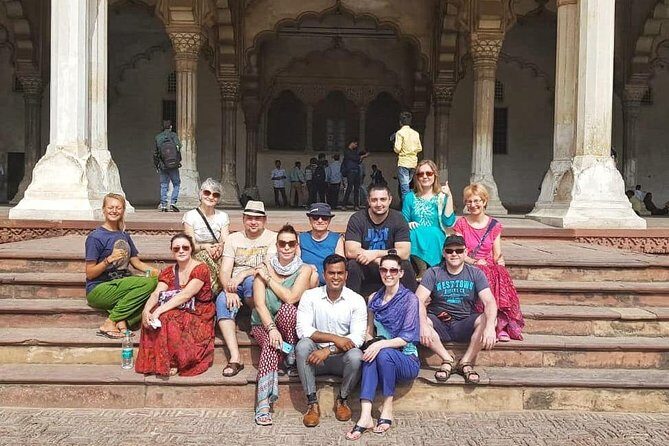
Delhi day is a mix of Mughal-era grandeur, British-era memorial architecture, and modern-spiritual design. The timing is designed for momentum: about four stops in one day, each with a clear time window.
Jama Masjid (biggest mosque in Delhi)
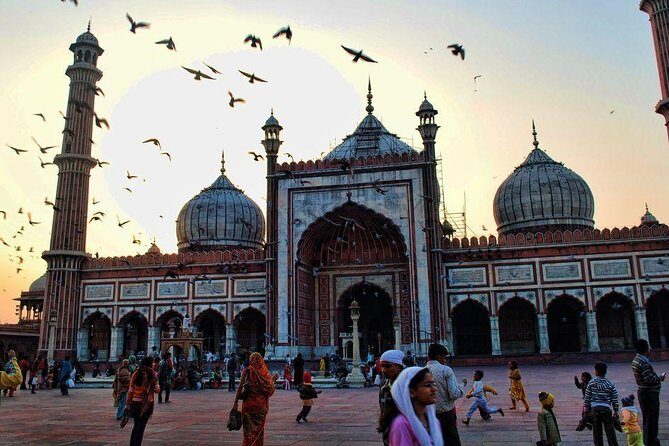
You start at Jama Masjid, described as the biggest mosque on Delhi, built by Shahjahan in the 17th century. The visit time is 45 minutes, and admission is listed as free in this plan. This is the kind of stop where a guide helps you read what you’re seeing—courtyards, scale, and the overall layout.
India Gate: the 42-meter war memorial pause
Next is India Gate, a war memorial supervised by British architect Edwin Lutyens, noted here at 42 meters tall. You get 30 minutes, and it’s also free. It’s a quick but meaningful break in the day—good for photos and a moment to reflect on how modern India remembers conflict and sacrifice.
Rashtrapati Bhawan: President’s House overview
Then comes Rashtrapati Bhawan (President’s House). The detail you’ll like is the footprint: the main building covers about 5 acres and is described as having 340 rooms over 4 floors. You’ll spend 20 minutes, and admission is listed as free.




Lotus Temple (Bahá’í House of Worship)
You end at the Lotus Temple, the Bahá’í House of Worship, known for its lotus shape. The building is described as made of 27 free-standing marble-clad petals, designed by Fariborz Shaba. You get 45 minutes and admission is listed as free.
Practical takeaway for your day: Delhi day is mostly about architecture and iconic form—less about long museum-style wandering, more about getting the highlights efficiently.
Day 2 in Agra: Taj Mahal and Agra Fort without the ticket surprise
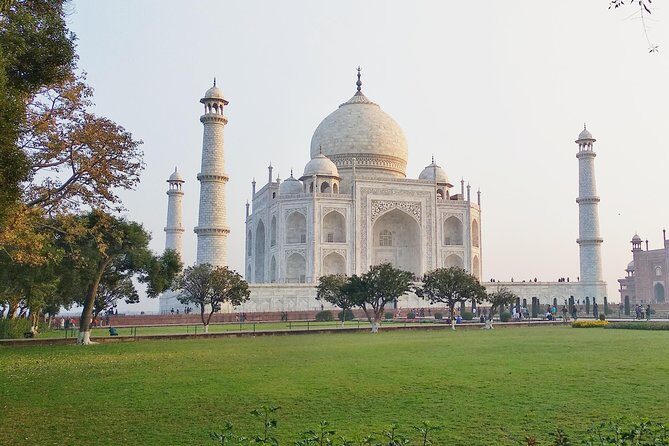
Agra is the “must” day. The schedule is built around two big monuments: the Taj Mahal and Agra Fort.
Taj Mahal: 2 hours with a guide’s lens
The Taj Mahal is the headline stop: described as one of the world’s seven wonders, built by Shahjahan in memory of his wife. You’ll have about 2 hours, and admission is not included.
This is where a good guide earns their keep. Even without adding extra stops, they can help you notice details you’d otherwise miss—like how the monument’s design and symmetry work as a whole. If you’re the type who wants to understand what you’re staring at, plan to spend your time looking closely rather than just snapping photos.
Agra Fort: the royal capital’s fortress feel
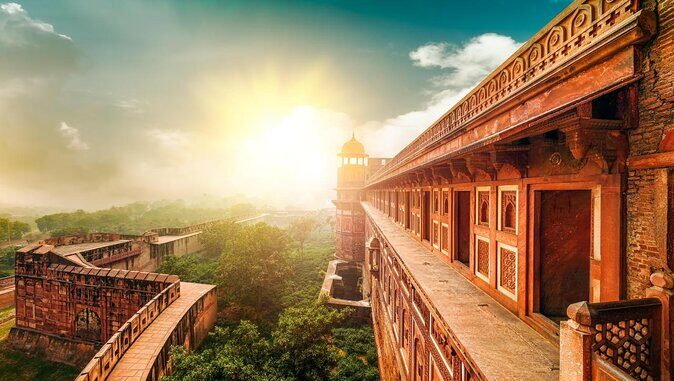
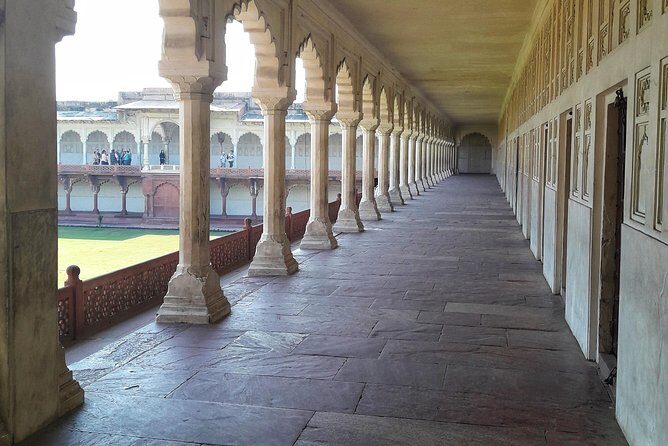
After the Taj, you go to Agra Fort, a UNESCO World Heritage site in this description. It’s listed as where the royal family lived and also described as the capital of India in the 16th century. You’ll get 1 hour, with admission not included.
Budget note: Because tickets aren’t included for these specific highlights, you’ll want to carry cash/card and set aside extra money in advance. If you don’t, it’s easy to feel rushed at the entrance.
Day 3 in Jaipur: Amber Palace, City Palace, Jantar Mantar, plus Hawa Mahal and Jal Mahal
Jaipur day is packed with everything that makes the city feel distinct: forts, palaces, astronomy, and signature pink-stone landmarks.
Amber Palace (Amer Fort): big fort interiors and key halls
You start at Amber Palace (Amer Fort), described as built by Raja Maan Sing. The itinerary calls out that it includes major areas like the hall of public audience, Sukh Niwas, Ganesh Pole, and Sheesh Mahal. Time allotted: 2 hours, and admission is not included.
What’s great about starting here is that you get the “wow” factor early. Forts can be overwhelming if you’re just walking around, so having a guide helps you understand what you’re looking at rather than treating it like a checklist.
City Palace: Mughal and Rajput architecture mix
Next is City Palace, constructed by Maharaja Sawai Jai Singh II. The description highlights a fusion of Mughal and Rajput architecture. You’ll spend about 1 hour 30 minutes. Again, admission is listed as not included.
The City Palace complex is described as spread across gardens, buildings, courtyards, temples, and museum areas. Even if you don’t linger in every corner, the guided approach helps you avoid missing the most important viewpoints.
Jantar Mantar: the giant stone astronomy tools
Then you’ll head to Jantar Mantar (astronomical observatory), built in 1734 by Sawai Jai Singh II. The highlight is the world’s largest stone sundial (noted here as the largest of five in India). You get 1 hour, and admission is listed as not included.
If you like the engineering side of travel—how people measured time and the sky before modern tech—this stop can feel surprisingly fun.
Hawa Mahal: the pink facade built for city views
The next stops are Hawa Mahal (Palace of Winds) and then Jal Mahal (Water Palace). The details provided for Hawa Mahal are vivid: a pink-painted honeycombed facade rising five storeys, constructed in 1799 by Maharaja Sawai Pratap Singh so ladies of the royal household could watch city life and processions.
No ticket timing is listed in the same way as the big-ticket monuments, so plan to treat this portion as a walk-and-look highlight.
Jal Mahal (Water Palace): a palace on Man Sagar Lake
For Jal Mahal, it’s described as a palace in the middle of Man Sagar Lake. As with Hawa Mahal, the data doesn’t specify an exact time slot or whether an entrance ticket applies here.
Jaipur takeaway: Your third day is where you’ll feel the most visual variety—fort textures, palace courtyards, a science stop, and landmark facades that look great in photos and in person.
Hotel comfort, breakfast options, and what you’re truly paying for
Let’s talk value, since the price is listed at $154.67 per person for the 3-day experience. That sounds like a bargain only if you understand what’s included versus what isn’t.
What’s included
From the included items, you get:
- Hotel pickup and drop-off
- Professional guide (and private local guides)
- Private transportation by air-conditioned vehicle
- Local taxes
- Bottled water
- Entrance fees are not clearly guaranteed here because the itinerary lists major tickets as not included—so treat that as the more reliable cue
What’s not included
The big ones:
- Accommodation (unless you choose the option that includes two nights)
- Food and drinks
- Entrance tickets of monuments (specifically called out as not included for Taj Mahal, Agra Fort, Amber Palace, City Palace, and Jantar Mantar)
Two-night hotel choice changes the trip math
The tour description says you can get two nights in a 4-star or 5-star hotel with breakfast, or you can choose a package without accommodation. For me, this is where your planning matters most: if you already have a hotel, you might save money by skipping accommodation. If you don’t, choosing the included hotel option can feel like less work and better overall value.
Small detail that helps: vegetarian option
Vegetarian option is noted as available—if you have dietary needs, tell the operator at booking. Since food isn’t included, you’ll still be eating independently, but having the option on record can help with recommendations.
Guides matter: Asif and Mubin Shah style you can look for
This tour’s quality hinges on the guide, because the schedule is tight and the landmarks are big. The information you shared also suggests the operator may use multi-lingual guides.
In the guide names provided, Asif is associated with reliability and strong cultural orientation, and Mubin Shah is described as transforming a Taj Mahal visit into a more educational and awe-inspiring experience. I’m not saying every guide will match those exact vibes, but it does tell you the company invests in guide performance.
How you get the most out of that:
- Ask questions before key entrances, not after you’ve already walked inside.
- Give yourself time to look, not just move.
- If you’re interested in architecture, ask about the design choices for Taj Mahal, Amber Palace, or Hawa Mahal while you’re still there.
One more practical point: your passport details are required at booking (name, number, expiry, and country), and you need a current valid passport on the day of travel. That’s the kind of thing that can derail a trip if you wait too long.
Who this Delhi–Agra–Jaipur tour suits best
This is a strong match for:
- First-time Golden Triangle visitors who want the headline sights in 3 days
- People who prefer private guide attention and a plan that doesn’t collapse under traffic and timing
- Travelers who want AC comfort during city-to-city transfers
- Anyone who likes learning on the spot rather than relying on a guidebook alone
If you’re traveling at an unhurried pace or hate feeling time-boxed, you might want to add extra days in one city so the monuments breathe.
Also, the tour is described as private for your group, but the pricing notes group discounts. So if you’re booking as a couple or solo, you may still end up with a very guided private feel; the discount language just suggests pricing can vary depending on departure.
Should you book this 3-day Golden Triangle tour?
I’d book it if you want the Golden Triangle highlights with private transportation, professional guidance, and clean city-to-city logistics. It’s also a good pick if you like the idea of choosing your hotel comfort level (with breakfast, or not).
Skip it—or at least budget carefully—if you don’t want to pay monument entry tickets on top of the tour price. Since several key sights are explicitly listed as not included, you should plan ahead so the day doesn’t feel like a series of extra payments.
If you’re torn, decide based on this: do you want a structured plan that gets you to Taj Mahal and Amber Palace efficiently? Or do you want total freedom and slower pacing? This tour leans hard toward the first option.
FAQ
Are monument entrance tickets included?
No for several major sights. Taj Mahal, Agra Fort, Amber Palace, City Palace, and Jantar Mantar are listed as having admission tickets not included. Ticket status for Hawa Mahal and Jal Mahal is not clearly stated in the provided details.
Does the tour include hotel accommodation?
It depends on the package option you choose. The description says you can select a version with two nights in a 4-star or 5-star hotel with breakfast, or choose a package without accommodation.
Is pickup and drop-off included?
Yes. The tour includes both hotel pickup and hotel drop-off.
What about food and drinks?
Food and drinks are not included. Breakfast may be included only if you choose the accommodation option that includes it.
Do I need a passport?
Yes. The operator requires passport name, number, expiry, and country at booking, and a current valid passport is required on the day of travel.
Is transportation private and air-conditioned?
Yes. You’ll travel by a private air-conditioned vehicle as part of the tour.