REVIEW · NEW DELHI
3-Day Private Golden Triangle Tour in Delhi, Agra, and Jaipur
Book on Viator →Operated by Golden Triangle Tours · Bookable on Viator
You can see three icons without the stress. This private 3-day Golden Triangle strings together guided UNESCO sights across Delhi, Agra, and Jaipur, plus two nights in 4- or 5-star hotels with breakfast. I like that you’re picked up from your Delhi-area location and moved around in a comfortable A/C vehicle instead of figuring out buses and rickshaws.
I also like the human side of the planning: private guides in each city, so the monuments feel like more than photos. In particular, you may get guides such as Honey or Yuvraj (and in other legs, people like Mr Ali in Agra or Raj in Jaipur) who focus on clear explanations and keeping your day on track.
One consideration: your base price doesn’t cover all major monument admissions, and a ₹4,500 per person entrance fee is noted for key sights like Taj Mahal, Amber Fort, Jantar Mantar, and City Palace. Also, Lotus Temple is listed as Monday closed, so the exact flow can depend on the day you go.
In This Review
- Key things to know before you go
- Why this Golden Triangle tour feels less chaotic than DIY
- Delhi with a guide: Humayun’s Tomb, Qutub Minar, and Lotus Temple
- New Delhi landmarks: India Gate and the government-architecture “skip-the-line” vibe
- The Agra transfer and the “ready for sunrise” rhythm
- Taj Mahal at sunrise plus Agra Fort: where the guide time pays off
- Agra to Jaipur: the 4-hour transfer that keeps your days realistic
- Amber Fort morning and Jaipur’s photo circuit (Jal Mahal, Hawa Mahal)
- City Palace and Jantar Mantar: royal Jaipur meets the science of the sky
- Price and value: what $299 includes and where extra costs pop up
- Who this tour suits best (and who should think twice)
- Should you book this 3-day private Golden Triangle?
- FAQ
- Is this tour private?
- What cities are included?
- How long is the tour?
- What is the price?
- What’s included in the cost?
- Are monument entrance fees included?
- Are meals included besides breakfast?
- Where does pickup happen and what time does it start?
- Is Lotus Temple always visited?
- What cancellation options do I have?
Key things to know before you go
- Private car, private driver: A/C comfort for the long city-to-city legs
- Two nights of hotel + breakfast: 4- or 5-star options on a twin-share basis
- Guides in each city: Explanation time that helps you understand what you’re seeing
- Sunrise Taj Mahal focus: Early access makes the experience feel special
- Planned photo stops: Jal Mahal and Hawa Mahal are built in without eating your whole day
- Monument admissions may be extra: Plan for separate entrance costs for major sites
Why this Golden Triangle tour feels less chaotic than DIY
The Golden Triangle is one of India’s most popular routes for a reason. You get Delhi’s big “capital” landmarks, Agra’s Mughal masterpieces, and Jaipur’s Rajput grandeur—stacked close enough that a short visit still feels meaningful. The difference here is that you’re not scheduling everything yourself.
This is a private, guided setup with a dedicated driver and an A/C vehicle for transfers. That matters because the “hard part” of this route isn’t just the sights—it’s the traffic, the distances, and the constant decision-making. With a plan already in place, you can spend more energy looking up, not checking maps.
Also, the tour uses a mobile ticket approach. That’s one less thing to manage when you’re moving through airports, hotels, and monument gates.
You can also read our reviews of more private tours in New Delhi



Delhi with a guide: Humayun’s Tomb, Qutub Minar, and Lotus Temple
Delhi can be intense. So I like starting with Mughal-era calm and big landmark architecture before you hit the more modern power sites.
Humayun’s Tomb is a strong first stop because it’s Mughal history you can actually walk through and see clearly. It’s an UNESCO World Heritage site and, in practice, it gives you an immediate “wow” moment without needing a long attention span. Your guide time here helps you understand the significance rather than just admiring the symmetry.
Then comes Qutub Minar, another UNESCO World Heritage site, and absolutely a must. This is a soaring minaret/victory tower complex originally erected by Qutb-ud-din in 1193—old, monumental, and unmistakable once you spot it. Even if you’ve seen pictures, being there in person changes how you experience scale.
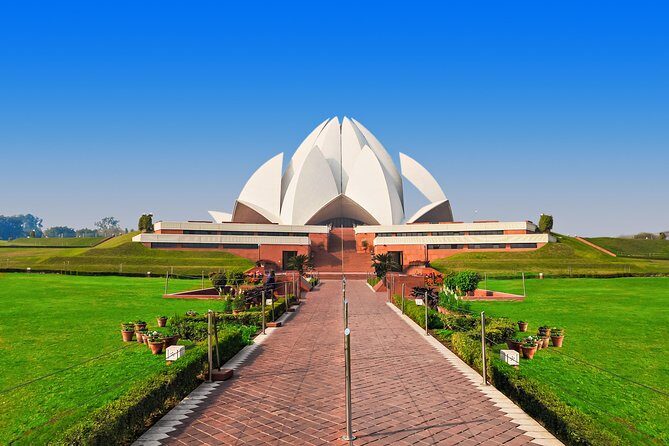
After that, you head to Lotus Temple. I appreciate that this stop is listed as Monday closed. When it’s open, it’s a peaceful break from the metal-and-stone intensity of the earlier monuments. It’s designed for tranquil worship and is shaped like a lotus, designed by Iranian-Canadian architect Fariburz Sahba in 1986. In other words: it’s not just another landmark photo.
Practical tip: Delhi days get warm fast. Bring sunglasses and something light for sun coverage, especially around Qutub Minar and the outdoor stretches between sites.
New Delhi landmarks: India Gate and the government-architecture “skip-the-line” vibe
Once you’ve done the big UNESCO hits, the tour shifts to the capital’s symbolic landmarks.
India Gate is the 42m-high memorial arch designed by Edwin Lutyens in 1921. It pays tribute to around 90,000 Indian army soldiers connected to WWI and later conflicts. Your time here is shorter—about 30 minutes—but that’s enough to understand it as a civic monument, not just a scenic arch.
The plan also includes a look at the circular colonnaded building where the 1947 power handover from Britain to independent India took place, with Parliament still meeting there. Even if you can’t go deep inside, it’s the kind of moment that makes the modern city feel tied to major turning points.
Finally, there’s a peek at Rashtrapati Bhavan (President House), the former residence of the British Viceroy. It’s massive—340 rooms and about 2.5km of corridors are noted—so you’re not meant to “tour it.” The value is in seeing the structure and understanding its role in the city’s story.
How this helps your trip: This part of the day gives you context. By the time you drive toward Agra, Delhi isn’t just traffic and museums—it’s the political backdrop that shaped the whole region.
The Agra transfer and the “ready for sunrise” rhythm
Late afternoon you drive roughly 3 hours to Agra. In a short tour like this, that timing is smart. You arrive, you check in, you eat breakfast tomorrow, and you’re not burning the day trying to do Taj Mahal and hotel check-in at the same time.
Agra itself is “compact important,” which makes it ideal for a 2-night/next-day rhythm. You’re not wandering the city for hours trying to find the next thing. You’re in “monuments first” mode.
The hotels are described as comfortable 4- or 5-star properties, with breakfast included. Twin sharing is part of the deal, so if you’re traveling solo you’ll likely be assigned a specific arrangement—worth checking at booking.
Practical tip: Even though you’re not leaving on a super early morning from the hotel, pack something light for sunrise. Agra mornings can feel cooler than the afternoon sun, especially after a drive day.
Taj Mahal at sunrise plus Agra Fort: where the guide time pays off
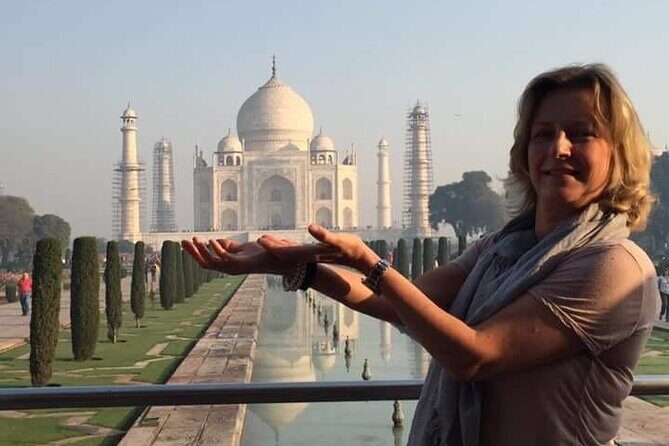
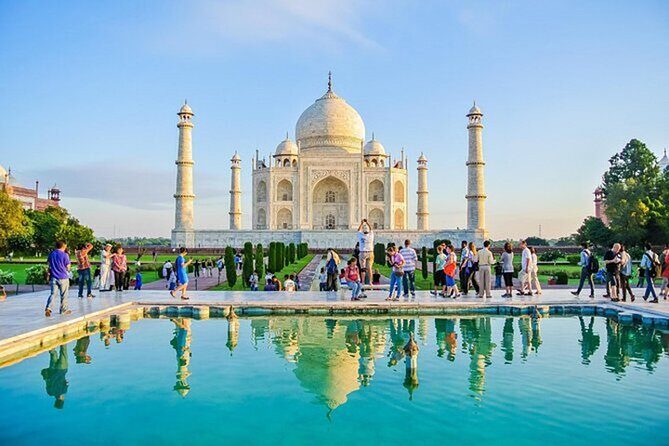
The highlight of the Golden Triangle is, of course, the Taj Mahal—and this tour schedules it for sunrise. That timing isn’t just a cliché. Early light helps with atmosphere and keeps you out of peak daytime heat.
The Taj Mahal is UNESCO-listed and widely regarded as one of the world’s most beautiful buildings. Built by Shah Jahan as a memorial for Mumtaz Mahal, who died in 1631, the story gives the architecture extra weight. A good guide here helps you notice details you’d otherwise miss—like why the structure looks the way it does and how the setting supports the symmetry.
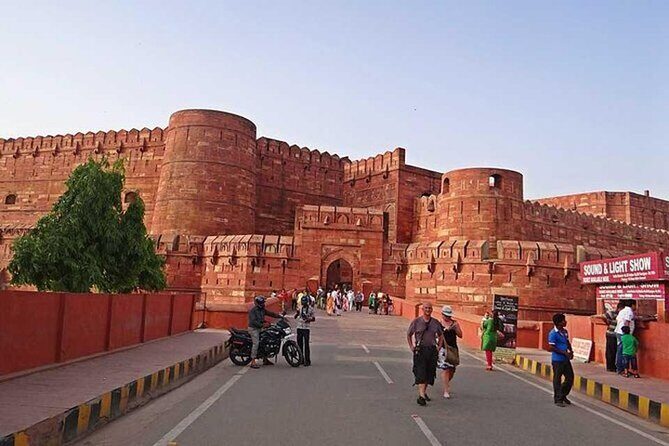
After the Taj, you move to Agra Fort, another UNESCO World Heritage site. This fort sits along the Yamuna River and was a major residence for Mughal emperors until 1638. It’s one of those places where history becomes visible in layers—ramparts, courtyards, and defensive architecture that tells you this wasn’t built just for beauty.
What I like about this pairing: Taj Mahal is emotion. Agra Fort is power and strategy. Doing both in one day gives you balance. You come away seeing the Mughal world as something practical as well as poetic.
A few more New Delhi tours and experiences worth a look





Agra to Jaipur: the 4-hour transfer that keeps your days realistic
Next comes a drive of about 4 hours to Jaipur, the Pink City. In three days, this transfer is the “price” you pay for seeing everything without flying. The upside is that you don’t lose an entire day navigating trains and transfers.
Jaipur check-in follows. Having time to settle matters, because Jaipur sightseeing involves more outdoor walking and sun than Delhi’s dense museum-style stops.
Also, the private driver concept helps here. You’re not waiting around or negotiating your way through traffic. You just move.
Practical tip: If you get motion-sensitive, take a moment before leaving—water, a light snack if you’re hungry, and sit where you feel most comfortable.
Amber Fort morning and Jaipur’s photo circuit (Jal Mahal, Hawa Mahal)
Your Jaipur morning centers on Amber Fort. The fort is described as honey-hued and rises from a rocky mountainside about 11km northeast of Jaipur. It’s an important Rajput architecture example and typically the kind of site where you appreciate the details more once someone explains what you’re looking at.
This tour gives you around 2 hours at Amber Fort, with admission included in the schedule. That duration works because Amber Fort has multiple layers—courtyards, views, and defensive/ceremonial spaces—so 60–90 minutes can feel rushed.
Then you get a photo stop at Jal Mahal, the Water Palace near Man Sagar and the cenotaphs of Jaipur’s maharanis. It’s only about 15 minutes, but those short photo stops are useful in a tight itinerary: you get the iconic image and move on.
Hawa Mahal (Palace of Winds) is another quick photo stop. The exterior is what people come for: a pink-painted honeycombed facade in five storeys. It was constructed in 1799 by Maharaja Sawai Pratap Singh. The quick stop works because the real payoff is your first sight—then you move to deeper sites like City Palace.
Real talk: If you’re the kind of traveler who wants to spend hours inside every building, a 3-day version can feel fast. But the photo circuit is planned to protect the best time for the bigger interiors.
City Palace and Jantar Mantar: royal Jaipur meets the science of the sky
After forts and street-level landmarks, you get a more grounded look at royal Jaipur.
City Palace is described as the residence of the royal family and sits right in the center of Old City. It’s a complex of courtyards, gardens, and buildings, with parts from different eras, including some from the early 20th century. The hour you get here is a good length—long enough to walk through key areas and absorb the layout.
Then you head to Jantar Mantar, a UNESCO World Heritage site. This place is different from the palace and fort theme: it’s a collection of curving geometric buildings calibrated to monitor the movement of stars and planets. You’ll likely hear explanations that connect geometry to observation—so it’s not just “pretty old structures.”
Why guides matter here: Without context, Jantar Mantar can feel abstract. With a guide, it becomes a way of thinking—how older civilizations built measurement into architecture.
Price and value: what $299 includes and where extra costs pop up
At $299 for 3 days, the pricing is mostly about one thing: buying back your time and stress.
Included highlights:
- Two nights’ accommodation in 4- or 5-star hotels (twin sharing)
- Breakfasts (2)
- Private driver with air-conditioned vehicle throughout
- Professional private tour guides for excursions
- Bottled water and all taxes/handling charges
- Mobile ticket
Not included:
- Lunch and dinner
- Camera fees at monuments
- Anything not listed above
- Monument entrance fees note: a ₹4,500 per person entrance fee is specified for major sites like Taj Mahal, Amber Fort, Jantar Mantar, and City Palace (and it also lists Red Fort)
That entrance-fee note is important because it can change the total cost more than you expect. Still, the value calculation usually favors this format if you’d otherwise pay for:
- Hotel nights anyway
- Private transport
- Multiple paid guides across three cities
- The time cost of planning and coordinating everything
How to budget cleanly: Plan for a separate monument cost amount, plus lunch and dinner. Then you can enjoy the tour without doing math every time you reach a gate.
Who this tour suits best (and who should think twice)
This private Golden Triangle works especially well if:
- You want guided monument time without spending your energy building a route
- You prefer A/C comfort and a driver for the long transfers
- You’d rather rely on local expertise than risk timing problems around sunrise and major attractions
- You’re traveling as a couple or small group and want the “just us” feeling
You might think twice if:
- You want to fully control day-by-day pacing and skip specific stops
- You don’t want to plan around potential schedule shifts (like Lotus Temple being Monday closed)
- You dislike short photo stops and prefer only interior visits
Should you book this 3-day private Golden Triangle?
If your goal is to hit the essentials—Delhi’s Qutub Minar and Humayun’s Tomb, Agra’s sunrise Taj Mahal and Agra Fort, and Jaipur’s Amber Fort plus City Palace and Jantar Mantar—this is a solid choice. The private setup, hotel nights, breakfasts, and A/C driver coverage reduce the “friction costs” that usually make the Golden Triangle feel like work.
I’d book it when you value guidance and logistics handled for you, and when you’re comfortable budgeting extra for monument admissions (notably the ₹4,500 per person entrance fee noted for big-ticket sites). If you’re the type who wants total spontaneity and no added fees at gates, then a more DIY approach might feel better.
FAQ
Is this tour private?
Yes. It’s described as a private tour/activity, and only your group will participate.
What cities are included?
The tour covers New Delhi, Agra, and Jaipur.
How long is the tour?
It’s listed as approximately 3 days.
What is the price?
The price is $299.
What’s included in the cost?
Included are two nights of accommodation (twin sharing), breakfasts (2), a private driver with an air-conditioned vehicle, professional private tour guides for excursions, bottled water, and all taxes/handling charges.
Are monument entrance fees included?
Not all major monument entrance fees are included. The tour notes an entrance fee of ₹4,500 per person for key sights such as Taj Mahal, Amber Fort, Jantar Mantar, and City Palace.
Are meals included besides breakfast?
Lunch and dinner are not included.
Where does pickup happen and what time does it start?
Pickup is offered from your desired location in Delhi, Gurugram (Gurgaon), or Noida, with a pickup described at 9am. The meeting/start time is also listed as 8:00am, and the start meeting point includes Indira Gandhi Intl Airport in New Delhi.
Is Lotus Temple always visited?
Lotus Temple is listed as Monday closed, so the exact visit may depend on the day of your tour.
What cancellation options do I have?
You can cancel for a full refund up to 24 hours in advance. Free cancellation is offered based on the experience’s local time.