REVIEW · NEW DELHI
3 Day Golden Triangle Trip -Delhi Taj Mahal and Jaipur From Delhi
Book on Viator →Operated by A Star Tours · Bookable on Viator
First, you’ll feel India’s scale fast. This 3-day Golden Triangle trip is built for people who want the big sights without juggling trains, tickets, or timing headaches. I especially like the five-star hotel comfort plus the included skip-the-line access at key stops. One thing to consider: it’s a tight route, so you’ll spend a lot of the days on the move in a car.
You’ll start with Delhi’s iconic mix of Mughal-era monuments and modern landmark angles, then shift to Agra for the early-light Taj Mahal moment. Day three pivots to Jaipur’s forts and palaces, including Amber Fort and major stops at the City Palace and Jantar Mantar. Bottled water is included throughout the tour, which sounds small until you’re actually walking in the sun.
At $350 per person for three days, the value mostly comes from what’s bundled: hotel pickup and drop-off, air-conditioned vehicle transfers, a professional guide, admission fees for many sites, breakfast, and taxes. If you want a slow, unstructured vacation, this isn’t that. If you want a smart, high-impact circuit, it works.
In This Review
- Quick hits: what makes this Golden Triangle trip work
- Golden Triangle in 3 days: the pace and what you trade for speed
- Delhi, first thing: Jama Masjid, Chandni Chowk, Humayun’s Tomb, and the Qutub Minar angle
- Jama Masjid: big scale, early walking time
- Chandni Chowk stroll: spices, silver, and tiny shops
- Humayun’s Tomb: Mughal grandeur without the crush
- Lotus Temple and Qutub Minar: two very different icons
- The best morning of the trip: Taj Mahal sunrise and Agra Fort’s mood
- Taj Mahal at sunrise: calm light beats later chaos
- Agra Fort: history you can actually walk
- Fatehpur Sikri: a free stop that can add depth (if you manage time)
- Jaipur day: Amber Fort, City Palace, Jal Mahal, and Jantar Mantar
- Amber Fort: a proper fort visit, not a quick glance
- City Palace: where Jaipur’s rulers set the stage
- Hawa Mahal and Jal Mahal: quick icons with smart pacing
- Jantar Mantar: practical science made visible
- Hotel, pickup, transport, and skip-the-line: why these details are worth paying for
- Deluxe five-star hotel + breakfast
- Hotel/port pickup and drop-off
- Bottled water included the whole way
- Skip-the-line access and included admission fees
- Value and price: what $350 buys you and who it’s best for
- Who should choose this Golden Triangle trip from Delhi
- Should you book this 3-day Delhi–Agra–Jaipur tour?
- FAQ
- What cities does this Golden Triangle trip cover?
- How long is the tour?
- Is pickup and drop-off included?
- Is the Taj Mahal visit scheduled for sunrise?
- Are skip-the-line entries included?
- Is bottled water provided?
- What’s included with the hotel stay?
- Are meals included besides breakfast?
- Is free cancellation available?
Quick hits: what makes this Golden Triangle trip work
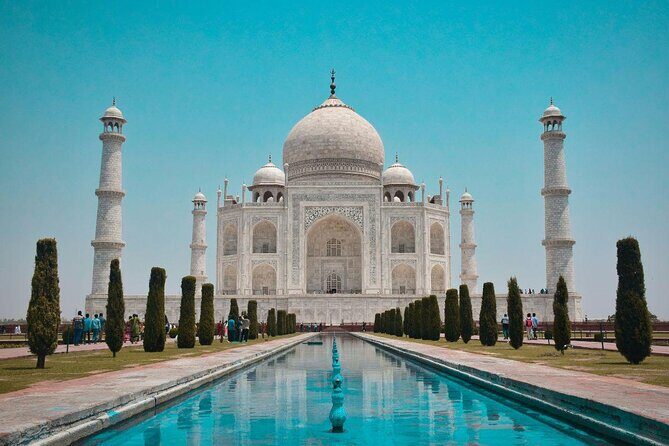
- Sunrise Taj Mahal timing that helps you avoid the day’s worst crowds and heat
- Skip-the-line access at major attractions so your time goes to seeing, not waiting
- Deluxe five-star hotel with breakfast, which matters when days are long
- Bottled water included for the duration—simple, but it keeps the day smoother
- A guide who handles logistics, plus admission fees at many stops
- A full Delhi–Agra–Jaipur arc in just 3 days, ideal for first-timers
Golden Triangle in 3 days: the pace and what you trade for speed
The Golden Triangle route is famous because it compresses India’s three high-profile destinations—Delhi, Agra, and Jaipur—into one efficient circuit. The tradeoff is that you don’t linger. You’ll see a lot, but not everything, and you’ll keep moving through mornings and afternoons.
The upside is clear if you’re short on time or you dislike planning under pressure. This tour is set up as a guided, private sightseeing run with a hotel base and transport. That means you’re not figuring out how to cross cities, where to park, what ticket desk is correct, or which entrance is fastest.
You’ll also get built-in comfort for the route: an air-conditioned vehicle, hotel pickup and drop-off, and bottled water during the tour. When you’re doing major sites back-to-back, those small inclusions can save the day from turning into stress.
A few more New Delhi tours and experiences worth a look



Delhi, first thing: Jama Masjid, Chandni Chowk, Humayun’s Tomb, and the Qutub Minar angle
Delhi on this itinerary feels like two cities stitched together: Old Delhi’s Mughal-era landmarks and market energy, plus South/central Delhi monuments that are calmer but still monumental.
Jama Masjid: big scale, early walking time
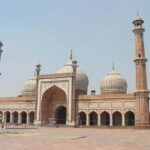
You’ll start at Jama Masjid, one of India’s largest mosques, built by Mughal Emperor Shah Jahan between 1650 and 1656. This stop is listed with admission included and a solid block of time, which matters because Jama Masjid isn’t a quick photo stop. It’s a place where you should look upward, notice the symmetry, and take in how it’s laid out.
Practical tip: dress modestly and bring a light layer you can adjust as you move from indoor-to-outdoor areas. You’ll be walking on uneven surfaces and through crowds.
Chandni Chowk stroll: spices, silver, and tiny shops
Next comes Chandni Chowk, centered in Old Delhi, with narrow side streets and shopfronts full of spices, dried fruit, silver jewelry, and vivid saris. This part is short and doesn’t involve admission tickets on the schedule, which is perfect because it’s about rhythm—browsing and people-watching.
If you’re into shopping, this is where you’ll feel the city’s pulse. If you’re not, treat it like a sensory “warm-up” for Delhi and move at your own pace.
Humayun’s Tomb: Mughal grandeur without the crush
Humayun’s Tomb is a standout Mughal monument commissioned by Humayun’s first wife and chief consort Empress Bega Begum in 1558, with design attributed to Mirak Mirza. Admission is included on the schedule, and the time block is long enough to actually slow down.
This is one of those places where you’ll appreciate details—arches, symmetry, and the way the complex is planned—without needing to rush.





Lotus Temple and Qutub Minar: two very different icons
Then you’ll shift to the Lotus Temple, a Baháʼí House of Worship dedicated in December 1986 and known for its flowerlike form. Admission is listed as free here, so the value is mostly in the experience of seeing it, not “paying to be there.”
Finally, Qutub Minar rounds out the day. It’s a UNESCO World Heritage Site and one of Delhi’s best-known monuments, described as a minaret and victory tower. Admission is included on this route, and you’ll get enough time to enjoy the setting and the views from the complex.
The best morning of the trip: Taj Mahal sunrise and Agra Fort’s mood
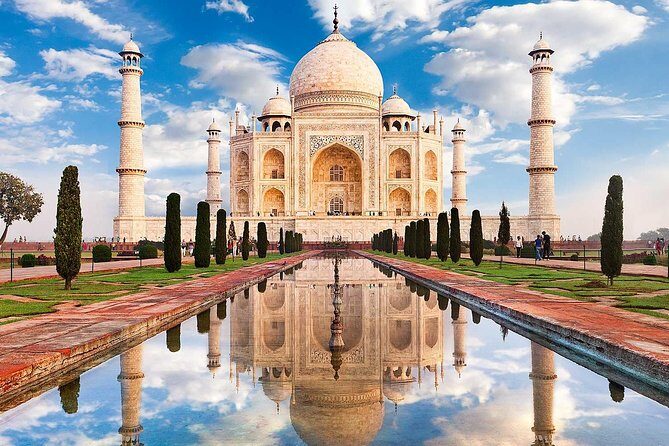
Agra is where the itinerary starts earning its reputation. The main event is the Taj Mahal, and this tour is set up for an early morning start from your hotel for a guided visit at sunrise time.
Taj Mahal at sunrise: calm light beats later chaos
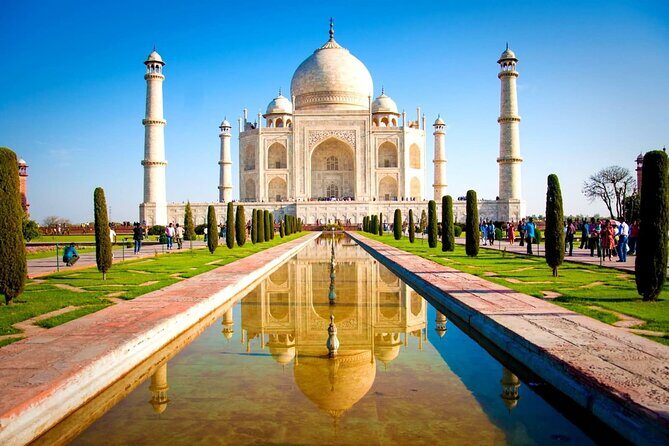
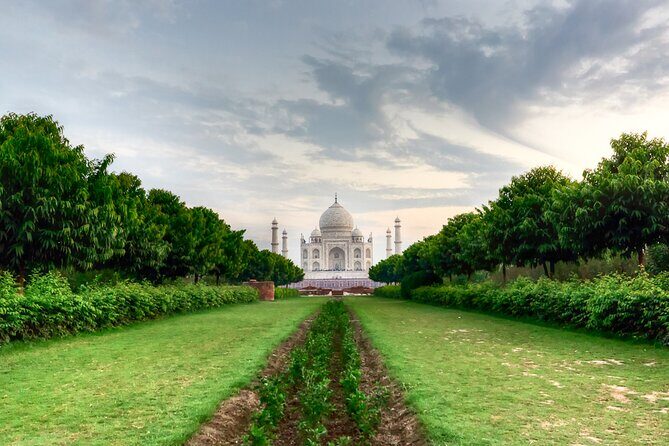
You’ll spend about 1 hour 30 minutes at the Taj Mahal with admission included. The Taj Mahal is described as an immense mausoleum of white marble and one of the World’s famed wonders. The sunrise timing is the whole point: it changes how the marble looks and helps you experience it with less stress than a later arrival.
What I like about this setup is that you’re not standing around waiting for your turn. The tour’s structure includes the guidance and the timing, and that keeps your attention on the monument instead of logistics.
Agra Fort: history you can actually walk
After the Taj Mahal, you head to Agra Fort, with admission included and a time block around 1 hour 30 minutes. The fort is described as the main residence of Mughal Dynasty emperors until 1638, when the capital shifted to Delhi.
Agra Fort tends to feel more “walkable and lived-in” than some other palace-and-mausoleum stops. You’ll get a sense of the power center of the region, plus the feeling of a fortress you can move through rather than only look at.
A useful note from a past visitor experience: you may meet a guide named Ali, and that’s been specifically praised for being informative, helping with great photo spots, and even showing artisans in Agra. If you get a guide like that, you’ll squeeze extra value out of the visit beyond just standing at famous walls.
Fatehpur Sikri: a free stop that can add depth (if you manage time)
Between Agra and Jaipur, you’ll visit Fatehpur Sikri, described as a small city founded by a 16th-century Mughal emperor, with red sandstone buildings clustered at its center. The schedule lists an admission-free visit with about 1 hour.
Even without an entry fee on the schedule, this kind of stop can still pay off because it adds variety. You’re not only moving between big-ticket sites; you’re seeing a Mughal complex that feels different in tone and layout.
The only caution: because the overall trip is packed, you’ll want to be ready to focus. If you’re tired, this is the kind of place that’s easier to enjoy when you take in the details quickly rather than trying to “study it.”
Jaipur day: Amber Fort, City Palace, Jal Mahal, and Jantar Mantar
Jaipur is where the route shifts into forts, palaces, and signature “views from a viewpoint.” It’s also where you’ll feel the Rajasthan vibe—more open spaces, more stonework, and more ways to frame photos.
Amber Fort: a proper fort visit, not a quick glance
Your first Jaipur stop is Amber Fort, also called Amer Fort, with admission included and about 1 hour 30 minutes. Amber is described as a town about 11 km from Jaipur, which helps you understand why this is a real day outing, not just a quick town stop.
Amber Fort tends to reward people who like structures and angles. It’s a good move to include admission and a longer time block here, because you need to walk, look, and understand the layout.
City Palace: where Jaipur’s rulers set the stage
Next is the City Palace, with admission included and about 1 hour 30 minutes. The palace is described as established at the time Jaipur was founded, by Maharaja Sawai Jai Singh II, who moved his court to Jaipur from Amber in 1727.
This is a “context” stop. Even if you don’t go super deep, it helps you connect why Jaipur looks the way it does and why certain architectural choices show up repeatedly. It’s also one of those places where the building and the rooms make more sense when you’re guided rather than wandering alone.
Hawa Mahal and Jal Mahal: quick icons with smart pacing
You’ll also see Hawa Mahal, a palace built from red and pink sandstone, sitting on the edge of the City Palace area and extending to the Zenana part of the palace complex. The schedule lists it as a stop but doesn’t mark it as ticket-included, so treat it as a “see it and move” icon.
Then you’ll visit Jal Mahal, described as a palace in the middle of Man Sagar Lake in Jaipur. The schedule lists it as 30 minutes and admission-free. Jal Mahal works well on a packed itinerary because it gives you an immediate visual payoff without demanding a long ticketed experience.
Jantar Mantar: practical science made visible
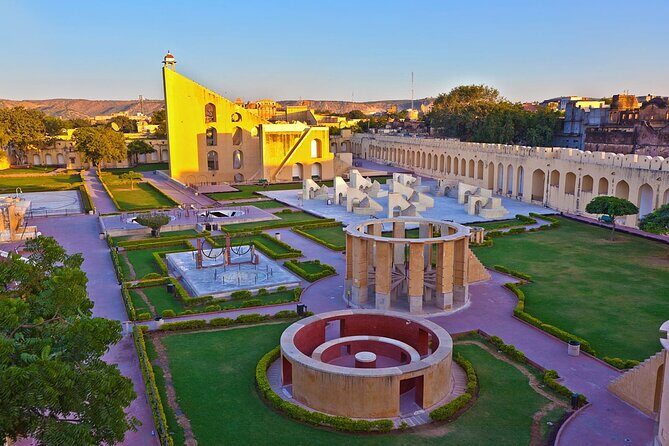
Finally, Jantar Mantar is listed with admission included and about 1 hour. It’s described as a collection of 19 astronomical instruments built by Rajput king Sawai Jai Singh II and completed in 1734.
If you think of monuments as only decorative, Jantar Mantar is a nice correction. It turns “old” into hands-on curiosity: instruments designed to measure time and sky patterns. Even if you only catch the main points, it’s a memorable way to end the trip because it feels different from palaces and forts.
Hotel, pickup, transport, and skip-the-line: why these details are worth paying for
A $350 price tag can feel like a lot until you break down what’s included. Here, a big chunk of what you’re paying for is removal of friction.
Deluxe five-star hotel + breakfast
You sleep in a deluxe five-star hotel, and breakfast is included. For long days that start early or run late, breakfast matters because it prevents you from spending the day searching for food you can tolerate while you’re tired.
Also, having one stable base reduces stress. You’re not constantly changing hotels or carrying luggage across cities.
Hotel/port pickup and drop-off
This tour includes hotel pickup and drop-off. It sounds routine, but it’s huge on a Golden Triangle trip. You avoid the “How do we meet?” scramble and you reduce the chance of delays caused by finding the right place at the right time.
Bottled water included the whole way
Bottled water included for the duration is a small thing that becomes a big thing once you’re walking and waiting at multiple monuments. It helps you keep your energy up without constantly negotiating water purchases.
Skip-the-line access and included admission fees
You get skip-the-line access at key attractions, plus admission tickets included for many stops (like Jama Masjid, Humayun’s Tomb, Qutub Minar, Taj Mahal, Agra Fort, Amber Fort, City Palace, and Jantar Mantar). Several other stops are listed as free on the schedule, like Lotus Temple and Fatehpur Sikri, plus Chandni Chowk and Jal Mahal.
The practical value: you spend your time inside the experience, not at ticket queues.
Value and price: what $350 buys you and who it’s best for
For $350 per person, you’re paying for a guided, private sightseeing circuit with hotel, transport, and several admission fees bundled. Without these inclusions, the cost to build the same trip yourself would usually rise quickly once you add driver/vehicle time across cities, entrance fees, and a guide who can keep the day on track.
It’s a smart fit if:
- you’re short on time and want the classic sights in a logical route
- you prefer a guide and clear timing over independent travel planning
- you’d rather pay a bit more to reduce risk and decision fatigue
It may be less ideal if:
- you want lots of free time in each city
- you dislike early starts and a packed schedule
- you prefer to choose each entrance and decide each day on the fly
One more planning tip: the trip is typically booked about 96 days in advance, so if your dates are firm, don’t wait until the last minute.
Who should choose this Golden Triangle trip from Delhi
This works best for first-timers to India or people who want the highlights without getting lost in logistics. It’s also good for couples, small groups, and anyone who appreciates a clear plan with a professional guide.
If you’re the type who likes photo stops, you’ll likely enjoy the way the day is structured around major landmarks. And if your guide is the kind of person who adds extra value—like the previously mentioned Ali with strong photo guidance and artisan connections in Agra—you’ll get more than just the “checklist” effect.
Should you book this 3-day Delhi–Agra–Jaipur tour?
I’d book it if you want a smooth, high-impact Golden Triangle trip with a deluxe hotel base, morning Taj Mahal timing, and guide-led sightseeing. The best part is that the “hard parts” are handled: pickup, transport, guidance, and a lot of ticket logistics.
I’d think twice if you’re traveling at a slower pace, hate long driving days, or want deep downtime in each city. This itinerary favors efficiency over flexibility.
If your goal is to leave India feeling like you truly saw the classics—without spending your vacation managing details—this one is a strong choice.
FAQ
What cities does this Golden Triangle trip cover?
It covers New Delhi, Agra, and Jaipur.
How long is the tour?
The duration is 3 days (approximately).
Is pickup and drop-off included?
Yes. Hotel/port pickup and drop-off are included.
Is the Taj Mahal visit scheduled for sunrise?
Yes. You’ll leave from your hotel early morning for a guided Taj Mahal visit at sunrise time.
Are skip-the-line entries included?
Yes. Skip-the-line access is included for key attractions.
Is bottled water provided?
Yes. Bottled water is included for the duration of the tour.
What’s included with the hotel stay?
You’ll have deluxe five-star hotel accommodation, plus breakfast.
Are meals included besides breakfast?
No. Meals are not included, aside from the breakfast that is included in the package.
Is free cancellation available?
Yes. You can cancel up to 24 hours in advance for a full refund.