REVIEW · NEW DELHI
3-Day Golden Triangle Luxury Tour from Delhi to Agra and Jaipur
Book on Viator →Operated by THE GOLDEN MEMORIES · Bookable on Viator
Three cities, one well-run plan. This 3-day luxury Golden Triangle trip strings together Delhi, Agra, and Jaipur with a private driver, A/C comfort, and timed sightseeing so you spend less energy figuring things out. I especially like the built-in flow from major UNESCO sights to classic Old Delhi streets, and the planned sunrise Taj Mahal visit with a battery bus/golf cart return from the parking area. One thing to keep in mind: entrance tickets for many monuments are not automatically included unless you choose the optional add-on.
On paper, it’s “luxury,” but the real win is practical: you get a private car door-to-door, bottled water, and professional guides to translate the big monuments into stories you can actually follow. The day-by-day pace is full, so if you hate early mornings or long walks, you’ll want to plan for it.
In This Review
- Key Highlights You’ll Care About
- How This Golden Triangle Route Works in 3 Days
- Day 1 Delhi: Humayun’s Tomb, Qutub Minar, Lotus Temple, and Old Delhi in One Sweep
- Day 1 Driving Time: Yamuna Expressway to Agra (and a Real Lunch Window)
- Day 2 Agra: Sunrise Taj Mahal, Agra Fort, and Itmad-ud-Daula
- Day 2 Outside Agra: Chand Baori (Abhaneri) Stepwell Time
- Day 3 Jaipur: Amber Palace, Hawa Mahal Photos, City Palace, and Jantar Mantar
- Comfort and Small Perks That Make Luxury Feel Real
- Price and Value: What $190.50 Covers and What You May Still Pay
- Timing, Closures, and How to Stay Happy While It’s Packed
- Who This Tour Suits Best
- Should You Book This 3-Day Luxury Golden Triangle Tour?
- FAQ
- What cities does this 3-day Golden Triangle tour cover?
- Is pickup and drop-off included?
- Are entrance fees included for the monuments?
- What does the itinerary include in Agra and Jaipur?
- Does the tour guarantee the Taj Mahal sunrise visit?
- What happens if I travel on a Thursday or around Monday?
Key Highlights You’ll Care About
- Sunrise Taj Mahal timing (weather-dependent), plus a battery bus/golf cart return for an easier walk
- Private A/C car with a driver throughout for the Delhi–Agra–Jaipur legs
- Old Delhi orientation with Chandni Chowk and a classic rickshaw ride through market streets
- UNESCO-heavy route: Humayun’s Tomb, Qutub Minar, Taj Mahal, Agra Fort, Amber Palace, Jantar Mantar
- Jaipur photos built in at Hawa Mahal and Jal Mahal, with key fort-palace time like Amber and City Palace
- Twin-share hotels with breakfast if you choose the accommodation option
How This Golden Triangle Route Works in 3 Days
The Golden Triangle is a simple idea: Delhi first for Mughal-era and imperial landmarks, Agra second for the Taj Mahal and Mughal architecture, and Jaipur last for forts, palaces, and the pink city look. What makes this tour worth your attention is how it handles the hard part—travel time—so your sightseeing days don’t turn into constant logistics.
You’re moving fast, but not randomly. The route is paced so you get a major anchor moment each day: Delhi’s UNESCO mix and Old Delhi streets on Day 1, Agra’s sunrise Taj Mahal on Day 2, and Jaipur’s Amber Fort and royal sights on Day 3. There’s also intentional down time: after you check into Agra and Jaipur hotels, the rest of each day is mostly at leisure, so you’re not stuck “on” every minute.
Transfers are approximate and traffic can change things, so I treat your schedule as flexible. Your best strategy is to keep your “energy plan” simple: comfortable shoes, a water bottle mindset (they provide bottled water), and patience around photo crowds—especially at the Taj Mahal sunrise window.
A few more New Delhi tours and experiences worth a look



Day 1 Delhi: Humayun’s Tomb, Qutub Minar, Lotus Temple, and Old Delhi in One Sweep
Day 1 starts with Humayun’s Tomb, a UNESCO World Heritage site and one of the most important Mughal tomb complexes in Delhi. Even if you’re not a serious history nerd, this stop helps you get the visual language of Mughal architecture—symmetry, gardens, and that calm grandeur that the Taj Mahal later scales up.
Next comes Qutub Minar, the soaring victory tower that anchors the Qutb complex. It’s one of those sights that’s easier to “read” when you’ve just seen another major UNESCO monument, because you notice the differences in style and timeline.
Then you get Lotus Temple, known for its lotus-shaped design and peaceful atmosphere. It’s a great contrast to the fort-and-tower world, and it also gives you a mental reset before you hit busier streets. Practical note: this temple is closed on Mondays, so your day plan matters.
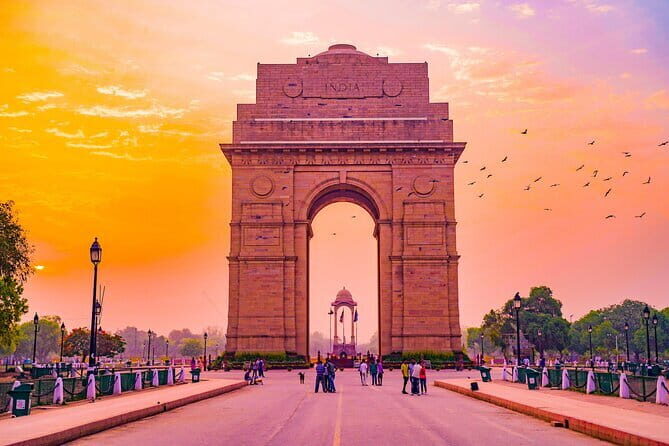
After that, the tour shifts from Mughal monuments to the New Delhi “seat of power” feel with stops at India Gate (a WWI memorial arch), Rashtrapati Bhavan (the President of India’s residence, formerly the British Viceroy’s home), and Parliament House. You spend short time here, but it helps you understand what British-era planning brought into modern India’s government center.
The tour also includes Agra Sen Ki Baoli, a protected stepwell. Stepwells are underrated for visitors because they don’t look like “big monuments” at first glance, but this one’s worth the pause. You start seeing how water storage and architecture were connected long before modern infrastructure.
Finally, you move into Old Delhi culture with Chandni Chowk shopping streets and a rickshaw ride through the market area. This is where you’ll feel the city’s rhythm for real: spices, silver jewelry, saris, and the tight side lanes where foot traffic rules.
The day rounds out with a stop at the Red Fort area. You get context for the fort’s long Mughal role as a royal residence, and you can decide how much museum time you want depending on your interests.
Drawback to plan for: Day 1 is packed with stops, and you’ll want to keep your walking comfortable. It’s not “hard hiking,” but it is constant movement.
Day 1 Driving Time: Yamuna Expressway to Agra (and a Real Lunch Window)
After Delhi sightseeing, you head toward Agra via the Yamuna Expressway. The tour description keeps this leg to about three hours, though traffic can shift it.
This part of the day is useful because it gives you a predictable transfer block instead of a “whenever we finish Delhi” situation. You also get a lunch window at a local restaurant during the drive time, which matters because you’re coming from dense sightseeing.
You’ll check into your Agra hotel after arrival, with the rest of the day mostly at leisure. That’s a smart setup. Agra can feel intense, so having a calmer evening is good for your energy level—especially because Day 2 starts early for the Taj Mahal.
Day 2 Agra: Sunrise Taj Mahal, Agra Fort, and Itmad-ud-Daula
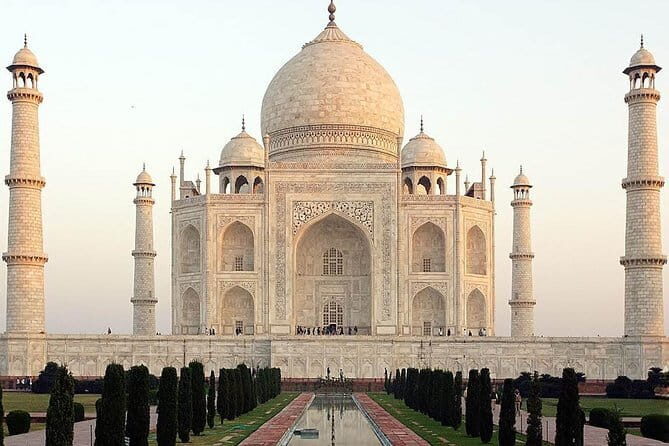
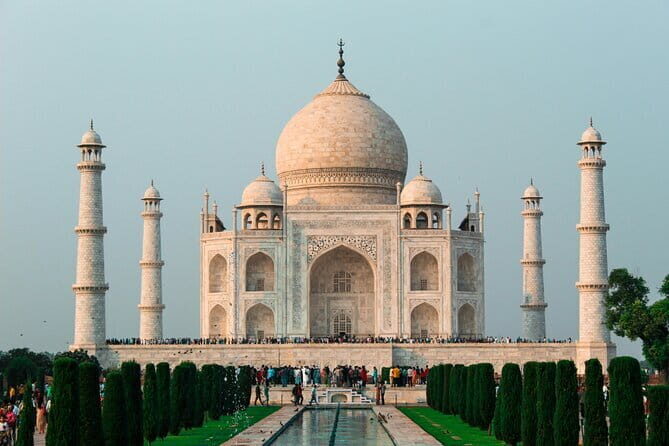
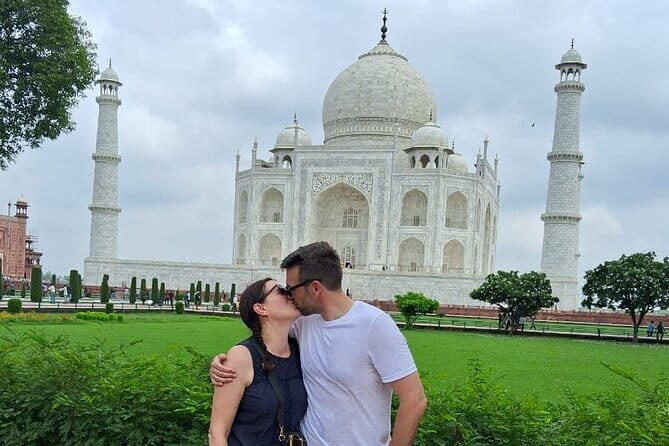
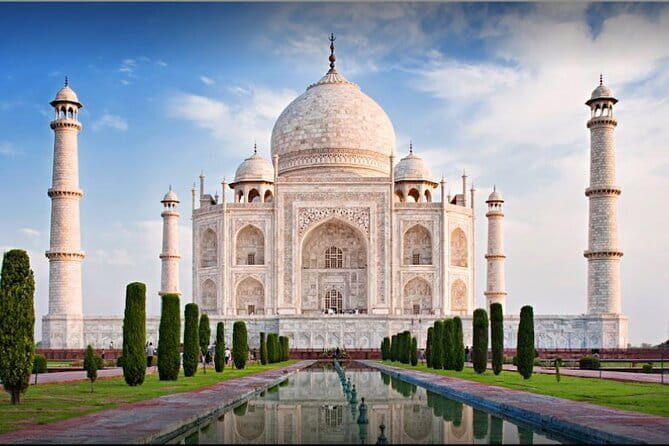
Day 2 is built around one big moment: the Taj Mahal at sunrise. The tour notes this is weather-dependent, so I treat sunrise as a “best effort” rather than a guaranteed postcard. If conditions are clear, the lighting changes the whole experience, and the timing also helps you beat some crowds.
You’ll also get a practical perk: a battery bus/golf cart return from the Taj Mahal parking area to the entrance area. This doesn’t change the monument, but it makes a difference when you’re doing early-morning walking and want your body to feel good for photos.
After the Taj, the tour continues with Agra Fort, another UNESCO World Heritage stop along the Yamuna. This is the kind of place where you start seeing the “why” behind the Mughal power story—defense, court life, and royal scale all in the same place.
Next is Itmad-ud-Daula, often called Baby Taj. It’s smaller than the main attraction, but that’s part of the appeal. You can slow down here and notice the details without feeling like you’re always chasing the next big headline.
One consideration: multiple Agra sights in one day can make your photo choices feel rushed. The tour’s structure helps by grouping Mughal highlights logically, but you should still aim to prioritize your own top 2 photo moments—don’t try to photograph everything equally.
Day 2 Outside Agra: Chand Baori (Abhaneri) Stepwell Time
This day includes a stop at Chand Baori in Abhaneri, a dramatic stepwell reached by 3,500 steps. The key thing here is that it’s not just a scenic break; it’s architectural context. Stepwells were engineering solutions for water access and community use, and this one is famous for its steep geometry and scale.
The stop time is about an hour. That’s long enough to walk a portion and take in the lines, but it’s not a “climb until you feel done” situation. If you’re not comfortable with lots of stairs, you’ll still enjoy the view, but you may want to pace yourself.
Then you transfer to Jaipur, check in, and get time to reset.
A few more New Delhi tours and experiences worth a look




Day 3 Jaipur: Amber Palace, Hawa Mahal Photos, City Palace, and Jantar Mantar
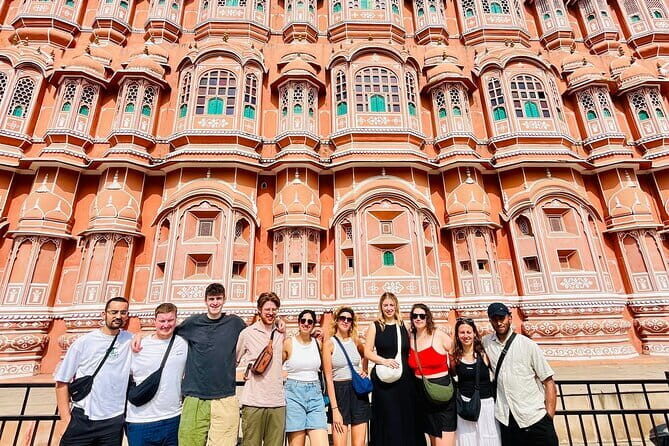
Jaipur is where the tour shifts into royal-palace mode. Day 3 begins with Hawa Mahal (Palace of Wind), famous for its honeycomb-like pink façade. The tour lists it as a photo stop, so you get the landmark look without spending the entire morning inside.
You then move to Panna Meena ka Kund, an old stepwell known for its symmetrical stair design leading to the well. It’s a short stop, but it’s the kind of detail-driven stop that makes Jaipur feel different from Delhi and Agra. It also gives you variety between forts, palaces, and architecture.
Next is the big one: Amber Palace (Amber Fort). This is where mirrored walls and marble-adorned rooms meet fort-like structure. The tour gives you about two hours, which is a good amount if you want to walk through the main areas without feeling like you’re sprinting.
After Amber, there’s a Jal Mahal (Water Palace) photo stop. It’s surrounded by water and sits in the Man Sagar area, giving you that dreamy “palace floating in the lake” effect—if the light and water conditions cooperate.
Then you get City Palace of Jaipur, described as the administrative and ceremonial seat of the Maharaja. It’s a strong way to connect the earlier palace looks with how power actually functioned.
You finish with Jantar Mantar, the UNESCO-listed observatory made of geometric structures calibrated to monitor celestial movement. If you like science that’s tied to art and empire, this is a satisfying close.
Day 3 ends with the return drive to Delhi/Gurugram/Noida, taking around five hours, and the tour notes you’ll be back around 9pm. There’s also flexibility if you want to reach earlier or later.
Comfort and Small Perks That Make Luxury Feel Real

Luxury is often marketing. In this case, the “feel” comes from practical choices that prevent wasted time.
You get:
- A private driver with an air-conditioned vehicle for the full route
- Professional private tour guides during excursions
- Bottled water
- Hotel pickup and drop-off
- A private tour setup where your group is the only group participating
- Personal care and attention (the tour language suggests the guide is responsive to your pace)
There’s also a note about battery bus/golf cart support for the Taj Mahal return walk, plus guidance that you should bring comfortable walking shoes. That last detail matters because this itinerary is heavy on major monuments where you’ll walk, pause, and take photos more than you might expect.
One more practical point: the tour mentions fully vaccinated private driver and private guides. It’s not something you can measure, but it is a comfort detail if that matters to you.
Car type is based on group size (sedan for 1–2 people, MPV for 3–4, van for larger groups). That matters if you’re traveling as a family or friends group with a lot of camera gear, because legroom and space can make the long drives feel less cramped.
Price and Value: What $190.50 Covers and What You May Still Pay
The headline price is $190.50 per person for a 3-day private luxury-style Golden Triangle route, with an option to include 5-star accommodation with daily breakfast. Your value depends on which option you pick.
From the tour details, the core “included” value looks like:
- Private A/C car + driver
- Private guides
- Hotel nights (if you choose the hotel-inclusive option): 2 nights on twin sharing with breakfast
- Bottled water and taxes/handling charges
- Battery bus/golf cart return support for Taj Mahal
- Pickup and drop-off
- Entrance fees are treated as optional in the broader description, even though many listed stops say admission ticket not included
So what’s the main “maybe extra” bucket? Monument entrance fees, including big ticket items like the Taj Mahal, are not guaranteed included unless you select the option that bundles them.
My practical way to think about it:
- If you want maximum convenience, choose the option that covers entrance fees so you’re not tracking ticket counters while on a tight schedule.
- If you like handling tickets yourself, you may save some money, but you’ll need to be comfortable with the process.
Also remember: Taj Mahal sunrise is weather-dependent and itinerary timing can shift if closures come into play.
Timing, Closures, and How to Stay Happy While It’s Packed
This tour has a good rhythm, but there are a few real-world factors you should plan around.
- Taj Mahal sunrise is subject to weather conditions. If weather is poor, you still get the visit attempt, but the quality of the sunrise moment can change.
- Lotus Temple is closed on Mondays. If your dates land on Monday, you’ll likely need to rely on the tour’s timing plan rather than expecting that exact stop to run.
- If you start the tour on Thursday, the itinerary may switch the order because the Taj Mahal remains closed every Friday.
Your best “stay happy” habits are simple:
- Wear shoes you can stand in for long stretches.
- Keep your camera battery charged; sunrise time drains batteries fast.
- Treat photos at Hawa Mahal and Jal Mahal as quick, because the tour lists those as photo stops.
- Use the leisure time after arriving in Agra and Jaipur to recover. Those quiet blocks are part of why the day-by-day plan works.
Who This Tour Suits Best
This is a strong match if you want the Golden Triangle with less hassle and more comfort.
I think it’s especially suitable for:
- Couples and friends who want to move quickly between top sights without dealing with separate taxis or constant price negotiations
- Families who prefer an organized schedule and an A/C car over DIY transit
- Anniversary trips, because the sunrise Taj Mahal moment is a natural “wow” anchor and the itinerary is built to feel special
- Travelers who like seeing the classics in a single shot: Humayun’s Tomb, Qutub Minar, Taj Mahal, Amber Fort, City Palace, and Jantar Mantar
If you’re the type who enjoys slowing down independently in each market, you might find the pace too structured. But if you want a smooth, major-sights plan with private guiding, this hits the mark.
Should You Book This 3-Day Luxury Golden Triangle Tour?
Book it if you want:
- Private A/C transport across Delhi–Agra–Jaipur
- Expert guides to make the monuments make sense
- A sunrise Taj Mahal plan with practical return support
- A structured itinerary with real free time in the evenings
Skip it or adjust your expectations if:
- You hate early mornings or you’re worried about walking with tight timing
- You want total freedom to wander at random times; this tour is designed for specific sight windows
- You know you’d rather self-manage entrance tickets; the tour suggests optional entrance-fee coverage
If you’re aiming for a “major monuments, minimal stress” trip—and you’re okay with a full schedule—this is a solid pick.
FAQ
What cities does this 3-day Golden Triangle tour cover?
It covers Delhi, Agra, and Jaipur. You’ll start in Delhi, spend nights in Agra and Jaipur (if you choose the hotel option), and return to Delhi at the end.
Is pickup and drop-off included?
Yes. The tour includes hotel/airport pick-up and drop-off.
Are entrance fees included for the monuments?
Entrance tickets are listed as not included for several monuments, while the overview also mentions an optional entrance-fee inclusion. So you’ll want to confirm which option you’re selecting.
What does the itinerary include in Agra and Jaipur?
Agra includes Taj Mahal (sunrise), Agra Fort, and Itmad-ud-Daula, plus Chand Baori (Abhaneri). Jaipur includes Amber Palace, City Palace, Jantar Mantar, plus photo stops at Hawa Mahal and Jal Mahal, and a stop at Panna Meena ka Kund.
Does the tour guarantee the Taj Mahal sunrise visit?
It’s a sunrise visit, but it is noted as subject to weather conditions, so it’s not treated as a guaranteed perfect-sunrise scenario.
What happens if I travel on a Thursday or around Monday?
The tour notes that if you start on Thursday, the order may change because the Taj Mahal is closed every Friday. It also notes that the Lotus Temple is closed every Monday.