REVIEW · NEW DELHI
3-Days Private Golden Triangle Tour: Delhi, Agra & Jaipur by Car
Book on Viator →Operated by Keeper Landwey · Bookable on Viator
Three cities. Zero planning stress. This 3-day Golden Triangle loop by car strings together Delhi, Agra, and Jaipur with private guides and a route that keeps your time focused on the big landmarks. You’re not stuck juggling tickets, directions, or timing between neighborhoods.
I especially like the morning rhythm in Delhi Old Town, with a tuk-tuk ride and market time that makes the day feel local instead of checklist-y. I also like the way the itinerary treats the Taj Mahal visit like the main event, including a sunrise start and a built-in battery van hop from the parking area toward the gate.
One catch to plan for: monument entrance fees are not included, with the tour listing $70 per person for sites. Also, the Taj Mahal closes on Fridays, so your exact start day can change what you’ll do on Day 2.
In This Review
- Key things I’d notice first
- The real value of a Golden Triangle car tour (and where it saves you)
- Price and entrance fees: what you should budget before you book
- Day 1 in Delhi: from Qutub Minar to Old Delhi market time
- Qutub Minar: UNESCO scale, stone carvings, and a quick first win
- Lotus Temple: peace architecture you can photograph without stress
- Pass-by moments: Red Fort, Parliament House, and Lutyens’ New Delhi
- Agrasen ki Baoli: stepwell atmosphere with legend energy
- Humayun’s Tomb: Mughal garden tomb in UNESCO style
- Old Delhi by foot: Connaught Place break, Chandni Chowk, Jama Masjid, Khari Baoli
- The Taj Mahal sunrise plan: timing, battery van, and why it matters
- Sunrise at the Taj Mahal: why early timing is worth the alarm
- Agra Fort and Itmad-ud-Daula: two different kinds of Mughal drama
- Agra lunch break and then the transfer to Jaipur
- Day 3 in Jaipur: forts, royal windows, and Jantar Mantar
- Jaigarh Fort: views over the Aravalli hills
- Hawa Mahal: the quick stop that still delivers
- City Palace: where the royal center lives
- Jal Mahal: the palace in the lake (photos with less pressure)
- Jantar Mantar: old-school astronomy you can actually see
- The guide names you’ll want to hope for: photo spots, crowd control, and comfort
- Transport details that make the itinerary feel easier
- Food breaks and markets: how to use the included meal stops well
- Hotels, room sharing, and the upgrade option
- So, should you book this car tour?
- FAQ
- What time can I start the Delhi pick-up?
- Are monument entrance fees included in the tour price?
- Does the tour include breakfast and hotel nights?
- Is the Taj Mahal open every day?
- What rides are included during the tour?
- Do I need a photo ID for monument entry?
- Can I upgrade my hotel category?
- What’s the cancellation policy window?
Key things I’d notice first
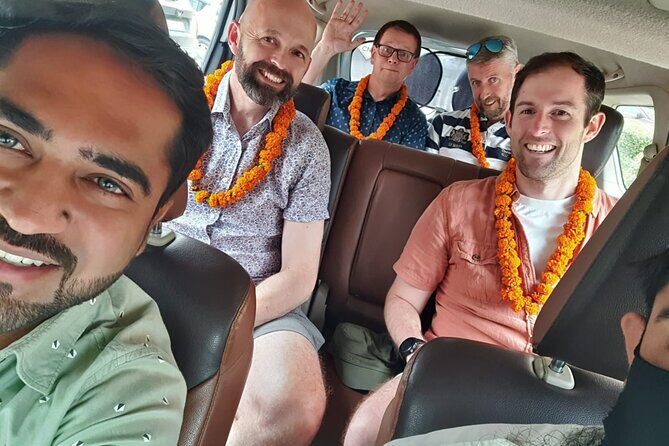
- Private chauffeur + government-approved guides: you’re not sharing history lessons with strangers.
- Tuk-tuk in Old Delhi plus market stops that feel like part of the city, not an add-on.
- Sunrise Taj Mahal plan with the battery van included to reduce dead time.
- Entrance fees aren’t included (budget extra beyond the $127 price).
- You can customize and upgrade hotel comfort levels if you want more polish.
- Multiple guide names show up in the feedback, including Saurabh, Maahi, Arham, Nasir, Kisor, Azzu, and Faisal.
The real value of a Golden Triangle car tour (and where it saves you)

A Golden Triangle itinerary is popular for a reason: Delhi, Agra, and Jaipur are different worlds packed into one tight route. The part that makes this tour feel practical is the transport structure. A private, air-conditioned car with a chauffeur handles the city-to-city travel so you can spend your brain power on seeing things, not mapping things.
You also get private guides throughout the sightseeing days. That matters on these monuments, where tiny details are easy to miss if you’re wandering on your own. With a guide, you’re more likely to understand why a building looks the way it does, and why certain viewpoints or corridors matter for photos.
The pacing is built for short stays. If you want slow travel, long museum time, or multiple food adventures that run late, you might find three days a bit intense. But if you want the headline sights without logistical work, this is exactly the kind of plan that helps.
You can also read our reviews of more private tours in New Delhi


Price and entrance fees: what you should budget before you book
The tour price is $127.00 per person and it includes a long list of practical items: private car with chauffeur, hotel or airport transfers in Delhi, Agra, and Jaipur, and sightseeing with private, government-approved local guides.
Then you hit the part that trips up first-time bookers: entrance fees to monuments are not included. The tour lists $70.00 per person for these sites, and you’ll need to cover that directly. On top of that, tips for guides and your driver are not included.
A quick reality check helps you decide:
- You’re paying for convenience plus guide time.
- You’re also paying for time efficiency, like the battery van at the Taj Mahal and the tuk-tuk ride in Old Delhi.
- You should plan for extra money on top of the $127 due to monument admissions.
If you’re doing the math, you’ll likely still come out feeling the tour is worth it, especially if you value a smooth, escorted schedule. If you’re strict about spending only the headline price, this one can feel like it starts cheaper than it ends.
Day 1 in Delhi: from Qutub Minar to Old Delhi market time
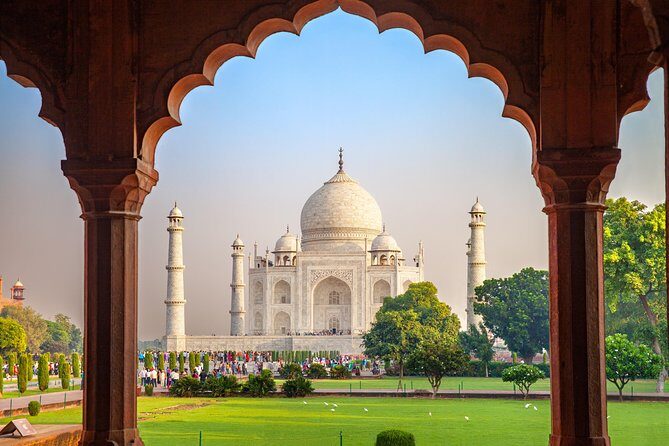
Day 1 is a full Delhi sampler, organized so you see both “newer monumental Delhi” and the older bazaar maze.
Qutub Minar: UNESCO scale, stone carvings, and a quick first win
You start with a pick-up window from 7:00 AM to 11:00 AM, from places like New Delhi, Noida, Gurugram, Ghaziabad, and Faridabad. Then it’s off to Qutub Minar, the UNESCO World Heritage site built in 1193 by Qutub-ud-din Aibak. The minaret’s height and detailed stonework are the kind of sight that makes you understand why medieval Delhi mattered.
Note the admission here is marked not included. That’s normal for Delhi monument stops, but it reinforces the theme: bring money for entry fees.
Lotus Temple: peace architecture you can photograph without stress
Next is the Lotus Temple, completed in 1986. The flower-like design is instantly recognizable, and it’s known as a Baháʼí House of Worship welcoming visitors of all faiths.
This stop is listed as admission free, which is a nice way to balance the paid monuments. You also tend to get easier pacing here since it’s not only about ticket lines.





Pass-by moments: Red Fort, Parliament House, and Lutyens’ New Delhi
You’ll pass Red Fort (built by Shah Jahan between 1639–1648), along with the Tomb of the Unknown Soldier and the planned monumental zones credited to Sir Edwin Lutyens and Herbert Baker in the late 1920s.
These are important Delhi landmarks, but they are pass-by stops. If you want to go inside every major site, this day may feel like it skips some depth. Still, as an orientation day, it’s useful. You’re basically getting bearings for what you’ll see later.
Agrasen ki Baoli: stepwell atmosphere with legend energy
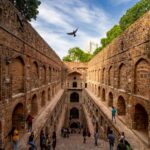
Then you head to Agrasen ki Baoli, an ancient stepwell in the heart of Delhi. The tour notes it’s known for an eerie ambiance and urban legends. Even if you don’t buy into paranormal stories, the structure itself has a strong, cinematic feel.
Admission is listed as free for this stop, which helps you stay on budget.
Humayun’s Tomb: Mughal garden tomb in UNESCO style
After that, it’s Humayun’s Tomb, a UNESCO World Heritage Site and noted as India’s first garden tomb. It’s a classic example of Mughal architecture, and it’s a great bridge between early Delhi styles and the later grandeur you’ll see in Agra.
Admission is listed as not included here.
Old Delhi by foot: Connaught Place break, Chandni Chowk, Jama Masjid, Khari Baoli
You then work your way into the older city. There’s a stop at Block-B Connaught Place for lunch time or snack break recommendations from your guide, then you move to Chandni Chowk and Jama Masjid in the Old Delhi core.
- Chandni Chowk is listed as free admission, with market time focused on spices, dry goods, and textiles.
- Jama Masjid is listed as not included for admission, and it’s described as India’s largest mosque with a massive red sandstone courtyard.
- Khari Baoli is a quick visit to Asia’s largest wholesale spice market, also listed as free admission.
This is where the tour gets more than just monuments. You’re getting a taste of how daily life feeds into history here—markets are part of Delhi’s culture, not a staged performance.
The Taj Mahal sunrise plan: timing, battery van, and why it matters
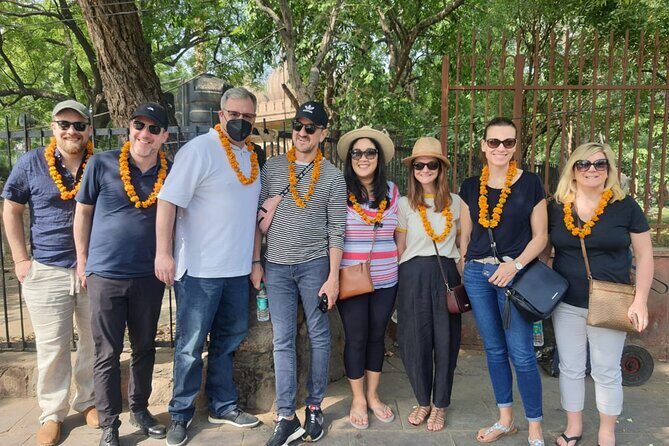
Day 2 is built around the Taj Mahal, and the tour treats it like a true centerpiece.
Sunrise at the Taj Mahal: why early timing is worth the alarm
You start with an early morning visit to the Taj Mahal for sunrise. The timing isn’t just about beauty—it also tends to mean a calmer start before the heaviest crowds. The tour includes a battery van ride from parking to the gate, which can save you from wasting time in the in-between moments.
Admission is not included for the Taj Mahal, so your $70 per person monument budget needs to cover it.
One practical detail: the tour states the Taj Mahal is closed every Friday. So if you’re traveling on a Friday start, your Day 2 plan may shift, since you’re not guaranteed access to that key stop.
Agra Fort and Itmad-ud-Daula: two different kinds of Mughal drama
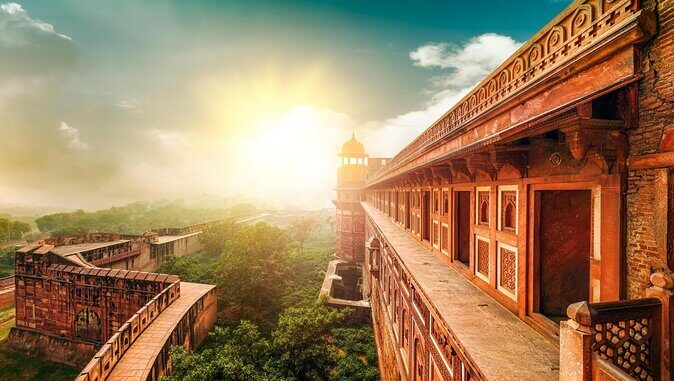
After the Taj, you’ll visit Agra Fort, a UNESCO site from the 17th century with Indian and Islamic architectural blends. Then you go to Itmad-ud-Daula, often called the Baby Taj, known for white marble and intricate pietra dura inlay work.
Both Agra Fort and Itmad-ud-Daula are listed as not included for admission. The good news is that these are shorter stops, so you keep energy for the overall day.
Agra lunch break and then the transfer to Jaipur
You’ll have a meal break in Agra with restaurant recommendations. Then the driver takes you to Jaipur. It’s a 4-hour drive, and you’re dropped at your pre-booked hotel for the overnight stay.
This “drive after monuments” structure works well because it stops the day from stretching too late. You’ll have Jaipur ahead of you without arriving at midnight.
Day 3 in Jaipur: forts, royal windows, and Jantar Mantar
Jaipur is your geometry day: fort shapes, palace facades, and the science-and-astronomy feel of old observatories.
Jaigarh Fort: views over the Aravalli hills
You start with Jaigarh Fort, built in 1726 by Maharaja Sawai Jai Singh II, sitting on the Aravalli hills. The tour lists 2 hours, which is a solid block for climbing up, taking photos, and letting the setting register.
Admission is not included here.
Hawa Mahal: the quick stop that still delivers
Then it’s Hawa Mahal (Palace of Wind). This is the five-story facade with 953 small windows (jharokhas), built from red and pink sandstone in 1799. The tour lists admission as free.
Even if you only spend about 30 minutes, this stop is usually satisfying because it’s all visual. The windows are the point.
City Palace: where the royal center lives
Next is the City Palace of Jaipur, listed at 1 hour. This is the kind of palace complex where courtyards and building clusters matter more than one single photo spot. Admission is marked not included.
Jal Mahal: the palace in the lake (photos with less pressure)
You continue to Jal Mahal, a 17th-century palace in the middle of Man Sagar Lake. It’s listed as free admission for this stop and scheduled for 30 minutes.
You’re there for the views, not a long interior museum style stop.
Jantar Mantar: old-school astronomy you can actually see
Finally, you end Jaipur sightseeing with Jantar Mantar, a UNESCO World Heritage Site and one of the best-preserved ancient observatories. Your time here is listed at 30 minutes, and admission is again marked not included.
After that, you drive back to Delhi. The trip duration is 4 hours, with an optional alternative: you can request drop-off at Jaipur Airport instead.
The guide names you’ll want to hope for: photo spots, crowd control, and comfort
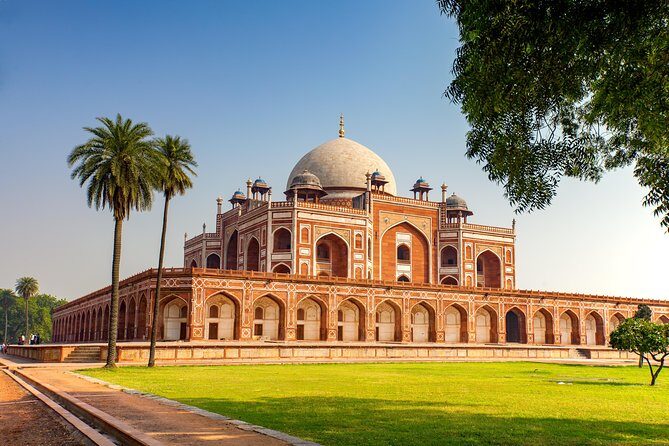
Private guide quality is the hidden variable in a short trip. The feedback tied to this tour highlights guides who do three practical things well:
First, they’re good at explaining what you’re seeing in plain language. Guides such as Saurabh in Agra, Maahi for Taj Mahal and Agra, Arham in Agra and Jaipur, and Nasir are repeatedly praised for making history feel understandable instead of like a textbook read-out.
Second, they’re strong on photo timing and angles. Names like Kisor (or Kishor) and Azzu come up for helping with the best viewpoints and for taking strong photos themselves. At the Taj Mahal, one of the most useful skills is helping you avoid getting swallowed by crowds, and Azzu is specifically described as attentive about navigating busy areas without overwhelm.
Third, comfort matters. One standout theme is that a female guide experience (like Maahi) can feel reassuring for families and groups. That doesn’t mean every visit is the same, but it does mean this tour often matches you with guides who take your pace seriously.
Also, don’t ignore the chauffeur role. Sanjay is mentioned in connection with handling Agra traffic smoothly, and that matters more than people think. If the car driver is sharp, your day stays on schedule and you arrive ready, not frazzled.
Transport details that make the itinerary feel easier
This tour includes transportation that targets bottlenecks:
- Private air-conditioned car with chauffeur, sized to your group (sedan for 1–2 people, wagon for 3–5, van for larger groups).
- Hotel/airport pick-up and drop-off in Delhi, Agra, and Jaipur.
- Tuk-tuk ride in Old Delhi, which is a smart way to experience the older streets without burning the whole day walking.
- Battery van ride at the Taj Mahal from parking to the gate, cutting down on the in-between slog.
You’ll also get bottled mineral water during journeys. Small thing, but on a warm day it’s the kind of detail you notice.
This is one of those tours where logistics aren’t a side quest. They’re part of what you’re paying for.
Food breaks and markets: how to use the included meal stops well
You’re given short breaks for food with guidance on where to go for local dishes. On Day 1, you’ll have a break around Connaught Place (Block-B) and then time in Chandni Chowk plus nearby markets. On Day 2, there’s an Agra food pause, and on Day 3 there’s another Jaipur meal window.
Here’s my practical advice: treat the meal time as a menu scouting session, not just lunch-and-run. Ask your guide what’s good today and what to avoid in that exact pocket of the market. If your guide mentions chai as a must, it’s usually because they know where people drink it and where it’s safe and steady.
You’ll also get spice-market energy through stops like Khari Baoli. Even if you don’t shop, it helps you understand the textures and scents that make Indian street markets feel so distinct.
Hotels, room sharing, and the upgrade option
The tour includes two nights accommodation only if you book with the hotel option. You can upgrade to 3-, 4-, or 5-star hotels.
Rooms are generally provided twin-sharing by default. If you book for three people, triple-sharing is default, and if three guests want two rooms instead, there can be an extra charge.
There are also special dates to know about: on December 24 and December 31, hotel blackout dates apply, and a mandatory gala dinner is required. The tour lists USD 99 per person as additional if you book accommodations on those dates.
If you’re traveling around those days, price comparisons can get messy fast. I’d factor the gala dinner into your budget early.
So, should you book this car tour?
Book it if you want a straightforward Golden Triangle plan that removes most logistics: private chauffeur, private guides, morning Taj Mahal, and built-in rides like the tuk-tuk and battery van.
I’d skip or adjust if you’re trying to do this on a strict total budget, because monument entry fees are listed as $70 per person plus tips. Also, if you’re set on visiting the Taj Mahal on a Friday, know it’s closed that day, so you may need flexibility.
If your goal is to hit the highlights in a tight three days without wasting time on tickets and transport decisions, this is a strong fit. It’s the kind of trip that gets you sightseeing momentum fast, and helps you focus on what matters: the buildings, the streets, and the stories behind them.
FAQ
What time can I start the Delhi pick-up?
Pick-up is available from 7:00 AM to 11:00 AM. You can choose any pick-up time within that window.
Are monument entrance fees included in the tour price?
No. Entrance fees to monuments are listed as $70.00 per person and are not included. The tour also notes gratuities/tips for guides and driver are not included.
Does the tour include breakfast and hotel nights?
Breakfast is included for 2 days (2 breakfasts). Two nights accommodation is included only if you book with the hotel option.
Is the Taj Mahal open every day?
No. The tour states that the Taj Mahal is closed every Friday.
What rides are included during the tour?
You get a tuk-tuk ride in Old Delhi and a battery van ride at the Taj Mahal from the parking area to the gate.
Do I need a photo ID for monument entry?
Yes. You should carry valid photo ID in your mobile for monument entry.
Can I upgrade my hotel category?
Yes. You can upgrade to 3-, 4-, or 5-star hotels.
What’s the cancellation policy window?
You can cancel for a full refund if you cancel at least 24 hours before the experience start time. If you cancel later than that, the amount paid is not refunded.